How Long Should I Bake Salmon? (Perfect Timing Guide)
Sitting down to a meal with perfectly cooked salmon is special. The fish flakes apart with your fork, and the flesh melts in your mouth. It’s a moment that feels both simple and satisfying.
If you’ve ever wondered how long to bake salmon, you’re not alone. Many home cooks feel nervous about cooking fish. But baking salmon is one of the most forgiving cooking methods out there.
Learning the right cooking salmon in the oven guide takes away the guesswork. When you understand the basic timing and techniques, you gain confidence in the kitchen. You’ll stop second-guessing yourself and start creating meals that taste restaurant-quality.
Your family and friends will be impressed by what you can do with just a few simple ingredients and the right knowledge.
The answer to how long to bake salmon isn’t just one magic number. The time your salmon needs depends on several factors like thickness, oven temperature, and whether the fish started cold or at room temperature. Throughout this guide, you’ll discover each piece of the puzzle.
You’ll learn what temperature to set your oven to, how to tell when your salmon is perfectly done, and the little tricks that separate good salmon from great salmon.
Whether you’re making dinner on a busy Tuesday night or preparing something special for guests, this cooking salmon in the oven guide will help you nail it every time. You’ll find practical tips for seasoning, instructions for using foil and parchment paper, and advice on side dishes that pair perfectly with your baked salmon.
By the end, you’ll have all the skills you need to bake salmon like a pro from your own kitchen.
Table of Contents
Understanding Baking Salmon: Basics and Benefits
Before diving into timing and temperatures, it’s key to see why baking salmon is a great choice. Baking is a top method for cooking this healthy fish. Knowing the benefits will boost your confidence in the kitchen and lead to better results.
Health Benefits of Eating Salmon
Salmon is full of nutrients your body loves. It’s rich in omega-3 fatty acids, which are good for your heart and reduce inflammation. You also get high-quality protein for muscle building and vitamin D for strong bones.
Salmon also has astaxanthin, a powerful antioxidant that gives it its pink color. This compound protects your cells. Learning to bake salmon perfectly helps keep these nutrients intact.
Why Choose Baking Over Other Cooking Methods
Baking is better than pan-frying, grilling, or broiling because it’s healthier. It uses very little fat. The oven’s heat cooks your salmon evenly, so you won’t get burnt or raw spots.
- Minimal supervision needed—set it and forget it
- Even heat distribution prevents overcooking
- Requires less added oil than other methods
- Easier to cook multiple fillets at once
- Perfect for beginners and experienced cooks
Choosing baking as your method is the first step. It lets you prep side dishes while your salmon cooks. This makes dinner prep easier and less stressful for everyone.
Key Factors That Affect Baking Time
To get the best salmon baking time, you need to know three key things. These factors help you cook your salmon just right. They ensure your fish is perfectly cooked, not overdone. Learning about these helps you bake salmon like a pro, no matter the type or size.
Thickness of the Salmon Fillet
The thickness of your salmon fillet is key. Thin fillets cook faster than thick ones. A good rule of thumb is to bake for 4 to 6 minutes for every half-inch of thickness.
- Thin fillets (about 0.75 to 1 inch thick): 8 to 12 minutes
- Medium fillets (about 1 to 1.5 inches thick): 12 to 18 minutes
- Thick fillets (about 1.5 to 2 inches thick): 18 to 25 minutes
Oven Temperature
The oven temperature is also very important. Salmon bakes best between 350°F and 450°F. Higher temperatures make the outside crispy and cook it faster. Lower temperatures make it tender and moist.
| Oven Temperature | Cooking Speed | Best For |
|---|---|---|
| 350°F to 375°F | Slower, gentle cooking | Tender, moist results |
| 400°F to 425°F | Moderate cooking | Balanced texture and speed |
| 425°F to 450°F | Faster cooking | Caramelized exterior |
Starting Temperature of the Fish
Whether your salmon is cold or at room temperature affects cooking time. Cold fish takes longer to cook than room temperature fish. Warming the salmon slightly helps it cook evenly.
- Cold salmon (straight from refrigerator): Add 3 to 5 extra minutes
- Room temperature salmon: Standard cooking time applies
- Benefit: Even heat distribution for consistent doneness
Knowing these three factors gives you control over your cooking. You can adjust your baking time with confidence, based on your salmon and oven.
Recommended Baking Times for Salmon
Getting the baking time for salmon just right is key to a great dinner. Your salmon should be moist, flaky, and taste amazing. The time needed depends on your oven’s temperature and the thickness of your fillets. Learning these guidelines will make you a pro at cooking salmon every time.
General Guidelines for Baking Salmon
The usual oven temperature for baking salmon is 400°F. For a standard fillet, baking should take about 12 to 15 minutes. If you prefer a lower heat, try 375°F for 15 to 18 minutes. For quicker cooking, use 425°F and check your salmon at 10 to 12 minutes.
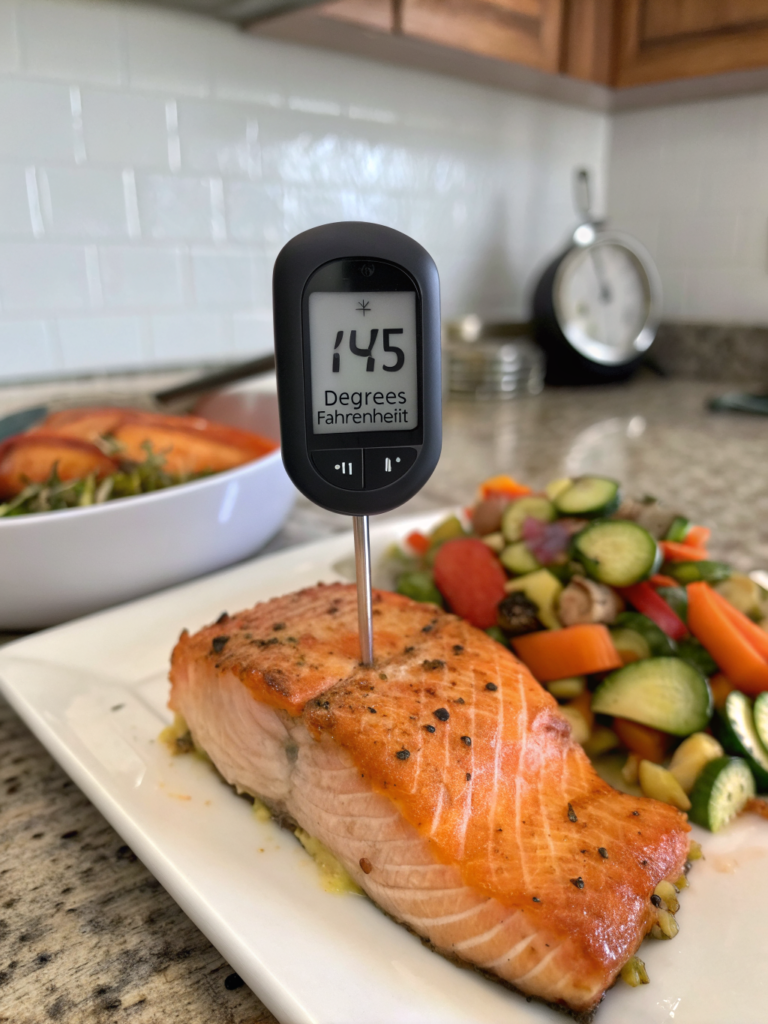
These times are best for fillets that are about one inch thick. Thinner pieces cook faster, while thicker ones need more time. The goal is to reach an internal temperature of 145°F, which means your fish is done.
Baking Time Based on Fillet Thickness
Fillet thickness greatly affects your salmon’s baking time. Knowing the right timing prevents overcooked, dry fish. Use this chart to find the perfect baking time for your salmon:
| Salmon Thickness | Oven Temperature | Optimal Baking Time for Salmon | Internal Temperature Target |
|---|---|---|---|
| 1 inch thick | 400°F | 12 to 15 minutes | 145°F |
| 1.5 inches thick | 400°F | 15 to 18 minutes | 145°F |
| 2 inches thick (whole side) | 400°F | 18 to 22 minutes | 145°F |
| 1 inch thick | 375°F | 15 to 18 minutes | 145°F |
| 1 inch thick | 425°F | 10 to 12 minutes | 145°F |
Complete Baked Salmon Recipe
Prep Time: 5 minutes | Cook Time: 12 to 15 minutes | Servings: 4
Ingredients:
- 4 salmon fillets (6 oz each, about 1 inch thick)
- 2 tablespoons olive oil
- 1 teaspoon salt
- ½ teaspoon black pepper
- 1 teaspoon garlic powder
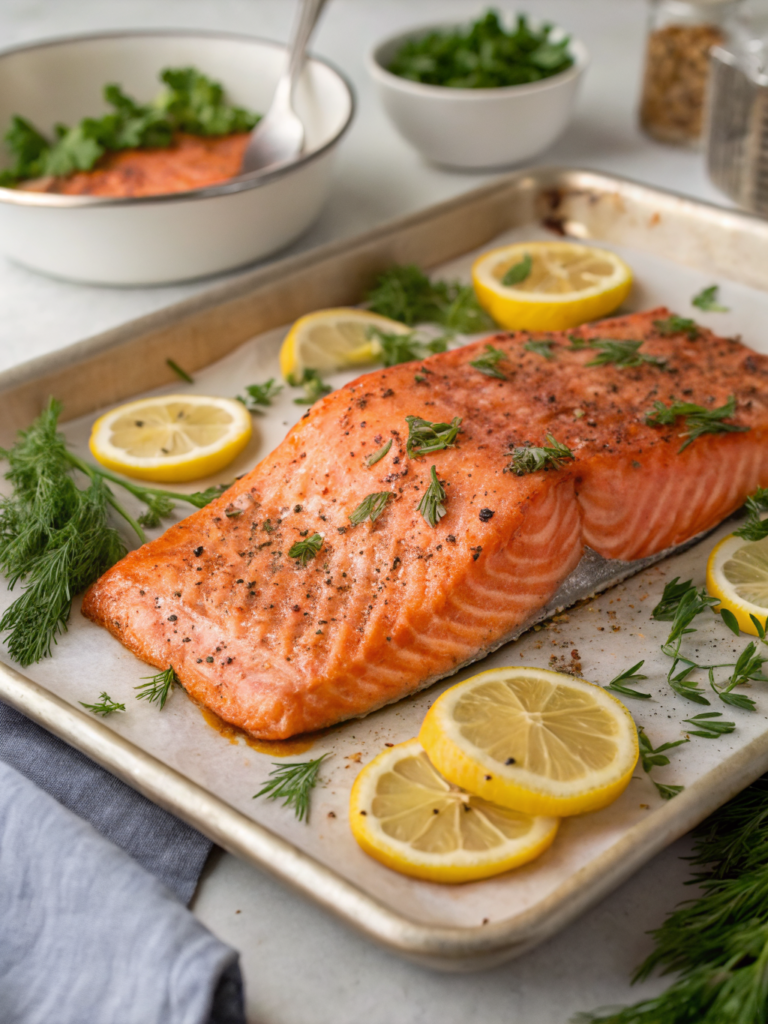
- Fresh lemon slices
- Fresh herbs (dill or parsley)
Instructions:
- Preheat your oven to 400°F and line a baking sheet with parchment paper
- Pat salmon fillets dry with paper towels to remove excess moisture
- Brush both sides of each fillet with olive oil
- Season with salt, pepper, and garlic powder
- Place skin-side down on the prepared baking sheet
- Top with fresh lemon slices and your choice of herbs
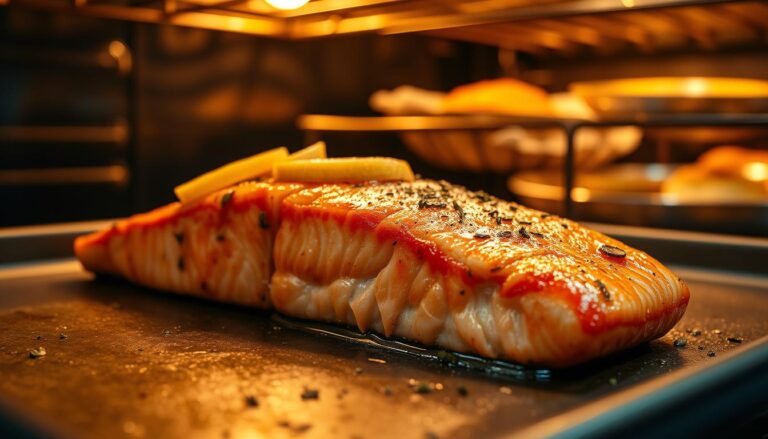
- Bake for 12 to 15 minutes until the internal temperature reaches 145°F
- Remove from the oven and let rest for 3 minutes before serving
Nutrition Facts (Per Serving): 280 calories | 34g protein | 15g fat | 0g carbohydrates | 75mg cholesterol | 650mg sodium
Expert Tips: Always use a meat thermometer for accuracy when checking doneness. Don’t overcrowd your baking sheet, as this prevents even cooking and can make your salmon dry. Remember that carryover cooking continues after you pull the salmon from the oven. Pull your salmon out when it reaches 140 to 145°F for perfectly moist results that you’ll love.
Perfecting Your Salmon’s Flavor
Mastering the timing of your baked salmon is just the start. Now, it’s time to add the ultimate salmon baking tips to impress everyone. The right seasonings and toppings can turn your salmon into a restaurant-quality dish. These flavor additions complement all baking times you’ve learned.
Your salmon deserves extra attention for its taste. It’s time to elevate it.
Marinades and Seasonings
Choosing the right marinade is key. You don’t need fancy ingredients to make your salmon taste great. Start with salt, pepper, and fresh lemon juice. These basics enhance the fish’s natural flavors.
For something different, try these marinades:
- Honey-garlic blend with soy sauce and olive oil
- Mediterranean style using olive oil, lemon juice, oregano, and garlic
- Asian-inspired teriyaki glaze for a sweet and savory taste
- Simple herb blend with dill, parsley, and chives
Marinate your salmon for 15 to 30 minutes. Avoid longer marinating. Acidic ingredients can “cook” the fish and change its texture.
Adding Toppings for Extra Flavor
Toppings add flavor and visual appeal. You can keep it simple or get creative with toppings.
| Topping Type | Main Ingredients | Best For | Preparation Time |
|---|---|---|---|
| Dijon Mustard Crust | Dijon mustard, fresh dill, breadcrumbs | Adding a tangy, herb flavor | 5 minutes |
| Parmesan-Panko Topping | Panko breadcrumbs, grated parmesan, butter, herbs | Creating a crunchy texture | 5 minutes |
| Lemon and Herb Finish | Thin lemon slices, fresh herbs, olive oil | Light and fresh taste | 3 minutes |
| Compound Butter | Softened butter, garlic, herbs, citrus zest | Adding richness and depth | 10 minutes |
Spread Dijon mustard mixed with fresh dill on your salmon for a tangy taste. The parmesan-panko mix adds a satisfying crunch. Thin lemon slices and fresh herbs on top offer a clean, fresh taste. Add a compound butter pat during the last few minutes for extra richness.
These toppings and seasonings don’t affect your cooking time. They make your baked salmon more interesting and delicious. Your ultimate salmon baking tips toolkit is now complete with flavor strategies that work every time.
Using Foil and Parchment Paper
Looking for expert advice on baking salmon? Choosing the right cooking surface is key. Foil and parchment paper each have benefits that can enhance your salmon’s taste and texture. Your choice should match your desired outcome and cleaning preferences.
Benefits of Baking Salmon in Foil
Baking salmon in foil is a method called “en papillote.” It steams the fish in its juices, keeping flavors inside. This method prevents dry, tough fish by trapping moisture.
Wrapping salmon in foil is great because you can add veggies, herbs, and lemon slices inside. This makes dinner easy and cleanup simple. But, foil-wrapped salmon won’t get crispy edges or golden color because of the steam.
- Creates an all-in-one meal with vegetables
- Locks in moisture perfectly
- Nearly impossible to overcook
- Minimal cleanup needed
- Add 2-3 extra minutes to your baking time
Should You Use Parchment Paper?
Parchment paper offers a middle ground for baking salmon. It allows air to circulate, helping your salmon get light browning on top. This non-stick surface also won’t react with acidic ingredients.
Experts suggest parchment paper for easier cleanup and some surface color. You can fold it into packets like foil for steam control and gentle cooking.
| Method | Moisture Retention | Browning | Cleanup | Best For |
|---|---|---|---|---|
| Foil Packet | Excellent | None | Easy | All-in-one meals with vegetables |
| Parchment Paper | Good | Light | Easy | Light browning with simple cleanup |
| Greased Baking Sheet | Good | Excellent | Moderate | Maximum browning and crisping |
Your choice between foil and parchment paper depends on your goals. Both methods can produce delicious salmon if you follow expert advice.
Checking for Doneness: What to Look For
Knowing when your salmon is done is key. Timing is a start, but doneness signs confirm it’s ready. You need ways to check without guessing or cutting into it too much.
The Importance of Internal Temperature
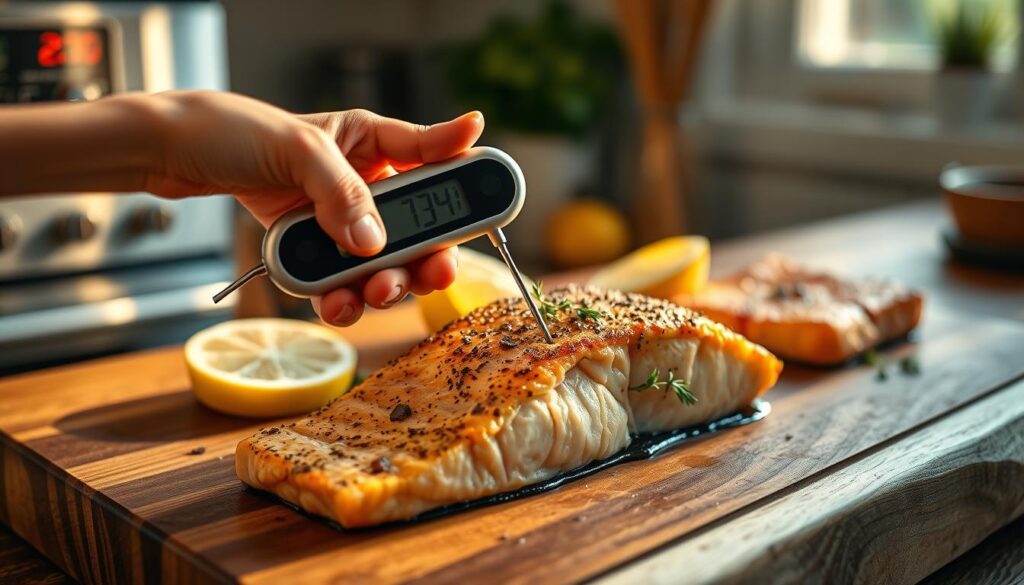
A meat thermometer is the best way to check salmon’s doneness. The USDA says it should be 145°F at its thickest part. At this point, it’s opaque and firm all over.
Some like their salmon cooked to 125°F to 135°F for a tender center. This makes the middle soft and buttery. Both are safe if done right, so it’s up to your taste.
Remember, salmon’s temperature will rise by about 5 degrees after you take it out of the oven. So, take it out when it’s 5 degrees below your target. Knowing how long to bake helps you get it just right.
Visual Cues That Indicate Doneness
Without a thermometer, look for these signs:
- Your salmon changes from translucent to opaque throughout
- The flesh flakes easily when you gently press it with a fork
- White albumin (protein) appears on the surface
- The fillet feels firm but has a slight give when pressed
If it feels mushy, bake it longer. If it’s very firm and dry, it’s overcooked. These signs, along with baking time, help you achieve great results at home.
Common Mistakes to Avoid When Baking Salmon
Learning to bake salmon perfectly means knowing what can go wrong. Many home cooks face the same challenges. But, once you know what to avoid, you can make restaurant-quality salmon at home.
Overcooking vs. Undercooking
Overcooking is the biggest issue when baking salmon. An overcooked fillet becomes dry and tastes bad. You’ll see white protein on the surface, which means it’s overcooked.
Getting the temperature right is key. Remember, the fish will cook a bit more after you take it out of the oven. So, pull it out when it’s slightly underdone in the center. It will get a bit hotter while it rests.
Undercooking is also a problem. It makes the salmon feel soft and look too raw. This can be unsafe. Start checking your salmon a few minutes before it’s done. This way, you avoid both overcooking and undercooking.
Ignoring Resting Time
The resting time is what makes great salmon. After taking it out of the oven, let it rest for three to five minutes. This lets the juices spread evenly, making it moist and tender.
- Tent the baked salmon loosely with foil
- Leave it on the hot baking sheet to keep it warm
- Keep it undisturbed during the entire resting period
- Resist the urge to cut into it immediately
Cutting into it too soon lets moisture out. Those few minutes make a big difference in taste and texture. Treat your salmon like a steak for better results.
Serving Suggestions for Baked Salmon
After baking your salmon to perfection, it’s time to make a complete meal. The right sides and touches can turn your salmon into a fancy dinner. How you present it is just as important as how you cook it.
Great Side Dishes to Pair
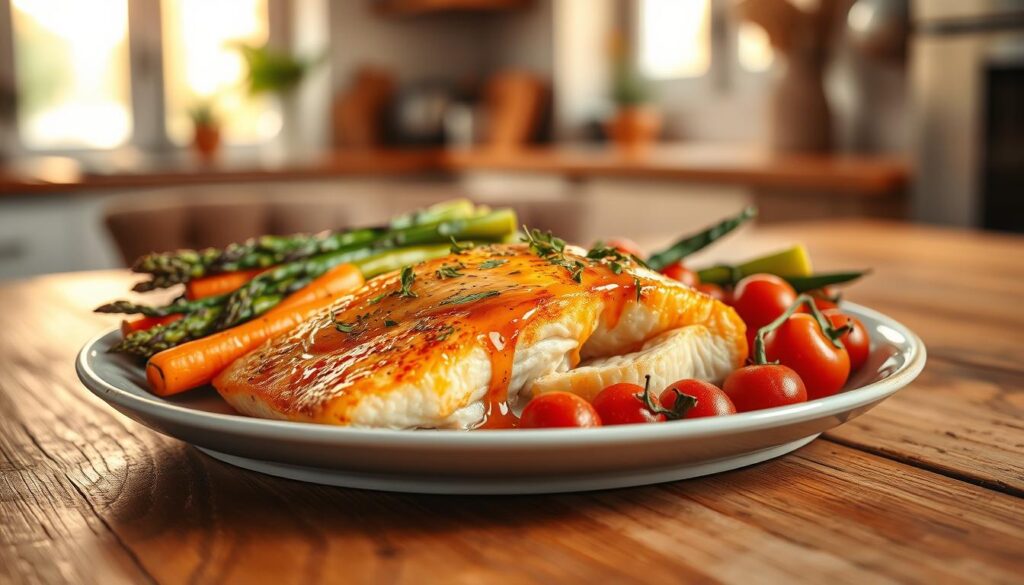
Choosing the right sides can make your meal better. Pick veggies and starches that go well with your fish. Roasted veggies are a great choice, as they make a tasty one-pan dinner.
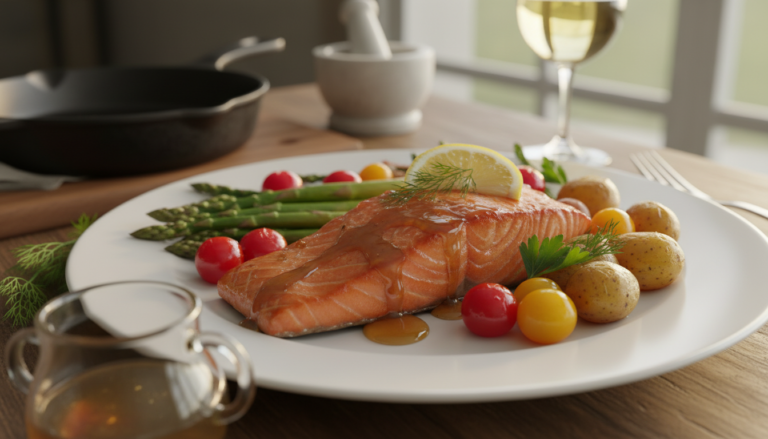
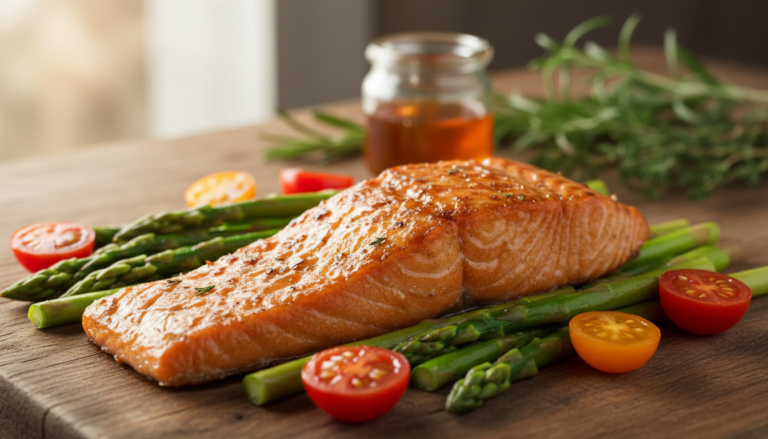
- Roasted asparagus with garlic and olive oil
- Brussels sprouts tossed in balsamic vinegar
- Roasted baby potatoes with fresh herbs
- Garlic mashed potatoes for comfort and richness
- Fresh green salad with lemon vinaigrette
- Quinoa pilaf mixed with roasted vegetables
- Sautéed green beans with sliced almonds
- Cauliflower rice for a lighter option
- Zucchini noodles with light seasoning
Sauces and Garnishes for Extra Taste
Sauces and garnishes can make your dish stand out. They add flavor without needing more cooking time after baking.
| Sauce Option | Main Ingredients | Flavor Profile |
|---|---|---|
| Lemon-Dill Sauce | Greek yogurt, fresh dill, lemon juice, garlic | Bright and herbaceous |
| Brown Butter Caper | Butter, capers, lemon | Rich and tangy |
| Mango Salsa | Fresh mango, jalapeño, lime, cilantro | Tropical and fresh |
| Tzatziki | Greek yogurt, cucumber, dill, garlic | Cool and creamy |
| Creamy Dill | Sour cream, fresh dill, white wine vinegar | Smooth and tangy |
Fresh garnishes make your salmon look good and taste great. Try fresh dill, parsley, or chives on top. Add lemon wedges for extra flavor. For a fancy touch, use toasted sesame seeds or microgreens.
These simple touches can make your salmon look like it’s from a fancy restaurant.
Storing Leftover Baked Salmon
You’ve cooked the salmon perfectly and now have leftovers. You want to enjoy them later. Storing them right keeps your salmon fresh and tasty for days.
Learning how to store it ensures it stays moist and flavorful. This way, you can enjoy it again without losing its taste.
Best Practices for Refrigerating
Let your cooked salmon cool to room temperature before storing. Don’t leave it out for more than two hours. Once cooled, put it in an airtight container or wrap it tightly.
Your salmon will stay fresh in the fridge for three to four days. If you want to keep it longer, freezing is a good option. Wrap it in plastic wrap, then in a freezer bag, and press out air. Label the bag with the date.
Frozen salmon can last up to three months.
How to Reheat Baked Salmon Effectively
The best way to reheat salmon is in your oven at 275 degrees Fahrenheit. Cover it with foil and warm it for about fifteen minutes. This method keeps the fish moist.
You can also use your microwave at fifty percent power. Heat it in thirty-second intervals, checking between each one. This method needs more attention because the heat spreads unevenly.
A smart trick is to skip reheating. Flake your leftover salmon and add it to salads, grain bowls, or salmon cakes. Cold salmon is great on fresh greens with a tangy dressing. Reheat your salmon only once and only heat what you plan to eat right away.