Salmon Fillet in Oven: Easy Baking Guide for Perfect Results
There’s something special about pulling a perfectly cooked salmon fillet from your oven. The rich aroma fills your kitchen. Your family gathers around the table. You realize you’ve created something restaurant-quality right at home.
Learning how to cook salmon fillet in oven doesn’t require years of culinary training. You just need the right information and a bit of confidence. Whether you’re cooking dinner for your family or impressing guests, baking salmon offers simplicity that doesn’t sacrifice quality.
This complete guide covers everything you need to master salmon fillet in oven preparation. You’ll discover how to select the best fish at your local grocery store. You’ll learn the secrets to keeping your salmon moist and flaky. You’ll understand the exact temperatures and timing that guarantee success every time.
Inside these sections, you’ll find practical instruction on preparation methods. You’ll explore seasoning combinations that elevate your dish. You’ll learn which common mistakes to avoid. You’ll even get ideas for creative sides that pair beautifully with your baked salmon.
By the time you finish reading, you’ll have all the knowledge needed to make perfectly baked salmon a regular part of your weekly meals. No fancy equipment required. No complicated steps to follow. Just straightforward guidance that turns you into a confident home cook.
Table of Contents
Why Bake Salmon Fillets?
Baking salmon in the oven is a top choice for cooking this fish. It’s easy and yields amazing results. This method is loved by many home cooks for its simplicity and effectiveness.
Choosing to bake salmon is a smart move for your health and meals. Let’s look at why this method is great for you and your family.
Health Benefits of Salmon
Salmon is a nutritional powerhouse. It’s full of omega-3 fatty acids, which are good for your heart and brain. It also has high-quality protein, vitamins B12 and D, and selenium.
- Omega-3 fatty acids for heart and brain health
- High-quality protein for muscle support
- Vitamin B12 for energy production
- Vitamin D for bone strength
- Selenium for immune system support
Flavorful and Versatile
Salmon’s rich, buttery flavor makes it versatile. You can season it in many ways, from simple to bold. This means you can enjoy it for any meal, from weeknights to special occasions.
Easy to Prepare
Baking salmon is simple and quick. Your fillet needs just a few minutes of prep before the oven does the rest. You don’t need to be a skilled cook. The oven cooks while you relax or prepare sides.
This method is perfect for busy cooks who want healthy, tasty meals without hassle.
Choosing the Perfect Salmon Fillet
Choosing quality salmon is key to a great oven-baked salmon fillet. The type of fish affects flavor, texture, and cooking results. Knowing the different types and how to spot fresh quality is important.
Types of Salmon
There are several salmon species, each with its own traits. Here are the main ones you’ll find at seafood markets:
- Chinook (King) Salmon: The largest variety with high fat content, delivering rich flavor and tender texture perfect for the best oven-baked salmon fillet
- Sockeye Salmon: Deep red flesh with bold, pronounced taste and firm texture
- Coho Salmon: Medium-sized with mild flavor and moderate fat content
- Atlantic Salmon: Creamy texture with delicate taste, widely available year-round
- Pink Salmon: Lighter color with milder flavor and leaner meat at budget-friendly prices
Sourcing Fresh Salmon
At the fish counter, look for these signs of quality:
- Bright, vibrant flesh color without gray or brown spots
- Firm texture that springs back when gently pressed
- Fresh ocean smell, not strong fishy odor
- Moist appearance with no dried or curled edges
- Clear eyes if purchasing whole fish
Ask your fishmonger when the salmon arrived. Fresher fish leads to better results.
Understanding Wild vs. Farmed Salmon
| Characteristic | Wild Salmon | Farmed Salmon |
|---|---|---|
| Flavor Profile | Rich, robust taste | Milder, buttery flavor |
| Texture | Firmer, leaner meat | Softer, higher fat content |
| Availability | Seasonal, limited supply | Year-round availability |
| Price | Premium pricing | More affordable options |
| Sustainability | Ocean-dependent, varies by species | Controlled environment farming |
Both wild and farmed salmon can make great dishes. Wild salmon has a stronger flavor and firmer texture. Farmed salmon is more accessible and affordable. Your choice depends on taste, budget, and what’s available.
Essential Tools for Baking Salmon
To make a perfect oven-baked salmon fillet, you need more than just good ingredients. The right tools make the process easier and ensure great results every time. The tools you choose affect how your salmon cooks and tastes.
Baking Equipment You’ll Need
Start with basic baking equipment. A rimmed baking sheet helps distribute heat evenly and keeps drippings in. Aluminum foil or parchment paper prevents sticking and makes cleanup easy. They also help keep your salmon moist and tender.
Your oven must have a consistent temperature. Before baking, check if your oven heats evenly. An uneven oven can ruin your salmon.
Recommended Cookware
The shape of your baking dish affects how your salmon cooks. Here are your best options:
- Glass baking dishes (like Pyrex) heat slowly and distribute warmth evenly
- Ceramic baking dishes (such as Le Creuset) provide excellent heat retention
- Stainless steel sheet pans offer durability and quick heat response
- Cast iron skillets work great for achieving crispy skin on your perfect oven-baked salmon fillet
Kitchen Gadgets for Precision
These tools help you cook with precision:
| Tool | Purpose | Why It Matters |
|---|---|---|
| Instant-Read Thermometer | Checks internal salmon temperature | Prevents overcooking your perfect oven-baked salmon fillet |
| Fish Spatula | Turns and serves delicate fillets | Keeps salmon intact without breaking |
| Basting Brush | Applies marinades and oils | Distributes flavor evenly across the fish |
| Kitchen Timer | Tracks cooking time accurately | Prevents undercooking or overcooking |
An instant-read thermometer is your best friend. It tells you exactly when your salmon is done. A fish spatula has a thin, flexible blade that slides under delicate flesh without tearing. A basting brush helps you apply oils and seasonings evenly. A reliable timer keeps you on track and prevents mistakes.
Having these tools ready sets you up for success. You’ll cook with confidence, knowing you have everything needed to create a perfect oven-baked salmon fillet that rivals restaurant quality.
Preparing Your Salmon Fillets
Getting your salmon ready is key to a great meal. It’s what turns an ordinary dish into a delicious oven-baked salmon fillet. Each step is important to ensure your fillets are perfectly cooked and full of flavor. Follow this guide to transform raw fish into something truly special.
Cleaning and Drying
Begin by rinsing your salmon fillets under cold water. Gently remove any residue or scales from the skin. Then, pat the fillets dry with paper towels. This step is important because moisture can prevent browning and seasoning from sticking.
Look for pin bones in the center of the fillet. Use tweezers to remove them. These bones can ruin your meal, so take your time. Feel along the flesh to find them easily.
Seasoning Options
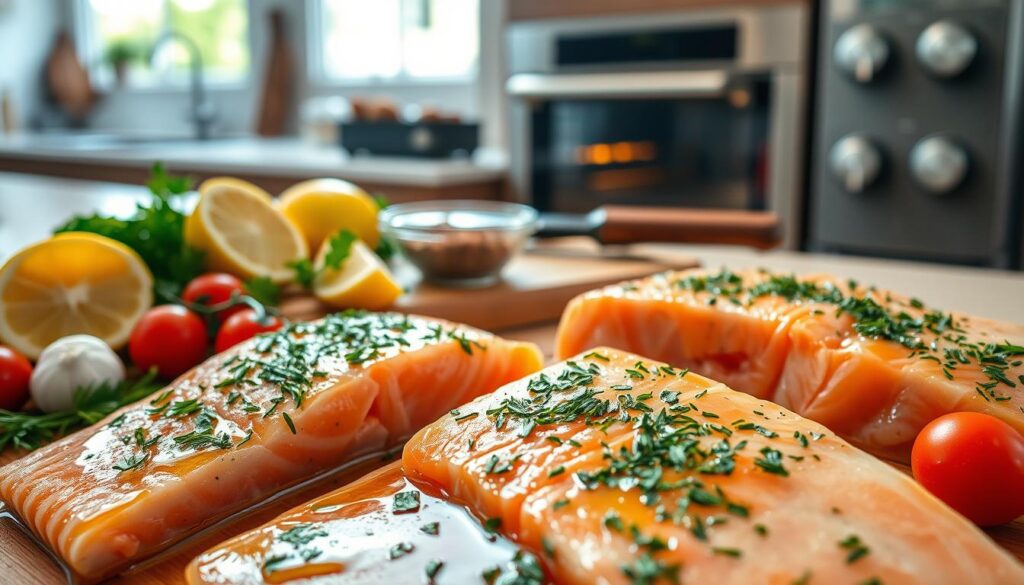
Your salmon fillet deserves the right seasoning. Here are some popular choices:
- Simple salt and pepper for a clean taste
- Lemon-herb blend with fresh dill
- Garlic butter for richness
- Cajun spice for bold flavor
- Mediterranean style with olive oil and oregano
- Teriyaki glaze for Asian-inspired taste
Each seasoning works well on salmon. Sprinkle them evenly on both sides of your fillets before baking.
Marinating for Extra Flavor
Marinating can add more flavor to your salmon. Keep marinating time between 15 minutes and 2 hours. Longer times can cook the fish due to acidic ingredients.
| Marinade Type | Key Ingredients | Best Duration |
|---|---|---|
| Soy-Ginger | Soy sauce, fresh ginger, garlic | 30-45 minutes |
| Citrus | Lemon juice, lime, olive oil | 15-30 minutes |
| Honey Mustard | Dijon mustard, honey, vinegar | 45-60 minutes |
| Herb Garden | Fresh basil, parsley, thyme, olive oil | 20-40 minutes |
Acidic ingredients like lemon juice or vinegar can “cook” the fish if marinating too long. Be careful with timing. These steps will help you bake your salmon perfectly.
The Best Oven Temperature for Salmon
Finding the right oven temperature is key for a juicy salmon fillet. The temperature affects how the salmon cooks and stays moist. You want it to cook through without losing its juices.
Recommended Baking Temperatures
Most cooks find success with temperatures between 350°F and 425°F. The best spot for a juicy salmon is around 375°F to 400°F. This range cooks the salmon through and gives a light golden color.
At 375°F to 400°F, your salmon gets nice caramelization without drying out. The outside gets crispy, while the inside stays tender. This range is your safe zone for great results.
| Oven Temperature | Best For | Cooking Time (per inch of thickness) | Texture Result |
|---|---|---|---|
| 350°F | Thin fillets and delicate sauces | 12-15 minutes | Very tender and buttery |
| 375°F | Average fillets (recommended) | 10-12 minutes | Moist with slight firmness |
| 400°F | Thicker cuts and skin-on salmon | 10-12 minutes | Firm and well-developed exterior |
| 425°F | Extra-thick fillets and crispy skin | 9-11 minutes | Crispy exterior with moist center |
Factors Influencing Temperature
Several things affect the best temperature for your salmon. Fillet thickness is key. Thinner fillets cook fast, so lower temperatures are better. Thicker cuts need more heat and time.
Skin-on salmon can handle higher temperatures. The skin protects the flesh. If your salmon has skin, you can use 400°F or 425°F safely.
Your desired texture also matters. For a buttery texture, use 350°F to 375°F. For firmer salmon, use 400°F to 425°F.
Cooking method is important too. Covering your salmon with foil keeps it moist, letting you use higher temperatures. Uncovered salmon needs lower temperatures.
- Thin fillets (under 1 inch): Use 350°F to 375°F
- Medium fillets (1 to 1.5 inches): Use 375°F to 400°F
- Thick fillets (over 1.5 inches): Use 375°F to 400°F with possible foil covering
- Skin-on salmon: Use 400°F to 425°F for crispy results
- Covered with sauce or foil: Use 400°F to 425°F for moisture retention
Start checking your salmon around the minimum time for your temperature. Every oven is different, so you might need more or less time. Your salmon is ready when it flakes easily and looks opaque inside.
Baking Time for Salmon Fillets
Timing is key when baking salmon fillets. The right baking time makes all the difference. It ensures your fish is tender and flaky, not dry and tough. The oven temperature and fillet thickness are the main factors to consider.
General Baking Time Guidelines
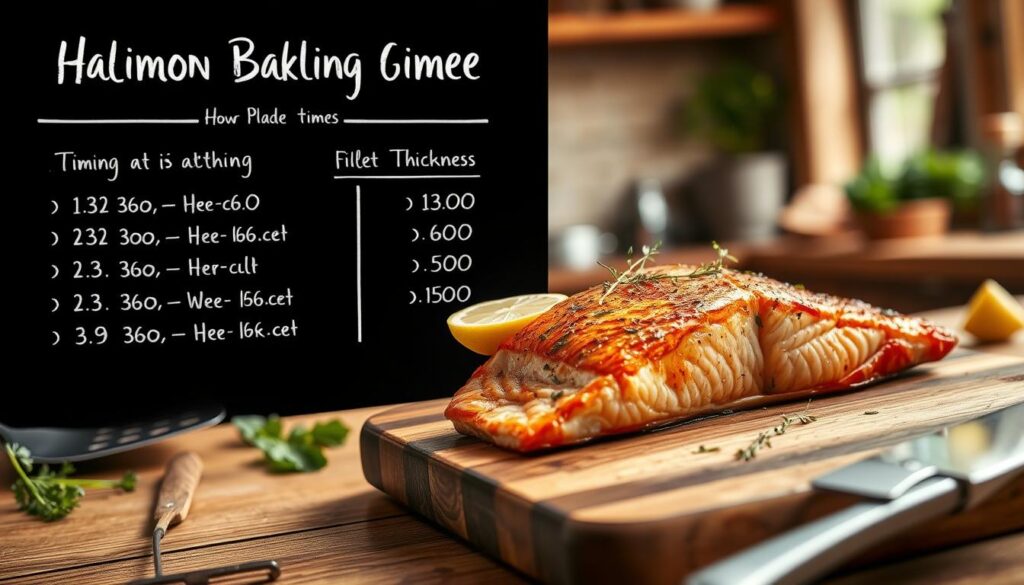
For a baked salmon fillet recipe, cook at 400°F. A good rule is 4-6 minutes for every half-inch of thickness. Most fillets are about one inch thick, so they need 12-15 minutes.
Thinner fillets cook faster, in 8-10 minutes. Thicker ones take 15-18 minutes. Always check your fillets before baking to get the exact time.
How to Check for Doneness
Don’t just rely on the timer. There are other ways to check if your salmon is done:
- Use an instant-read thermometer to check the internal temperature at the thickest part
- Look for the color change from translucent to opaque throughout the fillet
- Test if the fish flakes easily when you gently press it with a fork
- Watch for white albumin, a protein that appears on the surface
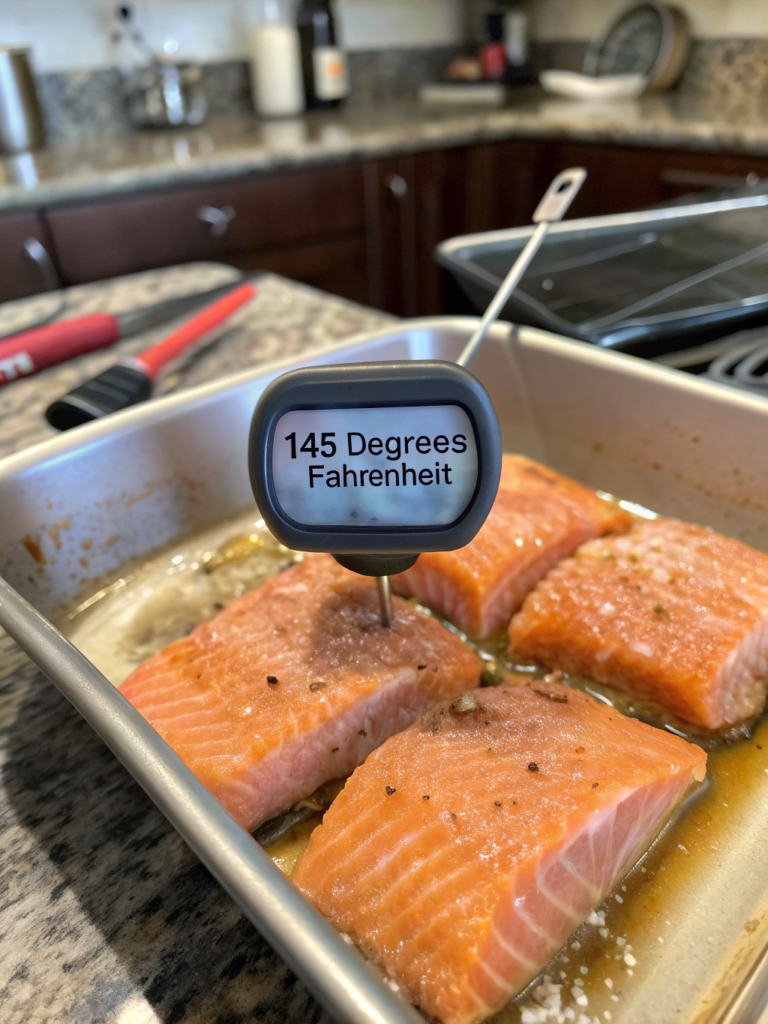
The USDA says to cook salmon to 145°F internally. Your baked salmon fillet recipe will reach this temperature when the thickest part does.
Serving Temperatures
Salmon can be enjoyed at different temperatures. Some like it hot, while others prefer it warm or even chilled. Remember, salmon will continue to cook a bit after it’s removed from the oven.
Take your salmon out of the oven about one to two minutes before it reaches your desired temperature. This prevents it from becoming dry and tough.
| Fillet Thickness | Baking Time at 400°F | Internal Temperature Target |
|---|---|---|
| ¾ inch | 8-10 minutes | 145°F |
| 1 inch | 12-15 minutes | 145°F |
| 1½ inches | 15-18 minutes | 145°F |
Flavor Combinations and Seasoning Ideas
A crispy oven-baked salmon fillet is amazing with the right seasonings and marinades. The flavors you choose can turn a simple dinner into a fancy meal. It’s all about finding the right mix that brings out salmon’s taste without being too strong.
Popular Seasonings for Salmon
There are many seasonings that go great with salmon. Try these classic favorites that always please:
- Lemon-dill with melted butter for a fresh, bright flavor
- Garlic-herb blend using parsley and thyme for earthiness
- Brown sugar and mustard glaze for sweet-savory balance
- Everything bagel seasoning for a trendy, modern twist
- Blackened Cajun spices for those who enjoy heat
- Asian-inspired sesame-ginger for umami richness
- Simple olive oil with flaky sea salt and cracked pepper for elegance
Marinades to Try
Marinating your salmon before baking keeps it moist and flavorful. Your salmon will taste even better when marinated for 20-30 minutes in these mixtures:
| Marinade Type | Key Ingredients | Flavor Profile |
|---|---|---|
| Teriyaki | Soy sauce, mirin, ginger, garlic | Sweet and savory Japanese style |
| Maple-Dijon | Maple syrup, Dijon mustard, balsamic vinegar | Sweet with tangy mustard notes |
| Mediterranean | Olive oil, lemon, garlic, oregano | Fresh and herbaceous |
| Honey-Lime-Chili | Honey, lime juice, red chili flakes | Sweet heat combination |
| Miso-Butter | White miso paste, butter, garlic | Rich umami depth |
Side Dish Pairings
Your crispy oven-baked salmon fillet goes well with sides that make the meal complete. Try these options:
- Roasted vegetables like asparagus, Brussels sprouts, or broccoli
- Grain salads with quinoa or farro for nutrition
- Creamy mashed potatoes or rice pilaf for comfort
- Fresh green salads with vinaigrette dressing
- Crusty bread to soak up delicious pan juices
When you match these sides with your chosen seasoning and marinade, your dinner is sure to impress.
A Step-by-Step Guide to Baking Salmon
Making a perfect oven-baked salmon fillet is easy. This guide will help you prepare a delicious baked salmon fillet recipe at home. Follow these steps and you’ll have a restaurant-quality dish in under 30 minutes.
Prepping the Salmon
Take your salmon fillets out of the fridge about 10 minutes before cooking. This lets them warm up to room temperature. This ensures even cooking.
Pat the fillets dry with paper towels. This removes excess moisture. Moisture can stop the fish from browning properly.
Put each fillet skin-side down on a parchment-lined baking sheet. Drizzle with olive oil and season with salt, black pepper, lemon juice, garlic, and dill. These flavors enhance the salmon beautifully.
How to Arrange in the Oven
Put your fillets in a single layer on the baking sheet. Make sure they don’t overlap. Space them about one inch apart for even heat.
Baking Instructions
Here’s your complete baked salmon fillet recipe breakdown:
| Recipe Element | Details |
|---|---|
| Prep Time | 10 minutes |
| Cook Time | 12-15 minutes |
| Total Time | 22-25 minutes |
| Servings | 4 |
| Oven Temperature | 400°F |
Steps to follow:
- Preheat your oven to 400°F for about 5 minutes
- Place prepared salmon on the baking sheet
- Slide the sheet into the middle oven rack
- Bake for 12-15 minutes until the fish flakes easily with a fork
- Remove from the oven and let rest for 2 minutes
- Serve immediately with your favorite sides
Nutrition Facts (per serving):
- Calories: 280
- Protein: 30g
- Fat: 16g
- Carbohydrates: 0g
- Omega-3 Fatty Acids: 2,260mg
Expert Tips for Success:
- Check doneness by gently pressing the thickest part with a fork. It should flake apart easily
- Don’t overcook your salmon. It continues cooking slightly after you remove it from the oven
- Add cherry tomatoes, zucchini, or asparagus to the baking sheet for roasted vegetables alongside your fish
- Use a meat thermometer for precision. Your salmon is done at 145°F internal temperature
“The key to a perfect oven-baked salmon fillet is knowing when to stop cooking it. Slightly underdone beats dry and overcooked every single time.”
Your perfect oven-baked salmon fillet is now ready. This simple recipe delivers impressive results with minimal effort. The right temperature, timing, and seasoning make a dish your whole family will love.
Common Mistakes When Baking Salmon
Learning to cook salmon fillet in the oven opens up a world of delicious possibilities. Success depends on avoiding common mistakes that can ruin your dish. Knowing these mistakes helps you cook perfect salmon every time. These errors can happen to anyone, whether you’re a beginner or an experienced cook.
Overcooking vs. Undercooking
The biggest challenge is getting the cooking time just right. Overcooking makes salmon dry and flaky, tasting chalky. Salmon cooks fast and keeps cooking after it’s removed from heat.
Undercooking leaves salmon raw and translucent in the center. This is less common but a real concern. Finding the perfect balance requires attention and simple tools.
- Use a meat thermometer to check internal temperature (145°F is ideal)
- Look for opaque flesh that flakes easily with a fork
- Remove salmon from the oven when it looks slightly underdone (it continues cooking)
- The thickest part should be your focus when testing doneness
Skipping Seasoning
Never put plain salmon fillet in oven without seasoning. Salmon’s natural flavor is enhanced with the right seasonings. Simple salt and pepper make a huge difference in taste.
Build flavor layers with these essential elements:
- Salt brings out natural salmon flavors
- Acid like lemon juice brightens the dish
- Aromatics such as garlic and fresh herbs add depth
- Olive oil helps distribute seasoning evenly
Choosing the Wrong Cut
Not all salmon pieces cook the same way. Understanding cut differences ensures consistent results when cooking salmon fillet in the oven.
| Cut Type | Thickness | Cooking Time | Best For |
|---|---|---|---|
| Center Cut Fillets | 1 to 1.5 inches | 12 to 15 minutes | Even cooking and presentation |
| Tail Pieces | 0.5 to 1 inch | 8 to 10 minutes | Quick weeknight dinners |
| Skin-On Fillets | Varies | 13 to 16 minutes | Added flavor and protection |
| Skinless Fillets | Varies | 12 to 14 minutes | Lighter preparation |
Thawed salmon cooks evenly, while frozen salmon releases excess moisture and steams. Always thaw your salmon completely before baking for best results.
Serving and Garnishing Your Salmon
Your oven-baked salmon fillet deserves a stunning presentation. The way you serve and garnish it can make a big difference. Adding fresh toppings and sides can turn a simple meal into a special occasion. Whether it’s for your family or guests, these ideas will help you present your salmon beautifully.
Best Ways to Serve Baked Salmon
There are many ways to serve your salmon, depending on the occasion. For family dinners, place the fillet in the center of the plate with sides around it. This makes the salmon the main attraction. For bigger gatherings, serve it family-style on a large platter. This way, everyone can help themselves.
You can also flake the salmon and layer it over salads or grain bowls for a lighter meal. For special dinners, serve individual portions on warmed plates. This makes the meal feel like it’s from a restaurant.
Garnish Ideas for Presentation
Adding garnishes can make your salmon look and taste better. Here are some easy ideas:
- Fresh chopped herbs like dill, parsley, or chives
- Lemon wedges or thin wheels for squeezing
- Microgreens for an upscale look
- Toasted sesame seeds or sliced almonds for crunch
- A drizzle of high-quality olive oil or flavored butter
Pairing with Sides and Sauces
Your salmon goes well with rich sauces and fresh sides. Choose sauces that enhance the fish’s flavor without overpowering it:
| Sauce Options | Best Side Dishes |
|---|---|
| Creamy dill sauce | Roasted asparagus |
| Lemon-butter sauce | Garlic green beans |
| Tzatziki | Wild rice pilaf |
| Chimichurri | Quinoa salad |
| Simple aioli | Mediterranean couscous |
These pairings make complete meals that highlight your salmon. They add variety and nutrition to your plate.
Storing and Reheating Leftover Salmon
Your leftover baked salmon fillet can be enjoyed for days. Let it cool to room temperature within two hours. Then, put it in an airtight container or wrap it tightly. Store it in the fridge for three to four days.
Label the container with today’s date. This helps you keep track of when you cooked it. Proper storage prevents bacteria and keeps the fish fresh.
How to Reheat Salmon Without Drying It Out
Reheating salmon can be tricky. High heat makes it dry and rubbery. Instead, use the gentle oven method.
Set your oven to 275°F and cover the salmon with foil. Heat it for about fifteen minutes. This keeps it moist and tender.
Creative Ways to Use Leftovers
Turn your leftover salmon into new dishes without reheating. Flake it over mixed green salads for a protein boost. Mix it into pasta with cream sauce and peas for a quick dinner.
Make salmon salad with mayonnaise and celery for tasty sandwiches. Add it to scrambled eggs or omelets for a protein-packed breakfast. Toss it with Asian noodles and sesame dressing for an easy lunch bowl.
Stuff the salmon into avocados for an elegant snack. You can also blend it into salmon cakes or patties. These creative ideas give your salmon new life and prevent food waste.