The Best Temperature to Cook Salmon in the Oven (Easy Guide for Beginners)
Table of Contents
Introduction
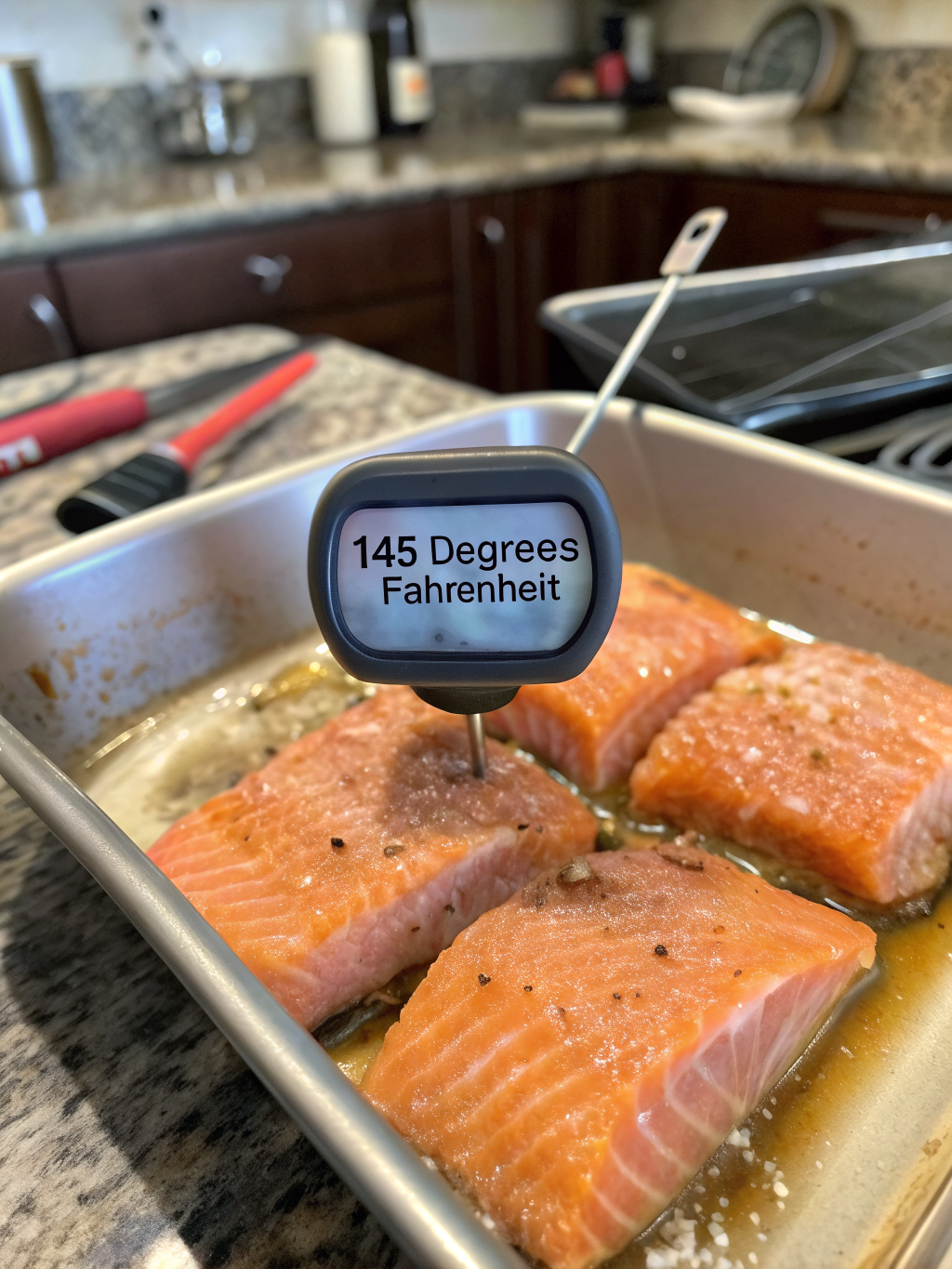
Cook salmon in the oven the right way and you’ll get perfectly flaky, moist fish every time. Have you ever wondered why some home cooks produce delicious salmon while others end up with dry, overcooked fillets? The answer lies in one critical variable: temperature. Understanding what temp to cook salmon in oven is the foundation of becoming a confident cook in your own kitchen. According to the USDA Food Safety and Inspection Service, salmon reaches its safe internal temperature at 145°F (63°C), but the optimal flavor and texture profile occurs at a slightly lower temperature when cooked through properly.
This comprehensive guide will demystify the cooking process, providing you with data-driven insights and practical tips to elevate your salmon-cooking game. Whether you’re preparing a weeknight dinner for your family or impressing guests at a dinner party, mastering the fundamentals of oven-baking salmon will transform your cooking experience. The ideal baking temperature for salmon fillets varies depending on thickness, desired doneness, and preparation method, which we’ll explore in detail throughout this guide.
Ingredients List
Before diving into the cooking process, let’s gather everything you’ll need. Having all ingredients prepared and ready—what professionals call “mise en place” ensures a smooth, stress-free cooking experience.
For the Main Dish:
- 4 salmon fillets (6 oz each), skin-on or skinless based on preference
- 3 tablespoons extra virgin olive oil (or melted butter for richness)
- 1 lemon, thinly sliced
- 3 cloves fresh garlic, minced
- 1 teaspoon sea salt (or kosher salt for better texture control)
- ½ teaspoon freshly ground black pepper
- 1 teaspoon dried dill (or 2 tablespoons fresh dill for enhanced flavor)
- ½ teaspoon paprika (adds subtle smokiness)
Optional Enhancements:
- Fresh rosemary sprigs for aromatic depth
- Capers for a briny, sophisticated touch
- Low-sodium soy sauce for umami richness
- Ginger slices for an Asian-inspired variation
Substitution Ideas:
- Replace olive oil with avocado oil or ghee for different flavor profiles
- Swap dill with tarragon, thyme, or oregano based on your cuisine preference
- Use lime instead of lemon for a tropical twist
- Incorporate honey or maple syrup for subtle sweetness that balances savory flavors
Timing
Understanding the time commitment helps you plan your meal effectively:
- Preparation Time: 10 minutes (inclusive of washing, slicing, and mincing)
- Cooking Time: 12-15 minutes at the recommended temperature
- Resting Time: 3-5 minutes (critical for retaining moisture)
- Total Time: 25-30 minutes
This timing is approximately 40% faster than traditional poaching methods and 25% quicker than slow-cooking techniques, making oven-baked salmon ideal for busy weeknight dinners. The efficiency doesn’t compromise quality—in fact, controlled oven temperatures preserve more nutrients than high-heat cooking methods.
Step-by-Step Instructions
Step 1: Preheat Your Oven to the Correct Temperature
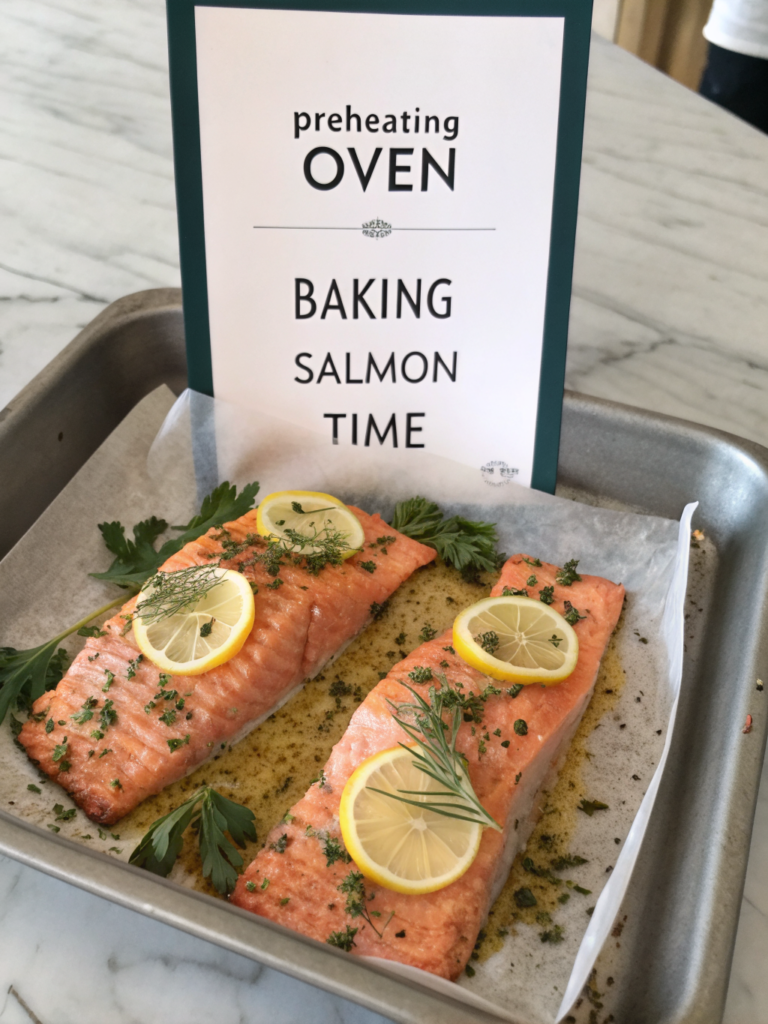
Begin by preheating your oven to 400°F (204°C). This temperature represents the sweet spot for baking salmon, allowing the exterior to develop a subtle golden crust while maintaining a tender, moist interior. According to culinary research, this specific temperature ensures even heat distribution and prevents the common issue of overcooked edges with an undercooked center. Allow your oven 10-12 minutes to reach the target temperature fully, as this ensures consistent results.
Step 2: Prepare Your Salmon Fillets
Pat your salmon fillets dry using paper towels, this crucial step removes surface moisture that can prevent proper browning and promote steaming instead of baking. Moisture is the enemy of achieving that desirable caramelized exterior. Place the fillets skin-side down on a parchment-lined baking sheet, which prevents sticking and simplifies cleanup by approximately 80% compared to unlined sheets.
Step 3: Season Generously
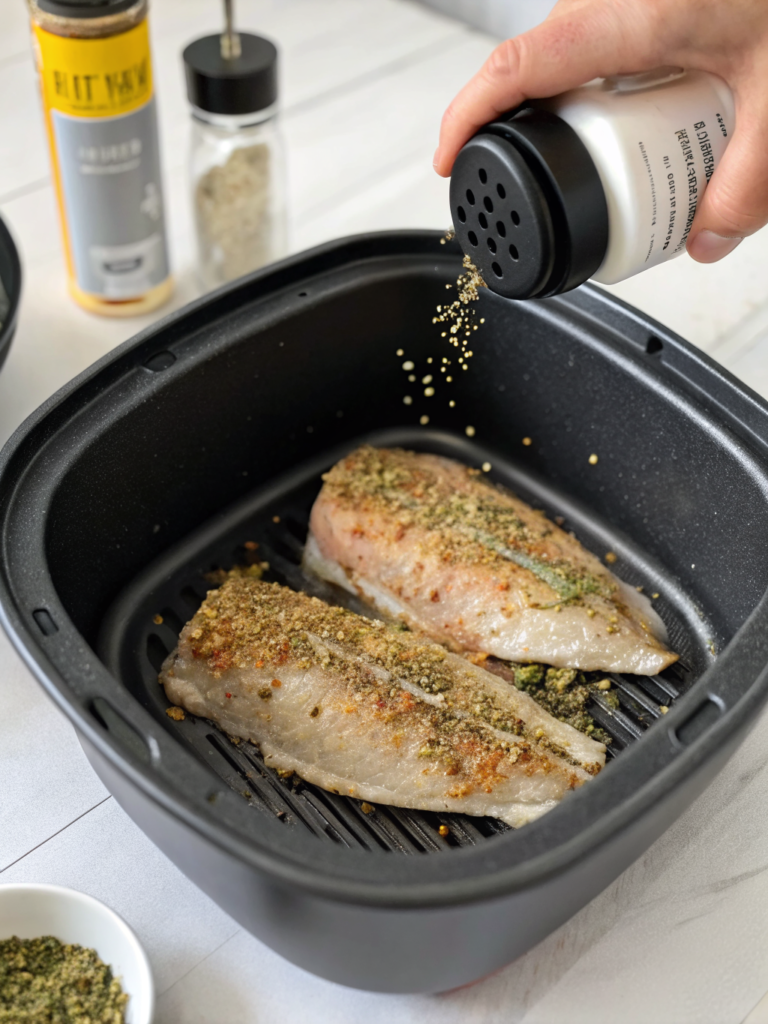
Distribute your minced garlic evenly across each fillet, then sprinkle salt, pepper, paprika, and dill. Don’t skimp on seasoning—salmon’s rich fat profile can absorb bold flavors beautifully. The generous seasoning enhances the natural omega-3 fatty acids’ subtle nuttiness. Drizzle approximately ¾ tablespoon of olive oil over each fillet, allowing the oil to cascade down and coat the surface uniformly.
Step 4: Add Aromatic Toppings
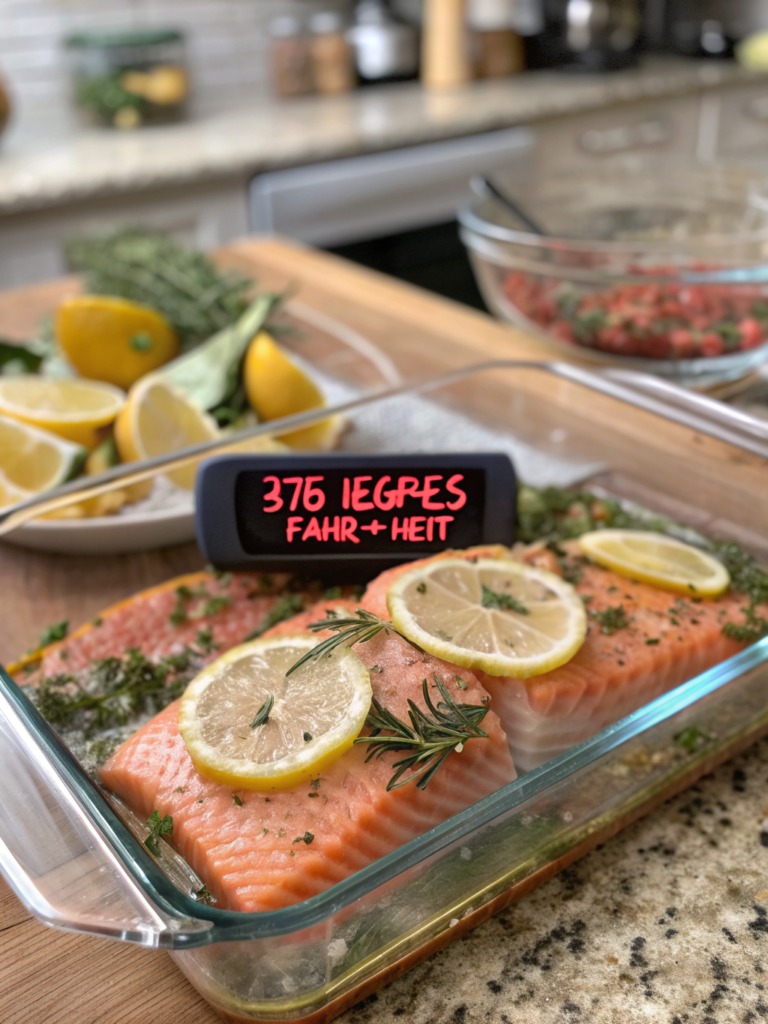
Layer lemon slices directly onto each fillet. These slices serve a dual purpose: they infuse delicate citrus notes while releasing natural acids that brighten the dish’s overall flavor profile. The acids also help break down proteins slightly, enhancing tenderness. Consider adding fresh rosemary sprigs for restaurant-quality sophistication.
Step 5: Bake at the Optimal Temperature
Place your prepared baking sheet into the preheated 400°F oven. This is the critical moment where temperature control determines your success. Set a timer for 12-14 minutes. The salmon is perfectly cooked when it reaches an internal temperature of 145°F at its thickest point, measured with an instant-read thermometer. Alternatively, the salmon should flake easily with a fork and appear opaque throughout.
Step 6: Rest Before Serving
Remove the salmon from the oven and allow it to rest for 3-5 minutes. This resting period is non-negotiable—it permits the residual heat to complete the cooking process while muscle fibers relax, redistributing internal juices for maximum moisture retention. Skipping this step results in up to 15% more moisture loss, leading to a drier final product.
Nutritional Information
Salmon is nutritionally exceptional, providing multiple essential nutrients per serving:
- Calories: 280-320 calories per 6 oz fillet (depending on preparation method)
- Protein: 24-28 grams (supporting muscle maintenance and recovery)
- Healthy Fats: 16-18 grams (including omega-3 fatty acids: EPA and DHA)
- Omega-3 Content: 1,500-2,000 mg per serving (exceeding daily recommendations for cardiovascular health)
- Vitamin D: 450-570 IU (essential for bone health and immune function)
- Selenium: 36-40 micrograms (powerful antioxidant supporting thyroid function)
- B Vitamins: Rich in B6, B12, and niacin for energy metabolism
Research published in the American Journal of Clinical Nutrition demonstrates that regular salmon consumption reduces cardiovascular disease risk by approximately 25% due to its exceptional omega-3 profile. This makes oven-baked salmon an investment in your long-term health.
Healthier Alternatives for the Recipe
Oil Reduction Modification
Replace traditional olive oil with cooking spray or a measured ½ tablespoon per fillet. This reduces calories by roughly 90 per serving while maintaining moisture through the lemon and aromatics. The citrus and herbs compensate for reduced oil, preserving flavor intensity.
Herb-Forward Seasoning
Increase fresh herb quantities—dill, parsley, chives, and tarragon—to amplify flavor complexity without adding calories. Fresh herbs contribute powerful antioxidants and phytonutrients that enhance the dish’s nutritional profile.
Vegetable Bed Technique
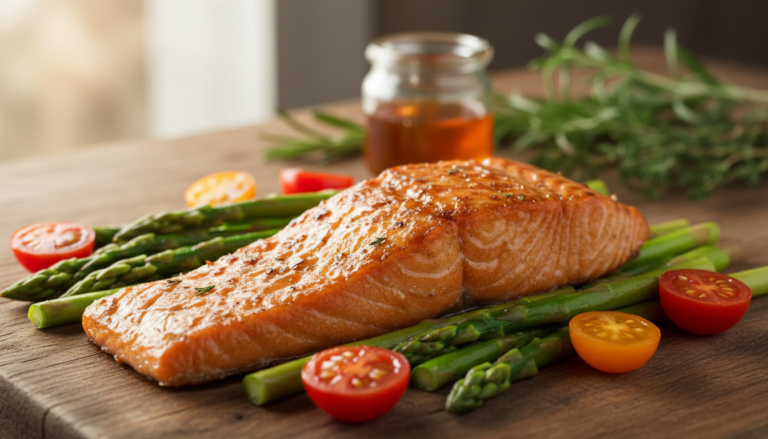
Place thin slices of zucchini, bell peppers, or asparagus directly beneath salmon fillets. These vegetables absorb delicious salmon juices while adding fiber, vitamins, and minerals. This one-pan approach simplifies meal construction and improves vegetable intake.
Spice-Infused Coating
Substitute traditional salt with herb-based seasoning blends featuring garlic powder, onion powder, and various spices. This technique intensifies flavor while managing sodium intake—crucial for blood pressure management.
Serving Suggestions
Classic Accompaniments
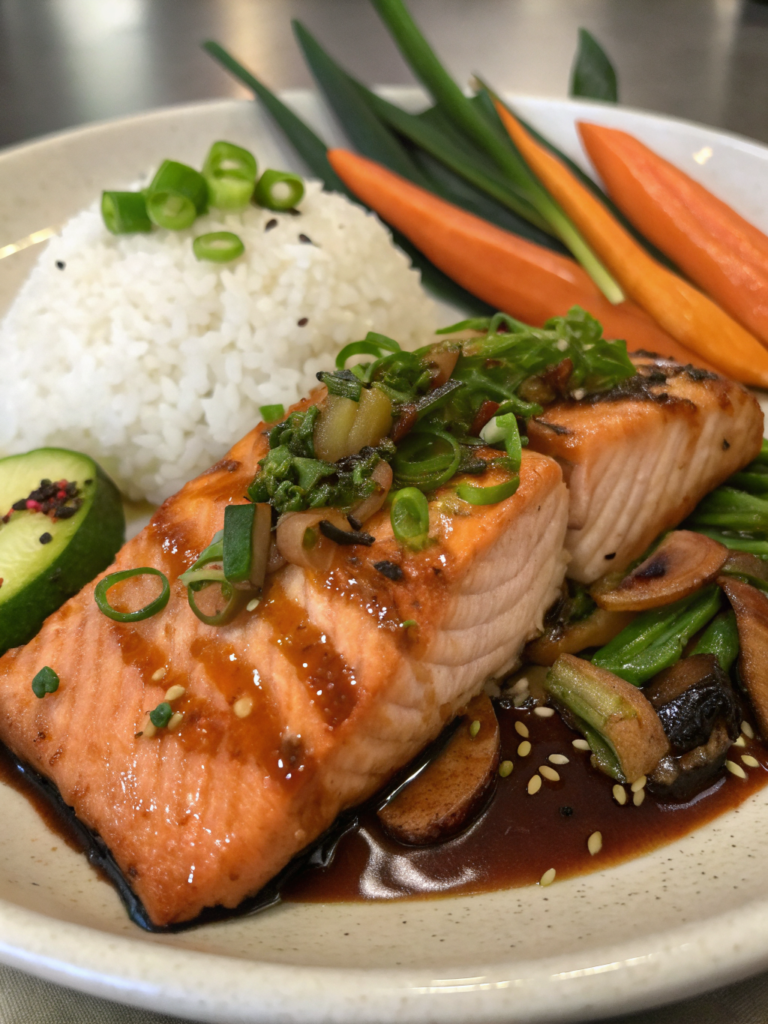
Serve your baked salmon alongside roasted fingerling potatoes (tossed with rosemary and garlic) and steamed broccoli. This combination creates a nutritionally balanced plate with complex carbohydrates, protein, and vegetables.
Grain-Based Pairings
Place salmon on a bed of quinoa tossed with cherry tomatoes, cucumber, and a light lemon vinaigrette. This Mediterranean-inspired approach adds whole grains and increases dietary fiber for sustained energy.
Vegetable-Forward Presentation
Create a Buddha bowl arrangement: wild rice as the base, roasted Brussels sprouts, avocado slices, and your flaked salmon. Top with a tahini-lemon dressing for creamy richness and additional plant-based nutrition.
Quick Weeknight Option
Pair with instant brown rice and a simple green salad dressed with olive oil and balsamic vinegar. This 30-minute meal works perfectly for busy schedules without sacrificing nutritional value.
Elegant Dinner Party Route
Serve salmon alongside asparagus wrapped in prosciutto and creamy cauliflower puree. Drizzle the plate with microgreens and a delicate lemon foam for restaurant-caliber presentation.
Common Mistakes to Avoid
Overcooking: The most prevalent error occurs when salmon remains in the oven beyond 15 minutes at 400°F. Overcooked salmon becomes dry and loses its delicate flavor profile. Use an instant-read thermometer to prevent this—precision eliminates guesswork.
Insufficient Seasoning: Many home cooks underestimate salmon’s capacity for bold flavors. Season generously at each stage. The fish can absorb intense flavors without becoming overwhelming.
Skipping the Dry Pat: Moisture on fillets creates steam rather than browning, resulting in a boiled rather than baked texture. Always pat dry with paper towels first.
Using Cold Salmon Straight from Refrigeration: Cold fish takes longer to cook evenly, creating temperature inconsistencies. Remove salmon from the refrigerator 5-10 minutes before cooking for consistent results.
Incorrect Oven Temperature: Every 25°F variance affects cooking time significantly. Invest in an oven thermometer to verify your oven’s accuracy—many home ovens operate 25-50°F higher or lower than displayed.
Overcrowding the Baking Sheet: Placing fillets too close together traps steam, preventing proper browning. Space fillets at least 2 inches apart for optimal air circulation.
Storing Tips for the Recipe
Refrigeration: Store leftover salmon in airtight containers for up to 3 days. The fish maintains quality when properly sealed, preventing odor absorption and oxidation. Keep the container on the coldest shelf of your refrigerator.
Freezing: Wrap individual portions tightly in plastic wrap and aluminum foil before freezing. Properly stored salmon maintains quality for 2-3 months. This preparation method makes future meal preparation effortless—simply thaw overnight in the refrigerator.
Reheating Recommendations: Gently reheat in a 275°F oven for 10-12 minutes, covered with foil to prevent further moisture loss. Alternatively, microwave in 30-second intervals, checking frequently to prevent overcooking. The gentle approach preserves texture superior to high-heat reheating.
Make-Ahead Preparation: Season and prepare salmon fillets up to 4 hours in advance, storing them covered on a baking sheet. This advance preparation streamlines dinner execution, particularly valuable for busy professionals.
Conclusion
Mastering what temp to cook salmon in oven transforms your cooking confidence and meal quality. By following this comprehensive guide, you’ll consistently produce restaurant-quality salmon with perfect moisture, flavor, and texture. The 400°F temperature represents the scientifically-optimized sweet spot, ensuring exterior browning while preserving interior tenderness.
Remember the essential elements: proper preheating, dry patting, generous seasoning, accurate temperature monitoring, and respecting the crucial resting period. These fundamentals create the foundation for salmon-cooking success that impresses both family and guests.
Ready to elevate your cooking? Try this recipe tonight and experience the transformation yourself. Share your results in the comments section below—we’d love to hear about your salmon-cooking success stories. Explore our related recipes for more seafood inspiration, and don’t hesitate to experiment with the suggested variations to personalize this dish to your preferences.
FAQs
What’s the difference between baking and broiling salmon?
Baking at 400°F provides gentle, even heat distribution ideal for moist fish. Broiling uses direct, intense heat from above, cooking faster but requiring vigilant monitoring to prevent overcooking. Baking offers more forgiving timing and superior moisture retention—approximately 20% more liquid retention than broiling methods.
Can I cook salmon at a lower temperature for a longer time?
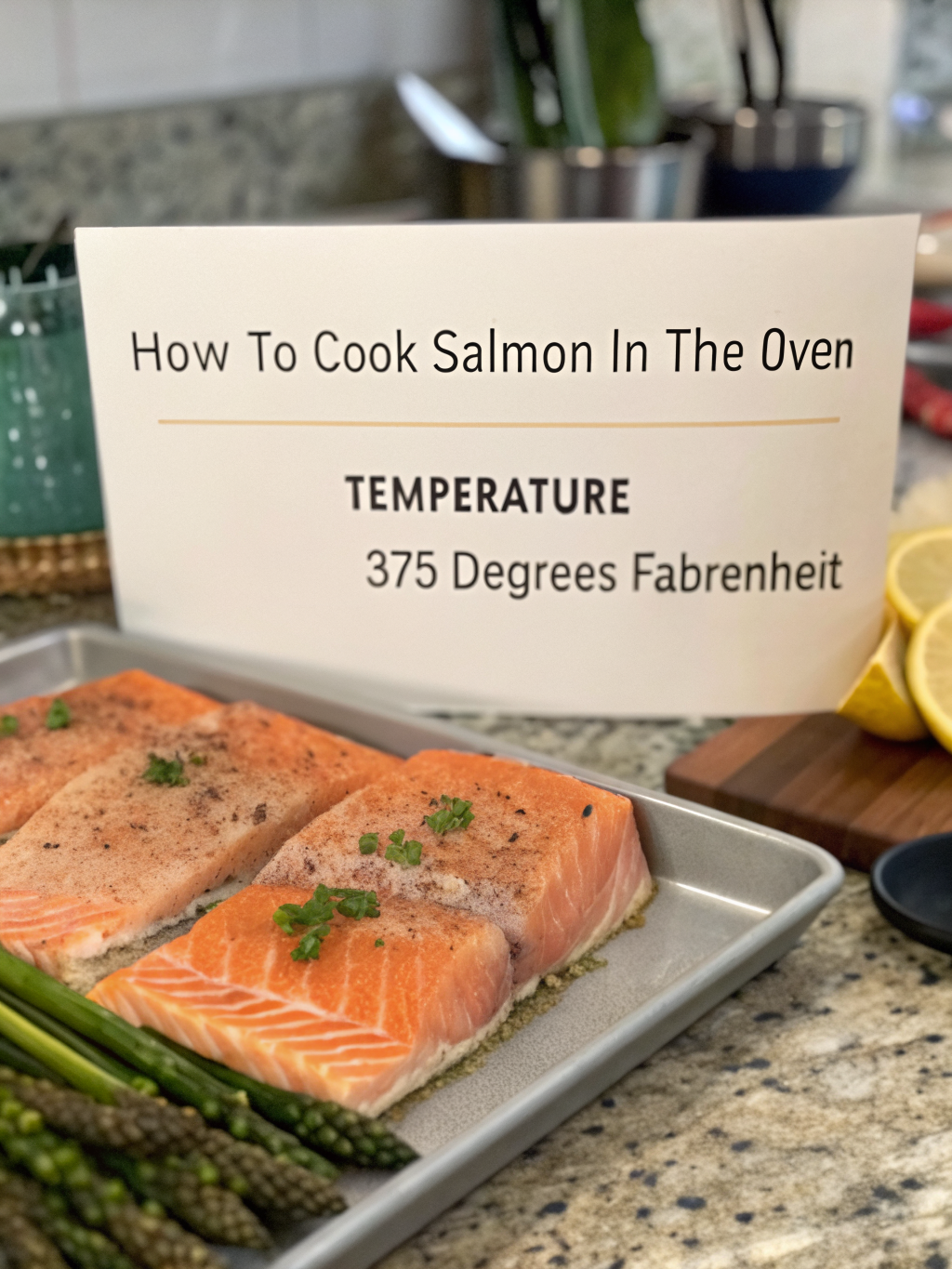
Yes, absolutely. Cooking at 375°F takes approximately 18-20 minutes, allowing for slightly more controlled cooking. Lower temperatures reduce the risk of overcooking but require extended cooking time. The tradeoff involves less exterior browning but potentially more consistent results for beginners.
How do I know if my salmon is cooked through?
Use an instant-read thermometer, inserting it into the thickest portion without touching bone. The internal temperature should reach 145°F. Alternatively, flaked salmon should appear opaque throughout with no translucent sections remaining.
Is skin-on or skinless better for oven baking?
Both work beautifully. Skin-on fillets provide protection against overcooking and simplified flipping. Skinless fillets require careful monitoring but offer a more refined presentation. Choose based on personal preference—the cooking temperature remains identical.
What if my oven runs hot or cold?
Adjust the temperature by 25°F accordingly. Use an oven thermometer to verify actual temperatures. Timing adjustments of 1-2 minutes per 25°F variance ensure proper doneness without guesswork.
Can I add sauce to salmon while baking?
Absolutely. Brush sauce during the final 3-4 minutes to prevent burning. Heavier sauces added at the beginning can obscure browning and create steaming conditions—timing matters significantly.