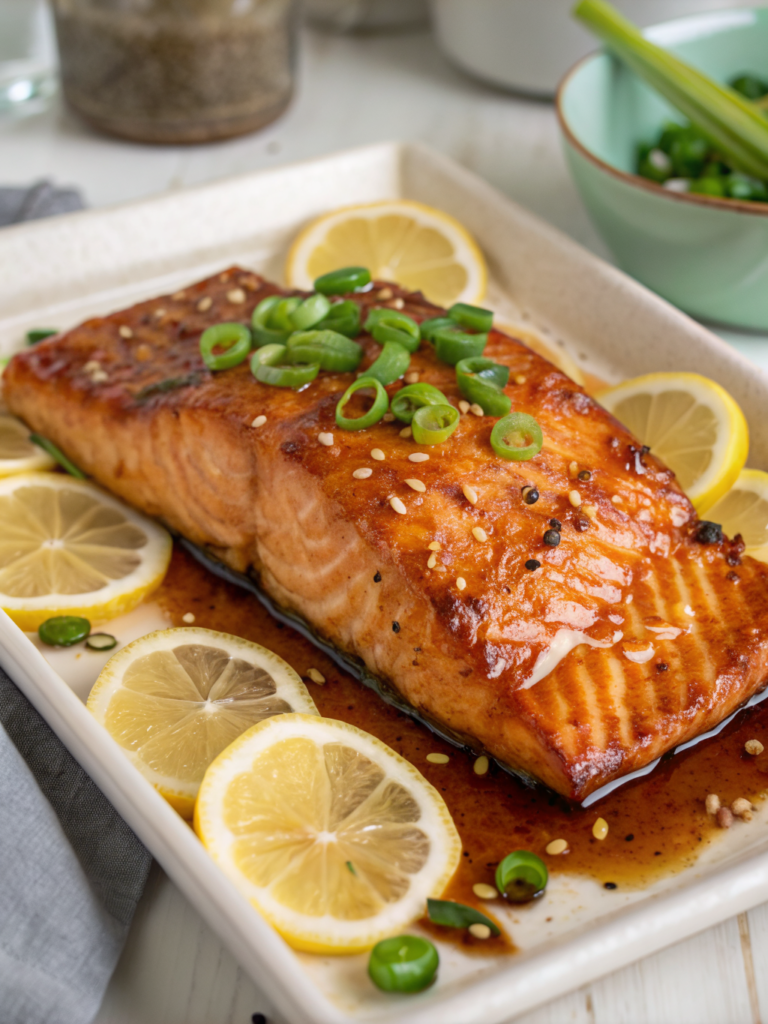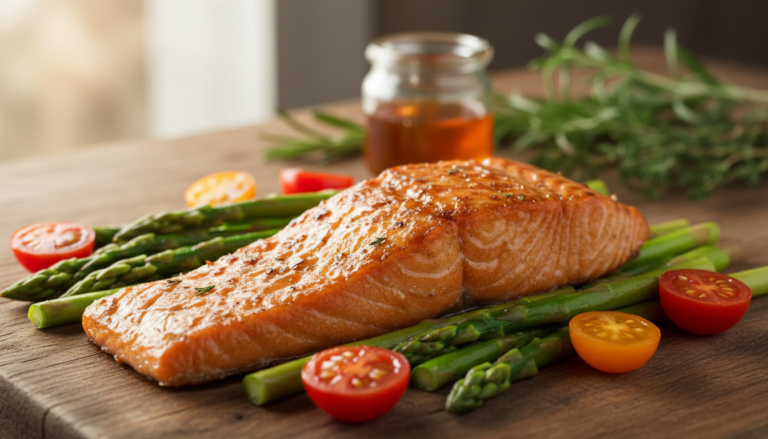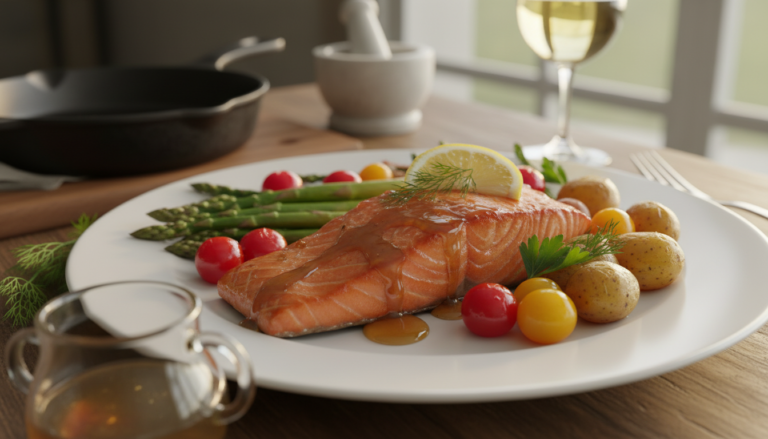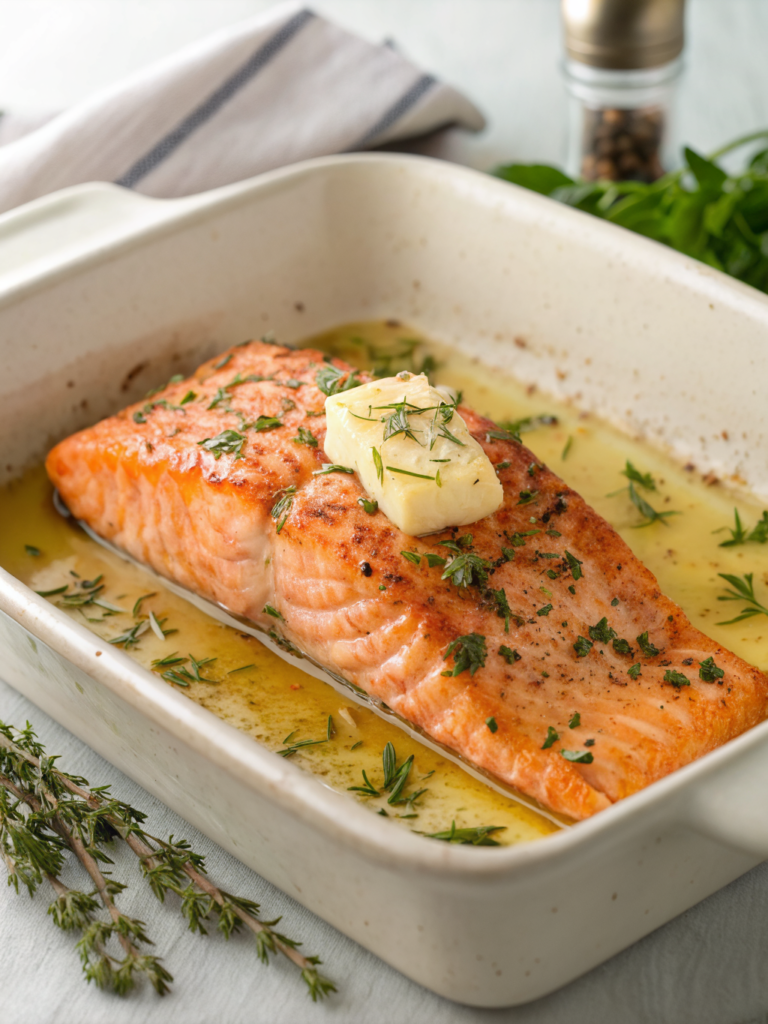
What Temp to Cook Salmon in Oven (Perfect Results Every Time)
What temp to cook salmon in oven is one of the most common questions home cooks ask. There’s something special about pulling a perfectly cooked salmon fillet from the oven. It flakes apart easily and smells amazing. Getting it right isn’t luck, it’s all about choosing the right temperature and cooking time.
Cooking salmon at home can seem scary. You might worry about it drying out or being undercooked. But, it’s actually quite simple. Once you know the basics, you can cook like a pro.
This guide will teach you everything you need to know. You’ll learn why temperature is so important. You’ll find out the best heat settings and get a simple recipe to try right away. Whether you’re new to cooking or want to improve, this article has what you need.
Table of Contents
Complete Baked Salmon Recipe
Prep Time: 10 minutes
Cook Time: 15 minutes
Total Time: 25 minutes
Servings: 4
Ingredients:
Four salmon fillets (6 ounces each)
2 tablespoons olive oil
1 teaspoon sea salt
1/2 teaspoon black pepper
1 lemon, sliced
2 cloves garlic, minced
1 tablespoon fresh dill
Step-by-Step Instructions:
First, preheat your oven to 375°F. Line a baking sheet with parchment paper. This makes cleanup easier and helps prevent sticking.
Next, place your salmon fillets on the prepared baking sheet. Pat them dry with paper towels. Damp fish won’t brown as nicely.
Drizzle olive oil over each fillet. Sprinkle with salt, pepper, and minced garlic. The garlic will infuse the fish with extra flavor as it bakes.
Arrange lemon slices on top of each fillet. The citrus juice will keep the fish moist during cooking. Sprinkle fresh dill over everything.
Slide the baking sheet into your preheated oven. Bake for 12 to 15 minutes. The exact time depends on the thickness of your fillets.
Check for doneness by gently flaking the salmon with a fork. The flesh should break apart easily and look opaque.
Remove from the oven and let cool for 2 minutes before serving.
Nutrition Facts Per Serving:
Calories: 280
Protein: 34 grams
Fat: 15 grams
Carbohydrates: 2 grams
Fiber: 0 grams
Sodium: 520 milligrams
Expert Tips for Success:
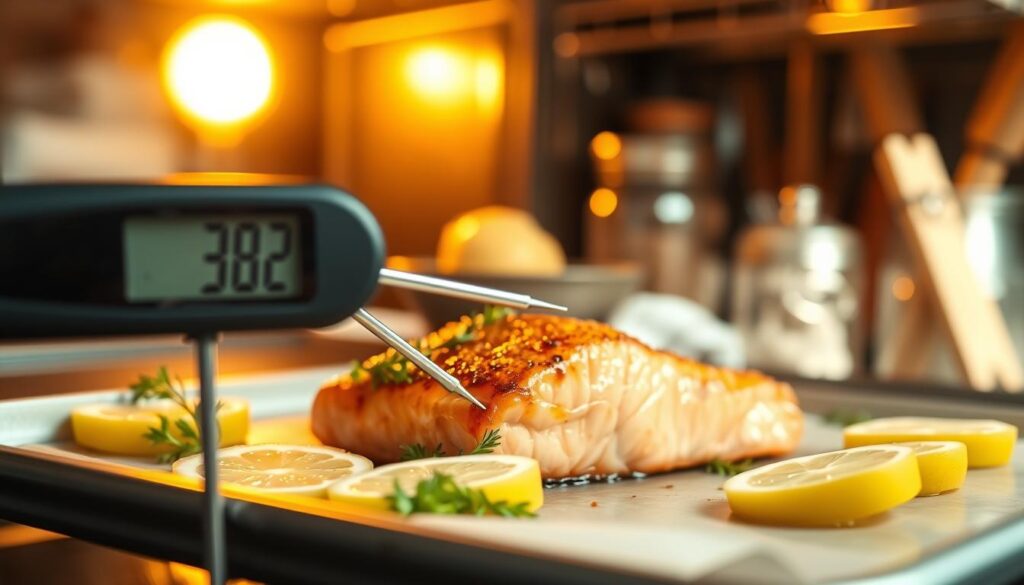
Use a food thermometer for guaranteed results. Insert it into the thickest part of the salmon. The internal temperature should read 145°F.
Don’t skip the parchment paper. It prevents the skin from sticking and makes cleanup fast.
Buy salmon from reputable fishmongers like Whole Foods or your local fish counter. Fresh salmon cooks better than frozen.
Pat your salmon dry before seasoning. This step matters more than many people realize.
Keep your oven door closed while baking. Opening it releases heat and extends cooking time.
Let your salmon rest for a minute after cooking. This keeps the juices inside the fish.
Understanding Optimal Cooking Temperatures for Salmon
Getting the salmon cooking temperature right is key. It makes all the difference between a dry, rubbery fillet and a moist, tender masterpiece. You need to know the ideal oven temperature and the fish’s internal temperature to get it right every time.
Importance of Cooking Temperature
Temperature control is the secret to cooking salmon. The right heat makes the proteins denature at the perfect pace. This results in a flaky texture you’ll love.
Too much heat, and the proteins squeeze out moisture. This leaves you with a dry piece of fish.
Correct temperature also ensures food safety. It kills harmful bacteria. Your family stays safe when you follow the science of cooking temperatures.
The right oven temperature also enhances flavors. Gentle heat brings out the fish’s sweetness and lets seasonings shine without burning.
Choosing the Right Internal Temperature
There are choices for internal salmon temperature. The USDA says to cook salmon to 145°F for safety. This ensures fully cooked fish.
Many chefs prefer 125°F to 130°F. This keeps the salmon tender and slightly translucent. It continues to cook a bit as it rests, reaching a perfect medium rare.
- 145°F: Fully cooked, opaque throughout, safe standard
- 130°F to 135°F: Medium rare, tender with slight translucency
- 120°F to 125°F: Medium, very moist and delicate
Your preference decides the target temperature. A meat thermometer makes it easy to achieve your desired doneness when baking salmon.
Recommended Baking Temperatures for Salmon
Choosing the right baking salmon temperature is key. It makes all the difference between a dry, overcooked fillet and a moist, perfectly cooked meal. Your oven temperature affects how fast the heat penetrates the fish and how the outside browns. The best temperature for oven-baked salmon varies based on fillet thickness, kitchen setup, and desired results. Two temperatures are the most reliable for home cooks.
350°F: A Balanced Approach
Baking salmon at 350°F is a gentle, forgiving method. It works well in many situations. This moderate temperature allows the fish to cook evenly without drying out. You have more time before overcooking becomes a problem, which is great when you’re busy.
This temperature is ideal for:
- Thicker fillets that need extra time to cook through
- Whole salmon sides or larger cuts
- When you’re cooking multiple dishes at once
- Fillets wrapped in foil or parchment paper
At 350°F, most standard fillets take 12 to 15 minutes to cook right. The slower cooking keeps the flesh tender and moist.
375°F: For Flaky Perfection
Many home cooks prefer 375°F for quick, beautiful results. This slightly higher temperature is perfect for standard-sized fillets around one inch thick. Your salmon will have a lightly caramelized surface while staying tender and flaky inside.
Choose 375°F when you want:
- Faster cooking times (10 to 12 minutes)
- A slightly crispy, golden exterior
- Standard one-inch thick fillets
- Restaurant-quality presentation
| Temperature | Best For | Cooking Time | Results |
|---|---|---|---|
| 350°F | Thick fillets, whole sides, multitasking | 12-15 minutes | Very moist, tender, forgiving |
| 375°F | Standard fillets (1 inch), quick meals | 10-12 minutes | Flaky, light caramelization, crispy edges |
Both temperatures offer excellent results. Your choice depends on your fillet size and how much time you have in the kitchen.
Oven Cooking Methods for Salmon
Your oven can cook salmon in several ways. Each method gives you different results. Knowing your options helps you choose the best one for your meal. You can bake, broil, or use a convection oven for faster cooking.
The method you choose depends on your recipe and schedule. Each method has its own benefits.
Baking vs. Broiling
Baking and broiling are two different cooking techniques. Baking uses indirect heat that surrounds your salmon. This cooks it evenly. Broiling uses direct heat from above, searing the top while keeping the inside tender.
Baking is great for even cooking. Set your oven to 350°F to 375°F. Broiling is perfect for a quick, crispy top. You can bake first and then broil for a golden crust.
- Choose baking for even cooking and moist, flaky salmon
- Choose broiling for quick meals and crispy tops
- Combine both for restaurant-quality results
Using a Convection Oven
Convection ovens cook faster and brown more evenly. They circulate hot air around your food. Adjust your temperature settings correctly for best results.
Lower your oven temperature by 25°F for convection. For example, use 350°F instead of 375°F. Cooking time will also be about 25 percent less. Your salmon will cook faster and stay moist.
| Oven Type | Temperature Setting | Cooking Time Adjustment | Best For |
|---|---|---|---|
| Standard (Conventional) | 350°F to 375°F | Normal time | Even, gentle cooking |
| Convection | 325°F to 350°F | Reduce by 25% | Faster cooking with even browning |
Convection ovens are great for salmon. They offer even browning and keep the inside moist. The air circulation prevents hot spots. This method is perfect for whole fillets or multiple pieces.
Preparing Salmon for Baking
Getting your salmon ready for the oven is key. The right prep ensures a delicious, evenly cooked meal. Before cooking, choose the best salmon and season it well. This step is quick but greatly impacts the taste.
Selecting the Right Cut
At the fish counter, pick salmon fillets that feel firm. They should be bright pink or orange. Fresh salmon smells clean and ocean-like, not fishy.
Center-cut fillets are best for baking because they cook evenly. Plan for 4 to 6 ounces of salmon per person. Choose between wild-caught and farm-raised based on your preference and what’s available.
Check the skin if you prefer skin-on salmon. It should be shiny and moist. Avoid fillets with loose scales or damaged skin.
Seasoning Tips for Flavor
Simple seasonings are best for salmon. A light sprinkle of salt and black pepper enhances the natural taste. Fresh lemon juice and dill are classic choices.
For more adventurous flavors, try these:
- Garlic powder, paprika, and fresh parsley
- Italian herbs with crushed red pepper
- Cumin and lime juice for a Southwest twist
- Thyme, rosemary, and minced garlic
Season your salmon right before baking for the crispiest skin. Salt can draw out moisture if applied too early. Use about one-quarter teaspoon of salt per fillet. A light hand with seasoning lets the salmon’s flavor shine.
Cooking Time Based on Thickness
To cook salmon just right, know your fillet’s thickness. The thickness determines the baking time. This way, you’ll always hit the right temperature, making your salmon moist and tender.
Start by measuring your fillet accurately. Knowing the thickness helps you use a simple cooking time guide. This ensures consistent results every time.
How to Measure Salmon Fillets
Measuring your salmon fillet is quick. Use a ruler or your thumb as a guide. An adult thumb is about one inch wide, matching most salmon fillets.
Find the thickest part of your fillet for the measurement. Place your ruler flat against the salmon. Record the thickness in inches. If your fillet varies in thickness, measure at the thickest point.
Accurate measurements are key. They help you cook your salmon perfectly, avoiding overcooked edges and undercooked centers.
General Cooking Time Guide
Bake your salmon for 4 to 6 minutes per half-inch of thickness at 375°F. This ensures a flaky texture.
Here’s a guide based on your fillet’s thickness:
| Fillet Thickness | Cooking Time at 375°F | Cooking Time at 350°F |
|---|---|---|
| ½ inch | 4–6 minutes | 8–10 minutes |
| ¾ inch | 7–9 minutes | 10–13 minutes |
| 1 inch | 10–15 minutes | 13–18 minutes |
| 1¼ inches | 13–18 minutes | 16–21 minutes |
| 1½ inches | 15–20 minutes | 18–24 minutes |
These times assume your salmon is at room temperature. Cold salmon may need a few more minutes. The cooking temperature is the same for 350°F or 375°F. Start checking at the lower end of the time range. Salmon cooks faster than you think.
- Thin tail pieces (½ inch): 4–6 minutes at 375°F
- Standard center cuts (1 inch): 10–15 minutes at 375°F
- Thick cuts (1½ inches): 15–20 minutes at 375°F
Your salmon is done when it’s opaque and flakes with a fork. The internal temperature should be 145°F for safety. With this guide, you’ll cook salmon perfectly every time.
Using a Food Thermometer
A food thermometer is key to cooking perfect salmon every time. It helps you know when your fish is done. Color and flaking can be tricky, but a thermometer makes it easy.
Even pros use thermometers for salmon. It’s because salmon can quickly go from perfect to overdone. A good thermometer costs between $10 and $30. It saves your expensive salmon and keeps your family safe.
Why It’s Essential for Salmon
Salmon is delicate and can easily become overcooked. Knowing the right temperature and using a thermometer boosts your confidence. It prevents your salmon from becoming dry and rubbery.
- Eliminates guesswork from cooking
- Prevents overcooking expensive fish
- Ensures food safety standards
- Builds your cooking confidence
- Takes just seconds to use
Ideal Internal Temperature
The USDA says to cook salmon to 145°F for safety. But many like it cooked lower for taste and texture. Here’s what you need to know:
| Internal Temperature | Doneness Level | Center Appearance | Best For |
|---|---|---|---|
| 120-125°F | Very Rare | Translucent and soft | Maximum moisture and tenderness |
| 130-135°F | Medium-Rare | Slightly opaque, moist | Balance between texture and safety |
| 140-145°F | Medium | Mostly opaque | USDA recommended safe temperature |
| 150°F and above | Well-Done | Fully opaque | Firm texture, less moisture |
To use your thermometer right, put it in the thickest part of the salmon. Make sure it’s not touching the pan. This gives a false reading. Insert it horizontally from the side for the best reading.
When you hit your target temperature, take the salmon out. Remember, it will cook a bit more after you remove it. So, pull it at 120-130°F for a bit more doneness at the table.
Enhancing Flavor with Marinades
Marinades turn your salmon into a feast for the taste buds. They add depth, moisture, and exciting flavors. The right marinade can make your baked salmon unforgettable.
Marinating is quick but packs a big punch in flavor. It’s a simple way to elevate your salmon dinner.
Popular Marinade Recipes
You can whip up tasty marinades with common ingredients. Each recipe offers a unique flavor to your salmon.
- Teriyaki Marinade: Mix one-third cup soy sauce, two tablespoons ginger (minced), three garlic cloves (minced), and two tablespoons honey. This creates a sweet and savory Asian-inspired flavor.
- Mediterranean Marinade: Combine one-quarter cup olive oil, juice from two lemons, four garlic cloves (minced), and one tablespoon dried oregano. This brings fresh, bright tastes to your salmon.
- Maple-Mustard Marinade: Blend one-quarter cup maple syrup, three tablespoons Dijon mustard, two tablespoons soy sauce, and one tablespoon apple cider vinegar. This gives your salmon a sweet and tangy kick.
Marinating Time Guidelines
Timing is key when marinating salmon. Its delicate flesh absorbs flavors quickly. Light marinades need just 15 to 30 minutes. Acidic marinades with citrus or vinegar should not sit longer than one hour.
Never marinate salmon overnight like you might with chicken or beef. The acid can make the fish mushy.
Put your salmon in a zip-top bag with the marinade for even coverage. Pat the salmon dry with paper towels before baking. This helps create a nice crust and locks in the flavors.
Cooking Salmon with Skin On vs. Skin Off
When you buy salmon, you must decide whether to cook it with the skin on or off. Both ways are good, depending on what you like and how you cook. Knowing the differences helps you bake salmon better every time.
Benefits of Keeping the Skin
The skin of salmon does more than look good. It protects the fish from sticking to the baking sheet. This keeps the meat soft and juicy.
Salmon skin is full of omega-3 fatty acids, which are good for you. Cooking the skin right makes it crispy and tasty.
To get crispy skin, follow these steps:
- Pat the salmon skin dry with paper towels before baking
- Season the skin with salt and spices
- Place the fillet skin-side down on a preheated baking sheet
- Bake at 375°F for 12 to 15 minutes, depending on thickness
- For extra crispiness, flip the salmon skin-side up for the final 2 minutes of cooking
Tips for Cooking Skinless Salmon
Skinless salmon needs extra care because it doesn’t have the skin’s protection. It can stick to pans or baking sheets more easily.
To cook skinless salmon well, use parchment paper or brush the surface with oil. This stops sticking and makes cleaning up easier.
Skinless fillets cook faster than those with skin. Check them at 10 to 12 minutes at 375°F. Brush the top with melted butter or olive oil halfway through to keep it moist and flavorful.
If you prefer skinless salmon but want protection during cooking, remove the skin after baking. Let the salmon rest for a minute, then use a thin spatula to separate the skin from the flesh.
| Cooking Method | Baking Temperature | Cooking Time | Best For | Key Tip |
|---|---|---|---|---|
| Skin-On Salmon | 375°F | 12-15 minutes | Moist, flavorful results with crispy skin | Pat skin dry and place skin-side down |
| Skinless Salmon | 375°F | 10-12 minutes | Quick cooking with minimal sticking | Use parchment paper and brush with oil |
Whether you choose skin-on or skinless salmon, you now know how to cook it perfectly. Both methods can make delicious results if you follow the right steps.
Baking Accessories and Tools
The right tools make baking salmon easier and more enjoyable. Your equipment choices affect how your salmon turns out and how much work you put in afterward. Investing in quality baking accessories helps you achieve consistent results every time you cook salmon.
Recommended Baking Sheets and Trays
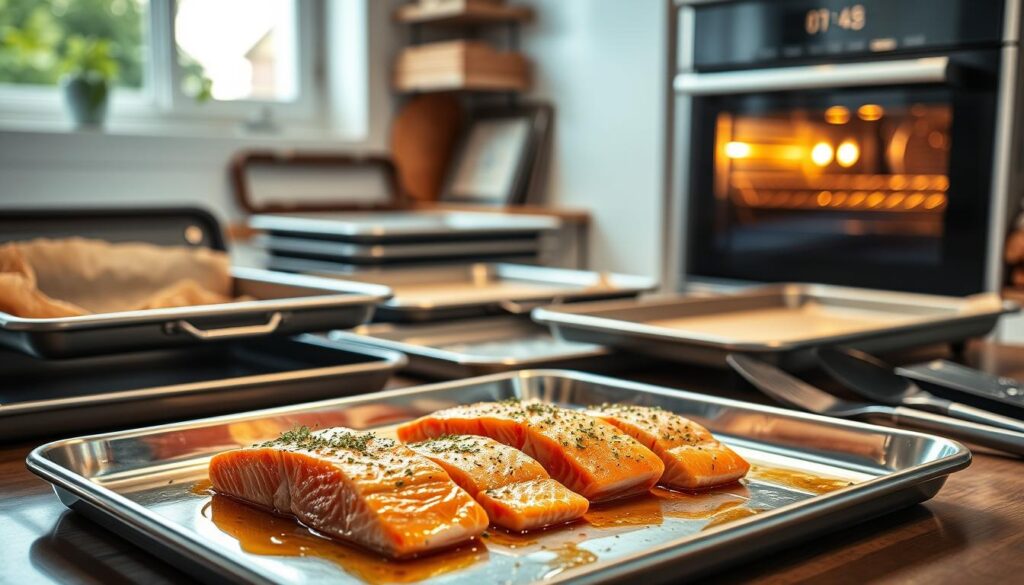
Heavy-gauge rimmed baking sheets are your best choice for baking salmon. These sturdy pans won’t warp when exposed to high heat and feature raised edges that catch any juices or oils. A standard 13×18-inch half-sheet pan fits four to six salmon fillets comfortably with room for vegetables on the sides.
Light-colored pans work better than dark ones. Dark baking sheets absorb more heat and can cause the bottom of your salmon to brown too quickly or burn. Choose aluminum or stainless steel options for even heat distribution.
You also have alternative options to consider:
- Glass baking dishes work well but require slightly lower temperatures and longer cooking times
- Specialized fish baking pans feature raised ridges that keep salmon elevated above excess moisture
- Cast iron skillets provide excellent heat retention for crispy skin
Importance of Parchment Paper
Parchment paper transforms your baking experience. It prevents sticking without requiring extra oil or butter, making cleanup quick and simple. Your salmon releases easily without sticking to the pan or losing its skin.
Parchment paper lets you create parchment packets, also called en papillote cooking. This method steams your salmon in its own juices while trapping flavors and keeping the fish moist. You simply fold the parchment around your salmon and seasonings, then bake.
| Tool Option | Best For | Temperature Adjustment | Cleanup Difficulty |
|---|---|---|---|
| Parchment Paper | Easy cooking and maximum flavor | No adjustment needed | Very easy |
| Silicone Baking Mat | Reusable, eco-friendly option | No adjustment needed | Easy |
| Aluminum Foil | Budget-friendly alternative | No adjustment needed | Moderate |
Silicone baking mats work as a reusable alternative to parchment. They’re eco-friendly and last for hundreds of uses. Avoid aluminum foil when baking salmon with acidic ingredients like lemon or tomato sauce, as foil can react chemically with these foods and affect the taste.
Common Mistakes When Baking Salmon
Learning to bake salmon takes practice, and most beginners make the same errors. These mistakes can turn your beautiful fish into something dry and disappointing. Understanding what goes wrong helps you cook salmon perfectly every time.
Overcooking Hazards
Overcooking is the number one problem home cooks face with salmon. When you leave salmon in the oven too long, the proteins squeeze out moisture. Your fish becomes dry, chalky, and loses its tender appeal.
Watch for these warning signs of overcooked salmon:
- White albumin (protein) leaking out onto the surface
- Flesh that feels very firm and dense
- A dull appearance instead of a glossy, moist look
- Flaking that separates into dry pieces
Remove your salmon from the oven when it looks slightly underdone. The residual heat continues cooking it after removal. Use a food thermometer to check that the thickest part reaches 145°F. Thinner fillets cook much faster than thick ones, so adjust your timing.
Not Preheating the Oven
Skipping preheating creates uneven cooking and disappointing results. Placing salmon into a cold oven means the outside cooks slower than the inside.
Follow these preheating steps:
- Set your oven to the target temperature
- Allow 10-15 minutes for full preheating
- Use an oven thermometer to verify accuracy
- Place salmon inside only when the oven reaches the correct temperature
Many ovens run inaccurate, so an oven thermometer becomes your best friend. This simple tool prevents guessing and ensures your salmon bakes evenly from start to finish.
Serving Suggestions for Baked Salmon
Your perfectly baked salmon deserves a meal that matches its quality. The way you present and pair your fish can turn a simple dinner into something special. Great sides and creative serving ideas help you create complete, impressive meals that your family and guests will love. Let’s explore delicious ways to bring out the best in your baked salmon.
Pairing Sides with Salmon
Choosing the right sides makes your baked salmon shine. Fresh vegetables work beautifully with salmon’s rich flavor and tender texture. Roasted asparagus with garlic adds a crisp, earthy touch. Green beans tossed with olive oil and lemon bring brightness to your plate. Brussels sprouts roasted until golden offer a nice crunch.
Starch options give your meal substance and balance. Creamy mashed potatoes pair well with the fish’s oiliness. Wild rice pilaf adds nutty flavor and texture. Roasted baby potatoes with fresh herbs create an easy, elegant side. Quinoa offers a lighter grain choice packed with nutrition.
For lighter pairings, try mixed green salads with vinaigrette to cut through richness. Cucumber salad with dill refreshes your palate. Coleslaw with a tangy dressing balances the salmon’s flavors beautifully.
Creative Serving Ideas
Beyond the standard plated fillet, your baked salmon works in many dishes. Flake the cooked salmon over fresh greens for a protein-packed salad. Build grain bowls with avocado, edamame, and your baked salmon for a complete meal. Serve salmon over pasta with a light cream sauce for comfort food elegance.
Try these serving approaches:
- Asian-inspired: Serve with soy sauce, sesame oil, and steamed rice
- Mediterranean-style: Pair with couscous and tzatziki sauce
- Southwestern-style: Top with black bean and corn salsa
- Salad bowls: Mix with quinoa, cucumber, and fresh dill
Garnishing brings your dish to life. Fresh herbs like dill or parsley add color and flavor. Lemon wedges brighten every bite. A drizzle of quality olive oil or herb butter adds richness and shine to your salmon.
Storing Leftover Baked Salmon
You’ve learned how to cook salmon in the oven perfectly, and now you have leftovers. Storing them right keeps your salmon safe and tasty for days. This way, you can enjoy your meal in new ways all week.
Best Practices for Refrigeration
Put your cooled salmon in the fridge within two hours of cooking. This stops harmful bacteria from growing. Use an airtight container or wrap it tightly with plastic or foil.
These methods keep your salmon moist and prevent it from picking up fridge smells. Baked salmon stays fresh for three to four days in the fridge. Mark your container with today’s date.
If you want to keep salmon longer, freezing is a good option. Cooked salmon freezes for up to two to three months when wrapped right. Remember, the texture might change when thawed, but it’s just as tasty.
Reheating Tips for Optimal Taste
Gentle reheating keeps your salmon moist and flavorful. Set your oven to 275 degrees Fahrenheit and warm it for about fifteen minutes. Cover it with foil to trap moisture.
You can also use your microwave by heating in thirty-second bursts at fifty percent power. Many people enjoy leftover salmon cold in salads or grain bowls.
Turn your leftover salmon into exciting dishes. Flake it into pasta with cream sauce, mix it into salmon cakes, or add it to scrambled eggs. Blend it with cream cheese for a tasty bagel spread. Knowing how to cook salmon in the oven gives you perfect leftovers for many recipes, making your cooking go further all week.