Medium Steak Internal Temp: Foolproof Method for Perfect Doneness
Standing by the grill or stove, you wait for your steak to be just right. You want that warm pink center and juicy bite, just like your favorite steakhouse. This guide will help you achieve that at home, every time.
Your goal is a steak that’s warm pink inside but firm and tender. The USDA says beef should be 145°F (63°C) before serving. But chefs often pull steaks a bit earlier to account for cooking after it’s removed.
Experts say the perfect medium steak temperature is between 140–145°F. You’ll learn how to aim for this range with ease.
Getting the temperature right is important for texture, juiciness, and safety. It prevents overcooking, keeps the steak juicy, and ensures it’s safe to eat. You’ll learn to use thermometers, the touch test, and different cooking methods to control the temperature.
Expect detailed guidance and a recipe for a perfect medium steak. You’ll also get tips for sides, wine pairings, and storing leftovers. By the end, you’ll be able to cook a medium steak perfectly, for any occasion.
Table of Contents
Understanding Steak Doneness Levels
Learning about doneness can make your steak better. Doneness is how much the meat’s proteins have changed. This affects the steak’s color, texture, and how juicy it is.
As proteins tighten, the meat gets firmer. This is because juices are pushed out.
What is Meat Doneness?
Doneness levels include rare, medium-rare, medium, medium-well, and well-done. Rare steaks are deep red and very soft. Medium-rare steaks have a warm red center and are tender and juicy.
Medium steaks have a pink center and are firmer. Medium-well steaks have a hint of pink and are denser. Well-done steaks are brown all the way through and firm.
Fats and connective tissue melt as the steak gets hotter. This can make some cuts tenderer at higher temperatures.
There are typical ranges for each doneness level. Rare is 120–125°F. Medium-rare is 130–135°F. Medium is 140–145°F.
Medium-well is 150–155°F. Well-done is 160°F and above. These ranges are close to food-safety guidelines.
The Importance of Cooking Temperature
Temperature is better than time for doneness. This is because steak thickness, starting temperature, and heat source change every time you cook. You can’t judge doneness just by time.
The USDA says to cook whole cuts of beef to at least 145°F. Let them rest for three minutes. Many chefs cook steaks a few degrees lower to get the right temperature after resting.
A simple steak doneness chart can help. Use it to set target temperatures for each level. This way, you’ll get the doneness you want every time.
| Doneness Level | Typical Internal Temp (°F) | Appearance | Texture |
|---|---|---|---|
| Rare | 120–125°F | Deep red center | Very soft, juicy |
| Medium-rare | 130–135°F | Warm red center | Tender, slightly springy |
| Medium | 140–145°F | Pink center | Firm but juicy |
| Medium-well | 150–155°F | Small hint of pink | Dense, less juicy |
| Well-done | 160°F+ | Brown throughout | Very firm, minimal juice |
Medium Steak Internal Temperature
Getting the medium steak internal temp right makes a big difference in texture and flavor. Below you will find the common culinary range, practical pull temperatures for carryover cooking, and clear steps for using a meat thermometer so you hit your ideal steak temperature every time.
Ideal Temperature Range for Medium Steak
The commonly accepted range for medium is 140–145°F (60–63°C) when the steak is served. The USDA recommends 145°F with a three-minute rest for whole cuts. Many chefs pull steaks from heat at about 135–140°F so carryover cooking raises the internal temperature into the 140–145°F window during resting.
If you prefer a slightly pink center, plan a pull temperature near 140°F. For a less pink, more uniform medium, pull closer to 145°F. Adjusting your pull temperature by just a few degrees will change the shade of pink without overcooking the steak.
How to Use a Meat Thermometer
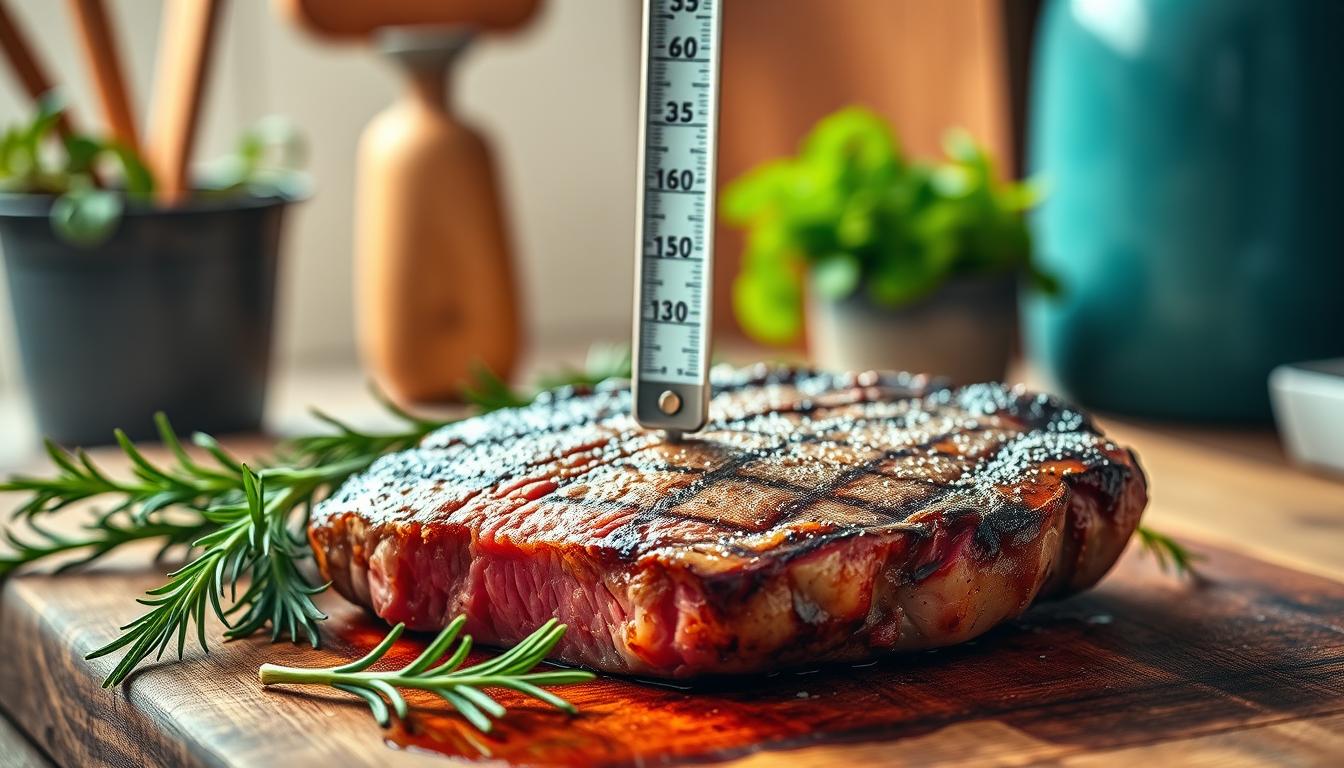
Choose the right thermometer first. Instant-read digital models, leave-in probe thermometers, and infrared thermometers each have strengths. Note that infrared tools only read surface temperature and cannot replace a probe for internal temperature for medium steak.
Use an instant-read this way: insert the probe into the thickest part of the steak from the side so the tip reaches the center. Avoid bone, fat, or gristle. Hold until the reading stabilizes, usually a few seconds with quality models like the ThermoWorks Thermapen.
Calibrate and maintain your thermometer. Test it in an ice water bath (32°F) and in boiling water (212°F at sea level) from time to time. Replace batteries or follow the manufacturer’s calibration steps when readings drift.
Check temperature toward the end of cooking. Repeated probing lets juices escape and prolongs cooking. Pick a pull target based on how pink you want the steak and match your medium steak temp to that pull point.
| Goal | Pull Temperature | Expected Served Temp | Doneness Notes |
|---|---|---|---|
| Slightly pink medium | 135–140°F | 140–142°F | Warm center with noticeable pink |
| Standard medium | 140°F | 140–145°F | Even pink center, firmer texture |
| Less pink medium | 142–145°F | 145°F | Light pink to near uniform brown |
| USDA recommendation | 145°F (serve after rest) | 145°F after 3-minute rest | Recommended for whole cuts |
Factors Affecting Steak Temperature
Getting the right medium steak temp involves several key factors. The size of the steak and the cooking method play big roles. Small changes in how you cook can make a big difference in the steak’s doneness.
Thickness and Heat Penetration
How thick your steak is affects how fast it cooks. Thin steaks cook quickly and can get overcooked fast. Use high heat and a short cooking time to get a good crust without overcooking.
Thicker steaks take longer to cook but can get a nice sear. Try searing then finishing in the oven or use a reverse sear. Bone-in steaks need more time because the bone slows down the cooking.
Method, Surface, and Ambient Factors
Methods like grilling or pan-searing cook the steak fast. They create a crust quickly and need careful timing. Oven roasting or sous vide cook the steak more slowly, giving better control over the temperature.
The shape of the steak also matters. The edge cooks faster than the center. Different pans and grills affect how the steak cooks. Wind and flare-ups on the grill can speed up or slow down cooking.
The steak’s starting temperature is important. A cold steak takes longer to cook than a warm one. Preheating the pan or grill can speed up the searing but be careful not to burn the steak.
| Factor | Effect on Cooking | Practical Tip |
|---|---|---|
| Thin steak (½–¾ in) | Very fast heat penetration; small window to reach medium steak temp | High heat, short sear; flip once; rest briefly |
| Thick steak (1–2+ in) | Slower internal rise; easier to maintain pink center | Sear then finish in oven or use reverse sear for control |
| Bone-in | Bone acts as heat sink; longer to reach target temp | Add 3–5 minutes to finish times; measure near bone |
| High-heat direct (grill/pan) | Fast crust, rapid surface temp rise | Watch steak cooking times closely; use thermometer |
| Low-temp indirect (oven/sous vide) | Even internal control; predictable cooking steak temperature | Sous vide: set precise target; oven: use probe thermometer |
| Pan material & ambient | Conductivity and wind affect how fast internal temp climbs | Use cast-iron for steady heat; shelter grill from wind when possible |
Common Cooking Methods for Steak
You have three reliable ways to reach the best temperature for medium steak. Each method builds a deep crust and rich flavor. Choose the method that fits your equipment and time. Each approach needs attention to heat and a thermometer to hit the target internal temp.
Grill heat should be fierce at first to lock in juices. For direct high-heat grilling, aim for a surface heat between 450–550°F. This helps sear and develop a charred crust. Use a two-zone setup with a hot direct zone for searing and a cooler indirect zone to finish thicker cuts without burning.
Manage flare-ups by trimming excess fat and keeping a spray bottle of water nearby. Oil grates lightly with a high-smoke-point oil before placing the steak. Check the center with a probe or instant-read thermometer so you know when the grilling steak temp matches your target.
Use a heavy skillet when you want tight control on browning. Preheat cast iron until nearly smoking, then add an oil like canola or avocado. Sear thin steaks 1–2 minutes per side. Thicker cuts need longer sears and a finish in a 400°F oven to reach the best temperature for medium steak.
Near the end of pan-searing steak, add butter and aromatics such as garlic, thyme, and rosemary. Tilt the pan and spoon the melted butter over the steak to boost exterior browning and infuse flavor. An instant-read check at the thickest point prevents overshoot.
Broiling uses your oven’s top element for fast crust formation when you cannot grill outdoors. Preheat the broiler on high and position the rack close to the element. Watch closely as broiling steak can brown in minutes and can go from perfect to overdone quickly.
Use an oven-safe probe or instant-read thermometer while broiling. Flip once for even color. For thick cuts, finish by moving the steak to a cooler part of the oven if the exterior is done before the center reaches the desired internal temp.
| Method | Heat Source | Recommended Surface Temp / Setting | Key Tip | Best For |
|---|---|---|---|---|
| Grilling | Charcoal or gas | 450–550°F surface; two-zone setup | Use direct sear then indirect finish; control flare-ups | Ribeye, New York strip, thicker steaks |
| Pan-Searing | Stovetop cast iron skillet | Pan near smoking; finish in 400°F oven if thick | Use high-smoke oil; butter baste with aromatics | Filet mignon, skirt, thin cuts |
| Broiling | Oven top element | Broiler on high; rack close to element | Watch constantly; use instant-read or probe | Quick crust when grill unavailable; thinner steaks |
Tips for Achieving the Perfect Medium Steak
Getting a perfect medium steak requires a few key steps. Use these steak cooking tips to feel confident at the grill or in a pan. They focus on controlling temperature, timing, and simple checks to ensure your steak is always great.
Always use a thermometer. It helps you know when the steak is just right. Add your own touch to make quick decisions when you’re busy or have guests.
Let the Steak Recover
Resting the steak is important. It lets the meat cook a bit more and makes the juices spread evenly. Thin steaks need 5 minutes, while thicker ones need 7–10 minutes or more.
Use foil to keep the heat in but avoid steam. This helps the crust stay crispy. Take the steak off the heat a bit early so it finishes cooking while resting.
Use a Simple Touch Technique
The touch test is a quick way to check doneness without a thermometer. Press the fleshy part with your thumb and index finger for rare. For medium, use your middle finger. For medium-well, use your ring finger.
This method is not exact but helps when you don’t have a thermometer. Over time, using both touch and temperature will make you better at judging doneness.
| Step | What to Do | Why it Helps |
|---|---|---|
| Temperature check | Use a probe to read the center before resting | Confirms the steak is near the medium steak internal temp |
| Pull early | Remove steak 5–10°F below target | Accounts for carryover cooking during letting steak rest |
| Tent loosely | Drape foil without sealing | Retains heat while preserving a crisp crust |
| Touch test check | Compare firmness to thumb-finger method | Quick estimate when you lack a thermometer |
| Combine methods | Use thermometer plus touch test | Builds confidence and improves consistency |
The Role of Carryover Cooking
Understanding how heat keeps moving after you take a steak off the grill is key. Carryover cooking is when the internal temperature of the meat rises a bit after it’s removed. This rise changes how you plan cooking, rest time, and plating. It ensures your medium steak temp is just right.

How Carryover Cooking Affects Internal Temp
Carryover cooking makes the internal temperature of a medium steak go up by about 5–10°F. The exact increase depends on the steak’s thickness, size, and cooking method. Thicker cuts, like a 1.5–2 inch ribeye, can gain the full 10°F, while thinner cuts gain less.
To aim for a medium of 140–145°F, remove the steak from heat at 135–140°F. Smaller steaks need the lower end of that range. Larger, thicker steaks need the higher end to reach the desired medium after resting.
Resting does more than just raise the temperature. It also lets juices spread out, keeping slices moist. Skipping rest can make your steak dry and lose a lot of juice.
Timing Your Steak Cuts
Wait the recommended rest time before cutting to avoid losing juices. A 5–10 minute rest is good for standard steaks. Thicker cuts might need 10–15 minutes. Use this time to finish any sides so everything is hot when you serve.
Use a timer to avoid cutting too soon. A probe thermometer helps check the final temperature after rest. Insert the thermometer gently into the center to confirm the steak is at the right temperature before plating. This simple check ensures your steak cuts are always precise and repeatable.
Flavor Enhancers for Medium Steak
You want your medium steak to taste like it was made in a steakhouse. Focus on simple techniques that lift the beef without hiding it. Use salt and pepper with purpose, finish with butter and herbs, and bring umami agents when you need deeper savory notes.
Start with the right seasoning for steak. Coarse kosher salt and freshly ground black pepper are the backbone of great flavor. Salt applied 40 minutes before cooking lets it dissolve and reabsorb, improving crust and seasoning depth. If you’re short on time, salt immediately before searing to avoid drawing moisture out of the surface.
Seasoning Techniques
For the best seasoning medium steak, work in layers. Rub a light mix of salt, pepper, and a pinch of garlic powder on both sides. Add Maldon or other finishing salts right after resting for a bright pop of texture and flavor.
Compound butters and herb basting are quick upgrades. Mix unsalted butter with chopped thyme or rosemary and a touch of lemon zest. Spoon the melted butter over the steak during the last minute of cooking to boost richness without masking beef.
Use umami boosters sparingly. A dash of Worcestershire sauce, a splash of low-sodium soy sauce, or a pinch of mushroom powder in a dry rub will deepen the savory profile. These work best when balanced with salt and black pepper so the steak remains the star.
Marinating Your Steak
Marinating steak is best for less tender cuts or when you want to infuse specific flavors. A basic marinade includes an acid (vinegar or citrus), oil, salt, aromatics, and a flavor agent like soy or Dijon mustard. This mix tenderizes slightly and adds complexity.
Keep marinating times short for tender cuts. For ribeye or strip steaks, 30 minutes to 2 hours is enough to add flavor without altering texture. Tougher cuts like flank or skirt can handle longer marinating times.
Practice safe marinating. Always marinate in the refrigerator. Discard used marinade or bring it to a boil for at least five minutes before using it as a sauce to kill any bacteria. These steps protect flavor and food safety when marinating steak.
| Enhancer | Best Use | Timing | Effect on Steak |
|---|---|---|---|
| Kosher salt + pepper | All steaks | 40 minutes before or just before sear | Improves crust and basic seasoning |
| Finishing salt (Maldon) | After resting | Right before serving | Adds crunch and bright pop |
| Compound butter (herb) | Steaks at rest or basting | Final minute / resting | Adds richness and herb aroma |
| Umami boosters (Worcestershire, soy, mushroom powder) | Dry rubs or marinades | Apply before cooking or include in marinade | Deepens savory flavor without masking beef |
| Acid-based marinades (citrus, vinegar) | Less tender cuts | 30 min to overnight depending on cut | Tenderizes and infuses bright notes |
| Oil + aromatics | Marinades | 30 minutes to several hours | Improves mouthfeel and carries flavors |
How to Pair Sides with Medium Steak
When pairing sides with medium steak, aim for a balance. You want to complement the beef without overpowering it. Choose dishes that cut richness, add brightness, or echo savory char. Make sure sides are ready when the steak rests for the best taste.
Recommended Side Dishes
Garlic mashed potatoes are a classic choice. They soak up juices without overpowering the meat. Roast root vegetables in a hot oven while your steak rests. This adds sweet, caramelized notes that match the steak’s warmth.
Roasted or sautéed asparagus and Brussels sprouts offer a green, slightly bitter contrast. Finish sautéed greens with lemon for a bright touch. Creamed spinach adds velvet richness, while chimichurri or chimichurri-roasted potatoes bring herbaceous lift.
Keep a simple green salad on hand to cut heaviness between bites. When planning sides for medium steak, mix soft and crisp textures. This makes each mouthful interesting.
Wine Pairing Suggestions
For wine pairing steak, medium-bodied reds like Merlot and Malbec are great. They match the beef’s fat and savory depth. A fruit-forward Cabernet Sauvignon can stand up to richer cuts and peppered seasoning.
Choose a Pinot Noir for leaner cuts that need less tannin pressure. Pick a bold Zinfandel when using heavy rubs or spicy sauces. This way, the wine’s fruit and spice can hold their own.
If you skip wine, try an amber ale or brown ale. They offer malt sweetness and low bitterness. A full-bodied non-alcoholic black cherry shrub also works well, with acidity and fruit that mirror wine pairing steak effects.
Timing and Practical Tips
Coordinate sides so they finish as the steak rests. Roast potatoes or root vegetables in a 425°F oven while you let the meat sit. Sauté greens in the last five minutes, then finish with lemon or vinegar for brightness.
For easy plating, serve a spoonful of chimichurri beside the steak. This lets diners control the herb intensity. These small planning steps improve pairing with medium steak and make dinner feel effortless.
Cooking Steak on Different Equipment
Choosing the right equipment for cooking steak is key to flavor and doneness. You can use the oven, a backyard grill, a cast-iron skillet, or a precision circulator for sous vide steak. Each method has its own strengths. Choose based on your timing, texture goals, and tools available.
Oven and Grill Options
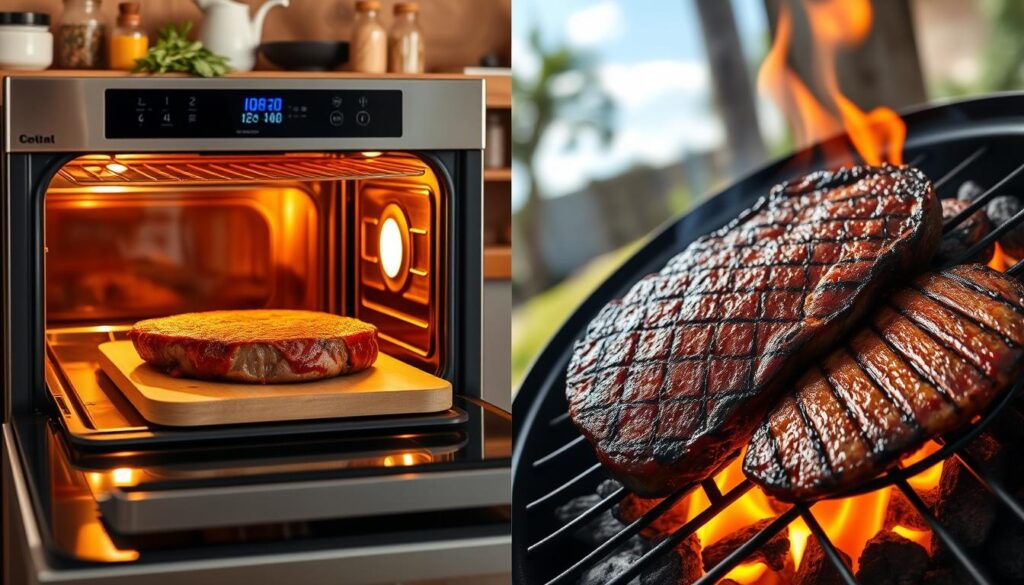
Grilling offers quick, high heat for a char and smoke flavor like a steakhouse. It’s best for thinner cuts or a strong crust.
The oven provides steady heat for controlling internal temperature, ideal for thicker cuts. Try sear-then-oven or reverse sear for thick steaks. Cook low in the oven first, then finish with a hot sear for even doneness.
Preheat the oven to 375–450°F after searing. Use the broiler for a quick finish if you prefer. Always check the internal temperature for the best medium steak.
Precision with Sous Vide
Sous vide steak uses a temperature-controlled water bath for exact doneness. Vacuum-seal the steak, set the circulator to your desired doneness, and cook to that exact temperature. For medium, 140°F is the common target.
Cook times range from 1 to 4 hours based on thickness. After sous vide, pat the steak dry and sear it fast in a hot cast-iron pan or with a culinary torch. This builds a crust without raising the internal temp too much.
| Method | Strengths | When to Use |
|---|---|---|
| Grill | Charred crust, smoky flavor, fast cooking | Thin to medium steaks, outdoor cooking, strong sear |
| Oven (sear then oven / reverse sear) | Even doneness, controlled ambient heat, great for thick cuts | Thick steaks, when you need consistent internal temp |
| Sous vide + sear | Edge-to-edge uniform doneness, minimal risk of overcooking | Precise results, tenderizing tougher cuts, busy timing |
Whichever method you choose, always check the internal temp with a reliable probe. Matching your method to the right equipment ensures perfect medium steak every time. Choose the approach that gives you consistent results and the flavor you prefer.
Troubleshooting Common Steak Issues
If your steak didn’t turn out right, there are quick fixes. Check the texture and temperature to see if it’s overcooked or undercooked. Knowing what went wrong and how to fix it can save your meal and improve your cooking next time.
Overcooked Solutions
If your steak is tough and dry, try slicing it thinly against the grain. This makes it more tender. Add a sauce or compound butter to moisten it.
Use a red wine reduction, pan jus, or chimichurri to add flavor and moisture. These can make the steak more tender.
Turn overcooked steak into dishes where it won’t matter if it’s a bit tough. Thin slices work well in salads, tacos, quesadillas, or stir-fries. Reheat them gently in a skillet with a bit of beef broth to keep them moist.
To rehydrate the steak, briefly braise it in beef broth or a savory sauce. Keep the heat low to avoid overcooking. This method can make tough steak tender and flavorful again.
Undercooked Solutions
If the steak is too rare, finish it on a cooler part of the grill or in a preheated oven. Use a thermometer to check the internal temperature. Aim for 135–140°F for medium.
For a bigger undercooked steak, sear it briefly in a hot pan or use a covered skillet with butter. This method helps control the final color and temperature.
When using a thermometer, insert it into the thickest part. Pull the steak at 135–140°F and let it rest to 140–145°F. If you’re worried about food safety, make sure it reaches 145°F with a three-minute rest. Knowing the right cooking times can help you avoid mistakes and improve your cooking skills.
- Quick overcooked steak fix: thin slices + sauce or gentle braise.
- Fast undercooked steak fix: finish on cooler grill zone, oven at 350–400°F, or quick pan sear.
- Use an instant-read thermometer at the thickest part to confirm doneness.
Storing and Reheating Leftover Medium Steak
You cooked a medium steak and want to keep its flavor and texture for later. Proper handling when storing leftover steak and refrigerating steak stops bacteria and keeps taste. A short cooling step and correct wrapping make a big difference.
Cool the steak at room temperature briefly, no longer than two hours total. Place the steak in an airtight container or wrap tightly in plastic wrap and foil before refrigerating steak. Put it in the fridge within two hours of cooking. Use the steak within 3–4 days for best safety and quality, per USDA guidance.
For longer storage, freeze tightly wrapped steak or vacuum-seal it. Label the package with the date. For best quality, eat frozen steak within 2–3 months. Thaw overnight in the refrigerator before reheating steak to keep juices intact.
When you plan reheating steak, choose gentle methods that preserve medium doneness and avoid overcooking. Set your oven low and slow, use sous vide, or reheat on the stovetop with moisture. These steps help answer how to reheat steak without drying while keeping flavor and texture.
Oven method: preheat to 250–275°F. Place steak on a wire rack over a pan. Warm until the center reaches about 120–125°F for medium. Finish with a quick sear in a hot skillet if you want a fresh crust. This approach warms the meat evenly and reduces moisture loss.
Sous vide method: set the bath to 130–135°F for medium-rare to medium. Place vacuum-sealed or well-wrapped steak in the water and heat until the center reaches target temp. This technique restores tenderness and prevents drying.
Skillet method: add a splash of beef broth or a pat of butter to a pan over low heat. Cover the pan to create gentle steam. Turn the steak occasionally until warmed through. For sliced steak, reheat briefly in a hot pan with butter and aromatics or incorporate slices into a sauce to retain moisture.
Avoid microwaving when possible. If you must use a microwave, cover the steak and heat in short intervals, checking often, to limit overcooking. These tips will help you enjoy leftover steak that tastes close to freshly cooked.
| Step | Method | Target Temp / Time | Why It Works |
|---|---|---|---|
| Short-term storage | Airtight container in fridge | Use within 3–4 days | Limits bacterial growth and preserves flavor |
| Long-term storage | Freeze tightly wrapped or vacuum-seal | Best within 2–3 months | Prevents freezer burn and maintains quality |
| Oven reheating | Low oven + quick sear | 250–275°F until 120–125°F center | Even warming, retains juices |
| Sous vide reheating | Water bath in bag | 130–135°F until warmed through | Precise temp control, avoids drying |
| Skillet reheating | Low heat with liquid, covered | Short, gentle reheating | Steam keeps slices moist and tender |
| Microwave (least recommended) | Covered, short bursts | Check often, seconds at a time | Quick but risks uneven heating and dryness |
Conclusion: Mastering Medium Steak Cooking
To cook a medium steak, aim for an internal temperature of 140–145°F. Use an instant-read thermometer to check the temperature. Let the steak rest to allow the temperature to rise.
Consider the steak’s thickness and cooking method. This will help you achieve the perfect texture.
Recap of Key Points
Check the thickest part of the steak with a thermometer. Insert the probe from the side. Let it rest for 7–10 minutes for a 1–1¼ inch ribeye.
Keep a cooking log to track your progress. This helps you adjust for any temperature issues. If the steak is too hot or cold, rest it longer or finish it in the oven.
Encouragement for Experimentation
Experiment with different temperatures within the medium range. Find the perfect pinkness for you. Try new seasonings, oils, and sides.
Test pan-searing and sous vide methods. Follow USDA food safety guidelines while exploring new flavors and textures.
Pan-Searing
Start with a pan-seared ribeye medium steak recipe. Use 1–1¼ inch bone-in ribeyes and a hot cast-iron pan. Sear for 2–3 minutes on each side, then butter-baste.
Finish in a 400°F oven for 3–6 minutes. Use an instant-read thermometer to check the temperature. Rest the steak to reach the perfect medium temperature.