The 7 Best Meat Thermometers – Ultimate Guide to Perfect Meat Every Time
Ever had a steak that looked great but was overcooked? Or a chicken that felt dry? These moments are common for home cooks. But, a good meat thermometer can change everything.
Getting the best meat thermometer is key in 2026. It makes cooking meat easy and accurate. No more guessing or cutting into food to check if it’s done. You’ll cook perfectly every time.
This guide shows you seven top digital and wireless thermometers. Each one is tested for accuracy and works well in real cooking situations. Whether you grill, roast, or use your air fryer, you’ll find the perfect tool here.
Discover the best digital thermometer for grilling and the perks of wireless models. Learn how to choose the right one for your kitchen. This isn’t just a list. It’s your guide to cooking like a pro at home, every meal.
This post may contain affiliate links. I may earn a commission at no extra cost to you.
Table of Contents
Why Every Home Cook Needs a Reliable Meat Thermometer
Cooking meat without a thermometer is like driving blind. You might get there, but it’s a risky ride. A kitchen meat thermometer turns cooking into a science. It helps you cook steaks, chicken, brisket, or pork chops perfectly.
With it, you avoid burnt meals and get restaurant-quality dishes. Your family deserves safe and tasty food. And that’s only possible with the right tools.
The Science Behind Perfect Cooking Temperatures
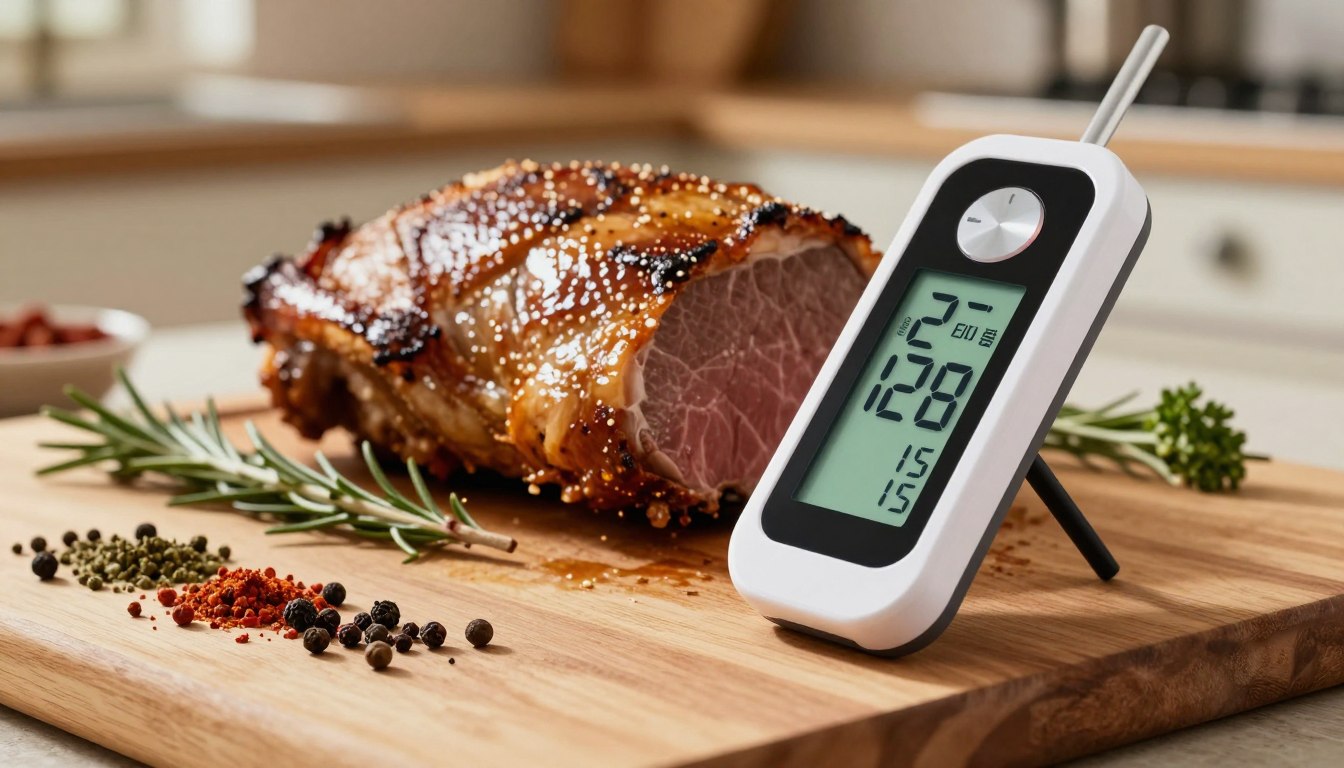
Meat changes at specific temperatures. It’s not magic, but chemistry. An accurate cooking thermometer shows when meat turns tender and juicy.
A small difference in temperature can make a big difference. Cook beef too low, and it’s not safe. Cook it too high, and it’s tough.
Each meat type has its best cooking temperature:
- Beef and steak are best at 130-135°F for medium-rare
- Chicken needs 165°F to kill bacteria
- Pork is safest at 145°F with a three-minute rest
- Fish cooks perfectly at 145°F, staying moist and flaky
With precision temperature control, you hit these targets every time.
Food Safety and Avoiding Undercooked Meat
Undercooked meat can be deadly. Salmonella, E. coli, and Campylobacter bacteria thrive in unsafe meat. Your thermometer protects your family from these dangers.
The USDA has clear guidelines for safe temperatures:
| Meat Type | Safe Internal Temperature | Rest Time |
|---|---|---|
| Poultry (all cuts) | 165°F | None required |
| Ground meats | 160°F | None required |
| Beef steaks and roasts | 145°F | 3 minutes |
| Pork | 145°F | 3 minutes |
| Fish and seafood | 145°F | None required |
One quick probe into the thickest part of your meat confirms safety instantly.
View the Top Choice :
- ThermoMaven Smart Bluetooth Wireless Meat Thermometer
- Alpha Grillers Meat Thermometer Digital
- 0.5 Sec Instant Read Meat Thermometer Digital
- TempPro TP19H Digital Meat Thermometer
- Etekcity Infrared Thermometer Laser Temperature
- TempPro TP16 Large LCD Digital Cooking Food Meat Thermometer
- ThermoPro Digital Meat Thermometer for Cooking and Grilling
Achieving Restaurant-Quality Results at Home
Professional chefs never cook by eye or timing alone. They use precision temperature control for perfect results. You can do the same in your kitchen with an accurate cooking thermometer.
Here’s what precision brings to your cooking:
- Perfectly cooked interiors that match your preference exactly
- Consistent results across different cuts and sizes
- Confidence in your cooking skills and techniques
- Juicier meat because you’re not overcooking out of fear
- Impressive meals that impress family and friends
Your kitchen meat thermometer removes cooking anxiety. You’ll cook with confidence, knowing your food is safe and delicious. That’s the difference between a home cook and a culinary artist.
Understanding Different Types of Meat Thermometers
Choosing the right meat thermometer starts with knowing your options. Each type is designed for different cooking styles and preferences. Your cooking habits will help you pick the best one for your kitchen.
An instant read meat thermometer gives you temperature results in just 2 to 4 seconds. You insert the probe into your meat, wait a moment, and get your reading on the digital display. These handheld devices are perfect for quick checks while grilling or cooking on the stovetop. They’re affordable and convenient for cooks who want fast feedback without leaving the grill.
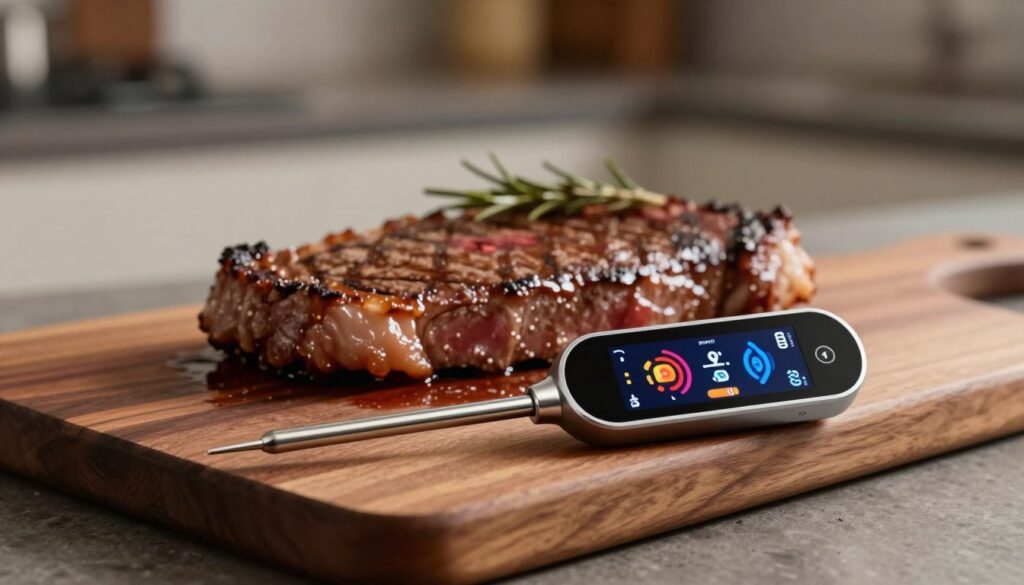
A wireless meat thermometer lets you check temperatures from your phone or receiver unit. Bluetooth models work within about 165 feet, while WiFi-enabled versions connect from anywhere with internet access. You can monitor your meat while relaxing, preparing side dishes, or entertaining guests. This option works beautifully for low-and-slow cooking where you need consistent temperature monitoring.
Probe thermometer varieties include leave-in models that stay inserted throughout cooking. These stay in place during oven roasting or BBQ smoking, giving you continuous temperature readings. The probe sends data to a wireless receiver or app on your device.
Your cooking method should guide your choice. Quick weeknight meals benefit from an instant read meat thermometer. Weekend grilling sessions work well with wireless options. Low-and-slow BBQ demands leave-in probe thermometers for overnight monitoring.
- Instant read devices offer speed and portability
- Wireless models provide convenience and remote monitoring
- Probe thermometer varieties excel at long-duration cooking
- Digital thermometer types outperform traditional dial versions
Understanding these categories helps you select the thermometer that matches your cooking style. This ensures perfect results every time you cook meat.
Best Meat Thermometer Reviews for 2026
Finding the right thermometer is key to great cooking. Whether you’re grilling, roasting, or making meatloaf, the best thermometer ensures perfect food. This section highlights seven top picks, organized by type. You’ll find instant-read, wireless, and affordable thermometers.
View the Top Choice :
- ThermoMaven Smart Bluetooth Wireless Meat Thermometer
- Alpha Grillers Meat Thermometer Digital
- 0.5 Sec Instant Read Meat Thermometer Digital
- TempPro TP19H Digital Meat Thermometer
- Etekcity Infrared Thermometer Laser Temperature
- TempPro TP16 Large LCD Digital Cooking Food Meat Thermometer
- ThermoPro Digital Meat Thermometer for Cooking and Grilling
Top Digital Instant Read Options
Digital instant-read thermometers are fast. They read meat temperature in 2-3 seconds, ideal for grilling and checking chicken. You get accurate readings within ±0.9°F, ensuring perfect cooking every time.
Look for features like rotating displays and backlights for easy reading. Many include auto-shutoff to save battery. The probes are thin, making them easy to insert into meat without damaging it.
- Lightning-fast 2-3 second readings
- Waterproof designs for easy cleanup
- Compact size fits in your pocket or drawer
- Perfect for grilling and stovetop cooking
These thermometers are best for quick-cooking foods. Steak, chicken breasts, and thin pork chops benefit from their speed and accuracy. You’ll avoid overcooking and ensure food safety.
Premium Wireless and Bluetooth Models
A bluetooth meat thermometer like the Meater thermometer changes cooking for larger cuts. These devices let you monitor temperature from your phone. The Meater connects to an app that guides you through cooking, alerting you when meat reaches target temperatures.
Premium wireless models are great for whole chickens, pork roasts, and meatloaf. You set temperature alerts on your phone and get notifications when your meat is ready. The extended wireless range lets you monitor cooking from anywhere.
| Feature | Benefit for You |
|---|---|
| Smartphone App Control | Monitor cooking from anywhere, no need to constantly check |
| Multi-Probe Capability | Cook multiple items at once and track each separately |
| Preset Cooking Programs | Guided cooking walks you through each step perfectly |
| Extended Wireless Range | Stay connected up to 165 feet away from your grill |
| Temperature Alerts | Notifications tell you exactly when meat reaches safe temps |
The Meater thermometer stands out for its dual monitoring. It tracks both food temperature and ambient cooking temperature. This helps you adjust heat levels without guessing. Whole chickens, pork roasts, and meatloaf cook more evenly with this approach.
Budget-Friendly Accurate Thermometers
You don’t need to spend much for reliable accuracy. Budget-friendly options under $25 offer the same dependability as expensive models. They’re perfect for beginners or as a backup thermometer.
Affordable thermometers give accurate readings within acceptable ranges. They’re great for meatloaf, ground meat dishes, and everyday cooking. Simple designs mean fewer buttons to learn and fewer things that can break.
- Priced under $25 for budget-conscious cooks
- Accurate within ±1-2°F range
- Simple one-button operation
- Long battery life reduces replacement costs
- Great backup option for your kitchen
These models prove you don’t have to sacrifice quality for price. A top-rated cooking thermometer at this price ensures your meatloaf reaches safe temperatures and your chicken stays juicy. Start with a budget option and upgrade later if you want wireless features or smartphone connectivity.
Instant Read vs Wireless Meat Thermometers: Which Should You Choose
Choosing between an instant read and a wireless meat thermometer depends on your cooking style. Think about what you cook most often. Both types are important in your kitchen, and knowing their strengths helps you choose wisely.
An instant read meat thermometer gives fast temperature readings in seconds. It’s perfect for grilling steaks, burgers, and other quick-cooking cuts. These thermometers are simple and affordable, costing between $20 and $40.
A wireless meat thermometer is better for slow-cooking like smoking brisket or roasting turkeys. It lets you check temperatures from your phone without opening your oven or grill. Expect to spend $60 to $200 for quality wireless systems with Bluetooth.
When to Choose an Instant Read Thermometer
- You grill quick-cooking proteins regularly
- You prefer hands-on cooking methods
- You want something portable and simple
- You’re budget-conscious
When to Choose a Wireless Meat Thermometer
- You cook large cuts that take hours
- You roast meats in your oven frequently
- You multitask during cooking
- You cook multiple proteins at once
Many serious home cooks have both types. An instant read thermometer is great for quick checks, while a wireless system handles long cooks. This comparison shows that the right thermometer is one you’ll use often.
| Feature | Instant Read | Wireless |
|---|---|---|
| Price Range | $20–$40 | $60–$200 |
| Setup Time | Seconds | Minutes |
| Best For | Quick cooks, grilling | Long cooks, smoking |
| Portability | Highly portable | Requires receiver |
| Monitoring | Manual checks | Real-time alerts |
| Learning Curve | Very easy | Moderate |
Your cooking habits should guide your decision. If you grill a lot, an instant read thermometer is good. For slow smoking, wireless technology is key. Think about your kitchen, budget, and cooking frequency to find the best fit.
Key Features to Look for When Buying a Meat Thermometer
Choosing the right meat thermometer is key. You need to know what makes a good one. Look for important features to get the best results. Think of yourself as a smart shopper who knows what to look for.
Accuracy and Response Time
First, focus on accuracy. You want readings within ±0.9°F to ±1.8°F. Any less and you risk bad food or safety issues. Good thermometers are tested to meet these standards.
Response time is also critical. Choose instant-read thermometers that show temperatures in under 4 seconds. This saves time and keeps your food cooking well.
Probe Length and Durability
The probe should be 4 to 5 inches long. This lets you get accurate readings from thick cuts of meat. Short probes can give you wrong readings.
A good thermometer is durable. It should handle repeated use and high heat. Look for:
- Stainless steel for resistance to corrosion
- Waterproof ratings (IPX4 minimum for splash protection)
- Stepped-down probe tips for faster heat transfer
- Heat-resistant handles rated for 400°F or higher
Temperature Range and Display Quality
Your thermometer should work from -40°F to 572°F. This covers all your cooking needs. A big, backlit display is easy to read, even in bright or dim light.
Look for extra features that make your life easier:
- Magnetic backing for easy storage
- Auto-shutoff to save battery
- User-replaceable batteries for cost savings
- Preset temperature alerts for different meats
By knowing these features, you can pick the best thermometer for your cooking. You’ll be a confident shopper, ready to make a smart choice.
How to Properly Use Your Meat Thermometer for Different Cooking Methods
Learning how to use a thermometer is key for great cooking results. Whether you’re grilling or using a bbq meat thermometer, the basics are the same. Always put the probe in the thickest part of the meat, avoiding bones and fat. This method is essential for accurate temperature checks in all cooking.
Grilling and BBQ Techniques
When grilling, timing is everything. For thin cuts like steaks, check the temperature right after searing. Use a digital meat thermometer to check chicken breasts by inserting it horizontally into the center. For larger cuts, check several spots because heat spreads unevenly.
Wireless probes are great for long cooking times. They let you monitor temperatures without opening the grill lid too often.
Low-and-Slow Cooking Methods
BBQ smoking and roasting need special placement. For brisket, put the probe in the flat muscle, not the point. With pork shoulder, aim for the thickest muscle area, away from bones. Use wireless thermometers to avoid direct flames and heat damage.
Oven Roasting Approach
For whole chickens or turkeys in the oven, use an oven-safe thermometer. Insert it into the innermost thigh meat before cooking starts. This way, you avoid losing heat when you open the oven door. Be careful to angle the probe to reach the deepest part without touching bone.
Air Fryer Cooking
Air fryers have limited space, making instant-read thermometers better than leave-in probes. Check temperatures near the end of cooking because air fryers heat up fast.
Understanding Carryover Cooking
Meat keeps cooking after it’s removed from heat. Take it off when it’s 5-10°F below your target temperature. This ensures you get the exact final temperature you want.
| Cooking Method | Probe Placement | Timing for Checks | Best Thermometer Type |
|---|---|---|---|
| Grilling Steaks | Horizontal through center | After initial sear | Digital instant-read |
| BBQ Brisket | Flat muscle area | Every 30 minutes | Wireless probe |
| Oven Whole Chicken | Innermost thigh | Before cooking | Oven-safe leave-in |
| Air Fryer Chicken | Thickest part center | Near end of cooking | Instant-read digital |
| Grilling Pork Chops | Center avoiding bone | After 4-5 minutes | Digital instant-read |
Maintenance and Cleaning
Clean your thermometer probe between checks to prevent contamination. Keeping it clean and well-maintained ensures accuracy. Regularly calibrate your thermometer with ice water or boiling water tests.
- Insert probes into the thickest meat portion
- Avoid contact with bones, fat, and gristle
- Check multiple spots on unevenly shaped meats
- Remove meat 5-10°F before target temperature
- Clean probes between each measurement
- Use wireless options for long-duration cooking
- Position probes away from direct flame and excessive heat
By following these guidelines, you’ll get top-notch results every time. Your digital meat thermometer is a key tool for all your favorite cooking methods.
Essential Internal Temperature Guide for Perfectly Cooked Meat
Using an accurate cooking thermometer changes how you cook at home. You don’t have to guess if your steak is done or if your chicken is safe. The USDA temperature guidelines help keep your food safe and ensure perfect doneness.
Temperature is key for two reasons. First, it kills dangerous bacteria that can make you sick. Second, it gives you the texture and flavor you want. Each meat has its own perfect temperature, and your thermometer helps you find it every time.
Beef, Steak, and Lamb Temperatures
Beef offers flexibility because you can enjoy it at many doneness levels. Your preference determines the temperature. A reliable thermometer lets you choose your perfect doneness with confidence.
- Rare: 120-125°F (cool red center, very tender)
- Medium-rare: 130-135°F (warm pink center, most popular choice)
- Medium: 135-145°F (warm throughout with slight pink)
- Medium-well: 145-155°F (mostly brown with light pink)
- Well-done: 155°F and above (fully brown throughout)
Tough beef cuts like brisket need higher temperatures. Cook brisket to 195-205°F for tenderness. Prime rib and roasts taste best at 130-135°F, then rest to reach 135-140°F. Lamb follows the same guidelines as beef, giving you the same doneness options.
Poultry and Chicken Safety Temperatures
Poultry safety is non-negotiable. The USDA guidelines state that all poultry must reach 165°F minimum to eliminate salmonella risk. Your thermometer ensures you hit this critical safe internal temperature every time.
Dark meat like thighs and drumsticks benefit from cooking slightly hotter to 175°F for better texture and juiciness. Chicken breasts should come off heat at exactly 165°F to prevent dryness. Always check temperature in the innermost thigh (away from bone) for whole chickens, and in the thickest part of the breast. For whole turkeys, check both the thigh and the thickest part of the breast to ensure all areas reach safe internal temperatures.
Pork, Fish, and Ground Meat Guidelines
Modern pork safety has changed. The USDA guidelines now recommend 145°F followed by a 3-minute rest period, not the old 160°F standard that dried out pork chops. Your thermometer lets you enjoy tender, juicy pork while staying safe. Ground pork requires 160°F for safety.
Fish reaches safe internal temperatures at 145°F when the flesh flakes easily. Salmon and tuna lovers can cook to 125-130°F if they prefer a translucent center, though this is a personal preference. All ground meats demand 160°F, whether you’re cooking ground beef, ground turkey, or ground lamb. This protects you from harmful bacteria throughout the meat.
| Meat Type | Cut or Form | Safe Internal Temperature | Rest Time |
|---|---|---|---|
| Beef | Steaks (medium-rare) | 130-135°F | 3-5 minutes |
| Beef | Roasts & Brisket | 195-205°F | 10-15 minutes |
| Lamb | All cuts (medium-rare) | 130-135°F | 3-5 minutes |
| Chicken | Breasts | 165°F | 3 minutes |
| Chicken | Thighs & Drumsticks | 175°F | 3 minutes |
| Turkey | Whole bird (thigh) | 165°F | 20-30 minutes |
| Pork | Chops & Tenderloin | 145°F | 3 minutes |
| Pork | Ground Pork | 160°F | 3 minutes |
| Fish | All types | 145°F | 2-3 minutes |
| Ground Meat | Beef, Turkey, Lamb | 160°F | 3 minutes |
Your accurate cooking thermometer is the only way to guarantee you hit these perfect doneness levels. Guessing by appearance or touch leaves too much to chance. Keep this temperature reference guide nearby while you cook, and you’ll achieve restaurant-quality results every single time you fire up your grill or stove.
View the Top Choice :
- ThermoMaven Smart Bluetooth Wireless Meat Thermometer
- Alpha Grillers Meat Thermometer Digital
- 0.5 Sec Instant Read Meat Thermometer Digital
- TempPro TP19H Digital Meat Thermometer
- Etekcity Infrared Thermometer Laser Temperature
- TempPro TP16 Large LCD Digital Cooking Food Meat Thermometer
- ThermoPro Digital Meat Thermometer for Cooking and Grilling
Caring for and Maintaining Your Digital Meat Thermometer
Your kitchen meat thermometer is key to cooking right and keeping food safe. Taking care of it right after each use helps it last longer and work better. Just a few minutes of care each time you use it ensures it gives you accurate readings.
After each use, clean your device to stop buildup and keep it safe from germs. Use hot soapy water and a soft cloth on the probe. For waterproof models, you can rinse it under running water. But, avoid the dishwasher to protect the sensors.
Use alcohol wipes on the probe to sanitize it between meats. Always dry it completely before storing to avoid rust. This keeps your thermometer in top shape.
Where you store your thermometer is important. Use protective covers to keep the tip safe. Store it in a cool place, away from extreme temperatures. Some models have magnetic backs for easy fridge storage. If you won’t use it for a while, remove the batteries to prevent damage.
It’s vital to check if your thermometer is accurate. You can do this every few months with two easy tests:
- Ice water method: Insert the probe into a glass of ice water for 30 seconds. It should read 32°F
- Boiling water method: Place the probe in boiling water for 30 seconds. It should read 212°F at sea level
If it’s not accurate, you can adjust it if it’s adjustable. If not, you might need a new one.
| Maintenance Task | Frequency | Why It Matters |
|---|---|---|
| Clean probe after use | Every cooking session | Prevents cross-contamination and buildup |
| Sanitize with alcohol wipes | Between different meats | Eliminates bacteria from raw poultry |
| Check battery level | Monthly | Ensures reliable operation during cooking |
| Calibrating thermometer | Every 3-6 months | Maintains accuracy for food safety |
| Inspect for damage | Before each use | Catches problems early before cooking |
Keeping your thermometer’s batteries in good shape is important. Most use AA or AAA batteries that last 6 to 12 months. Watch for low-battery signals on your device. Keep spare batteries handy so you’re always ready.
Avoid mistakes that can harm your thermometer. Don’t expose it to extreme temperatures. Never leave it in an oven above its limit. Use gentle cleaners and avoid drops to keep it working well.
By following these simple steps, your thermometer will last longer and stay accurate. This means your family’s food is always safe and well-cooked.
Common Mistakes to Avoid When Using a Cooking Thermometer
Using a meat thermometer seems easy, but mistakes can ruin your cooking. Even with a good thermometer, wrong use can waste your food and time. Knowing how to avoid these mistakes helps you get the right temperature every time.
Incorrect Probe Placement
Most errors come from wrong probe placement. Your thermometer only reads the temperature where the tip is. So, where you put it is very important.
For accurate testing, put the probe in the meat’s thickest part, away from bone. Bone heats up differently than muscle, giving wrong readings. For steaks, insert the probe sideways. For chicken breasts, do the same in the thickest area. For whole poultry, use the thigh without touching bone.
Surface temperatures don’t show what’s inside. You need to find the meat’s center. For odd shapes, check several spots. If you move the meat, check the temperature again.
- Insert the probe into the thickest part of the meat
- Avoid contact with bones at all times
- Test the geometric center, not the surface
- Check multiple spots on irregular cuts
- Retest after moving meat during cooking
Not Calibrating Your Thermometer
Calibration is key for accurate readings. Small errors can mean the difference between safe and unsafe meat. They also affect the quality of your steak.
Check new thermometers right away because defects can happen. Recalibrate every 3 to 6 months if you use it a lot. The ice water method is quick: just put the probe in ice water and check it reads 32°F. The boiling water method works at 212°F for most places.
Don’t rely on pop-up indicators in turkeys. They’re not reliable. Take your meat off the heat a few minutes before it’s done. Wait for instant-read thermometers to settle before reading. Never test frozen or partially frozen meat.
- Test new thermometers in ice water immediately
- Calibrate every 3 to 6 months
- Check accuracy using boiling water method
- Account for carryover cooking
- Clean probes between testing raw and cooked foods
Getting the right temperature needs good equipment and the right way to use it. Avoiding these mistakes keeps your thermometer reliable and ensures your cooking turns out right.
Where to Buy the Best Meat Thermometers Online
Looking for a meat thermometer online can be easy and fun. You have many great places to shop. They offer quality products, good prices, and help when you need it.
Amazon is the best place to buy a meat thermometer. You’ll find lots of options with reviews from other cooks. They have sales like Prime Day and Black Friday. You can also get fast shipping and return items if needed.
When shopping on Amazon, look for these helpful indicators:
- Amazon’s Choice badge showing popular, trusted products
- Best Seller status indicating top-rated thermometers
- Verified purchase reviews from actual customers
- Seller ratings if buying from marketplace vendors
- Lightning deals for limited-time savings
A bluetooth meat thermometer is convenient. You can find great options on Amazon. These thermometers send updates to your phone and come in many prices.
But Amazon isn’t the only place to shop:
| Retailer | Selection | Price Point | Best For |
|---|---|---|---|
| Manufacturer Websites | Limited but exclusive | Premium pricing | Extended warranties and bundles |
| Williams Sonoma | Curated selection | High-end | Hands-on shopping experience |
| Target | Basic models | Budget-friendly | In-store pickup options |
| Walmart | Good variety online | Competitive | Value-conscious shoppers |
Start your search on Amazon today. Look at the best meat thermometers, compare prices, and check for deals. Your perfect meals are just a click away.
Conclusion
A professional meat thermometer is a must-have for every kitchen. It takes the guesswork out of cooking meat and keeps your family safe. Whether you choose an instant-read model for quick dinners or a wireless one for barbecues, it’s a smart choice.
In this guide, you’ve learned about various thermometer types and what matters for your cooking. You have seven top picks across all price ranges. You know the right internal temperatures for different meats. You also know how to use your thermometer correctly in different cooking methods.
Choosing the right meat thermometer means picking one you’ll use every time you cook. Look for a model that fits your budget and cooking style. Imagine serving perfectly cooked steaks or enjoying juicy, safe poultry dinners. With the right thermometer, you can achieve restaurant-quality results in your own kitchen.
Don’t let cooking be a guessing game anymore. Pick your perfect meat thermometer today from the top options in this guide. Start cooking with confidence. With the right tool and knowledge, your cooking will go from hit-or-miss to reliably excellent. Your family and friends will notice the difference right away.
View the Top Choice :
- ThermoMaven Smart Bluetooth Wireless Meat Thermometer
- Alpha Grillers Meat Thermometer Digital
- 0.5 Sec Instant Read Meat Thermometer Digital
- TempPro TP19H Digital Meat Thermometer
- Etekcity Infrared Thermometer Laser Temperature
- TempPro TP16 Large LCD Digital Cooking Food Meat Thermometer
- ThermoPro Digital Meat Thermometer for Cooking and Grilling