Best Slow Cookers for Easy & Delicious Meals – Top Picks 2026
The best slow cooker makes dinner effortless and delicious. You’ll enjoy simple meals that taste like effort without standing over the stove.
We tested real models in everyday use and updated picks on Dec 17, 2025 (Sharon Franke). Favorites include the Cuisinart MSC-600 and the West Bend 5-Qt. You’ll find a top-5 roundup with Amazon affiliate links and recipe ideas so you can start cooking right away.
What to expect: quick recommendations, full reviews, a buying guide focused on capacity, features, and ease of use, plus practical recipes. This is for you if you like set-and-forget meals, batch cooking, and fork-tender meats.
Note the tradeoff: these appliances shine with long, gentle cooking but won’t crisp like a broiler unless the unit includes that function. Prices and availability change in the U.S., so links aim to make buying simple.
This post may contain affiliate links. I may earn a commission at no extra cost to you.
Table of Contents
Why a Slow Cooker Belongs in Your Kitchen for Hands-Off, Flavor-Packed Meals
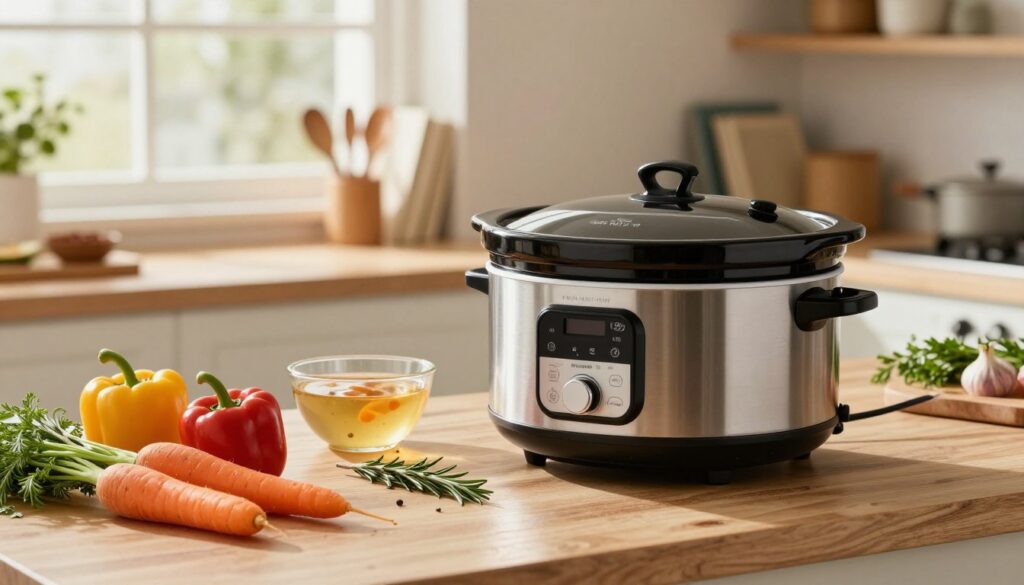
Let your countertop do the heavy lifting so you can reclaim your evening. A slow cooker locks in steady low heat for long hours, so simple ingredients turn into deep, developed dishes with very little effort.
What it does best
Slow cooking shines with soups, stews, chili, and collagen-rich meat. Over time, connective tissue breaks down and sauces concentrate, giving you rich flavor without constant stirring.
When it’s not the right tool
It’s not ideal for meals that need crisp edges, quick cooking, or delicate seafood. Many units lack a browning function, so you may brown ingredients in a pan first for full flavor.
- Hands-off advantage: load, set the time, and forget it.
- Texture wins: tough cuts become fork-tender; sauces thicken naturally.
- Limitations: not for stir-fries, seared crusts, or fragile fish.
| Ideal | Why | Typical Time |
|---|---|---|
| Stews & chili | Deep flavor development | 4–8 hours |
| Roasts & shredded meat | Consistent low heat breaks down collagen | 6–10 hours |
| Quick dinners & crisp dishes | Better on stovetop or oven | Under 1 hour |
Use these points to match how you cook with models and features. Pick a unit that fits the food you prepare most often for confident results.
Who This Guide Is For and How These Tested Slow Cookers Were Selected
If you want consistent dinners with minimal effort, this roundup points you to models that actually deliver. You’ll find options for quick weeknight meals, batch cooking, and hands-off entertaining.
What “tested” means
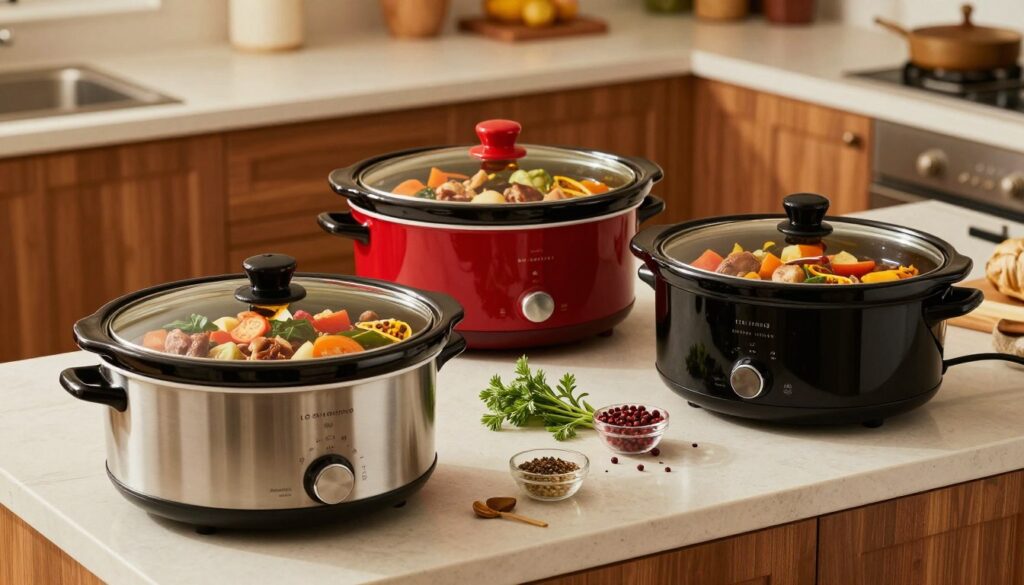
Tested units went through real-world trials focused on even heat, stable temperatures, and tenderness. We ran stews, roasts, soups, and pulled meats to judge cooking performance.
How we scored usability and features
Controls and cleanup matter. We scored how intuitive each control is, the ease of setting cook time, and whether pots lift and clean easily.
- Feature checks: sauté/browning, timers, keep-warm, and probe cooking.
- Durability: materials, lid fit, and build quality for long-term use.
- Match guide: start with “Top Picks at a Glance” and pick by your time, food needs, and budget.
| Test Area | What We Measure | Why It Matters |
|---|---|---|
| Cooking performance | Even heat, tenderness, sauce concentration | Consistent results for stews, roasts, and soups |
| Usability | Controls, timers, insert handling | Fewer mistakes and faster cleanup |
| Design & durability | Materials, lid seal, weight | Long-lasting value and safe storage |
Top Picks at a Glance: Best Slow Cookers by Value, Premium Features, and Meal Prep
Match capacity and controls to your routine so shopping is fast and confident. Below is a compact snapshot to help you choose by capacity, control type, and common use case.
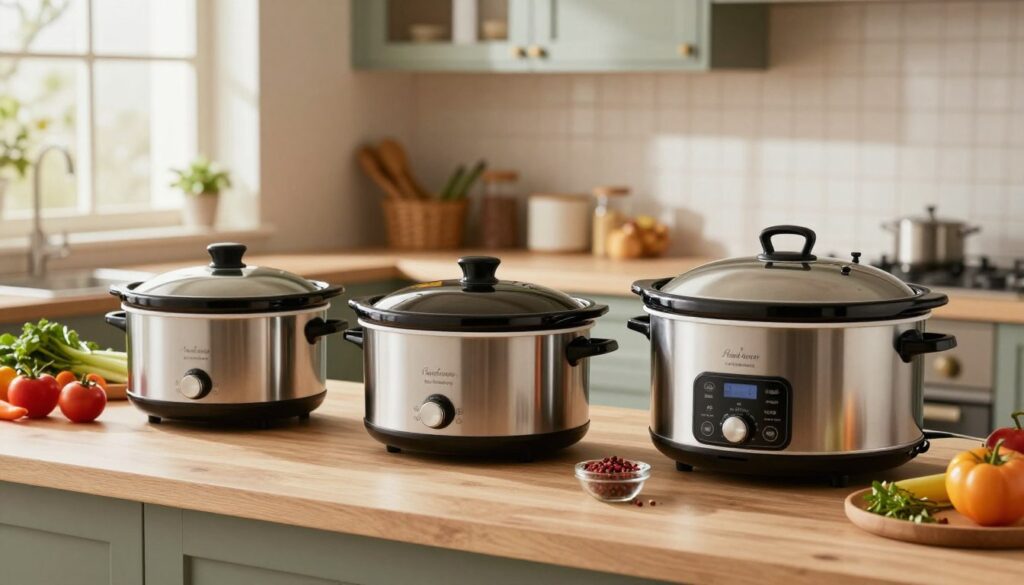
Quick match: capacity, control type, and ideal use
- Cuisinart MSC-600 (6 qt, digital) — versatile for everyday use; includes sauté/brown and steam.
- West Bend (5 qt, manual) — simple knobs for smaller batches and soups.
- GreenPan (6 qt, digital) — nonstick pot and reheat function for easy cleanup.
- All-Clad (7 qt, programmable) — programmable slow cooker with superior keep-warm for entertaining.
- Hamilton Beach 33866 (6 qt) — probe and clip lid for meal prep and transport.
Price tiers to expect in the U.S. market
| Tier | Typical features | Who it suits |
|---|---|---|
| $$ (budget) | Manual knobs, basic heat settings | Simple weeknight stews |
| $$$ (midrange) | Digital timers, probe options, better temperature control | Meal preppers and families |
| $$$$ (premium) | Programmable units, sturdier build, advanced keep-warm | Entertaining and heavy use |
Note: pick a 5-qt for small batches, 6-qt for most homes, and 7-qt for crowds. Key differentiators to check later: nonstick vs ceramic insert, probe temperature cooking, and built-in sauté/browning function.
The best slow cooker for Most People: Cuisinart MSC-600 3-in-1 Cook Central Multicooker
If you want one appliance that handles browning and set-and-forget meals, the Cuisinart MSC-600 is built to do both.
Standout features: sauté/brown, slow cook, and steam in one cooking vessel
The MSC-600 is a true 3-in-1 cooking vessel, it lets you sauté and brown, then switch to slow cook or steam without moving ingredients to another pot.
Why you’ll like it for set-and-forget meals plus browning
Built-in browning means you can brown meat and develop flavor for chili, stews, and shredded meat right in the same pot. That saves time and cuts cleanup.
The digital controls deliver steady heat and reliable temperature monitoring so your stew finishes tender while you’re out of the house.
Potential drawbacks to consider before you buy
Multicooker controls are more involved than simple knobs, so there’s a learning curve if you prefer manual settings.
It sits at a higher price point than basic cookers, so weigh features vs. budget before you buy.
Quick facts and recommendation
| Feature | Why it matters | Practical tip |
|---|---|---|
| Sauté/Brown | Builds flavor without extra pans | Brown meat, then slow cook in same pot |
| Slow Cook | Even low heat for long braises | Use for roasts, stews, and soups |
| Steam | Adds gentle finishing options | Use for vegetables or quick sides |
Who this model suits: you want set-and-forget convenience but still care about depth of flavor and flexibility beyond a basic unit.
Amazon link: Cuisinart MSC-600 , prices may change.
Best Value Slow Cooker: West Bend Versatility Slow Cooker, 5-Qt.
For steady weeknight meals that won’t cost a lot, the West Bend 5-qt. model delivers predictable results. It’s a top-scoring, no-frills option that focuses on reliable performance rather than extra programs.
Why manual knobs are foolproof for everyday slow cooking
Manual knobs make the unit easy to use when you’re rushing. Turn to Low, High, or Warm and you’re done. That reduces mistakes from complex digital menus.
Best use cases: soups, stews, and batch cooking
The 5-quart capacity suits couples, small families, or side-dish batches. Use it for stews, bean soups, and weekly meal prep where steady low heat matters more than fancy features.
- Value: dependable cooking without paying for programs you won’t use.
- Foolproof controls: simple setting and less chance of mis-programming.
- Practical: fewer parts to clean and reliable tenderness for meats and legumes.
| Feature | Why it matters | Trade-off |
|---|---|---|
| 5-qt pot | Good for small households and leftovers | Not ideal for large crowds |
| Manual settings | Fast, intuitive setup | No programmable delay or probe |
| Value pricing | Affordable everyday performance | No built-in browning; use a skillet first |
Amazon link: West Bend Versatility 5-Qt. U.S. pricing can fluctuate, so check current offers before you buy.
Best Upgrade Pick: GreenPan Slow Cooker, 6-Qt.
For households that cook often and dislike scrubbing, an upgraded nonstick pot changes the game. The GreenPan 6-Qt. model pairs a user-friendly digital interface with a reheat function that fits unpredictable schedules.
Nonstick pot benefits and the reheat function for real-life schedules
Nonstick surfaces cut stuck-on residue and make wipe-out fast after thick sauces. The digital reheat function warms food without overcooking, so you can shift dinner by an hour or two with confidence.
Who should choose this model for easier cleanup
Pick this model if you cook frequently, hate scrubbing, and want lighter cleanup than a heavy ceramic insert. The 6-quart size fits family meals, meal prep, and small entertaining without feeling oversized.
- Key features: digital controls, reheat function, nonstick pot.
- Care note: use gentle utensils and avoid harsh scouring to protect the coating.
- Practical: some parts are easier to clean than bulky ceramic pots; check dishwasher guidance.
| Feature | Why it matters | Quick tip |
|---|---|---|
| Nonstick pot | Less soaking and faster cleanup | Wipe while warm for easiest results |
| Reheat function | Keeps texture without overcooking | Use when your schedule shifts |
| 6-Qt capacity | Flexible for most households | Good for families and meal prep |
Amazon link: GreenPan 6-Qt. Slow Cooker
Best Premium Programmable Slow Cooker: All-Clad SD800D51, 7-Qt.
Entertaining is easier when your appliance handles timing and temperature without fuss. The All-Clad SD800D51 positions itself as a premium, programmable slow cooker with a roomy 7-qt capacity and polished design that fits a higher-end kitchen.
Programmable settings and Keep Warm performance
Set the cook time and temperature, then let the unit move from active cooking to maintenance automatically. The programmable slow option removes guesswork and frees you to host without timing stress.
Keep Warm behavior is a clear premium differentiator: it holds food at safe serving temperature for a generous window so guests arriving late won’t ruin the meal.
Why the 7-quart capacity works for entertaining
The 7-qt size lets you make large batches of chili, pulled meat, or party soups in one pot. That means fewer cookers on the counter and simpler prep when you feed a crowd.
| Feature | Why it matters | Note |
|---|---|---|
| Programmable settings | Precise time and temperature control | Reduces monitoring |
| Keep Warm | Extended serving window | Good for entertaining |
| 7-Qt capacity | Large batch cooking | Feeds a group without extra pots |
Design and build: expect a sturdier feel and a sleek countertop presence typical of higher-tier models. The trade-off is price; if you rarely cook for groups, the premium features may not justify the cost.
Amazon link: All-Clad SD800D51
Best for Meal Prepping and Perfectly Cooked Meat: Hamilton Beach 33866 Temp Tracker, 6-Qt.
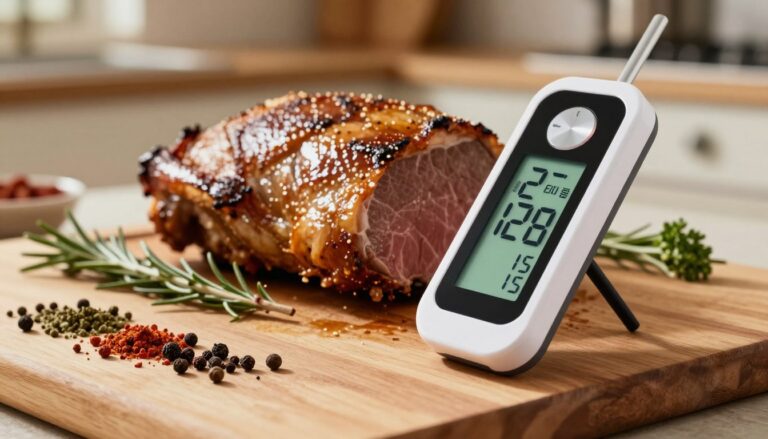
When you need repeatable results for pork shoulders and weeknight batches, temperature control matters most. The Hamilton Beach 33866 puts a probe front and center so you cook to a target internal temp instead of guessing by time.
Probe-based cooking reduces overcooked edges and gives you consistent texture across different cuts of meat. That reliability makes this unit ideal for meal prep where every batch should match the last.
Clip lids lock the insert for transport, so you can bring pulled pork or chili to gatherings without spills. Important safety note: the clips are for hauling—do not lock the lid while the cooker is active, as pressure can build.
- Who should pick this model: you, if repeatable roasts and shred-ready results matter for weekly meals.
- Capacity: 6-Qt is a versatile middle ground for families and batch cooking.
- Practical tip: use the probe to hit precise temperature targets, then switch to Keep Warm to hold servings.
| Feature | Benefit | Practical tip |
|---|---|---|
| Temperature probe | Accurate doneness for pork and roasts | Set target temp, not just cook time |
| Clip/locking lid | Safe transport to events | Lock only after cooling; never while cooking |
| 6-Qt capacity | Feeds a family or makes meal prep batches | Fits large shoulders and big stews |
| Digital settings | Consistent program control | Use presets for repeatable results |
Amazon link: Hamilton Beach 33866
How to Choose the Best Slow Cooker for Your Home
Start with size, then match controls and inserts to how you cook. Pick a model that fits your routine and cleanup tolerance so you actually use the appliance each week.
Pick the right capacity
3–4 qt suits solo cooks and couples. It saves space and energy.
6 qt fits most families and meal prep. It’s the most versatile capacity choice.
7+ qt is for crowds and entertaining. Use it when you need large batches.
Controls that fit your routine
Manual knobs are fast and foolproof. Digital panels add precision and keep-warm modes. A programmable slow cooker is useful when your schedule shifts and you want timed starts or exact temperature control.
Insert and lid details
Ceramic inserts hold heat well but weigh more. Nonstick metal inserts wipe clean faster. Glass lids let you check progress without losing heat. Confirm which parts are truly dishwasher-safe for daily use.
Features worth paying for
- Browning/saute if you want to brown meat without extra pans.
- Auto keep-warm for flexible serving windows.
- Probe/delayed start for precise temperature and timing.
| Need | Suggested Capacity | Insert | Key Feature |
|---|---|---|---|
| Solo or couple | 3–4 qt | Nonstick metal | Dishwasher-safe parts |
| Family meals | 6 qt | Ceramic or nonstick | Digital keep-warm |
| Entertaining | 7+ qt | Ceramic | Programmable settings |
Quick rule: pay for functions that remove steps you avoid now — like browning meat — and skip extras you’ll ignore. That’s how you find best-fit value for your kitchen.
Upgrade Your Kitchen – Purchase the Best Slow Cookers Here!
Slow Cooker vs Multi-Cooker: What You Should Buy If You Also Want Sous Vide or Faster Cooking
Decide by matching the appliance to your cooking habits. A dedicated slow cooker delivers steady low heat for hours, which gives reliably tender stews, chili, and shredded meat without fuss.
Choose a dedicated unit when consistency matters most
Dedicated slow cookers hold uniform low temperature over long time periods. That matters if you run dishes while you’re away or need repeatable results for braises and soups.
Choose a multi-cooker when you want more functions
Multi-cookers add pressure, sauté, rice, steam, and sometimes sous vide. They let you brown, finish, or cook rice faster than an oven or classic unit. The tradeoff: their long, low-heat mode can be less even than a dedicated appliance.
- If you mostly make soups, stews, chili, or pulled meat, prioritize consistency and pick a dedicated model.
- If you want sauté, pressure, rice programs, or occasional sous vide, the multi-cooker earns counter space.
- Keep sous vide only if you will use it—otherwise it adds cost and complexity without improving day-to-day slow cooking.
| Need | Recommended Unit | Why |
|---|---|---|
| Set-and-forget long braises | Dedicated slow cooker | More consistent low-heat performance for tender results |
| One-pot versatility (rice, pressure, sear) | Multi-cooker | Consolidates functions and shortens cook times |
| Occasional sous vide and faster weeknight meals | Multi-cooker with sous vide | Useful if you’ll use sous vide regularly and want fewer appliances |
Practical workflow: use a multi-cooker for weeknight rice, fast braises, and sautéing. Reserve a dedicated unit for long, unattended cooking that must be ultra-consistent. Match your pick to your schedule, the dishes you cook most, and how much complexity you tolerate to avoid buyer’s remorse.
Tips for Better Slow Cooking Results (Less Watery, More Flavor, Better Texture)
A few practical habits stop watery results and give you deeper flavor without extra work. Use these tactics during prep and while the pot runs so you get consistent results from your slow cook setup.
Brown meat first for richer flavor
Do this: quickly sear beef or pork in a skillet or use a model with a browning function before you slow cook.
Why: browning creates fond and adds depth to chili, stews, and roast-based dishes.
Layer for even heat
Do this: put dense vegetables (carrots, potatoes) on the bottom and meat on top. Add delicate items later.
Why: dense pieces sit closer to the heat source and cook evenly over long hours.
Use less liquid and mind the lid
Slow cookers trap steam, so reduce broth or water by about 25%. Adjust near the end if sauce is too thin.
Every time you lift the lid you lose heat and add 15–30 minutes of cook time. Use a glass lid to watch progress without peeking.
Use Keep Warm smartly
Keep Warm holds safe temperature but isn’t for active cooking. Use it to hold food briefly—long holds will soften vegetables and change meat texture.
| Tip | Why it works | Do this | Effect |
|---|---|---|---|
| Brown meat | Builds flavor | Sear before slow cook | Richer chili and stews |
| Layer ingredients | Even heat distribution | Dense veg bottom, meat top | Uniform doneness |
| Cut liquid | Less steam than stovetop | Reduce liquid ~25% | Thicker sauce |
| Limit lid lifts | Retains heat & time | Check through glass lid | Predictable timing |
Cleaning, Storage, and Everyday Ease of Use: What to Look For Before You Click “Buy”
Cleaning and storage are the unsung features that decide whether an appliance becomes part of your routine. Think past specs and ask how the pot, insert, and lid will perform after a full week of meals.
Dishwasher-safe inserts and lids: what’s actually convenient
A label that says dishwasher-safe helps only if the insert fits your machine and you can lift it without strain. Check depth and handle clearance before you assume it’s easy to clean.
Nonstick metal inserts wipe clean fast and need less soaking. Ceramic pots retain heat well but can be heavy and harder to maneuver when full. Prioritize the one you’ll actually wash by hand or toss in the dishwasher.
Weight and handling: why heavy crocks can be a deal-breaker
- Lift test: can you lift a full pot safely from the unit to the sink?
- Lid checklist: fit, comfortable handle, and a clear glass top so you can avoid lifting and losing heat.
- Storage: measure cabinet height and stow with handles aligned to avoid awkward jams.
| Feature | Ceramic | Nonstick Metal |
|---|---|---|
| Cleanup | Durable but may need soaking | Wipes clean quickly |
| Weight | Heavier | Lighter |
| Heat retention | High | Moderate |
Make cleaning a deciding factor: easier cleanup means you’ll use the pot more often. For batch cooking, favor an insert that’s quick to wash and parts that don’t need special care—your future self will thank you.
Slow Cooker Recipes You Can Make All Year (Plus Internal Links to Your Favorite Meals)
A single pot can feed your family all week when you lean on tried-and-true recipes. Use this roadmap to rotate comfort-food classics and meal-prep winners that match what your machine does best: long, hands-off cooking that builds flavor.
Comfort-food classics
Rotate staples like beef stew, chicken tortilla soup, classic chili, and shredded meat for tacos or sandwiches. These dishes shine after several hours of steady heat and need little active work.
Meal-prep winners
Make freezer-friendly soups, shredded pork for bowls, and portioned sauces you can reheat all week. Cook large batches, cool, then portion into containers for effortless lunches and dinners.
- Quick ideas: Slow Cooker Chili (link), Pulled Pork (link), Pot Roast (link), Slow Cooker Soup (link).
- Pairings: serve mains with oven-roasted vegetables or easy rice for a full plate with minimal effort.
- Pro tip: reduce broth by ~25% compared to stovetop recipes to avoid watery results.
| Recipe Type | Why It Works | Serve With |
|---|---|---|
| Stew & Pot Roast | Long braise equals tender meat | Mashed potatoes or oven-roasted root veg |
| Chili | Simmered spices deepen flavor | Cornbread or steamed rice |
| Shredded Pork | Low, slow heat yields shreddable meat | Taco shells, bowls, or sandwiches |
Next step: Browse more guides in your Kitchen Tools category to match recipes to the model you own and keep shopping on site.
Recipe Ideas by Cooker Feature: Match Your Model to the Right Slow Cooker Recipes
Let the functions of your unit guide what you cook—matching recipe to feature saves time and improves flavor. Below are focused tips so you use each function for recipes that benefit most.
If your unit has a browning function: build flavor without extra pans
Do this: brown aromatics and meat right in the pot before you slow cook. That creates fond and deeper flavor for chili, stews, and pot roast.
Try the Slow Cooker Chili and Pot Roast for immediate wins with browning.
If your model is programmable: set time and temperature for hands-off days
Use programmable slow settings to stagger cook time and maintain steady temperature. This helps soups and pulled pork tolerate schedule changes without drying out.
Good recipes: Slow Cooker Soup and Pulled Pork.
If your slow cooker has a probe: cook meat to the exact doneness
A probe removes guesswork. Target internal temperature for pork shoulder and roasts to hit shreddable, juicy results every batch.
| Feature | Best recipes | Why it helps |
|---|---|---|
| Browning | Chili, Pot Roast | Builds depth without extra pans |
| Programmable | Soup, Pulled Pork | Flexible time and temperature control |
| Probe | Pork shoulder, Roasts | Accurate internal temperature for perfect texture |
Quick tip: save or print your go-to recipes so you use your model more and justify the purchase faster. Matching recipes to functions makes cooking easier and results more consistent.
Upgrade Your Kitchen – Purchase the Best Slow Cookers Here!
Where to Buy and How to Get the Best Deal on These Slow Cookers
Shop smart for countertop appliances by comparing listings, warranties, and what’s actually in the box.
Where to buy: Amazon is the go-to for fast shipping, frequent discounts, and easy returns. You’ll also find major retailers and manufacturer sites that sometimes include bundle deals or extended warranties.
Amazon pricing changes: what to watch for before you purchase
Prices shift with seasonal sales, limited-time coupons, and lightning deals. Check the product page for coupon checkboxes and compare the same model across sellers to avoid mismatched capacity or missing accessories.
Warranty and return windows to prioritize for a countertop appliance
Prioritize models with at least a one-year warranty, especially for digital units with more electronics. Confirm return windows and who pays return shipping if the unit arrives damaged.
- Deal checklist: confirm capacity, removable insert type, lid/transport features, and included accessories (probe, clip lid, manual).
- Compare sellers: identical model numbers can hide different pots or extras—match SKU and photos.
- Timing: holiday and game-day demand can cause sellouts and limit color or size options.
| Where | Why | Tip |
|---|---|---|
| Amazon | Fast shipping, frequent discounts | Watch coupons and reviews |
| Manufacturer | Direct bundles, official warranty | Check for extended warranty offers |
| Big-box retailers | In-store pickup, demo units | Compare return policies |
Conclusion
Make tonight the night your countertop earns its keep: pick the model that matches how you actually cook and save time while improving flavor.
Our top pick, the Cuisinart MSC-600, wins for versatility—browning, slow cook, and steam in one unit so you get deeper flavor with less fuss. For a no-frills option, the West Bend 5‑Qt. delivers predictable results at great value.
Consider GreenPan if cleanup matters, All‑Clad for large, programmable batches, or the Hamilton Beach 33866 if probe accuracy is key for meats.
Choose by capacity, controls, and whether you need browning or probe temperature control. Click the Amazon links above to check current prices and buy today, then try a chili, pulled pork, pot roast, or soup to make your new slow cooker earn its keep from week one.