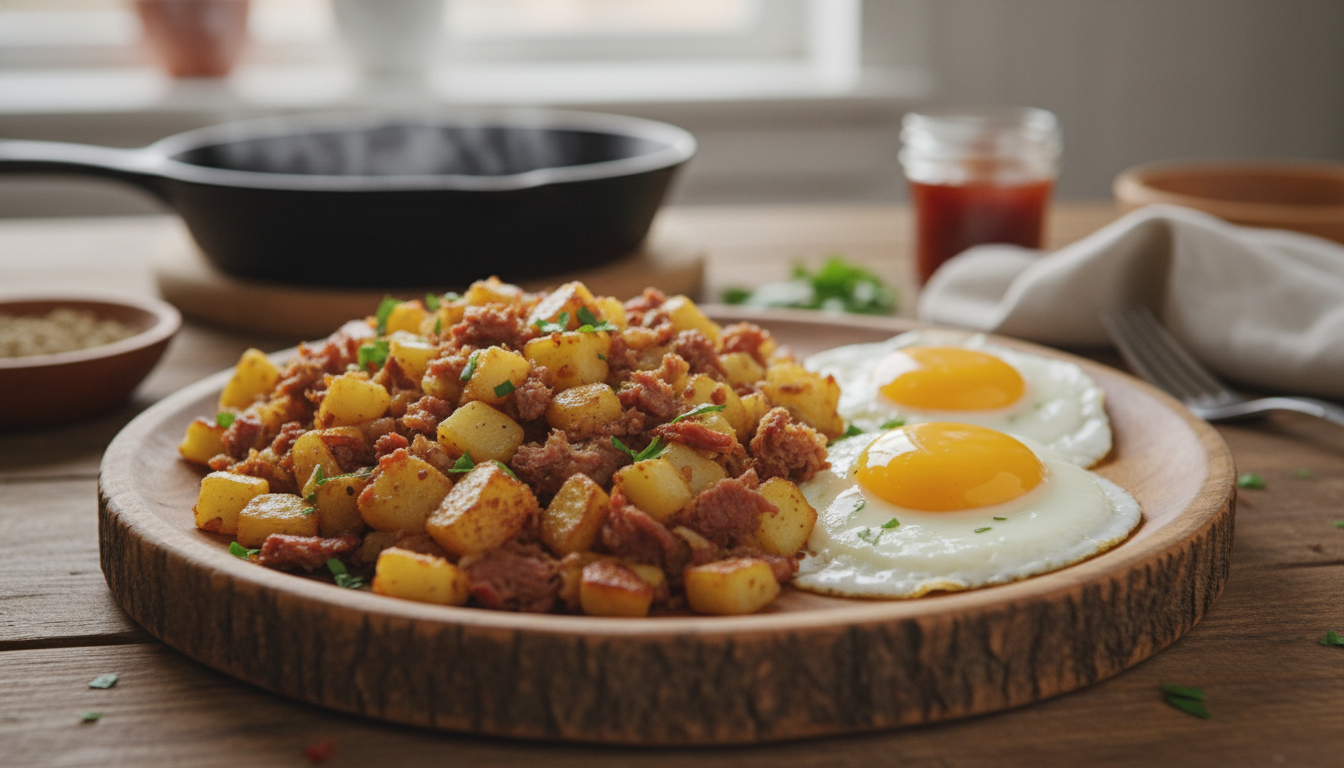
Corned Beef Hash: The Ultimate Comfort Food Breakfast
Do you remember the smell of onions sizzling, potatoes browning, and corned beef? That’s the magic of corned beef hash. It’s a classic breakfast that feels like a warm hug on a cold morning.
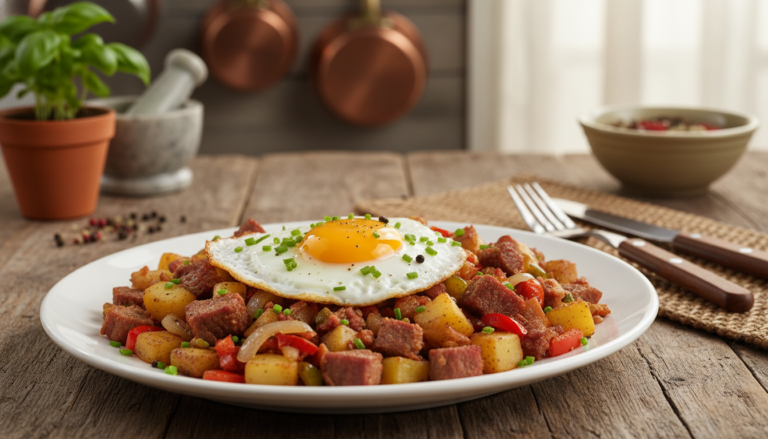
Corned beef hash is made with shredded corned beef, diced potatoes, and aromatics. It’s pan-fried until it’s crispy on the outside and tender inside. This dish is a comfort food favorite in diners and homes across the U.S.
This guide will show you how to make homemade corned beef hash. You’ll learn easy variations and the best ways to cook it. We’ll cover stovetop, oven, air fryer, and slow cooker methods. Plus, we’ll share healthy swaps, meal prep tips, and storage advice.
If you’re a home cook or a brunch host, this article is for you. We’ll help you make a hearty, budget-friendly dish that impresses everyone. Here are the meta details for search results.
Meta Title: Corned Beef Hash: The Ultimate Comfort Breakfast Guide
Meta Description: Learn to make the best homemade corned beef hash. It’s a classic breakfast with crispy edges and a tender interior. Find recipes, cooking methods, healthier swaps, and meal prep tips for a hearty comfort food.
Table of Contents
What is Corned Beef Hash?
Corned beef hash is a mix of meat and potatoes, served hot for breakfast. It started as a way to use leftovers, turning cold roast or canned corned beef into a warm morning meal. This dish is simple, flexible, and deeply rooted in home cooking traditions.
A Brief History of Corned Beef Hash
The history of corned beef hash goes back to 19th-century Britain and Ireland. “Hash” there meant chopped meat mixed with potatoes. Immigrants brought this idea to the United States.
Canned brands like Libby’s made corned beef common in American pantries during wartime. Diners adopted the dish, making it a staple breakfast item across the country.
Traditional Ingredients Used in Hash
A good hash recipe uses corned beef, potatoes, and onions. You’ll find canned or boiled corned beef with russet or Yukon potatoes. Butter or oil adds a crispy sear.
Salt and black pepper are key. Optional ingredients include garlic, paprika, parsley, and Worcestershire sauce to enhance flavor.
Texture choices change the dish. Diced beef and cubed potatoes make firm bites. Shredded meat or mashed potatoes create a softer, creamier hash.
Variations of Corned Beef Hash Around the World
Regional versions show the dish’s adaptability. In Britain and Ireland, hash uses roast meat leftovers. American diners make it a breakfast staple, often with fried eggs.
Jewish delis sometimes use brisket or canned corned beef for a richer taste.
Caribbean and Latin versions add plantains, peppers, and bold spices for brightness. These changes show how a basic recipe can reflect local tastes. You can easily adjust your homemade corned beef hash to suit your taste or what you have on hand.
Why Corned Beef Hash is a Comfort Food
Ever felt a warm feeling when a familiar scent fills the kitchen? Corned beef hash does that. It brings back memories of family breakfasts, diners, and lazy weekend cooking. It’s more than a meal; it’s comfort food for when you need something steady and satisfying.
Nostalgia and tradition
Remember leftover corned beef after a holiday or St. Patrick’s Day? Turning it into hash is a tradition of frugality and care. Diners across New York to Boston kept it on menus for years. The military and maritime communities used it for its long shelf life. Each bite is filled with history and family traditions.
Perfectly satisfying breakfast option
The dish has the right mix of protein and carbs to fill you up without feeling heavy. Crispy potatoes add texture, while the corned beef brings a savory flavor. Add runny yolks, and corned beef hash and eggs become a hearty start to your day.
Its appeal also comes from how easy it is to make. If you have leftover beef, you can whip up a skillet in minutes. It’s perfect for busy mornings or a relaxed brunch with friends. Serve it with toast, roasted tomatoes, or sautéed greens for a complete classic breakfast.
How to Make Corned Beef Hash at Home
Make a tasty breakfast skillet with pantry staples. This easy recipe lets you control the texture and flavor. Follow the steps below for a crispy homemade corned beef hash.
Essential Ingredients and Preparation
Checklist: cooked or canned corned beef (about 12–16 oz), 2–3 medium potatoes (russet or Yukon Gold), 1 medium onion, 2–3 tbsp butter or oil, salt, pepper, optional parsley, garlic, paprika, and eggs for serving.
Start by parboiling the potatoes until they’re tender but still firm. Then, drain and cool them. Leftover roasted or day-old potatoes add dryness and texture.
Drain and flake the corned beef, removing any large bits. Dice the onion and any peppers you want to add.
Step-by-Step Cooking Instructions
Parboil, drain, and cool the potatoes so they hold their shape. Heat a heavy skillet over medium-high with oil or butter until shimmering.
Sauté the diced onion until it’s translucent and fragrant. Add the potatoes and spread them out so each piece touches the pan. Cook until they’re golden.
Add the flaked corned beef and break up clumps with a spatula. Season with pepper and a splash of Worcestershire if you like. Press the mixture into an even layer and let it brown undisturbed for several minutes to build a crust.
Flip sections to brown the other side, allowing the hash to crisp evenly. Finish with chopped parsley and serve from the breakfast skillet with eggs fried, poached, or scrambled.
Tips for the Perfect Crisp
Use a heavy cast-iron or stainless-steel skillet for even heat and the best crust. Avoid overcrowding the pan; work in batches if needed. Combine oil and butter to boost flavor and browning.
Let the hash sear without stirring so a crust can form. If potatoes release too much moisture, dry them in the fridge briefly or use day-old potatoes. For extra crunch, finish the top under the broiler for a minute or two while watching closely.
Best Cooking Methods for Corned Beef Hash
Choose the right method for the meal you want to serve. Quick weeknight breakfasts benefit from a crispy, hands-on approach. Brunch crowds may prefer a hands-off technique you can leave warming. Below are clear options so you can match texture and timing to your plans.
Stovetop vs. Oven
The stovetop gives you instant control and the deepest crisp. Use a heavy skillet, heat oil until shimmering, then press the mixture into a thin layer. Cook without stirring for a few minutes to form a brown crust, flip in sections, and repeat. If you love a golden, crunchy breakfast skillet, the stovetop method is best for a traditional, crisp finish.
Oven cooking shines when you need to feed more people or want less hands-on time. Spread the mixture in a cast-iron skillet or baking dish, roast at 425°F, and let the oven produce even browning. Use the oven-baked hash approach for larger batches or when you want to finish a stovetop sear by sliding the skillet into the oven for uniform color.
Using an Air Fryer for Hash
The air fryer offers speed and lower oil use. Toss parboiled diced potatoes and corned beef with a light coat of oil and seasonings. Arrange in a single layer in the basket and cook at 375°F for 10–15 minutes, shaking halfway through. This air fryer corned beef hash yields quick, golden bites with less grease.
Keep in mind capacity limits. You may need batches for a full breakfast. Mixed ingredients can brown unevenly compared to a wide skillet, so use uniform dice and don’t overcrowd the basket.
Slow Cooker Corned Beef Hash
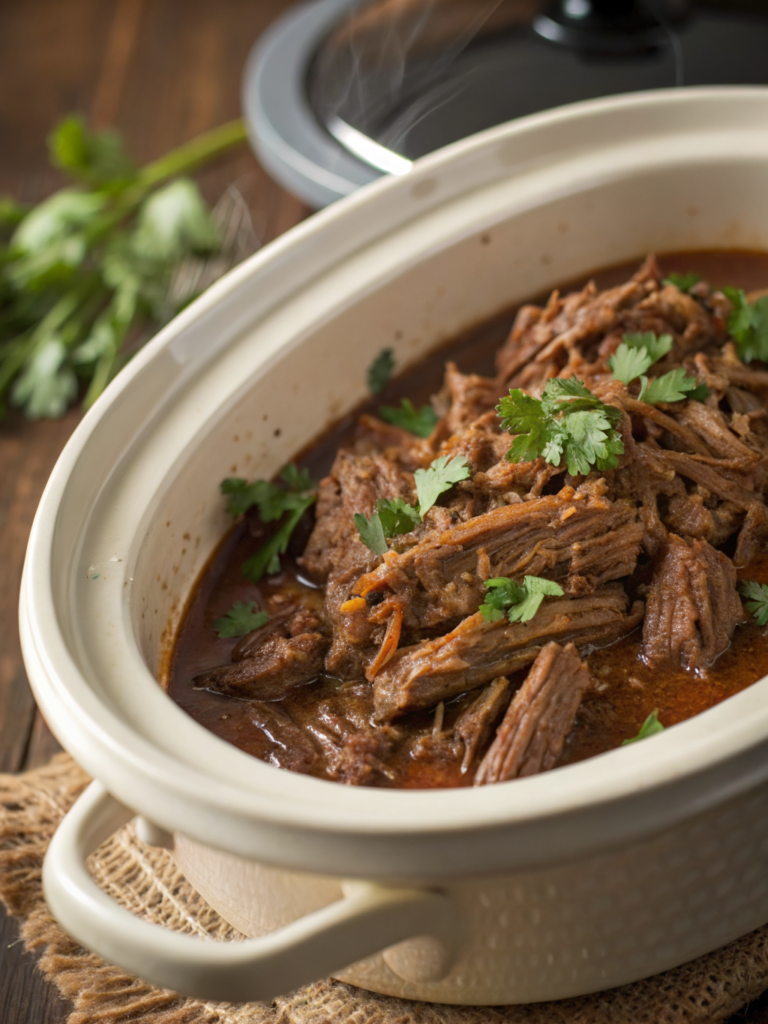
Use a slow cooker when you want soft, melded flavors and hands-off prep. Combine cooked diced potatoes, corned beef, onions, and a splash of stock. Set the cooker on low for 2–3 hours so tastes blend and textures soften. This slow cooker hash is ideal for overnight meal prep or keeping food warm for a brunch service.
If you crave crisp edges afterward, transfer portions to a hot skillet or broil briefly to finish. The slow cooker will not create the same crust as a stove or air fryer without that extra step.
Perfect Pairings: What to Serve with Corned Beef Hash
Start with a simple plan to balance your plate. Corned beef hash is best with matching textures and flavors. Choose one main egg style, a few breakfast skillet sides, and a light drink to complete the meal.
Eggs Cooked to Your Preference
Sunny-side-up or over-easy eggs mix well with the hash. Poached eggs add elegance for a restaurant feel. Scrambled eggs are great for a softer mix that blends into each bite.
Match runny yolks with crisp hash and firmer eggs with chunkier hash for the best contrast.
Delicious Side Dishes
Buttered toast or an English muffin helps scoop up every last bite. Sautéed spinach or kale adds color and a bitter note. Roasted tomatoes and avocado slices bring brightness and creaminess.
Pickled beets or gherkins add a sharp contrast, while baked beans create a classic diner feel.
Beverage Suggestions for Breakfast
Choose bold coffee from a drip brewer or French press for a strong start. Espresso-based drinks are good if you like milk with your coffee. Black or herbal tea offers a lighter option.
Fresh-squeezed orange juice adds zesty freshness for a delicious brunch. For weekend entertaining, a Bloody Mary or a mimosa pairs well with the savory flavors on your plate.
If you like condiments, keep options near the table. Ketchup, hot sauce, or whole-grain mustard enhance many side dishes for hash without overpowering the main flavors.
Healthier Alternatives to Traditional Corned Beef Hash
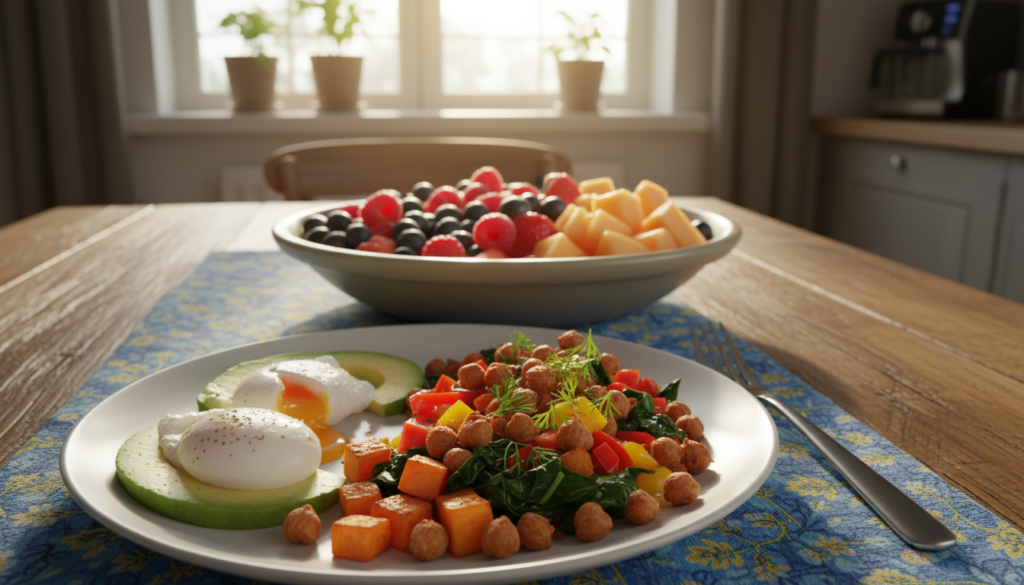
There are easy ways to enjoy corned beef hash without the extra calories and sodium. Try using lean proteins and adding more veggies. You can also adjust the seasonings to keep it tasty but with less fat. These changes make a healthier hash without losing the comfort.
Leaner Meat Options
Switch to diced turkey breast, skinless chicken breast, or low-sodium corned beef brisket. These choices are lower in saturated fat but still pack a flavor punch. For convenience, pick reduced-sodium canned corned beef and drain the oil.
Remove visible fat from whole cuts and pat dry with paper towels to cut down on grease. These small changes help you enjoy the classic texture but with a lighter version.
Vegetable Variations for Added Nutrition
Try using sweet potatoes, cauliflower rice, or shredded Brussels sprouts instead of potatoes. Add diced zucchini or turnips for a lower-carb option. Bell peppers, onions, mushrooms, and leafy greens bring color and extra nutrients.
Season with smoked paprika, cumin, and lemon zest for depth without extra fat. Use minimal oil or nonstick spray for browning. These adjustments turn a classic into a healthier breakfast option.
Corned Beef Hash for Meal Prep
Make mornings easier with corned beef hash meal prep. Plan ahead to make a big batch for your family or week’s breakfasts. Cook potatoes and onions early, shred the corned beef, and mix just before crisping.
Making a Big Batch Ahead of Time
To make more, just multiply the potatoes, onions, and corned beef. Roast or pan-fry potatoes and onions in batches for a crispy texture. Shred or chop the corned beef after warming it gently to avoid sogginess.
Put portions in microwave-safe containers for quick breakfasts. Or, use family-size pans for weekend meals. For crisp hash, store veg and meat separately and reheat in a skillet.
Storage Tips and Shelf Life
Cool hash to room temperature in two hours. Then, refrigerate in airtight containers for 3–4 days. Freeze for 2–3 months in freezer-safe containers or bags. Always label with the date.
Reheat in a skillet with oil for crisp edges, or bake at 375°F. The microwave is fast but makes it softer. Check for spoilage signs like bad smell, sliminess, or color change. Throw away hash that looks or smells off.
Corned Beef Hash in Restaurants
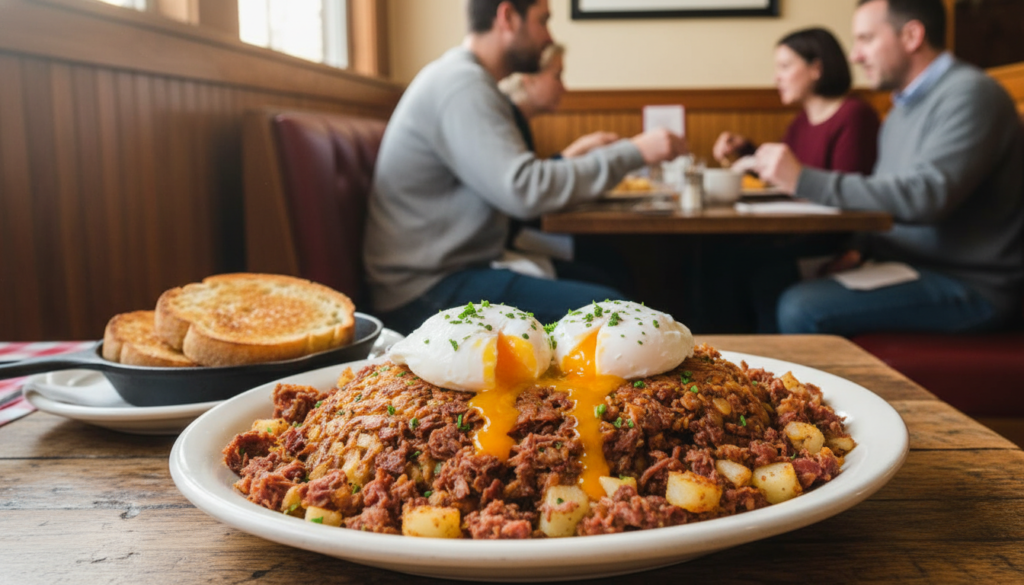
Corned beef hash is a staple in many restaurants, from diners to fancy brunch spots. Menus change based on where you are and who’s cooking. Some places serve it loose in a skillet, while others make it crispy and top it with eggs or hollandaise.
Popular chains offering hash
Denny’s and IHOP are known for their corned beef hash. Cracker Barrel offers a homestyle version that’s all about comfort. Local breakfast spots might serve it in a skillet with eggs and toast.
When you visit these places, you’ll notice different textures and sizes. It’s all about what the chef likes to do.
Unique local spots to try
Look for neighborhood diners and Jewish delis for homemade hash. Gastro-brunch cafés often use house-cured brisket or local potatoes. They might add fresh veggies or farm eggs for a twist.
Before you go, check menus online or call ahead. Use food apps and Yelp or Google Reviews to find the best local spots. Trying different versions will show you how it can feel both familiar and new.
Creative Twists on Classic Corned Beef Hash
Try new things with corned beef hash by using local produce and bold flavors. Start with seasonal veggies and local meats. This way, your hash will feel fresh and connected to your area.
Adding Local Ingredients
Make a Southwestern hash with roasted poblanos, chorizo spices, cilantro, and lime. Use local items like artisanal sea salts or cold-pressed olive oil to enhance the taste.
For a New England twist, add cooked lobster or smoked haddock. In the Pacific Northwest, wild mushrooms and leeks add earthiness. Pair these with rye or sourdough.
In the South, mix in collard greens and smoked paprika for smoky flavor. These variations celebrate local crops and pantry items.
Fusion Dishes Featuring Hash
Make hash into tacos with pickled cabbage and hot sauce for a zesty kick. Stuff hash into empanadas for a tasty, portable snack. These dishes balance flavors for a great taste.
Try a breakfast poutine with hollandaise instead of gravy and a poached egg on top. Or, add hash to ramen or a kimchi bowl for tang and heat. These dishes are best when you adjust flavors to your liking.
Be adventurous with local ingredients and fusion ideas. These creative approaches to corned beef hash lead to memorable meals you’ll want to make again and again.
Frequently Asked Questions About Corned Beef Hash
Got quick questions about corned beef hash? This FAQ answers common concerns about ingredients and safe storage. So, you can enjoy hash with confidence.
Is Corned Beef Hash Gluten-Free?
Plain corned beef, potatoes, onions, and basic seasonings are naturally gluten-free. If you have celiac disease or gluten sensitivity, check canned or processed corned beef labels. Some brands may include wheat-based fillers or malt vinegar.
Worcestershire sauce can contain gluten unless it’s labeled gluten-free. Choose certified gluten-free ingredients like gluten-free Worcestershire. Or, omit flour-thickened gravies. Brands like Libby’s and major store labels vary, so verify each product if gluten matters to your diet.
How Long Can You Store Leftover Hash?
For safe leftover hash storage, refrigerate within two hours of cooking. Eat refrigerated hash within 3–4 days for best quality. For longer keeping, freeze portions; use within 2–3 months for best texture and flavor.
When reheating, bring the internal temperature to 165°F. Re-crisp on the stovetop or in the oven to restore texture. Do not refreeze thawed hash more than once. Discard any portions that show off-odors, sliminess, or visible mold.
Conclusion: Embracing Corned Beef Hash in Your Breakfast Routine
Corned beef hash is a comforting food that’s easy to add to your week. With just corned beef, potatoes, and onions, you can make a tasty breakfast skillet or a soft, oven-baked dish for brunch.
Try stovetop crisping for a classic texture, or use lean turkey or extra veggies for a healthier version. You can also use an air fryer or oven to save time and keep flavors rich. This makes it easy to cook in batches and prep meals ahead.
Enjoy your hash with eggs and your favorite drink for a complete meal. Always store leftovers safely. Look for local restaurants for new ideas. And, don’t forget to adjust spices and add seasonal produce to keep your hash exciting and satisfying.