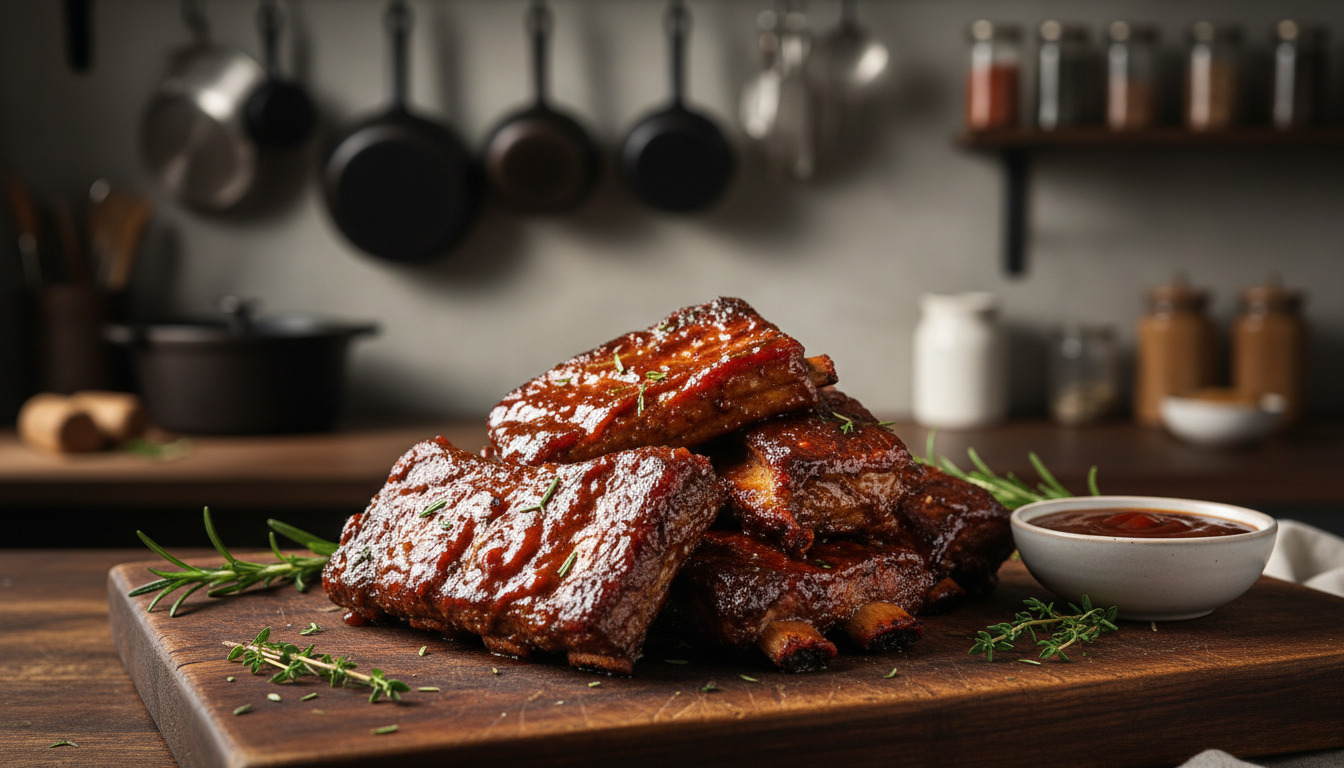
Beef Short Ribs Recipe: Irresistibly Juicy & Flavorful
Imagine a dinner that simmers slowly, filling your home with delicious smells. Maybe you’ve watched the first sear turn beef into something richer. Or felt the steam from the Instant Pot hit your face. This beef short ribs recipe makes any day special.
This recipe is perfect for home cooks because it’s easy to follow. It offers deep beef flavor, tender texture, and simple steps. You can braise, slow cook, use the Instant Pot, grill, or smoke your short ribs.
It covers everything from the cut to seasoning, including a garlic herb version. You’ll find recipes for slow cooker, braised, Instant Pot, and smoked short ribs.
Beef short ribs usually take 2.5–4 hours to cook, but Instant Pot or grill options are quicker. This recipe uses common cuts and pantry staples. It also suggests gluten-free or low-sugar marinades for those who need them.
Whether you’re cooking for a weeknight or a dinner party, this recipe has you covered. It includes tips on timing, seasoning, sides, storage, and presentation.
Table of Contents
What Are Beef Short Ribs?
Beef short ribs come from the chuck, plate, or brisket area of the cow. Each piece has a cross-section of bone with meat and connective tissue. When cooked long and moist, the collagen melts into rich gelatin.
This gelatin makes the meat tender and glossy.
Understanding the Cut of Meat
Retail short ribs come in three common forms. The English cut has long, meaty pieces with a single bone. The flanken cut slices across the bone into thin strips, perfect for Korean galbi.
Boneless short ribs are trimmed of bone and cook faster.
Look for good marbling when you buy. Marbling and connective tissue make these ribs ideal for braising or smoking. Bone-in pieces add flavor, while boneless cuts save time.
Popularity in American Cuisine
Short ribs have become popular in American cuisine. You’ll find braised short ribs in bistros and slow cooker short ribs in home kitchens. Barbecue joints and competitions feature smoked short ribs with deep, smoky flavor.
These ribs cross culinary lines. Korean galbi uses flanken cuts. Texas-style pitmasters smoke whole racks. Many chefs plate braises over mashed potatoes or polenta for comfort and richness.
- Buying tip: choose well-marbled ribs from Whole Foods, Kroger, Safeway, or a trusted local butcher.
- Portion guide: plan about 1 to 1.5 pounds raw short ribs per adult for hearty servings.
- Tradeoff: bone-in for flavor, boneless for faster cook times and easier slicing.
Preparing for Your Beef Short Ribs Recipe
Before you start cooking, gather your tools and ingredients. This makes the process smoother. It saves time and keeps flavors consistent, whether braising, slow cooking, or pressure cooking.
Essential Tools and Equipment
Having the right gear is key to success. For braising, a heavy Dutch oven or ovenproof braiser is essential. If slow cooking, a reliable slow cooker or Crock-Pot is needed. For quick results, a 6-quart or larger Instant Pot is best.
Other must-haves include a sharp chef’s knife, sturdy tongs, and a meat thermometer. A roasting pan or cast-iron skillet for searing, a cutting board, and aluminum foil are also necessary.
Optional tools can enhance your dish. A smoker or pellet grill like a Traeger or Weber Smokey Mountain is great for smoked short ribs. A grill with indirect heat is good for finishing. Fine-mesh strainers and immersion blenders help with silky sauces.
Remember to have cleaning and safety items like oven mitts, thermometer probe covers, and kitchen twine for tying ribs.
Choosing the Right Ingredients
Start with well-marbled bone-in beef short ribs. Look for bright color and a clean smell to ensure freshness. The cut you pick affects texture and richness.
Build flavor with aromatics and vegetables. A classic mirepoix of yellow onion, carrots, and celery provides a savory base. Add garlic for a garlic-herb short ribs profile, and swap in leeks or shallots for subtle sweetness.
Pick liquids that deepen the sauce. Low-sodium beef broth or stock keeps salt in check. Use a dry red wine like Cabernet or Merlot for deglazing and complexity. Tomato paste gives umami. A splash of balsamic or red wine vinegar balances the richness.
Season wisely with kosher salt, freshly ground black pepper, fresh rosemary, thyme, and bay leaves. For a bright finish, stir in minced garlic and chopped parsley at the end.
Choose fats for searing and sheen. Olive oil or a neutral oil works for high-heat searing. Finish with butter for a glossy sauce if you like.
Add optional boosters to customize the profile. Soy sauce or Worcestershire sauce deepens savor. Brown sugar or honey creates a caramelized glaze. Smoked paprika reinforces a smoked short ribs recipe.
Plan for substitutions and dietary needs. Use tamari for a gluten-free soy option. Replace wine with extra stock and a splash of apple cider vinegar to keep acidity without alcohol. Pick low-sodium broth if you monitor salt.
Step-by-Step Beef Short Ribs Cooking Method
Start with a short introduction that sets the stage for hands-on cooking. You will learn how to marinate, choose a method, and finish rich pan sauces. Pick the technique that fits your schedule and gear.
Marinating for Flavor
Marinades with acid and oil help tenderize and move flavor into the meat. A wet marinade gives a subtle lift under the surface while a dry rub locks seasoning on the crust.
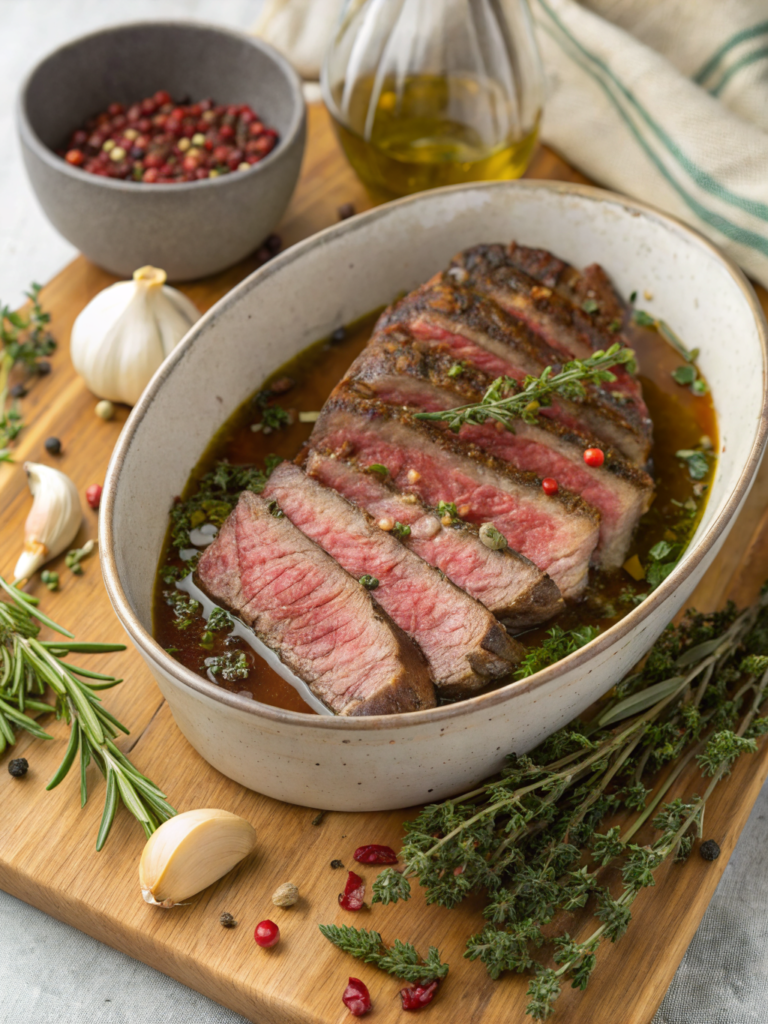
Try this garlic herb short ribs recipe marinade: minced garlic, chopped rosemary and thyme, extra-virgin olive oil, lemon zest or a splash of balsamic, kosher salt, and freshly ground black pepper. Mix well and coat the ribs. Chill for 2–12 hours. Avoid over-marinating in very acidic blends; the texture can turn mushy.
Other options include a red wine braise base for deep savory notes, a soy-ginger mix for an Asian-style profile, or a brown sugar–smoked rub for barbecue. Each approach changes the final texture and sauce behavior, so match your marinade to the cooking method.
Cooking Techniques to Consider
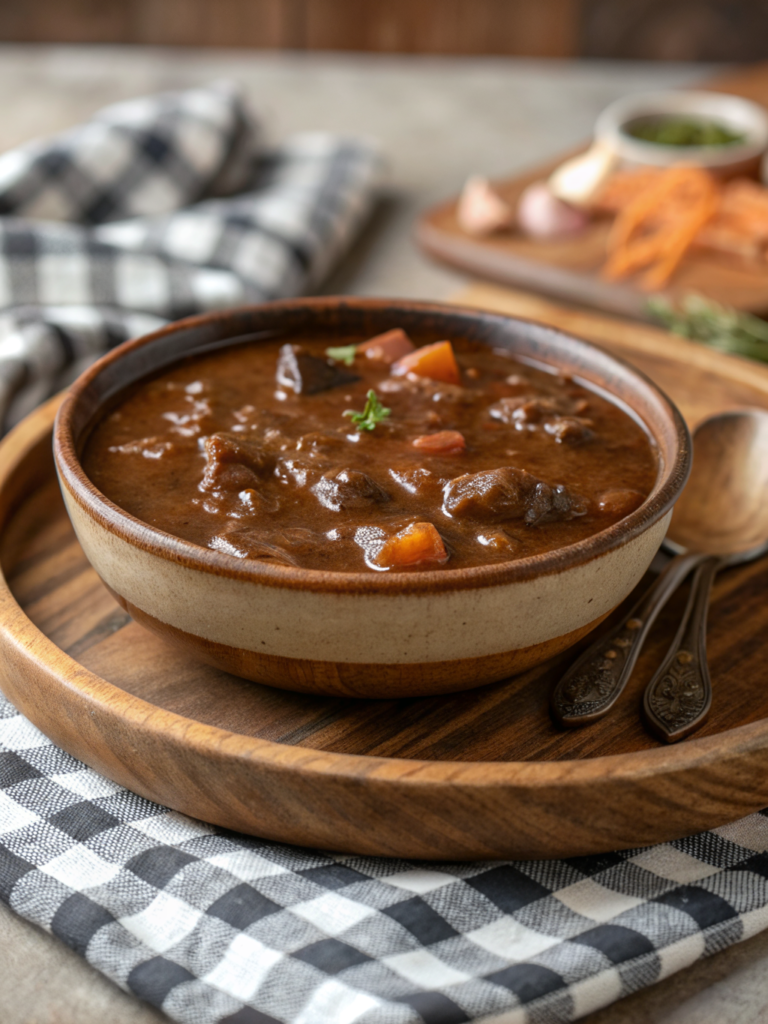
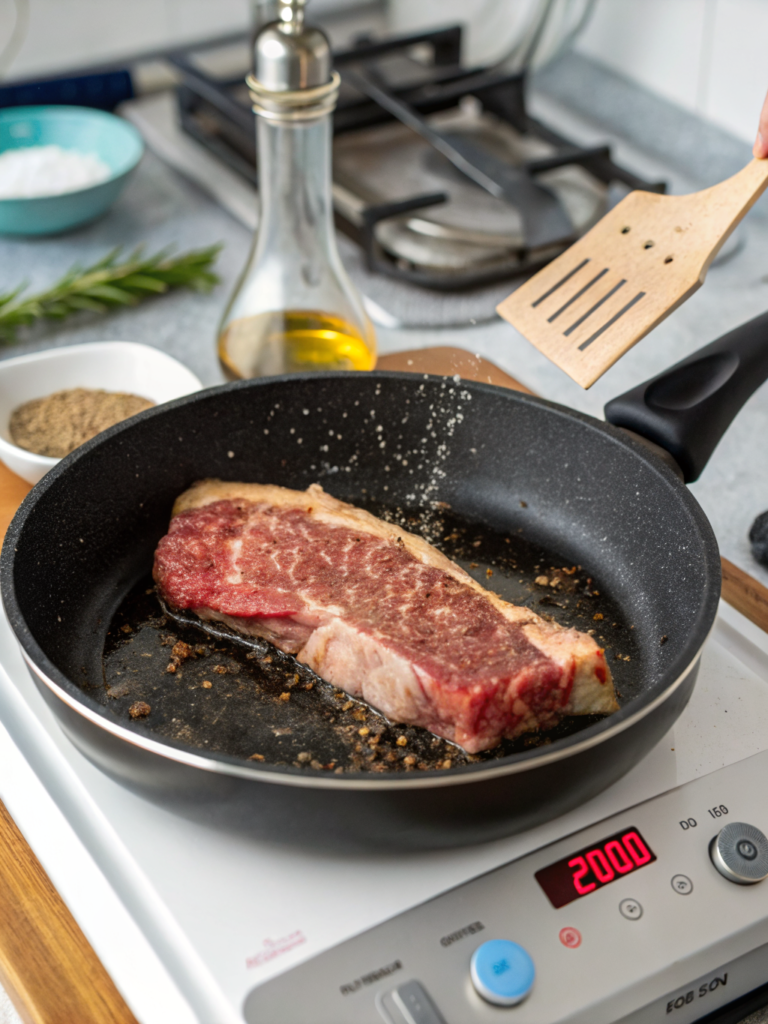
Braising is the classic choice for fork-tender results. Sear short ribs in a hot Dutch oven until deeply browned, then remove them. Sauté mirepoix, deglaze with red wine, stir in tomato paste and beef stock, return the ribs so they sit partially submerged, add herbs, and braise in a 300–325°F oven for 2.5–3.5 hours. Check for fork tenderness.
Use a slow cooker when you want set-it-and-forget-it convenience. Brown the ribs first to develop flavor. Transfer to the slow cooker with aromatics and liquid. Cook on low for 6–8 hours or high for 4–5 hours. Strain and reduce the braising liquid on the stovetop for a glossy sauce.
An Instant Pot speeds the process while preserving tenderness. Brown on Sauté, deglaze the pot, add liquid and aromatics, then pressure cook on high for 45–55 minutes depending on bone size. Allow a 15–20 minute natural release, then reduce the sauce if needed.
For a smoked short ribs recipe, apply a dry rub and smoke at 225–250°F for several hours until the meat is tender. Finish over high heat to build a bark. On the grill, par-cook by braising or sous vide, then sear to create a crisp exterior and caramelized edges.
Finish your dish by skimming excess fat from the resting braising liquid, straining, and reducing it to a glaze. Swirl in a pat of butter for sheen and tweak seasoning with salt, pepper, or a splash of acid for balance. These touches lift any beef short ribs recipe to a restaurant level.
Perfect Seasoning for Beef Short Ribs
Seasoning makes short ribs truly special. Start with kosher salt and black pepper for a solid base. Add smoked paprika or cumin for a smoky flavor that’s perfect for easy recipes.
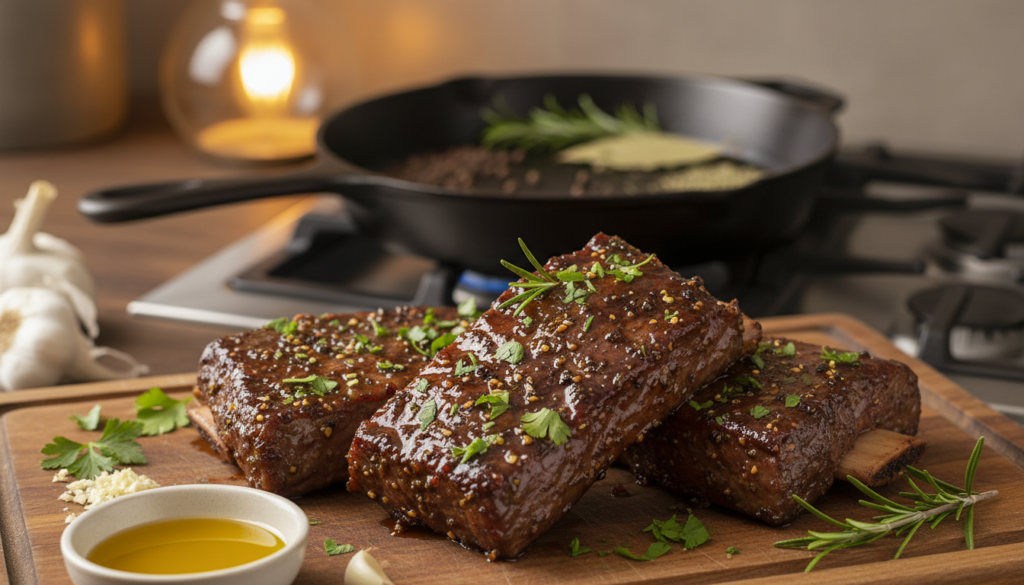
Fresh herbs like rosemary, thyme, and bay leaves add depth to the braise. Finish with parsley or chives for a fresh touch. For a BBQ crust, mix brown sugar, chili powder, garlic powder, and mustard powder into a dry rub before searing.
Recommended spices and herbs
- Kosher salt and black pepper for seasoning at every stage.
- Smoked paprika, ground cumin, or coriander for depth.
- Fresh rosemary, thyme, and bay leaves for braise aromatics.
- Garlic, onions, carrots, and celery for savory balance and natural sweetness.
Creating your own marinade
Make marinades with oil, acid, savory elements, aromatics, and seasonings. A good mix is three parts oil to one part acid, plus salt and herbs. This lets you tailor the flavor to your liking.
- Garlic Herb Marinade (ideal for a garlic herb short ribs recipe): 1/2 cup olive oil, 1/4 cup balsamic vinegar, six cloves minced garlic, two tablespoons chopped rosemary, two tablespoons chopped thyme, one teaspoon kosher salt, 1/2 teaspoon black pepper.
- Red Wine Braise Marinade: one cup dry red wine, 1/2 cup beef stock, two tablespoons tomato paste, two tablespoons Worcestershire sauce, minced garlic and herbs.
- Asian-style Marinade: 1/2 cup soy sauce or tamari, 1/4 cup brown sugar, two tablespoons rice vinegar, grated ginger and sliced scallions. Works well for an Instant Pot or pressure-cooked approach.
Marinating tips keep your ribs safe and flavorful. Pat the meat dry before searing for a better crust. Always heat marinade before using it, never use it raw.
These tips help you pick the best short ribs recipe for your kitchen. Choose bold seasoning for a standout dish or keep it simple for a rich, beefy flavor.
Cooking Times and Temperature for Short Ribs
Timing and temperature are crucial for tender short ribs. The cooking method affects both. Use a thermometer and touch tests to check if they’re done.
Braising vs. Grilling
Braising uses low heat to make meat tender. Roast at 300–325°F for 2.5–4 hours. Check after 2.5 hours, then every 30 minutes until tender.
Grilling is best for thin cuts or as a final step. Grill flanken 4–6 minutes per side. For thicker ribs, braise or sous-vide first, then sear.
Smoking is a mix of braising and grilling. Smoke at 225–250°F for 4–6+ hours. Use hickory or oak for flavor.
Pressure cooking is quick. For bone-in ribs, cook in the Instant Pot for 45–60 minutes. Adjust time for boneless or large cuts.
Ideal Internal Temperature
Short ribs are tender, not just by temperature. USDA says 145°F is safe, but you need 190–205°F for tenderness.
Check by fork tenderness and ease of bone pull. A thermometer should slide in easily when done.
Rest ribs for 10–15 minutes after cooking. This lets juices settle and firms the meat. Try braising for more time or Instant Pot for less.
Sides That Complement Beef Short Ribs
Choose sides that balance the richness of your short ribs. They should match the style of your cooking. Whether you follow the best short ribs recipe, use an easy short ribs recipe, or rely on a slow cooker short ribs recipe, the right accompaniments lift the whole meal.
Classic choices soak up sauce and add comforting textures. Creamy mashed potatoes made from Yukon Gold or russets meld with braising juices. Soft polenta or creamy grits carry the sauce and bring a silky mouthfeel. Roasted root vegetables such as carrots, parsnips, and potatoes add sweet, caramelized notes.
Sautéed greens like spinach, kale, or Swiss chard with garlic brighten each bite. A crusty baguette or country loaf gives you something to mop the plate clean. These staples pair well with any style of short ribs and keep the meal grounded.
Creative pairings introduce contrast and flair. Try herb-infused cauliflower mash or a parsnip purée for a lower-carb swap. Charred broccolini or grilled asparagus add fresh, smoky edges that accent smoked preparations.
- Quick-pickled cucumbers or pickled red onions cut through richness with bright acidity.
- Creamy polenta with Parmesan and a drizzle of truffle oil makes an elevated base.
- Serve Asian-style short ribs over steamed jasmine rice or kimchi fried rice for bold, savory notes.
Think about drinks as part of your pairing. Full-bodied red wines such as Cabernet Sauvignon, Malbec, Syrah, or Zinfandel stand up to robust beef flavors. Robust stouts or brown ales work with grilled or smoked ribs, while a smoked porter complements smoky notes.
For non-alcoholic options, a strong black tea or sparkling water with lemon refreshes the palate. Choose sides that support the score of flavors in your chosen recipe and let the ribs stay center stage.
Tips for Achieving Tender, Juicy Ribs
Getting tender, juicy short ribs is more than just a good recipe. Small changes in how you cook can make a big difference. Use time, the right temperature, and patience to turn tough meat into tender, juicy ribs.
Common mistakes to avoid
- Searing in an overcrowded pan. Brown ribs in batches so each piece gets a deep crust that adds savory flavor to the braise.
- Cooking at too-high heat for long braises. Keep oven temperature around 300–325°F to protect the proteins and melt collagen gently.
- Using too little braising liquid or a shallow pan. Ribs should be at least partially submerged so collagen converts evenly across the cut.
- Cutting too soon after cooking. Slice after resting to keep the juices inside the meat rather than on the cutting board.
- Over-salting early in the process. If you dry-brine, taste the sauce after reduction and adjust so the final dish isn’t too salty.
- Treating short ribs like steaks. These cuts need long, moist cooking or thin, quick grilling; they stay tough if not.
Importance of resting the meat
Resting lets muscle fibers relax and reabsorb juices that heat pushed toward the surface. If you serve straight from the oven, those juices run out when you slice.
For large braises rest the ribs 10–15 minutes under a loose foil tent. If service is delayed rest up to 20–30 minutes; the meat stays moist and slices cleaner when slightly cooled.
Many cooks find a garlic herb short ribs recipe benefits from a short rest so the herb aroma settles into the meat. When reheating, warm gently to keep moisture and follow best practices in the next section for storing and reheating leftovers.
Use these tips with your favorite beef short ribs recipe to approach the best short ribs recipe you’ve tasted. Small technique fixes lead to consistently tender results every time.
Storing and Reheating Leftover Short Ribs
To keep your short ribs juicy, cool them slightly first. Then, refrigerate them within two hours to slow down bacteria growth. Use shallow, airtight containers and include the sauce. This keeps the meat moist, no matter the cooking method.
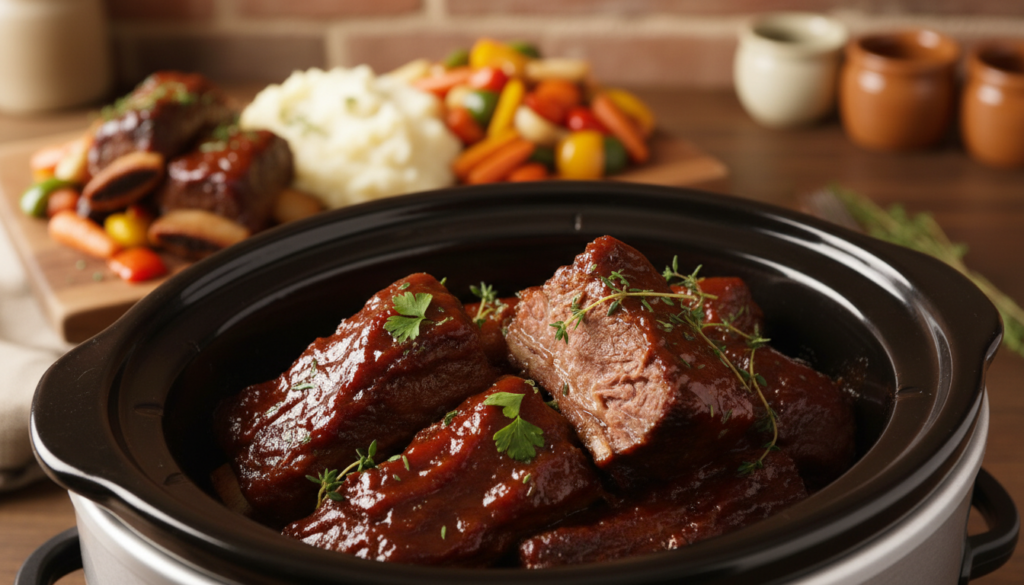
Best Practices for Storage
Store ribs in shallow containers for even cooling. Refrigerate them for 3–4 days. For longer storage, freeze for up to three months for the best quality.
Wrap frozen portions tightly in plastic wrap and aluminum foil, or use vacuum-sealed bags. Label each package with the date and reheating notes. This makes it easy to find the right portion later.
Reheating Techniques
Oven reheating is great for keeping sauce and texture intact. Preheat to 300°F. Place ribs and sauce in a covered dish and warm until it reaches 165°F. This takes 20–30 minutes, depending on the size.
Stovetop reheating is good for small portions. Warm ribs gently in a covered saucepan over low heat. Add a splash of stock or water to prevent drying. Stir occasionally until heated through.
Microwave reheating is quick for a fast meal. Cover the ribs, use medium power, and heat in short intervals. Pause to stir the sauce and check the temperature to avoid cold spots.
For precise results, use a sous vide or steam method. Place vacuum-sealed ribs in a 140–150°F water bath for 45–60 minutes. This keeps the meat moist and prevents overcooking from repeat heating.
If you want to restore a crust, finish reheated ribs under a high broiler for 2–4 minutes. Or, give them a quick sear on a hot grill. This adds texture without drying the inside, whether your batch began as a slow cooker short ribs recipe, Instant Pot short ribs recipe, or easy short ribs recipe.
Serving Suggestions and Presentation
How you present your short ribs can make a big difference. After resting, set up plates or a family-style board to keep the sauce and ribs warm. Make sure the portions are right and serve quickly.
Plating Ideas for Impressing Guests
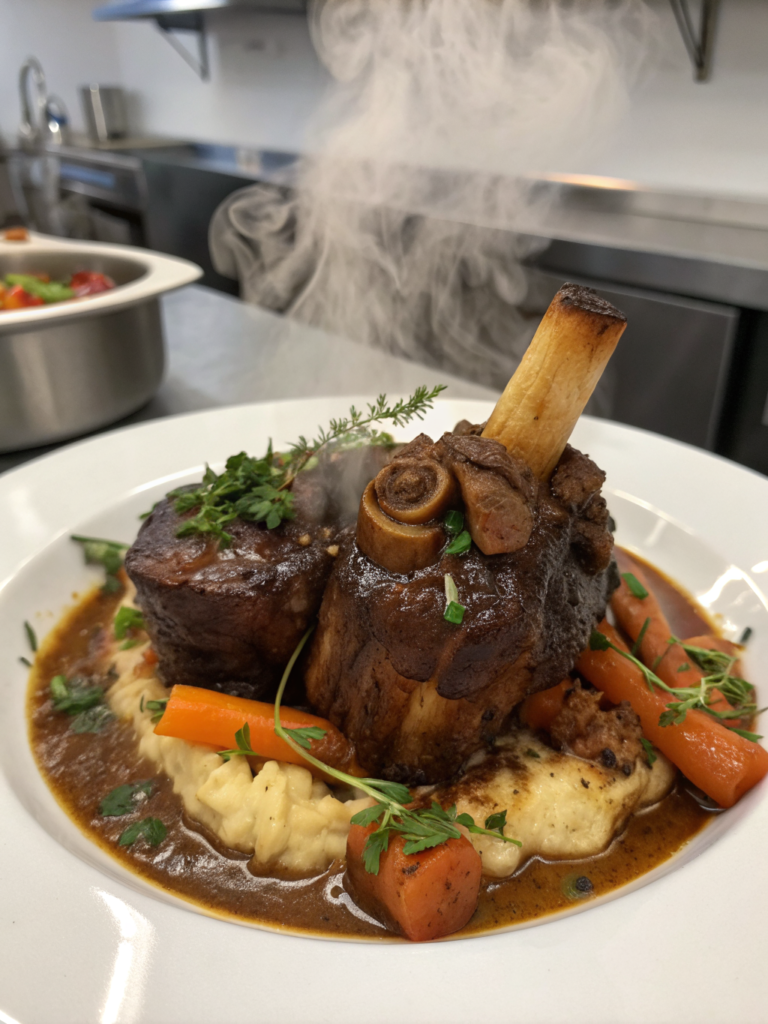
For a group feel, put whole ribs on a big platter with sauce and sides like carrots and mashed potatoes. For individual servings, place mashed potato or polenta in the center, add a rib on top, and drizzle with sauce. To look like a restaurant, slice the meat, arrange it on purée, and add veggies and microgreens.
Garnishes That Make a Difference
Use parsley, chives, or thyme to brighten up the ribs. A drizzle of balsamic, lemon, or sherry vinegar can enhance flavors. Add crunch with toasted hazelnuts or crispy shallots, and finish with butter or olive oil for shine.
For a rustic look, slice the ribs thick and serve on butcher paper with coleslaw and pickles. Top with Maldon sea salt and black pepper just before serving. Pairing suggestions from the sides section will round out your meal.