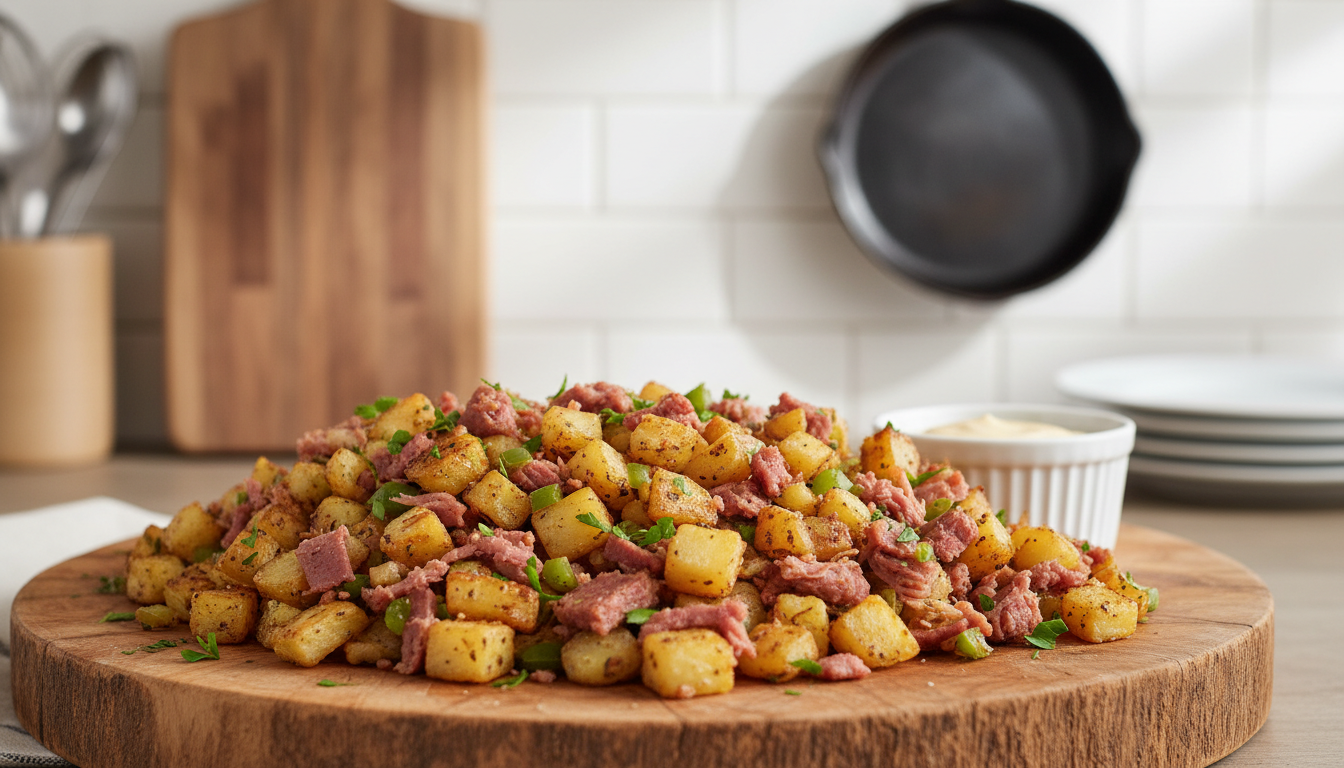
Corned Beef Hash Recipe: Easy Step-by-Step Guide
Some mornings, you just want something warm that feels like home. A skillet that fills the kitchen with a savory, golden aroma. This cornbeef hash recipe is just that, offering a crispy exterior, tender corned beef, and well-seasoned potatoes every time.
This recipe is perfect for cooks in the United States looking for a tasty breakfast, brunch, or easy dinner. You can use leftover brisket, canned corned beef, or deli-style corned beef. It shows how to adjust for the best homemade cornbeef hash.
You’ll learn about the dish’s history and variations, how to pick the right potatoes and corned beef, and the key spices. There are step-by-step stovetop and oven methods, tips for texture and flavor, and advice on storing and reheating. Plus, you’ll find dietary swaps for gluten-free, vegetarian, or low-carb options.
Follow this guide and you’ll have a reliable cornbeef hash recipe. It works for using leftovers or making a fresh skillet that tastes like a classic diner breakfast. You’ll get clear instructions and small techniques that make a big difference in flavor and texture.
Table of Contents
What is Corned Beef Hash?
Your first bite of cornbeef hash tells you it’s humble comfort food. It comes from cooks who made meals from leftovers. They turned salt-cured beef and roast into a filling dish. This thriftiness became a tradition as recipes moved from British Isles to American tables.
Origins and History
The word “hash” comes from the French hacher, meaning to chop. In the 19th and early 20th centuries, households in the United States and the British Isles reused corned beef, roast beef, or brisket. They mixed it with potatoes and onions. Irish-American cooks paired corned beef with potatoes, making it popular in urban kitchens and diners.
Your breakfast plate today carries those cornbeef hash origins in each savory forkful.
Common Ingredients
A classic cornbeef hash uses a few key ingredients. You can use corned beef from canned, cooked brisket, or deli slices. Choose starchy potatoes like russet or Yukon Gold for the best texture. Add yellow or sweet onions, and cook in butter, lard, or a neutral oil.
Season with salt and black pepper. You can also add bell peppers, garlic, Worcestershire sauce, and parsley for extra flavor.
Popular Variations
Regional and modern takes add new twists to the recipe. A New England-style version adds leeks and gentle onion flavor. Southern skillet hash may include hot sauce or smoked paprika for heat.
Cuban adaptations swap in diced ham and sofrito notes. Breakfast skillets are often finished with fried eggs on top. Vegetarian cooks replace meat with tempeh or crumbled seitan to mimic texture. Making your own cornbeef hash gives you control over crispness and seasoning.
Why You Should Try This Recipe
This dish is perfect for a warm, satisfying meal with little effort. The savory corned beef, creamy potatoes, and crisp crust offer a delightful mix of textures. Onion and black pepper add depth, making each bite rich and familiar.
Flavorful comfort food
The dish is full of hearty umami and comforting flavors, great for any meal. Searing creates a golden crust that contrasts with soft potato chunks. You can use fresh or canned corned beef, making it easy to prepare.
Easy to make at home
This recipe is simple for cooks of all levels. You need basic knife skills, one skillet, and common pantry items. Prep takes 15–20 minutes, and stovetop cooking is about 20–30 minutes. Oven finishing adds time but reduces hands-on work.
It’s practical because it uses leftovers, freezes well, and is easy to prep. You can make it for one or many. Adjust spices and add seasonal veggies to make it your own.
Key Ingredients for Your Corned Beef Hash
Learn about the key ingredients for the best cornbeef hash. Making smart choices at the start saves time and boosts flavor. Your homemade cornbeef hash will taste amazing every time.
Corned Beef: Choosing the Right Cut
Use leftover boiled corned beef brisket for the best flavor and texture. Deli-style corned beef works too, but chop it coarsely first.
Canned corned beef, like Libby’s, is softer. Crisp it in the pan for texture. If cooking a fresh brisket, simmer and cool it before shredding. This keeps it moist and prevents it from falling apart.
Potatoes: Fresh vs. Frozen
Choose fresh russets and Yukon Golds for homemade cornbeef hash. Russets are fluffy inside and crisp outside. Yukon Golds stay firm and add a buttery taste.
Frozen shredded hash browns or diced potatoes are quick to prepare. Drain and pat them dry to remove excess moisture. Boiling, microwaving, or brief roasting can speed up cooking and control texture.
Essential Spices and Seasonings
Begin with kosher salt and freshly ground black pepper. Taste as you go. Add Worcestershire sauce for depth. Smoked paprika or cayenne add warmth without overpowering.
Use mustard powder or Dijon to brighten flavors. Add fresh parsley or chives at the end. Be careful with salt when using canned corned beef, as it may be salty.
For a reliable cornbeef hash recipe, balance is key. Use the right meat-to-potato ratio, trim moisture, and season carefully. This approach ensures great results with leftovers or fresh ingredients.
Step-by-Step Cooking Instructions
Follow this guide to cook a delicious cornbeef hash. It’s perfect for a quick weeknight or a relaxed weekend breakfast. You’ll get a recipe that browns well and stays juicy.
Preparing the Ingredients
Dice one medium onion and one bell pepper if you’re using them. Mince two cloves of garlic. Boil or microwave 1.5 pounds of potatoes until they’re almost tender. Then, drain and cool them a bit.
Chop the corned beef into 1/2-inch pieces or shred it. Pat the potatoes dry to remove excess moisture. This helps them brown better.
Cooking the Hash on the Stovetop
Heat a heavy skillet over medium-high heat. Use 2–3 tablespoons of fat, like butter and oil, for flavor and to prevent burning. When the fat shimmers, add the onions and sauté for 3–4 minutes until they’re translucent.
Add the bell pepper and garlic; cook for 2 minutes until they’re softened. Stir in the potatoes and spread them out evenly. Let them brown undisturbed for 4–6 minutes to form a crust.
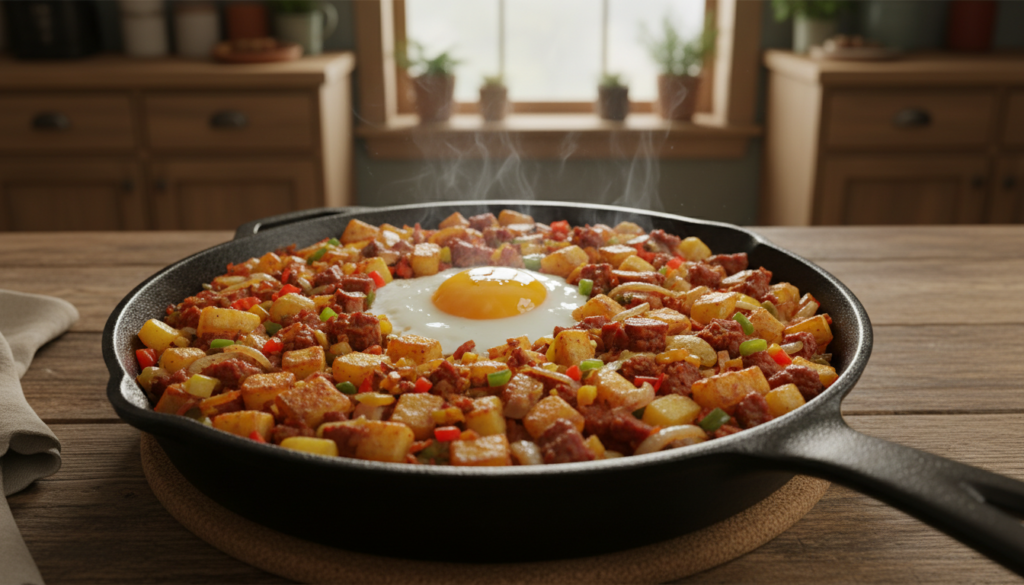
Use a spatula to stir and press the potatoes again. This allows other sides to color for another 4–5 minutes. Fold in the corned beef and 1–2 teaspoons of Worcestershire sauce. Season with salt, black pepper, and any smoked paprika or thyme you like. Cook for 3–5 minutes more until the corned beef is heated through and some edges crisp. Finish with chopped parsley and serve with eggs for a true cornbeef hash breakfast skillet experience.
Optional Oven-Baking Technique
For larger batches or hands-off finishing, transfer your oven-safe skillet to a 400°F oven for 10–15 minutes after stovetop browning. This sets the mixture and crisps the top evenly.
If you prefer a baking dish, assemble the browned hash in a 9×13 dish. Bake at 375°F for 20–25 minutes until heated through and golden. Use cast iron or ovenproof stainless steel for best results.
Tips for the Perfect Corned Beef Hash
Start with dry, room-temperature potatoes and a hot skillet. This combo ensures crisp edges and a soft center. It prevents the hash from becoming soggy.
Achieving the Right Texture
Combine mashed and chunky potatoes for texture. Grate some and keep others chunky. Use a lot of oil or butter and cook in batches if needed.
Let the potatoes brown before flipping. This helps create a nice crust.
Balancing Flavors
Don’t over-salt the dish since corned beef is salty. Add a bit of apple cider vinegar or lemon juice. A teaspoon of Dijon mustard and a dash of Worcestershire sauce also enhance the flavor.
Finish with fresh parsley and black pepper. This lifts the dish’s taste.
Using Leftover Corned Beef
Shred or dice cold brisket for even bites. If using canned corned beef, drain excess oil first. Reheat gently to keep the meat moist.
Adjust heat, fat, and acid to your liking. This framework helps perfect your homemade cornbeef hash. Use it for a tasty meal from last night’s brisket.
Serving Suggestions
You can dress your corned beef hash breakfast skillet in many ways. Choose simple finishes that highlight the savory flavors of the classic dish.
Pairings with Eggs
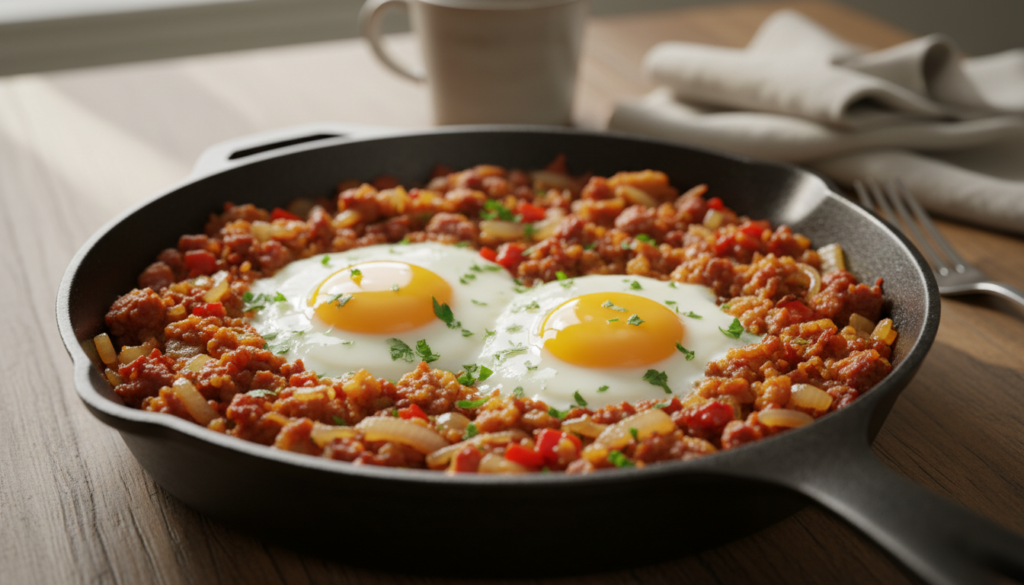
Place a sunny-side-up egg on top of the hash. The runny yolk mixes with the potatoes and meat. For firmer yolks, go for over-easy or poached eggs.
Scrambled eggs mixed into the hash make it creamier and save time. Cook the eggs just as the hash is done resting.
Start the eggs on the stovetop a few minutes before the hash comes out of the oven. This way, everything is warm when you serve it.
Garnishes and Toppings
Adding fresh herbs like parsley, chives, or scallions adds color and freshness. Pickled jalapeños or hot sauce add a spicy kick. Sour cream can cool down the dish if it’s too salty.
For a cheesy finish, sprinkle shredded cheddar on top and broil until golden. This turns a tasty cornbeef hash into a weekend brunch favorite.
Ideal Beverage Companions
For breakfast or brunch, a dark roast coffee pairs well with the savory hash. Black tea or a citrusy mimosa offer a lighter contrast.
For lunch or dinner, a crisp lager or a light-bodied red like Pinot Noir works well. These drinks balance the richness of the hash and keep the flavors lively.
These suggestions help make a simple cornbeef hash into a memorable meal for any time of day.
Storing Leftover Corned Beef Hash
Proper storage is key to keeping leftover cornbeef hash tasty and safe. Cool it down to room temperature within two hours after cooking. Then, put it in airtight containers and mark the date.
Best Practices for Refrigeration
Store the containers in the fridge and use the leftovers within 3–4 days. Use small portions to reheat only what you need. Glass or BPA-free plastic containers are great for stacking and seeing what’s inside.
Reheating Tips
To get a crispy texture, reheat in a skillet with a bit of oil or butter. Cover it briefly to warm it up, then uncover to get that nice browning. If you’re in a hurry, the microwave works too. Just cover it and stir halfway through to avoid a soggy texture.
To make it taste almost like new, heat it in a 350°F oven for 10–15 minutes. This method keeps your easy cornbeef hash recipe delicious.
Freezing Options
To freeze, let the hash cool completely and divide it into portions. Put it in airtight containers or freezer bags. Seal them well and store for up to 2–3 months. Thaw it in the fridge overnight before reheating to keep it moist.
After thawing, crisp it up in a skillet to get back its texture. Freezing is perfect for quick meals from your homemade cornbeef hash without daily prep.
Common Mistakes to Avoid
When cooking corned beef hash, a few mistakes can ruin it. Follow these tips to avoid texture and flavor issues. This way, you’ll make a delicious dish that’s easy to prepare.
Boiling potatoes for too long can make them mushy. Instead, par-cook them until they’re almost tender but still firm. Then, dry them well with a towel before frying.
Skipping the seasoning
Season your potatoes and corned beef in layers. This ensures every bite is flavorful. Start with salt on the potatoes and taste the corned beef first. Add pepper and spices like smoked paprika or mustard powder as you mix. Taste again and adjust before frying.
Not using enough fat
Using too little fat can cause sticking and pale hash. Mix butter and neutral oil and heat your skillet well, like cast-iron. Use just enough fat so the hash browns nicely. If oil pools, drain some to keep the texture right.
Dietary Considerations
You can make this cornbeef hash recipe fit many diets without losing flavor. Just a few changes and label checks can help with food sensitivities and carb-conscious cooking.
Gluten-free adaptations: Most homemade versions are safe if you avoid wheat-containing Worcestershire sauces. Use a certified gluten-free Worcestershire or tamari with apple cider vinegar for tang. Always check canned corned beef labels for gluten-free status.
Vegetarian alternatives: Use diced, seasoned tempeh, crumbled firm tofu, or vegan corned “beef” options instead of meat. Add smoked paprika, liquid smoke, tamari, and nutritional yeast for flavor. Sauteed mushrooms also add a meaty bite and complement the spices well.
Low-carb modifications: Replace potatoes with riced cauliflower, diced turnips, or rutabaga for a low-carb version. Cauliflower cooks faster and won’t crisp like potatoes. Roasting riced cauliflower first helps it brown and get firmer.
Enjoying Corned Beef Hash Beyond Breakfast
You can enjoy your favorite cornbeef hash at any time of day. Just a few tweaks can turn leftovers into exciting lunches or dinners. These meals are sure to impress everyone.
Lunch and Dinner Ideas
Try stuffing hash into a toasted sandwich or a Reuben-style melt. Add sauerkraut and Swiss for a tasty twist. You can also top a baked potato with it or mix it into savory pies and empanadas for easy, on-the-go meals.
For a lighter option, pair hash with a crisp green salad or steamed broccoli. Or, for comfort food, serve hash on crusty bread with pickles and mustard.
Creative Serving Styles
Make stuffed bell peppers by mixing hash with rice and cheese. Bake until it’s bubbly. Or, spread a thin layer on pizza crust for a unique weeknight pizza.
Build a shakshuka-style skillet with tomato sauce and hash. Crack a few eggs on top until the whites set. For a big gathering, serve warm hash family-style. Set up a toppings bar with cheeses, hot sauce, pickles, and fried eggs.
To serve a crowd, keep pans warm in a low oven at 200–225°F. Refresh leftovers by sautéing until crisp, seasoning to taste, and adding fresh garnishes for a pop of color.
Conclusion: Your Go-To Recipe for Corned Beef Hash
You now know how to make the best cornbeef hash at home. Start with good corned beef and potatoes. Cook the potatoes a bit before using them.
Heat a skillet with enough fat for crispy edges. Season with salt, pepper, and a bit of acid or smoked paprika. Choose to cook on the stovetop or in the oven for a crispy crust.
For easy storage, refrigerate leftovers in a sealed container. Reheat them gently in a skillet to keep them crispy. You can also freeze parts for later. Thaw them overnight and crisp them up in a hot pan.
Need dietary changes? Use gluten-free condiments, low-carb potatoes, or try a vegetarian version with seitan or smoked mushrooms.
Get creative with your homemade cornbeef hash. Try different potatoes, add bell peppers or leeks, and play with spices. Top it with fried eggs, shredded cheddar, or salsa to satisfy your taste.
With these tips, you can make a tasty breakfast skillet or a filling dinner. Try the recipe this weekend and adjust the flavors and ingredients to make it your own.