How to Cook a Steak on the Stove – The Perfect & Foolproof Method
You’ve stood over a hot pan, tongs in hand, hoping for a great dinner. This mix of nerves and excitement is common for home cooks. They want to learn how to cook a steak on the stove and serve something delicious.
This guide is for you: clear, practical steps for cooking a perfect steak. You’ll learn about selecting cuts, prepping, and choosing the right pan. You’ll also discover how to sear, check for doneness, and baste with butter and aromatics.
Resting, sides, cleanup, and simple recipes are also covered. This approach works well in small kitchens and all year round, even when grilling isn’t an option.
Cooking steak indoors on the stove offers precise heat control and faster results. You can achieve a restaurant-quality crust without fancy tools. Follow these techniques and cook with confidence every time.
Meta Title: “Perfectly Cooked Steak on the Stove” — Master the art of how to cook a steak on the stove with searing and finishing tips for a juicy result.
Meta Description: Perfect stovetop steak guide with step-by-step stove top steak recipe tips for cooking steak indoors on the stove. Learn selection, searing, doneness, and basting for a juicy, flavorful steak.
Table of Contents
Understanding the Different Cuts of Steak
Before you start cooking steak on the stovetop, pick the right cut. Each cut has its own texture, fat, and flavor. Knowing these helps you choose the best cut for your meal.
Popular Steak Cuts for Stove Cooking
Ribeye: It has a lot of marbling, making it buttery. The fat helps it cook well under high heat, perfect for searing and basting.
Strip (New York strip): It’s firm and has a strong beefy taste. This cut gets a great crust and cooks well on the stovetop.
Filet mignon (tenderloin): It’s very tender and has little fat. Cook it gently and watch it closely to avoid overcooking.
Skirt and flank: They have long fibers and a bold flavor. Quick, high-heat searing works best. Slice them against the grain for better tenderness.
Hanger and flat iron: They have a rich, beefy taste. They cook well on the stove when not too thick, giving you restaurant-style flavor at a lower cost.
Choosing the Right Cut for Your Meal
Thickness is key. Aim for 1–1.5 inches for classic stovetop searing. This size lets you create a crust while finishing to the right doneness. Thinner cuts, around ½–¾ inch, cook fast; keep an eye on them.
Match the cut to your meal’s purpose. For a rich dinner, choose ribeye. For a lean, elegant meal, go with filet mignon. For a budget-friendly option, use skirt or flank and add a marinade.
Think about marbling and connective tissue. Cuts with more fat handle high heat better. They’re forgiving when using stovetop techniques like searing and basting. Tougher cuts need thin slicing or longer, gentler cooking.
| Cut | Texture | Fat Content | Best Stove Approach |
|---|---|---|---|
| Ribeye | Buttery, tender | High marbling | Sear, finish with butter basting |
| New York Strip | Firm, meaty | Moderate | High-heat sear for crust |
| Filet Mignon | Very tender | Low | Gentle sear; avoid overcooking |
| Skirt | Coarse, long grain | Moderate | Quick sear; slice against grain |
| Flank | Lean, fibrous | Low to moderate | Marinate, quick sear, slice thin |
| Hanger | Dense, flavorful | Moderate | Sear when not too thick; rest well |
| Flat Iron | Tender with grain | Moderate | Sear; good for pan-finish |
Quick pairing ideas: ribeye with roasted potatoes, filet mignon with light sautéed vegetables, skirt steak with chimichurri and rice. Use these ideas when planning your stovetop steak meal.
Preparing Your Steak: The Basics
Begin by planning your stovetop steak prep. Trim off any excess fat and pat the meat dry with paper towels. Decide if you’ll use a dry rub or marinade. These steps are key for even searing and flavor when cooking a steak on the stove.
Seasoning Options: Salt, Pepper, and More
For top cuts, stick with kosher or sea salt and black pepper. Apply them just before searing for a clean crust. For something different, try garlic powder, onion powder, smoked paprika, or a bit of cayenne.
Use dry rubs for ribeye or New York strip to keep the texture. Acid-based marinades, like olive oil, lemon, vinegar, garlic, and herbs, work well for lean cuts. They tenderize and add flavor.
Pre-salting (dry brine) can deepen seasoning. Salt 40 minutes to overnight in the fridge for a better crust. If cooking right away, salt just before searing to avoid losing moisture.
Bringing Your Steak to Room Temperature
Let the steak sit at room temperature before cooking. A 30–60 minute rest, based on thickness, ensures even cooking. This step is vital for stovetop steak success.
Don’t leave meat out for more than two hours. Follow USDA food safety guidelines to avoid bacterial growth and keep your meal safe.
Essential Tools for Preparation
Get your tools ready: heavy-duty tongs, an instant-read digital meat thermometer, a sharp knife, a sturdy cutting board, paper towels, and a bowl for melted butter or aromatics. These tools make a quick stovetop steak recipe easy and reliable.
Measure the steak’s thickness, choose your seasoning, pat it dry, let it warm up, and preheat your pan. This checklist keeps you organized and focused for stovetop cooking.
Choosing the Right Pan for Cooking
Choosing the right pan is key to a great steak. The right cookware makes cooking steak on the stovetop better. It also improves your results when searing a steak on the stove. Think about the pan’s weight, how it heats, and how you’ll finish the steak.
Cast iron and stainless steel pans have their own strengths. Cast iron keeps heat well and helps create a deep crust. It’s heavy, durable, and perfect for basting or finishing in the oven.
Stainless steel pans heat up fast and are light to handle. They can make a great sear if preheated right. They’re easy to clean and work well with acidic ingredients. Thin steaks or quick cooking is best with stainless steel.
Use cast iron for thick, marbled steaks that need steady heat and oven finishing. Stainless steel is better for thinner cuts or when you want faster heating and easy care. Both pans are great for stovetop steak techniques, depending on the cut and cooking plan.
Size and thickness of the pan matter too. Choose a pan big enough so each steak can touch the surface. Thicker pans heat evenly and prevent hot spots that can burn the steak before it’s fully cooked.
Preheating is important for a good sear. Cast iron needs 5–10 minutes on medium-high. Stainless steel takes 3–5 minutes. Check if the pan is ready by flicking water; if it sizzles, it’s hot.
Use a high smoke-point oil like canola, grapeseed, or refined avocado oil. Add oil after heating and wait until it shimmers but doesn’t smoke too much. This helps create a consistent crust.
Follow safety tips. Use oven mitts for cast iron, keep handles away from edges, and use ventilation to clear smoke. Don’t overcrowd the pan to avoid steaming, which ruins the sear.
| Feature | Cast Iron | Stainless Steel |
|---|---|---|
| Heat Retention | Excellent; holds steady for even searing and basting | Good; heats faster but cools quicker under load |
| Best For | Thick, well-marbled steaks and oven finishing | Thin cuts, quick cooks, and easier cleanup |
| Preheat Time | 5–10 minutes on medium-high | 3–5 minutes on medium-high |
| Care | Seasoning required; hand wash and oil to maintain | Dishwasher-safe in many cases; nonreactive with acids |
| Weight & Handling | Heavy; requires two hands for safety | Lightweight; easy maneuvering |
| Ideal Oil | High smoke-point oils like grapeseed or canola | Same high smoke-point oils recommended |
| How It Affects Sear | Creates deep crust with less temperature drop | Can achieve good sear if very hot and monitored |
The Art of Searing a Steak
Searing a steak on the stove makes it a flavorful centerpiece. It creates a rich aroma and a caramelized surface. Mastering stovetop steak techniques helps you lock in texture and taste.
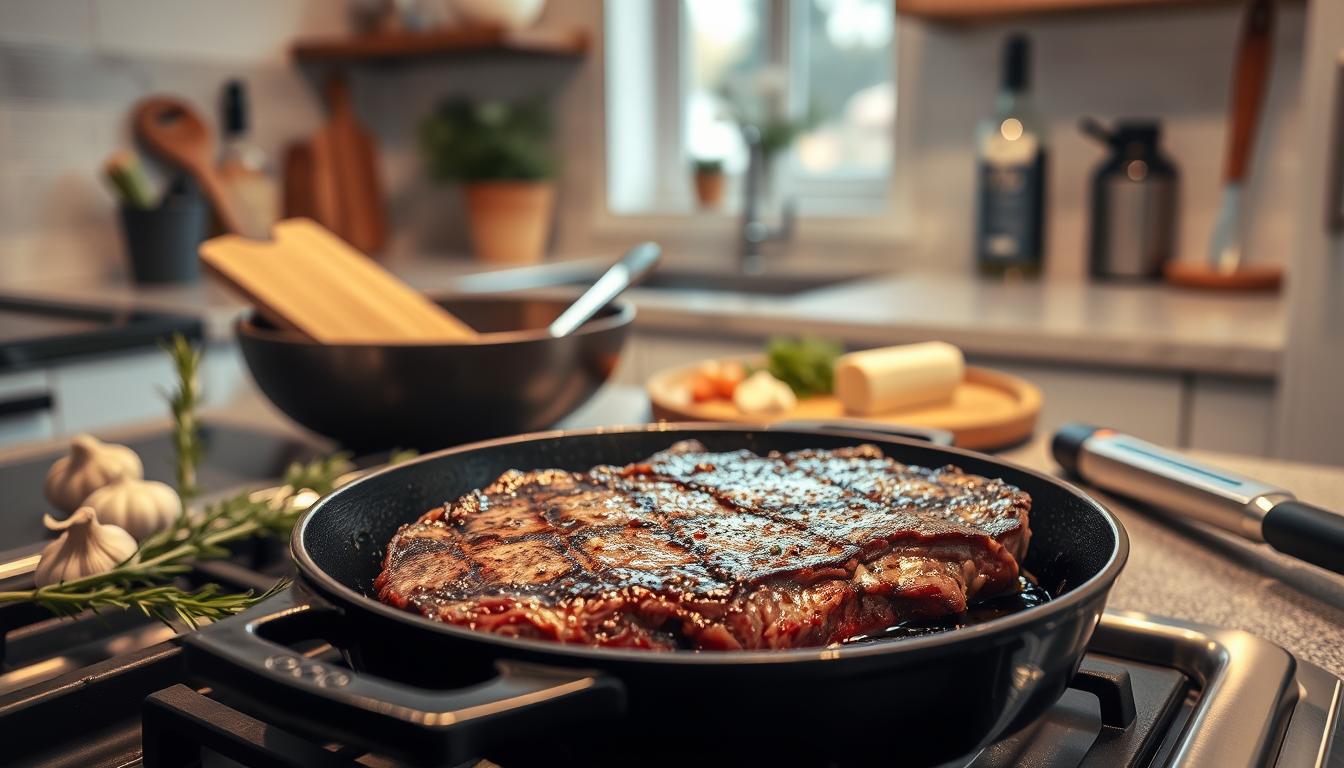
Start with a dry steak and coarse salt. Pat the meat dry, season generously, and let it sit briefly. Preheat a heavy pan until it is very hot. Add a small amount of oil, then place the steak away from you.
Do not move the steak during the first sear. Let a brown crust form without peeking. Flip only once to protect the crust and reduce moisture loss. These steps are key to cooking a steak on the stove.
What is Searing and Why is it Important?
Searing is rapid browning that creates flavor compounds on the meat’s surface. The Maillard reaction builds savory notes and a satisfying texture. A proper sear improves visual appeal and gives the steak more depth.
Cooking Times for Different Thicknesses
Stove models, pan material, and starting temperature change exact timing. Use these rules of thumb at medium-high heat for a 1–1.5 inch steak cooked to medium-rare.
- ½ inch: 1–2 minutes per side
- 1 inch: 3–4 minutes per side
- 1.5 inch: 4–5 minutes per side; may finish in the oven
- Thicker than 2 inches: try a reverse sear or sear then oven-finish
Check doneness with an instant-read thermometer for accuracy. These stovetop steak techniques reduce guesswork and help you avoid overcooking.
Creating the Perfect Crust
For a crisp, well-browned crust use high heat and a dry surface. Apply a light coating of oil to prevent sticking. Salt the steak generously to draw out surface moisture and promote browning.
Press the steak gently with a spatula at the moment it first contacts the pan for more even sear. Avoid pressing repeatedly or squeezing the meat. For a bold char on edges, finish with a quick touch at the pan’s hottest spot or with a culinary torch, used with care.
Remember that how to cook a steak on the stove depends on small adjustments. Pay attention to your stove’s flame, the pan’s conductance, and the steak’s temperature before it hits the pan. Those details make stovetop steak techniques work every time.
Achieving Your Desired Doneness
Knowing how to cook a steak on the stove is key. This guide helps you get the right texture and flavor. Use these targets after the steak has rested for the most accurate results.
Rare, Medium, and Well-Done: What They Mean
Rare: 120–125°F. Expect a cool red center and a tender bite.
Medium-rare: 130–135°F. Warm red center makes this the most recommended range for flavor and tenderness.
Medium: 140–145°F. Pink center with firmer texture.
Medium-well: 150–155°F. Slight pink remains, steak feels firmer under pressure.
Well-done: 160°F and above. No pink; meat is fully cooked through.
Using a Meat Thermometer for Accuracy
Choose an instant-read digital thermometer from trusted brands like ThermoWorks or alternatives such as Thermapen-style models for fast, reliable readings.
The 7 Best Meat Thermometers – Ultimate Guide to Perfect Meat Every Time
Insert the probe into the thickest part of the steak without touching bone or pan. Take readings toward the end of cooking.
Pull the steak when the thermometer reads about 5°F below your final target. Carryover cooking during rest will raise the temperature to the desired level.
The Visual Test for Steak Doneness
Use the finger test by comparing the steak’s firmness to the fleshy area beneath your thumb. Relaxed thumb equals rare; touch thumb to each fingertip to gauge increasing doneness.
Check color and juices: deep red for rare, warm red for medium-rare, pink for medium. Clear juices signal higher doneness.
Remember that a brown crust only shows surface browning. If you’re unsure, trust your thermometer. Apply these steak cooking tips for stovetop to get consistent results every time.
Measure steak thickness before you start, preheat your pan, avoid overcrowding, and always let the meat rest. Follow this perfect stovetop steak guide and you’ll hit the right doneness more often when you cook on a stovetop.
Adding Flavor with Butter and Aromatics
Finishing a steak with butter and aromatics adds richness and moisture. It also brings a savory aroma that enhances the dish. These touches add depth without hiding the meat’s natural flavor when searing a steak on the stove.
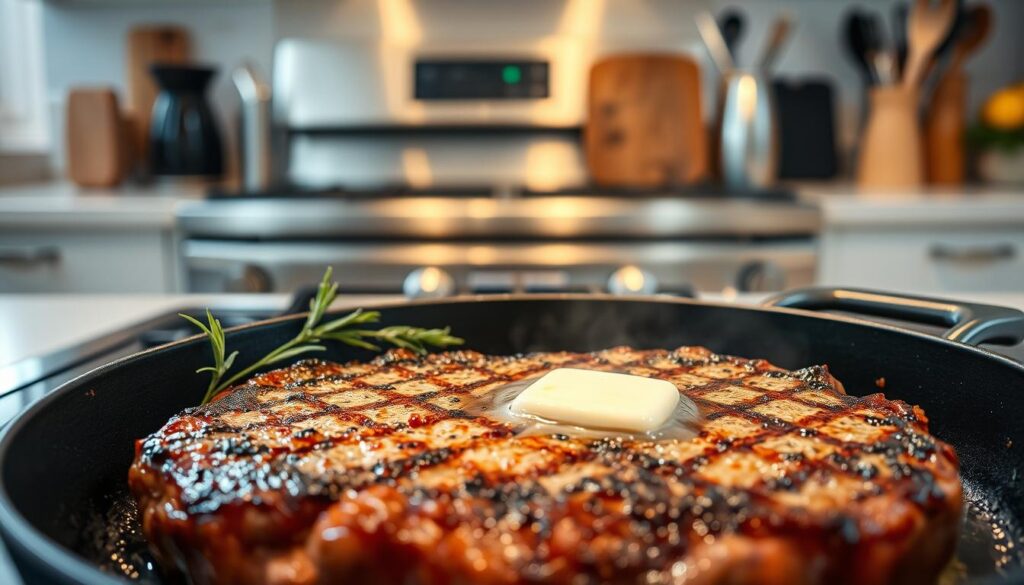
Use unsalted butter for control. Smash a few garlic cloves and add fresh sprigs of thyme or rosemary. A crushed shallot adds a gentle sweetness. Melt the butter gently in a small pan to infuse it, or add aromatics near the end of searing in the main skillet so the butter soaks up fast flavor.
Infusing Butter with Garlic and Herbs
To infuse, melt 2 tablespoons of unsalted butter over low heat with garlic and herbs for two to three minutes. Keep the heat low to avoid browning the butter. Strain if you want a clear, aromatic baste or leave the solids for rustic texture.
For stovetop steak techniques, you can also add the aromatics directly to the hot pan after flipping the steak. The butter will foam and pick up the pan juices, making the flavor more concentrated.
Basting Technique for Extra Flavor
After you flip the steak, add the infused butter and aromatics to the pan. Tilt the pan slightly so the butter pools at one edge. Use a large spoon to continuously spoon the hot butter over the top of the steak.
Baste for 30 seconds to two minutes depending on thickness. This helps finish the top of the steak and locks in flavor. Watch the butter closely; reduce heat if it begins to smoke to avoid a bitter taste.
Try finishing touches like a splash of Worcestershire, a pinch of flaky sea salt, or a squeeze of lemon for brightness. You can add blue cheese or a compound herb butter after the steak rests for extra richness.
When cooking steak indoors on the stove always prioritize safety. Use a long-handled spoon, keep an oven mitt nearby, and never leave hot butter unattended.
| Step | Action | Why It Helps |
|---|---|---|
| 1 | Melt unsalted butter with smashed garlic and thyme on low | Infuses butter gently without burning; clean aromatic base |
| 2 | Add aromatics to main pan during last sear | Captures pan juices for bolder stovetop steak techniques |
| 3 | Tilt pan and spoon butter over steak continuously | Evenly cooks top and adds glossy, flavored finish while searing a steak on the stove |
| 4 | Finish with Worcestershire, flaky salt, or lemon | Balances richness and brightens flavor |
| 5 | Rest steak, then add compound butter if desired | Melts into the meat for lasting richness when cooking steak indoors on the stove |
Letting Your Steak Rest: Why It Matters
After cooking your steak perfectly on the stovetop, it’s time to let it rest. This step is key. It allows the juices to move back into the meat, making it juicier and more even.
How Long Should You Let It Rest?
For steaks about 1 inch thick, rest for 5–10 minutes. Thicker steaks need 10–15 minutes. Use aluminum foil to keep it warm, but don’t seal it too tight.
The Science Behind Resting Meat
Cooking tightens muscle fibers, pushing juices to the center. Resting relaxes these fibers, spreading the juices evenly. This makes your steak less juicy when you cut it.
After cooking, the meat’s temperature will rise by 3–10°F. Thicker steaks will rise more. So, cook them slightly under your target temperature.
When slicing, use a sharp knife and cut against the grain. This makes tough cuts tender.
Resting at room temperature for a short time is safe. But, don’t leave cooked meat out too long.
Follow these tips for stovetop steak cooking. They’ll help you achieve great results every time. Your family will love the difference.
Sides to Pair with Your Steak
You want sides that match the richness of a stove top steak recipe without stealing the show. Choose vegetables and starches that complement the meat. They should soak up the pan jus and cook while your steak rests. This keeps dinner hot and balanced.
Vegetable Options for a Balanced Meal
Sautéed green beans with garlic take minutes and add bright color. Roast Brussels sprouts until edges caramelize for a savory crunch. Blistered asparagus cooks fast under high heat and pairs well with a quick squeeze of lemon.
Creamed spinach brings a silky contrast to seared beef. A simple arugula salad with lemon vinaigrette refreshes the palate between bites.
Time your vegetables so quick items cook while the steak rests. This ensures both steak and sides arrive warm at the table when you follow a quick stovetop steak recipe.
Recommended Starches: Potatoes, Rice, or Bread
Roasted fingerlings or garlic mashed potatoes soak up juices and add comfort to the plate. Pan-seared smashed potatoes crisp on the outside and stay tender inside, matching well with peppercorn or red wine sauce.
For a lighter starch, herb rice pilaf or garlic butter rice keeps the meal from feeling too heavy. A crusty baguette or garlic bread mops up pan jus nicely. Compound butter on warm bread adds richness with minimal fuss when you want to finish a how to cook a steak on the stove routine elegantly.
| Side | Why It Works | Timing Tip |
|---|---|---|
| Sautéed Green Beans with Garlic | Bright, crunchy counterpoint to rich steak; garlic echoes butter-basted flavors | Quick cook while steak rests; 4–6 minutes |
| Roasted Brussels Sprouts | Caramelized edges add texture and savory depth | Roast during initial sear and keep warm under foil |
| Blistered Asparagus | Fast, fresh, and great with lemon or parmesan | Pan-sear 2–3 minutes while steak rests |
| Creamed Spinach | Silky, rich contrast to crusted steak | Make quickly in same pan after deglazing |
| Garlic Mashed Potatoes | Comforting starch that soaks up sauces | Prepare ahead and reheat gently as steak finishes |
| Pan-Seared Smashed Potatoes | Crisp exterior pairs with tender interior and steak jus | Finish in oven while searing steak |
| Herb Rice Pilaf | Light, aromatic base that won’t overpower | Hold warm in covered pot while finishing steak |
| Crusty Baguette or Garlic Bread | Mops up pan sauce; adds rustic texture | Warm in oven for 5–7 minutes before serving |
| Chimichurri or Pan Jus | Bright herb sauce or concentrated jus elevates flavor | Make chimichurri ahead; deglaze pan for jus while resting |
| Wine or Beverage Pairing | Cabernet Sauvignon, Malbec, Zinfandel, or iced tea with citrus | Serve red wines slightly below room temp; chill non-alcoholic options |
Use these pairings to round out a how to cook a steak on the stove plan or a quick stovetop steak recipe night. Choose two sides—one veg, one starch—and a sauce to create a complete, satisfying plate.
Common Mistakes to Avoid When Cooking Steak
When cooking steak on the stove, you want it to turn out right. Small mistakes can ruin a great steak. Here are common errors and how to fix them to make your steak better every time.
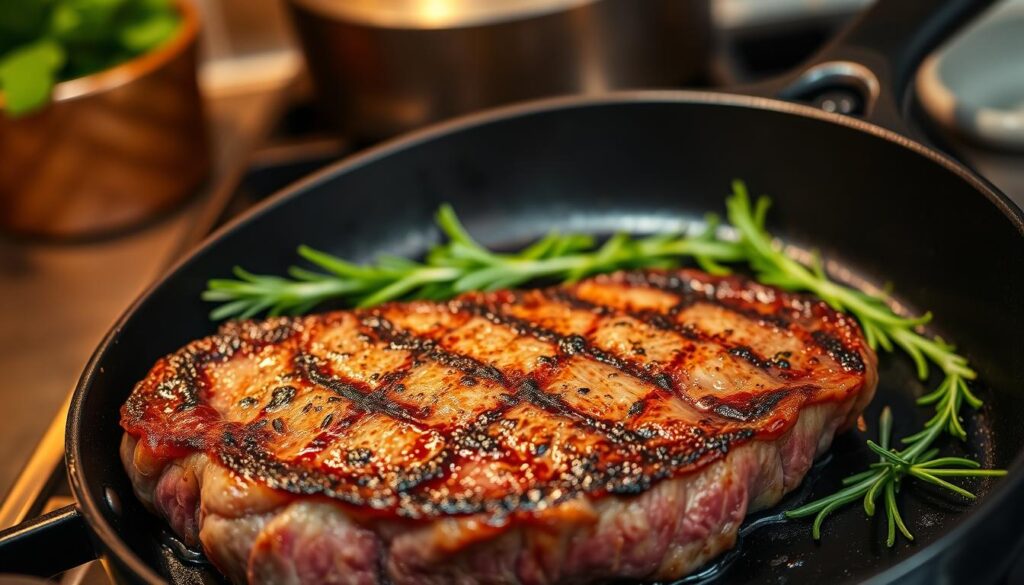
Not preheating the pan is a big mistake. Heat a heavy skillet very hot before cooking steak. Use a high smoke-point oil, add a thin layer, then place the steak in for a good sear.
Overcrowding the pan steams the steak instead of searing it. Cook one or two steaks at a time, depending on the pan size. This ensures each steak gets direct heat, improving texture and flavor.
Guessing when to take the steak out can lead to overcooking. Use an instant-read thermometer and remove the steak a few degrees before your target. This is a key tip for cooking steak on the stovetop.
Moving the steak too soon stops it from getting a good crust. Wait until it releases naturally before flipping. If it sticks, give it more time to sear and get that golden crust.
Using low-smoke oil or too much oil can burn and ruin flavor. Choose oils like avocado or refined grapeseed and use just enough to coat the pan. A thin layer is all you need for a great sear.
Not seasoning or under-salting makes the meat taste bland. Season well with salt and pepper. For thicker cuts, salt overnight to enhance flavor and keep it moist.
Cutting the steak right away can make it lose juices. Let it rest for several minutes before slicing. This lets juices spread evenly, making each bite juicy and flavorful.
Slicing with a dull knife or against the grain makes meat seem tough. Use a sharp chef’s knife and slice with the grain. This shortens muscle fibers, making the meat tender.
If the crust looks pale, try drying the steak’s surface and increase the pan heat. For a charred taste, reduce heat or add butter at the end to avoid burning.
If your steaks cook unevenly, prepare them at room temperature and aim for even thickness. These tips are essential for cooking great steak on the stovetop.
Cleaning Up: Maintaining Your Cookware
Keeping your pans ready for the next meal is key to mastering stovetop steak techniques. Good cleaning habits save time and protect your cookware. Start cleaning while the pan is warm, not too hot, to lift browned bits easily and cut down soaking time.
Use deglazing to rescue fond and make a simple pan sauce. Pour a splash of wine, stock, or water into the hot pan and scrape gently with a spatula. Strain the liquid if you want to store the sauce for later.
Cast iron needs special care. Rinse with hot water and scrub with a stiff brush or a chainmail scrubber to remove residue. For stuck-on bits, simmer a little water in the skillet to loosen them, then scrape clean.
After cleaning cast iron, dry it immediately. Apply a thin coat of vegetable oil while the skillet is warm to prevent rust. Store your skillet in a dry place and re-season periodically by coating with a high smoke-point oil and heating in the oven.
Stainless steel cleanup differs. Use hot soapy water and a non-abrasive sponge. For stubborn marks, make a baking soda paste or use Bar Keepers Friend. Avoid steel wool to prevent scratches.
Make cleanup easier before you cook. Line a small prep towel to catch juices and keep a bowl nearby for trimmings. Use a splatter screen to limit grease on the stovetop and reduce time spent scrubbing.
Clean as you go while you follow instructions on how to cook a steak on the stove. Wash utensils and cast-off plates while the steak rests. This shortens total cleanup time and keeps your workspace tidy.
These small routines reinforce sound stovetop steak techniques and keep cookware functional for years. Proper cleaning cast iron after steak maintains flavor and performance. Adopt one habit at a time and your pans will thank you.
| Cookware | Best Post-Cook Method | Quick Fix for Stuck-On Food | Maintenance Tip |
|---|---|---|---|
| Cast iron skillet | Hot water + chainmail scrub or stiff brush | Simmer water to loosen fond, then scrape | Dry immediately and rub thin oil; re-season monthly |
| Stainless steel pan | Hot soapy water with non-abrasive sponge | Baking soda paste or Bar Keepers Friend for spots | Avoid steel wool; polish with a microfiber towel |
| Nonstick pan | Cool slightly, wash with mild soap and soft sponge | Soak briefly in warm water, then wipe clean | Use silicone or wooden utensils to protect coating |
| General stovetop | Wipe spills after cooling; degrease with warm soapy cloth | Use a plastic scraper for hardened grease | Use a splatter screen to reduce future mess |
Recipes to Elevate Your Steak Experience
These recipes are based on basic stovetop steak techniques. They help you cook with confidence. You’ll find a complete stove top steak recipe, plus quick marinades and sauces that add flavor without extra effort.
Classic Pan-Seared Steak with Garlic-Herb Butter (serves 2)
- 2 ribeye or strip steaks, 1–1.5 inches thick (8–10 oz each)
- Kosher salt and freshly ground black pepper
- 1–2 tbsp high smoke-point oil (canola, grapeseed, or refined avocado)
- 2 tbsp unsalted butter
- 2 garlic cloves, lightly smashed
- 2 sprigs fresh rosemary or thyme
- Optional: squeeze lemon or pinch of flaky sea salt for finishing
Prep time: 15–30 minutes. Cook time: 8–12 minutes. Total time: 25–40 minutes.
- Remove steaks from refrigerator 30–60 minutes before cooking. Pat dry and season both sides with kosher salt and pepper.
- Preheat a 10–12 inch cast iron skillet over medium-high for 5–8 minutes until very hot.
- Add oil and swirl to coat. Place steaks in the pan away from you; don’t overcrowd.
- Sear first side undisturbed: about 3–5 minutes for 1–1.5 inch steaks. Aim for a deep brown crust.
- Flip steaks. Add butter, smashed garlic, and herb sprigs. Tilt the pan and baste continuously for 1–2 minutes while the second side cooks.
- Use an instant-read thermometer and remove steaks at 5°F below target.
- Transfer steaks to a plate, tent loosely with foil, and rest 5–10 minutes.
- Slice against the grain, finish with flaky sea salt or lemon, and serve.
Nutrition per serving (approximate for 8–10 oz ribeye with butter): Calories 700–850; Protein 55–65 g; Total Fat 50–65 g; Saturated Fat 20–25 g; Carbs 0–2 g; Cholesterol 180–220 mg.
Quick Marinades to Try
These ideas are for a fast flavor boost. Marinate 30 minutes to overnight, depending on cut and intensity.
- Citrus-Garlic: orange juice, olive oil, garlic, cilantro, salt, pepper — great for flank or skirt.
- Soy-Ginger: soy sauce, mirin, grated ginger, honey, sesame oil — pairs well with skirt steak.
- Simple Herb: olive oil, lemon zest, chopped rosemary, thyme, crushed garlic, salt — works for ribeye or strip.
Creative Sauces for Extra Flavor
Finish your steak with a pan sauce or a fresh condiment to highlight the meat.
- Chimichurri: parsley, cilantro, red wine vinegar, garlic, olive oil, red pepper flakes — bright and herb-forward.
- Red Wine Pan Sauce: deglaze with ½ cup red wine, reduce, add beef stock and a knob of butter for shine.
- Peppercorn Cream: cracked peppercorns, shallot, cognac or brandy, beef stock, cream, finished with butter.
Expert tips for mastering how to cook a steak on the stove
- Use a thermometer to avoid guesswork and remove steak slightly under target for carryover.
- For thicker cuts try reverse-sear: oven-roast at 250°F then finish with a quick sear for crust.
- Keep aromatics low in the butter and add them near the end so they don’t burn.
If you want a fast option, follow the classic pan method as a quick stovetop steak recipe. Adapt times for cut and thickness. These stovetop steak techniques let you make a reliable meal on weeknights or when you have guests.
Serving Suggestions and Plating Tips
Mastering how to cook a steak on the stove is just the start. The final touch is presentation. Let the steak rest to allow juices to redistribute. Then, use a sharp knife and a stable cutting board to slice.
Slice against the grain for tougher cuts like flank or skirt. For tenderloin, cut thinner medallions for an elegant look. Aim for uniform slices about 1/4-inch thick. Fan them slightly on a warm plate for a bistro-style presentation.
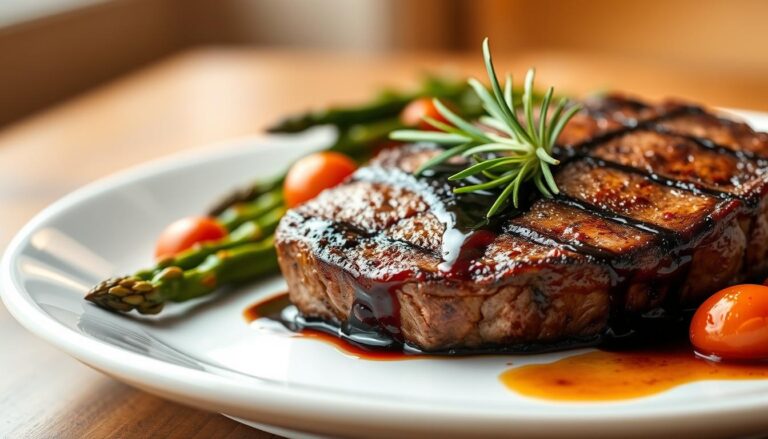
Drizzle reserved pan jus or melted herb butter over the meat. Finish with flaky sea salt and a pinch of pepper. Add a small sprig of thyme or rosemary for color and aroma.
For creative serving steak stovetop ideas, try a steak salad with mixed greens, cherry tomatoes, red onion, and blue cheese. Or a steak sandwich on toasted baguette with horseradish mayo and arugula. You can also surf and turf topped with sautéed shrimp.
For a plated dinner, pair steak with roasted potatoes and a green vegetable. Add a smear of sauce or a dollop of compound butter to complete the plate.
Keep final plating tips simple: warm your plates, balance color and texture, and portion 6–10 oz per person. With practice and the techniques in this perfect stovetop steak guide, you’ll consistently serve flavorful, attractive steaks that taste as good as they look.