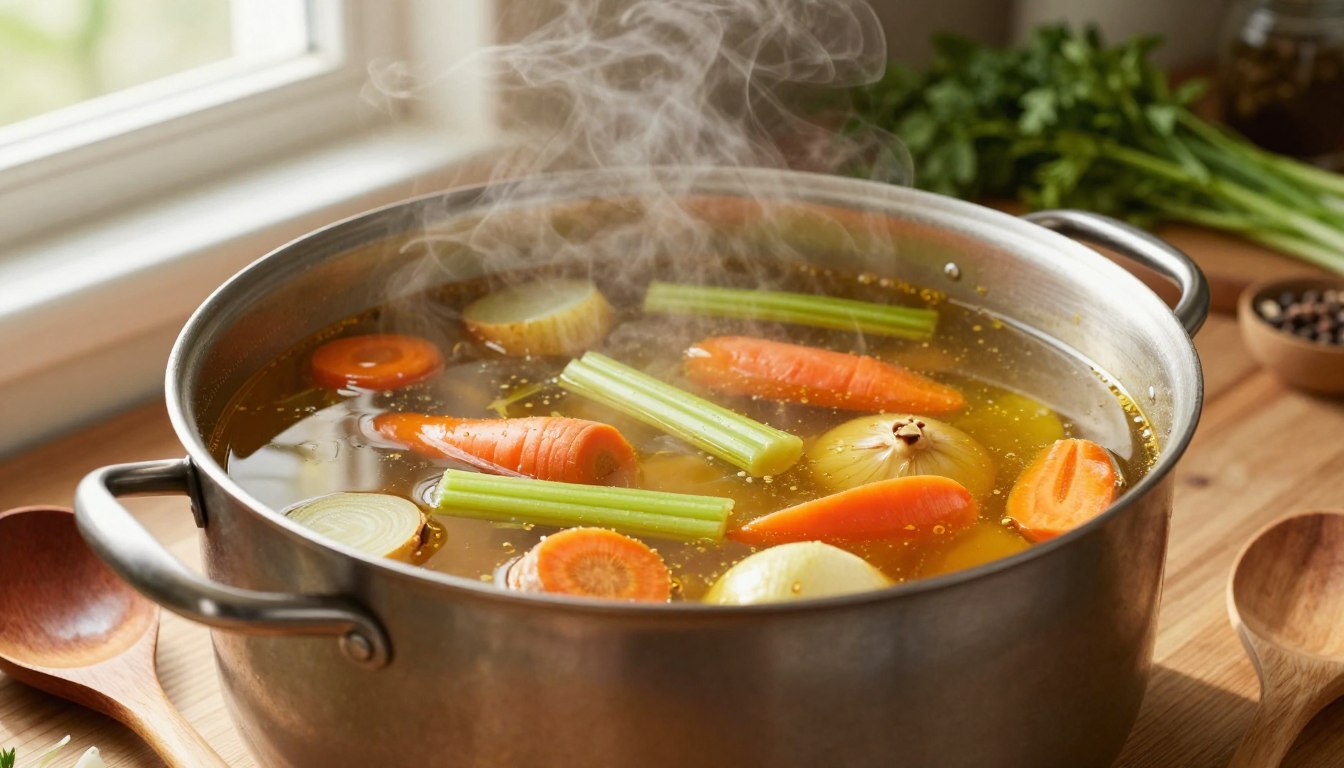
Delicious Chicken Stock Recipe – Perfect for Soups
Opening your kitchen cabinet and finding golden, aromatic stock is very satisfying. Making your own chicken stock recipe is rewarding. It’s something store-bought versions can’t offer.
Why is homemade chicken stock important? It’s because you control what goes into it. You avoid hidden sodium and preservatives. Instead, you get pure flavor from quality ingredients.
This guide will teach you to make chicken stock that tastes like it’s from a restaurant. You’ll learn about the best chicken parts, vegetables, and herbs. Plus, you’ll discover techniques for a rich, golden broth.
Making homemade chicken stock is easy. It takes time, but most of it is just simmering. You’ll only spend about fifteen minutes on actual work. The rest of the time, you can do something else.
This recipe includes everything you need. You’ll get detailed ingredient lists, step-by-step instructions, and timing guides. Plus, there are professional tips to make it easy. You’ll learn how to strain, store, and use your stock in many dishes.
Whether you’re making soups, sauces, or gravies, this chicken stock recipe is key. It’s the foundation for better cooking. Let’s get started.
Table of Contents
Why Homemade Chicken Stock Makes All the Difference
Making homemade chicken stock changes how you cook. You pick every ingredient for your stock. Unlike store-bought, homemade stock avoids high sodium and artificial additives.
The taste is amazing. Homemade stock is rich and complex, thanks to simmering bones and veggies for hours. It’s far better than store-bought stock for soups, risottos, and braises.
Homemade stock is also good for you. It’s full of collagen and gelatin from simmered bones. These help your joints and gut. Plus, your body absorbs minerals better from homemade stock.
It’s also cheaper. The best recipes use chicken parts you might throw away. Add veggie scraps like onion skins and carrot peels. This way, you waste nothing and get a treasure for your kitchen.
- Complete control over sodium content
- No artificial preservatives or additives
- Rich gelatin and collagen for health benefits
- Superior flavor for cooking
- Budget-friendly using kitchen scraps
- Perfect for professional-quality dishes
Professional chefs always choose homemade chicken stock. It makes every dish you make stand out. Your kitchen will smell great, and your family will love the taste.
Essential Ingredients for the Best Chicken Stock Recipe
Creating a flavorful chicken stock recipe is all about the right ingredients. The wrong mix can lead to a weak broth. But the right combination of chicken, vegetables, herbs, and seasonings makes a rich, satisfying stock.
Choosing the Right Chicken Parts
The bones and parts you choose are key. Chicken backs, necks, wings, and feet are full of collagen. This collagen turns into gelatin, adding richness to your stock.
You’ll need about 3 to 4 pounds of chicken parts for 4 quarts of water. Use both raw and roasted bones. Raw bones make a clearer stock, while roasted bones add deeper flavors. Many cooks use both for the best taste.
- Chicken backs and necks (primary bones)
- Chicken wings (add flavor and collagen)
- Chicken feet (extremely high in gelatin)
- Mixed scraps from butchering whole birds
Aromatics and Vegetables That Enhance Flavor
The mirepoix of onions, carrots, and celery is your base. Don’t peel these veggies for stock, their skins add color and nutrients. Cut them into chunks in equal amounts.
Leeks, garlic, parsnips, and fennel bulb are great additions. They add layers of taste that make your stock unforgettable.
| Vegetable | Amount (per 4 quarts) | Purpose |
|---|---|---|
| Onions | 2-3 medium | Sweet base flavor |
| Carrots | 2-3 medium | Natural sweetness and color |
| Celery | 2-3 stalks | Aromatic depth |
| Garlic | 4-6 cloves | Savory notes |
| Leeks | 1-2 (white parts) | Subtle onion flavor |
Herbs and Seasonings for Depth
A bouquet garni of fresh herbs adds aromatic flavor. Use parsley, thyme, and bay leaves. These herbs release their oils during cooking.
Whole black peppercorns add spice without heat. Optional herbs like rosemary or sage are good, but use them sparingly. Add these herbs early but remove them before the stock gets too strong.
- Fresh parsley sprigs (1/4 cup loosely packed)
- Fresh thyme sprigs (3-4 sprigs)
- Bay leaves (2-3)
- Whole black peppercorns (1 tablespoon)
- Salt (to taste, added at the end)
Knowing these ingredients can turn a simple chicken stock recipe into something special. Each part works together to create a flavorful stock that’s essential for soups, sauces, and more.
Kitchen Tools and Equipment You’ll Need
Before starting to make chicken stock, it’s important to have the right tools. You don’t need expensive gadgets, but the right equipment makes a big difference. Look for tools that handle heat well and help with straining.
A large stockpot is key for making chicken stock. Choose one that’s at least 8 to 12 quarts. Stainless steel and enameled cast iron are best because they heat evenly and don’t react with acidic ingredients. A heavy bottom prevents scorching and helps keep the stock clear and flavorful.
Straining equipment is needed to separate solids from liquid after cooking. A fine-mesh strainer catches most particles, while cheesecloth provides extra filtration for clear stock. Have both ready before your stock finishes simmering.
Other tools can make your work easier and more efficient:
- Slotted spoon or spider skimmer for removing impurities during cooking
- Ladle for transferring hot liquid safely
- Fat separator pitcher for removing grease from finished stock
- Glass containers or freezer bags for storing your stock
- Ice cube trays for portioning stock into manageable sizes
Optional equipment can enhance your stock-making experience. A slow cooker allows for hands-off cooking overnight. An Instant Pot or pressure cooker can cut cooking time from 4 to 6 hours to just 90 minutes. A bouquet garni sachet keeps herbs contained for easy removal.
| Equipment Type | Purpose | Capacity/Size | Material |
|---|---|---|---|
| Stockpot | Primary cooking vessel | 8-12 quarts | Stainless steel or enameled cast iron |
| Fine-mesh strainer | Initial straining of solids | Standard kitchen size | Stainless steel mesh |
| Cheesecloth | Extra-fine filtration | Multi-use rolls | Cotton gauze |
| Slotted spoon | Skimming impurities | Standard kitchen size | Stainless steel |
| Fat separator | Removing grease | 4-cup capacity | Plastic or glass |
| Storage containers | Preserving finished stock | Various sizes | Glass or BPA-free plastic |
| Instant Pot | Fast stock preparation | 6-8 quart models | Stainless steel inner pot |
Having these tools ready before you start makes the process smoother. Quality equipment makes learning how to make chicken stock less intimidating and more enjoyable.
Step-by-Step Chicken Stock Recipe
Making chicken stock at home is a rewarding process. It takes time but yields rich, flavorful broth. This guide will walk you through each step, from preparation to storage. You’ll learn the timing, techniques, and methods for success in your kitchen.
Preparation and Prep Time
Preparing your ingredients takes 15 to 20 minutes. This prep work is key to a great chicken stock. Start by gathering all your ingredients and setting up your workspace.
Cooking time is 4 to 6 hours. This makes 8 to 10 cups of stock, perfect for soups and sauces all week.
| Ingredient | Amount | Notes |
|---|---|---|
| Chicken parts (backs, necks, wings) | 3–4 pounds | Request from your butcher |
| Cold water | 4 quarts | Covers ingredients completely |
| Onions (quartered) | 2 medium | Leave skin on for color |
| Carrots (roughly chopped) | 3 medium | No need to peel |
| Celery stalks (roughly chopped) | 3 stalks | Include leaves for flavor |
| Garlic cloves (smashed) | 4 cloves | Leave skin on |
| Bay leaves | 2 | Dried works well |
| Fresh thyme sprigs | 4–5 sprigs | Tied together with string |
| Fresh parsley sprigs | 6–8 sprigs | Adds mild herb flavor |
| Whole peppercorns | 1 teaspoon | Coarsely crushed |
| Leek (optional) | 1, cleaned and chopped | Adds subtle sweetness |
Cooking Instructions and Techniques
Here’s how to make the perfect chicken stock:
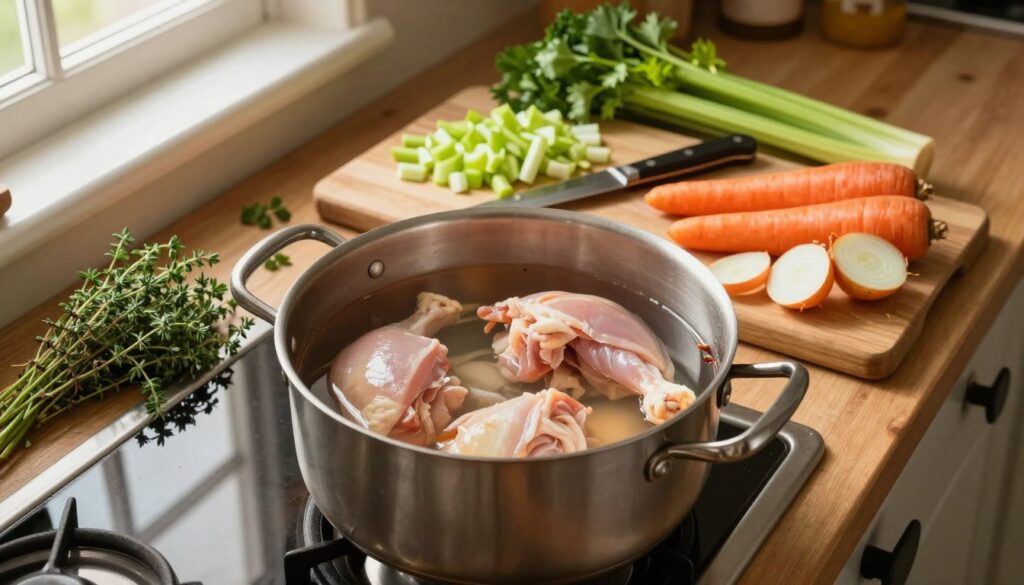
- Place chicken parts in a large stockpot and cover with cold water.
- Set heat to high and bring to a boil in 10 to 15 minutes.
- Lower heat to a gentle simmer once boiling.
- Skim foam and gray impurities from the surface in the first 30 minutes.
- Add vegetables, aromatics, bay leaves, thyme, parsley, and peppercorns to the pot.
- Maintain a bare simmer for 4 to 6 hours, with just occasional small bubbles.
- Add more water if ingredients become exposed above the liquid line.
- Never allow a rolling boil, as this creates cloudy, bitter stock.
This method develops deep, clean flavor and keeps your stock clear and beautiful.
Straining and Storing Your Stock
Strain your stock when cooking time is up. Pour the mixture through a fine-mesh strainer into a large bowl or container. Discard all solids, including chicken bones and vegetables.
Let your stock cool to room temperature on your kitchen counter for 1 to 2 hours. Once cool, refrigerate overnight. Fat solidifies on top, making removal easy in the morning. This simple chicken stock recipe stores well when handled properly.
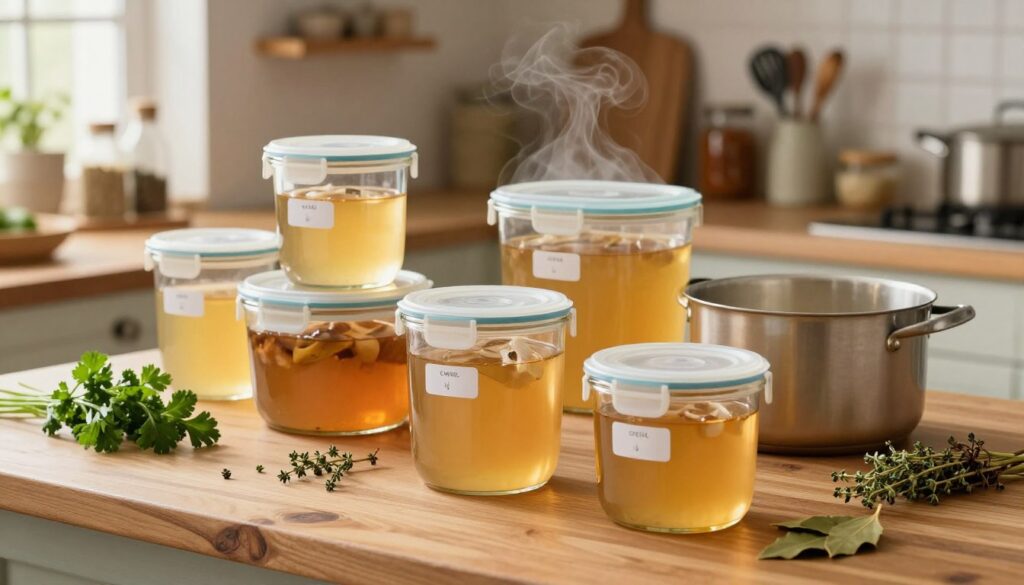
- Transfer cooled stock to clean containers or freezer bags.
- Refrigerate for up to 4 days.
- Freeze for 3 to 4 months in airtight containers.
- Leave 1-inch headspace in containers for expansion during freezing.
- Label containers with the date for easy tracking.
Your homemade chicken stock recipe provides approximately 40 calories, 2 grams of fat, 1 gram of carbohydrates, and 5 grams of protein per 1-cup serving. You also gain valuable minerals including calcium, magnesium, and phosphorus from the bones.
Expert Tips for Making Flavorful Chicken Stock
Making the best chicken stock recipe is more than just throwing bones in a pot. Expert tips can turn your homemade broth into something amazing. It will make every soup and sauce taste better.
Use cold water instead of hot. Cold water lets proteins dissolve slowly, making your stock clear and clean. Hot water seals proteins too fast, trapping bad stuff inside.
Roast your chicken bones at 400°F for 30 to 40 minutes before simmering. Roasting makes them darker and more flavorful. Your stock will taste richer and more complex.
Simmer gently, not at a boil. Boiling can make your stock cloudy and greasy. Keep the heat low and steady for the best results.
Add a little apple cider vinegar or wine, about 1 to 2 tablespoons. It helps pull minerals and collagen from the bones. This makes your stock more nutritious.
- Never add salt during cooking (salt it after reducing)
- Use chicken feet for maximum gelatin content
- Freeze vegetable scraps for stock-making
- Avoid cruciferous vegetables like broccoli that create bitter flavors
- Properly made stock should gel when refrigerated
For cloudy stock, try the “raft” technique with egg whites. Make “remouillage” by simmering used bones in fresh water again. These tips help you get the most out of your ingredients and make delicious stock every time.
How to Use and Store Your Homemade Chicken Stock
Making homemade chicken stock is just the start. Knowing how to store and use it is key. It’s like liquid gold in your kitchen, lasting for months with the right care.
Best Practices for Refrigeration and Freezing
Keeping your homemade chicken stock fresh is important. Cool it down before refrigerating. This stops harmful bacteria from growing.
In the fridge, it stays good for 4 to 5 days in airtight containers. You might see solidified fat on top. Leave it there until you use it. This fat keeps it fresh.
Freezing is best for longer storage. It keeps well for 4 to 6 months. Use freezer-safe containers and leave space for expansion.
Freezing in small portions makes cooking easier:
- Ice cube trays hold about 2 tablespoons per cube
- Muffin tins hold about 1/2 cup per cup
- Transfer frozen cubes to freezer bags after they harden
Always label your containers with the date and whether it’s seasoned or unseasoned.
Creative Ways to Use Your Stock
Your homemade chicken stock is great in many dishes. Use it as a base for soups like chicken noodle or tortilla soup.
It’s also good for cooking grains:
- Rice absorbs the rich taste perfectly
- Quinoa becomes more flavorful and tender
- Farro develops better depth in your homemade chicken stock
Use it to braise meats and vegetables for tender results. Make pan sauces and gravies by deglazing your pan with it. It’s perfect for making risotto or reduction sauces.
It’s also great for cooking beans, making French velouté sauce, or as a warm drink with herbs. Don’t waste a single drop.
Common Mistakes to Avoid When Making Chicken Bone Broth
Making the perfect chicken bone broth recipe needs careful attention. Many home cooks make mistakes that lead to cloudy, weak, or bad-tasting stock. Knowing these common errors helps you avoid wasting time and ingredients, leading to great results.
One big mistake is using a rolling boil instead of a gentle simmer. A hard boil breaks down bones too fast, making the broth cloudy and greasy. Keep the heat low and steady. You should see only occasional bubbles, not a churning pot.
Skimming impurities in the first 30 to 45 minutes of cooking is key. Gray foam and particles rise to the surface as it heats. Remove these with a spoon or ladle. Skipping this step leads to bitter flavors and a murky look.
Timing is important when making chicken bone broth. Quick versions take 2 to 3 hours, but traditional bone broth needs 4 to 6 hours. This longer time lets bones release collagen, creating a gel texture when chilled.
Key Errors to Skip
- Adding vegetables too early—they break down and cloud your stock
- Using excessive water—ingredients should be just covered, not submerged
- Adding salt while cooking—reduction concentrates saltiness too much
- Using only chicken breast—use bones and dark meat for better body
- Stirring too frequently—this incorporates fat and reduces clarity
- Storing warm stock—cool it first to prevent bacterial growth
| Mistake | Impact on Your Stock | Best Practice |
|---|---|---|
| Rolling boil | Cloudy, greasy texture | Gentle simmer only |
| No skimming | Bitter, murky flavor | Skim first 30-45 minutes |
| Cooking too short | Weak flavor, no gel | Simmer 4-6 hours minimum |
| Early vegetables | Cloudy appearance | Add after skimming phase |
| Too much water | Diluted taste | Just cover ingredients |
| Salt during cooking | Over-salted broth | Season after cooking |
When making chicken bone broth, use quality bones and parts. Old or poor-quality chicken can ruin your broth. Choose fresh bones from a butcher when possible. Cool your stock to room temperature before refrigerating to prevent bacterial growth.
These mistakes are simple to avoid once you know them. Your next batch of chicken bone broth will taste richer and clearer. Success comes from patience and proper technique.
Conclusion
You now know how to make a quick chicken stock recipe at home. It’s easier than you think. The prep work takes 15 to 20 minutes, and the rest is hands-off.
This means you can start your ingredients and let the stock simmer. You can then focus on other tasks while your stock develops its flavors.
In this article, you learned how to make stock from start to finish. You found out which chicken parts and vegetables are best. You also learned about the tools that make the job easier.
You got a step-by-step guide and expert tips for better results. You also learned how to store your stock. This knowledge lets you make top-quality stock whenever you want.
Think of making stock as a regular kitchen task. Keep a freezer bag for leftover bones and scraps. When it’s full, you’re ready for your next batch.
Homemade stock is a game-changer. It saves money, lets you control what goes into your food, and tastes better. Your body also benefits from the real bone broth.
Once you taste the difference, you’ll never go back. Start making your own stock today and elevate your cooking.