How to Make Chicken Stock: Easy & Delicious Recipe
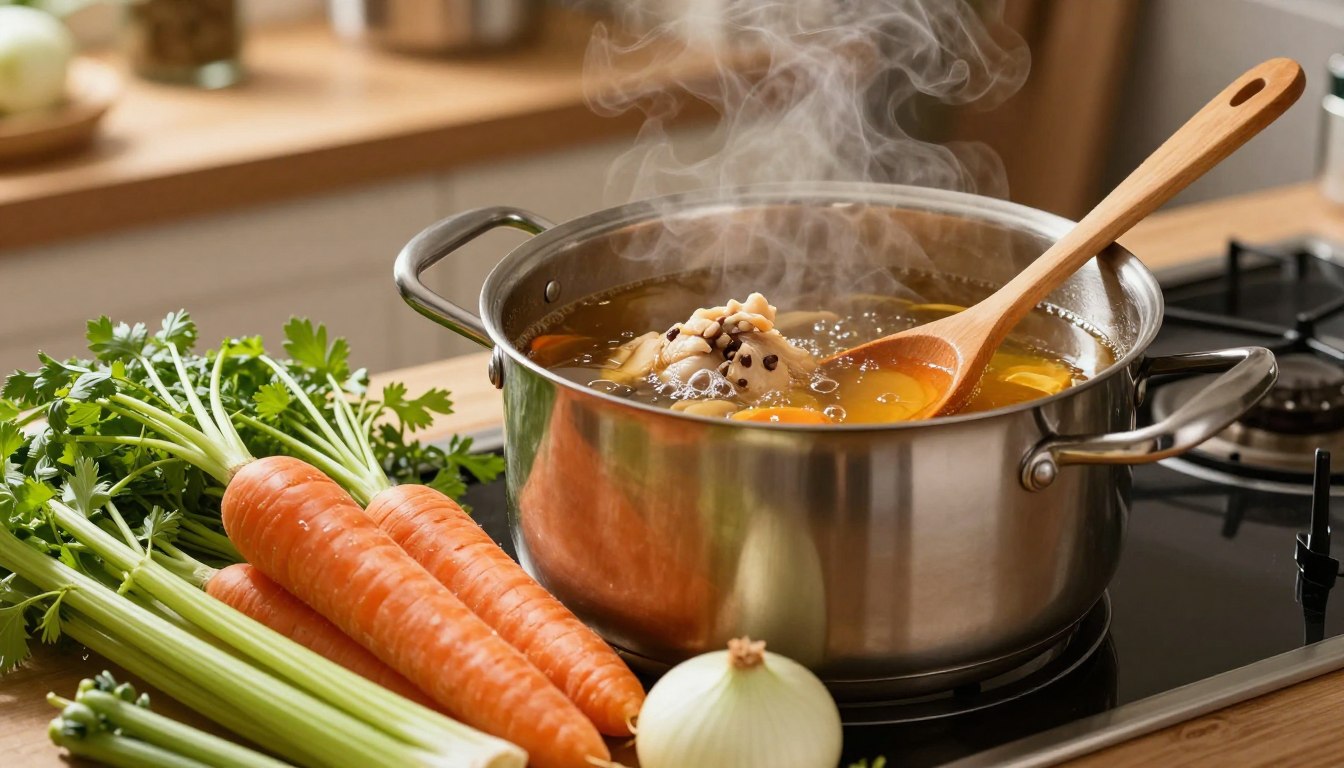
How to make chicken stock at home is one of the most rewarding kitchen skills you can learn. Creating nourishing food with your own hands is deeply satisfying. It’s more than just a recipe, it’s a tradition that turns simple ingredients into liquid gold for your kitchen. The aroma alone will remind you why homemade meals are better than store-bought.
Making chicken stock from scratch is easier than you think. You only need a few basic ingredients and some hands-off cooking time. Your kitchen will fill with warmth and comfort as the pot simmers on your stove.
This guide will show you how to make restaurant-quality chicken stock at home. You’ll learn what ingredients to use, how long to prepare, and the best ways to store it. Each section includes professional tips to help you succeed.
Whether you’re new to cooking or an experienced chef, this recipe will impress you. Your soups will be richer, your sauces will have deeper flavor, and your risottos will shine with homemade stock.
By the end of this article, you’ll know how to make perfect chicken stock every time. You’ll see why making your own stock changes the way you cook.
Table of Contents
Why Homemade Chicken Stock is Worth the Effort
Making homemade chicken stock from scratch takes time, but it’s worth it. When you make it yourself, you get something better than store-bought. It improves your cooking and health.
Superior Flavor and Nutritional Benefits
Homemade chicken stock tastes richer and more complex. It’s made by simmering bones, veggies, and herbs for hours. This process creates flavors that instant or canned broths can’t match.
It also has nutrients like collagen, gelatin, and minerals. These help your joints, gut, and immune system. Commercial products often lose these during processing.
Cost-Effective Kitchen Staple
You can make homemade chicken stock from bones you might throw away. Buying chicken bones is cheaper than buying broth. A few dollars of bones and veggies make lots of stock.
This saves money and gives you better quality for your soups and sauces.
Control Over Ingredients and Sodium Levels
When you make your own chicken stock, you choose what’s in it. You avoid additives, preservatives, and too much sodium. You can adjust salt levels and use organic ingredients.
This way, you make a pure, healthy product that fits your standards.
- Eliminate hidden additives and preservatives
- Customize sodium content for your health
- Select organic or locally-sourced ingredients
- Know exactly what you’re feeding your family
Essential Ingredients for the Best Chicken Stock
Making the best chicken stock is all about the ingredients. You don’t need expensive items to make great broth. Focus on using fresh, quality ingredients in the right amounts. Keep your list simple and fresh.
The base of your stock is chicken bones. Use a whole chicken carcass, raw backs, necks, wings, or a mix. Aim for 3 to 4 pounds of bones for a rich flavor. The bones add gelatin and minerals, making your stock thick and tasty.
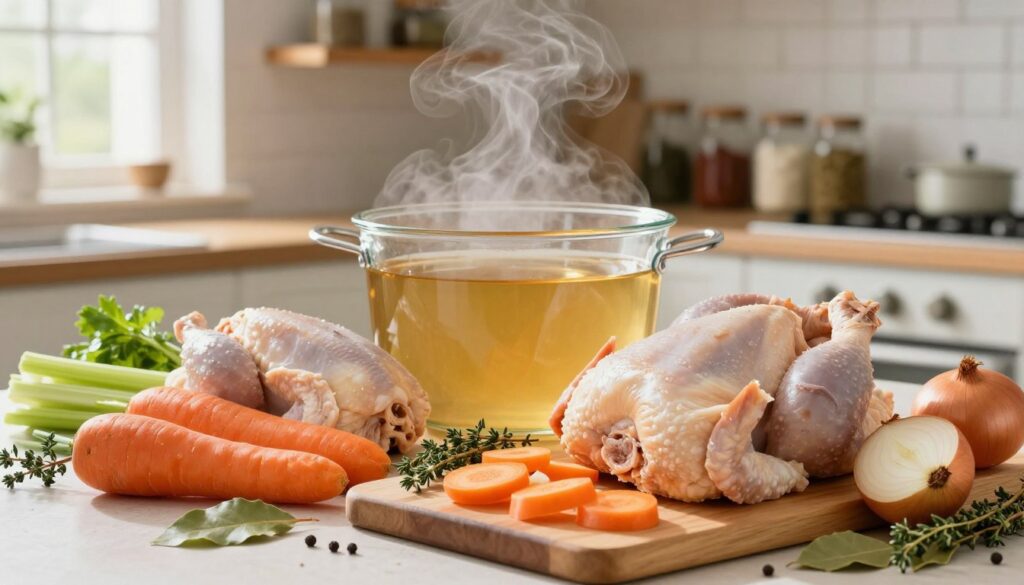
Aromatic vegetables are key for flavor. They add depth without making your stock too strong. Keep your vegetable prep simple.
- 2 medium onions, quartered with skins on for color
- 3 large carrots, roughly chopped
- 3 to 4 celery stalks, roughly chopped
- 1 head of garlic, halved crosswise
Fresh herbs and seasonings boost your stock’s flavor. They add complexity to your taste.
| Ingredient | Amount | Purpose |
|---|---|---|
| Bay leaves | 2 to 3 leaves | Adds earthy, subtle flavor |
| Fresh thyme sprigs | 6 to 8 sprigs | Contributes herbaceous notes |
| Black peppercorns | 8 to 10 whole | Provides gentle spice |
| Apple cider vinegar | 2 tablespoons | Helps extract minerals from bones |
| Cold filtered water | 4 to 5 quarts | Covers ingredients by 2 inches |
Consider adding optional ingredients for extra depth. Parsley stems, kombu seaweed, or a parsnip can enhance your stock. Using organic ingredients improves flavor and nutrition.
Prepare all your ingredients before cooking. This ensures a smooth process and helps you make the best chicken stock.
How to Make Chicken Stock: Step-by-Step Instructions
Learning to make chicken stock at home opens up new culinary adventures. This guide will walk you through each step, from preparing ingredients to storing the stock. It takes about 15 to 20 minutes to prepare, with 3 to 6 hours of simmering. You’ll end up with 3 to 4 quarts of flavorful stock.
Preparing Your Chicken and Vegetables
Begin by gathering your ingredients and preparing them. If using raw chicken bones, roast them at 400°F for 30 to 40 minutes until golden. This step adds a richer flavor to your stock. Roasting is optional but many swear by it.
Next, chop your vegetables like carrots, celery, and onions. You don’t need to chop them finely as they’ll be strained out later. Add garlic, fresh herbs, and peppercorns. A splash of vinegar helps extract minerals from the bones.
Put your chicken bones in a large stockpot, at least 8-quart capacity. Add your chopped vegetables, herbs, and seasonings. Cover with cold water, leaving 2 inches at the top to prevent boiling over.
Simmering Techniques for Maximum Flavor
Bring the pot to a boil, then reduce the heat to a low simmer. You want to see just a few bubbles. This gentle simmer is key to making great chicken stock.
For the first 30 minutes, skim off any foam. This improves clarity and taste. Keep the pot uncovered and simmer for 3 to 6 hours. The longer it simmers, the richer your stock will be. Check and add water if needed.
| Simmering Duration | Flavor Intensity | Best For |
|---|---|---|
| 3 hours | Light and delicate | Subtle soups and sauces |
| 4-5 hours | Medium and balanced | General cooking and versatile use |
| 6 hours | Deep and rich | Complex dishes and reductions |
Straining and Storing Your Stock
After simmering, let the pot cool for 15 minutes. This makes handling safer. Set up a fine-mesh strainer or cheesecloth-lined colander over a large container. Pour your stock through, pressing gently on the solids to extract all flavor. Discard the used bones and vegetables.
Let your stock cool to room temperature before refrigerating. This lets fat solidify, making it easy to remove. Store it in airtight containers in the fridge for up to 4 days, or freeze for longer.
- Cool stock completely before refrigerating
- Remove solidified fat from the top for a cleaner product
- Use airtight containers to prevent odors
- Label containers with the date made
- Freeze in ice cube trays for convenient portion sizes
Now you know how to make chicken stock from start to finish. Your homemade stock is better in taste, nutrition, and value. The effort is worth it for a versatile kitchen staple that lasts months.
Expert Tips for Rich and Flavorful Chicken Broth
Making great chicken broth is more than just throwing ingredients together. It’s about using professional techniques to make your broth stand out. Understanding the science behind each step is key to unlocking flavor and nutrition.
Begin with cold water for your chicken broth. This method helps flavors and nutrients slowly release as the water warms up. The slow process extracts gelatin, minerals, and rich compounds from the bones, enriching the broth’s taste.
It’s important to simmer your broth gently. Avoid boiling too quickly, as it can cloud the broth. A slow simmer keeps the broth clear and preserves delicate flavors.
Here are some expert tips for better results:
- Include joint bones like chicken feet and wings for maximum gelatin extraction
- Roast bones and vegetables before simmering to add depth and color
- Add vinegar at the beginning to draw calcium and minerals from bones
- Skip salt during cooking and season dishes individually instead
- Strain through cheesecloth without pressing solids
- Simmer for 6-8 hours for rich, gelatinous results
Your homemade chicken broth is a nutritional powerhouse. Each cup has about 40-60 calories, 6-8 grams of protein, and essential minerals like calcium and magnesium. Unlike store-bought broth, you can control the sodium, making it great for health-conscious cooking.
Common Mistakes to Avoid When Making Chicken Stock
Making easy chicken stock at home can lead to restaurant-quality broths. To avoid common mistakes, it’s important to know what they are. This way, you can make perfect stock every time.
Boiling Instead of Simmering
Boiling your pot at high heat is a common mistake. It breaks fat into tiny droplets, making your stock cloudy and greasy. This results in a stock that tastes bad and feels heavy.
To avoid this, simmer your stock gently. Look for bubbles that barely rise to the surface. This method makes your stock clear and flavorful.
Skipping the Roasting Step
Many skip roasting bones and vegetables to save time. But roasting is key to making your stock special. It caramelizes the bones and vegetables, adding deep flavors.
Here are more mistakes to watch out for:
- Using too much water, which dilutes your stock flavor
- Cooking for too short a time, resulting in weak, watery broth
- Adding salt early, limiting flexibility in future recipes
- Using wilted or old vegetables that impart off-flavors
- Skipping the foam-skimming step during the first 30 minutes
- Adding starchy vegetables like potatoes that cloud your stock
- Including strong vegetables such as cabbage that overpower chicken taste
By avoiding these mistakes, you can make perfect chicken stock. Your broths will be rich and flavorful, improving every dish you make.
Creative Ways to Use Your Homemade Chicken Stock
Your homemade chicken stock opens doors to countless kitchen possibilities. It turns everyday dishes into memorable meals. Once you’ve mastered making homemade chicken stock, it becomes a valuable cooking tool. The rich flavor and nutritional benefits of your stock extend far beyond simple soups.
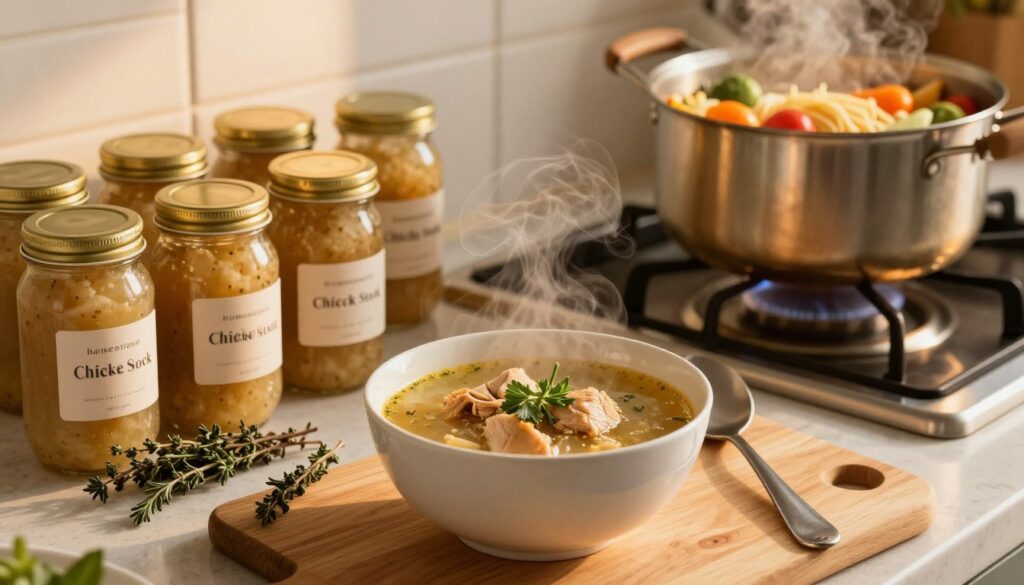
Transform simple grains by cooking rice, quinoa, farro, or barley in your homemade chicken stock. Each grain absorbs the deep, savory flavors beautifully. Your stock creates the perfect foundation for classic dishes like chicken noodle soup, tortilla soup, and Italian wedding soup. Elevate your cooking with elegant preparations such as French onion soup or butternut squash bisque using this liquid gold.
Beyond soups, your homemade chicken stock serves many purposes in your kitchen:
- Deglaze pans after searing meat to create restaurant-quality pan sauces instantly
- Add ladle by ladle to risotto for creamy texture and savory depth
- Braise vegetables, pot roasts, and chicken thighs for incredibly tender results
- Reduce by half to create concentrated bases for gravies and sauces
- Freeze in ice cube trays for quick flavor boosts in stir-fries and sautéed vegetables
- Mix into bread dough for savory loaves with rich flavor
- Use as gravy base during holiday meals
- Sip warm from a mug as a nourishing beverage
Your homemade chicken stock enriches casseroles, stews, and braised dishes. Add it to mashed potatoes for extra creaminess. Each application demonstrates why making your own stock pays dividends throughout your cooking year.
| Cooking Method | Best Uses for Homemade Chicken Stock | Flavor Impact |
|---|---|---|
| Grain Cooking | Rice, quinoa, farro, barley | Deep, savory flavor enhancement |
| Soup Base | Chicken noodle, tortilla, French onion | Rich, complex foundation |
| Pan Sauces | After searing meat or poultry | Restaurant-quality depth |
| Risotto Cooking | Added ladle by ladle while stirring | Creamy texture with savory taste |
| Braising Liquid | Vegetables, pot roasts, chicken thighs | Tender, flavorful results |
| Reduced Sauce Base | Gravies and concentrated sauces | Intensified, concentrated flavor |
| Frozen Cubes | Stir-fries, sautéed vegetables, potatoes | Quick flavor boost with convenience |
| Bread Dough | Savory loaves and focaccia | Subtle savory undertones |
Your homemade chicken stock becomes the backbone of your cooking repertoire. This ingredient proves its worth in every application, from simple preparations to complex dishes.
Storage and Freezing Guidelines for Long-Lasting Stock
After making your chicken stock, it’s key to store it right to keep it fresh. Your homemade stock can last for weeks or months if stored correctly. Knowing how to refrigerate and freeze it will help you enjoy your cooking for longer.
Refrigeration Best Practices
Let your chicken stock cool down completely before putting it in the fridge. This should take about two hours. Then, put it in airtight containers and refrigerate it right away.
Over time, you’ll see fat solidify on top. This fat helps keep your stock fresh. You can leave it or take it off, depending on what you like. Stock stored in the fridge stays good for four to five days.
Before using your stock, check if it’s fresh. It should smell good and savory. If it smells sour or off, it’s gone bad and should be thrown away.
Freezing Methods and Container Options
Freezing is the best way to keep your chicken stock for a long time. You can choose from several freezing methods:
- Pour cooled stock into freezer-safe containers, leaving one inch of headspace for expansion
- Use heavy-duty freezer bags laid flat for space-efficient storage in your freezer
- Freeze stock in ice cube trays or muffin tins for convenient small-quantity portions
- Apply a vacuum sealer to prevent freezer burn and extend freshness
| Freezing Method | Best For | Storage Duration | Thawing Time |
|---|---|---|---|
| Freezer-safe containers | Large batches | 4-6 months | Overnight in refrigerator |
| Heavy-duty freezer bags | Space-saving storage | 4-6 months | Cold water (30-60 minutes) |
| Ice cube trays | Small portions for recipes | 4-6 months | Direct use in hot dishes |
| Vacuum-sealed bags | Maximum protection | 4-6 months | Cold water or refrigerator |
Your frozen chicken stock stays best for four to six months. At zero degrees Fahrenheit, it’s safe to eat forever. Always thaw it in the fridge overnight, or thaw it quickly in cold water. You can add frozen stock straight to hot dishes without thawing it first.
Always label your containers with the date and what’s inside. Remember if you added salt, so you can season your dishes right. Never refreeze thawed stock again, as it’s not safe to eat.
Conclusion
Making the best chicken stock at home is easier than you think. You now have all the knowledge to create rich, flavorful stock. This beats any store-bought option. The process takes patience, but it’s simple.
Once you master this skill, you’ll see why home cooks have trusted homemade stock for years. Your homemade chicken stock offers real benefits. It has better flavor, nutrition, and costs less than store-bought.
You also have full control over what goes into your stock. The techniques you’ve learned are key to great stock. These include gentle simmering, choosing the right ingredients, and proper cooking and storage.
Transform leftover chicken bones and vegetable scraps into liquid gold. This liquid gold enhances every dish. As you make stock more, you’ll find your own style and preferences.
You might add ginger, lemongrass, or different herbs to make your own version. The basic method stays the same, but your touch makes each batch special. Your freezer will always have homemade stock ready.
This means you can make impressive soups, sauces, grains, and braises easily. Start with this recipe and make making the best chicken stock a regular part of your cooking. Soon, you’ll be like many home cooks who know great cooking starts with great stock.
Your kitchen will smell amazing, your dishes will taste better, and you’ll be proud of what’s in every pot.