How to Make Chicken Broth with Chicken: Easy & Delicious Recipe
Simmering chicken on the stove is deeply comforting. The aroma fills your kitchen. Your family gathers closer. You’re creating something nourishing with your own hands.
Making homemade chicken broth from scratch is satisfying. It lets you control what goes into your food. You don’t need special skills or hours of attention.
This guide will show you how to make chicken broth with chicken. You’ll learn why homemade broth is better than store-bought. You’ll know the ingredients and equipment you need.
Follow our step-by-step instructions for a simple process. You’ll also get expert tips for success every time.
Your homemade broth will be richer and more flavorful. You can control the sodium levels. You can choose the vegetables and herbs you like.
By the end of this article, you’ll be confident making chicken broth. The process is easy, and the results are delicious and nutritious. You’re about to unlock a skill that will change your cooking.
Table of Contents
Why Homemade Chicken Broth Is Worth Your Time
Making your own broth at home offers many benefits. You control every ingredient and nutrient. Simmering chicken bones turns kitchen scraps into liquid gold for your health and wallet.
Creating chicken bone broth from leftover bones and veggies is cheap. Your kitchen scraps become valuable instead of waste. This saves money over time.
Health Benefits of Chicken Bone Broth
Slow-simmering chicken bones release nutrients your body absorbs easily. It contains collagen for your joints and skin. The gelatin helps heal your gut and improves digestion.
Your bones release minerals like calcium and magnesium during cooking. Amino acids like glycine and proline boost your immune system. These compounds strengthen your body from the inside.
- Rich collagen content for joint support
- Gelatin that promotes gut health
- Easily absorbed minerals and amino acids
- Natural immune-boosting compounds
Cost Savings Compared to Store-Bought Broth
Making broth from a whole chicken or leftover bones is cheaper than buying it. Organic store-bought broth costs $8 to $12 per quart. Homemade broth costs just $1 to $3 per quart.
Your vegetable scraps and leftover chicken carcasses become valuable. You reduce food waste and save money. This makes nutrition affordable for any budget.
| Broth Type | Cost Per Quart | Preparation Time |
|---|---|---|
| Homemade from bones | $1-$3 | 12-24 hours |
| Store-bought organic | $8-$12 | Immediate |
| Conventional store broth | $4-$6 | Immediate |
Superior Flavor and Quality Control
The best chicken broth from scratch tastes richer than commercial versions. You control the salt content, avoiding excess sodium. Your homemade broth has no artificial additives or preservatives.
Customize your broth with your favorite vegetables, herbs, and spices. The thick, gelatinous texture of true chicken bone broth signals its nourishing quality. This ensures every batch meets your standards and delivers maximum nutrition.
- Complete control over salt levels
- No artificial additives or preservatives
- Customizable flavor profiles
- Visible gelatinous quality indicates nutrient density
Essential Ingredients and Equipment for Making Chicken Broth
Before you start making your homemade chicken broth, you need to gather everything. Having the right ingredients and equipment makes the process smooth. This step ensures your broth is flavorful and nourishing every time.
Your homemade chicken broth recipe starts with quality ingredients. Each part is important for rich, delicious broth. You’ll use it in soups, sauces, and more.
Key Ingredients You’ll Need
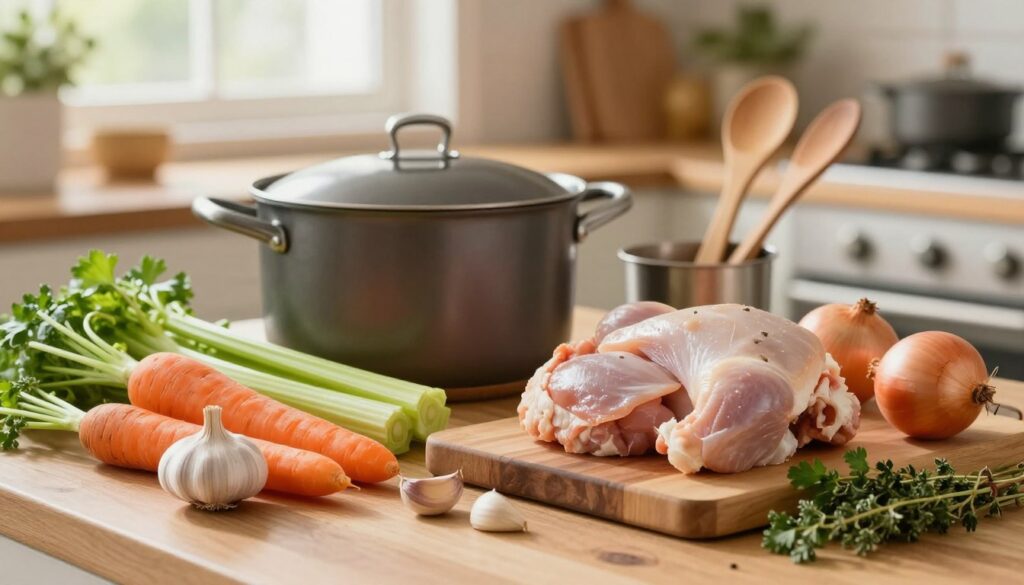
The foundation of an easy chicken broth recipe is the right protein and vegetables. Here’s what you’ll gather:
- 3 to 4 pounds of whole chicken, chicken backs, necks, wings, or a mix of bones and meat
- 2 medium onions quartered with skins on for golden color
- 3 large carrots cut into chunks
- 4 celery stalks with leaves cut into pieces
- 4 to 5 garlic cloves smashed
- 2 bay leaves
- 8 to 10 whole peppercorns
- Fresh herbs like parsley, thyme, and rosemary
- 4 to 5 quarts of cold water to cover ingredients by 2 inches
- 1 to 2 tablespoons of apple cider vinegar (optional but helpful)
Onion skins add beautiful golden color to your broth. Celery leaves add depth and complexity. Apple cider vinegar helps extract minerals from bones, making your broth more nutritious.
Essential Equipment for Your Broth
Your easy chicken broth recipe needs specific equipment. You don’t need fancy or expensive tools. Basic kitchen items work perfectly for making excellent broth:
| Equipment Item | Size/Type | Purpose |
|---|---|---|
| Stockpot | 8 to 12 quarts | Holds all ingredients while simmering |
| Fine-mesh strainer | Standard kitchen size | Separates solids from liquid |
| Cheesecloth | Food-grade | Optional filtering for clearer broth |
| Large bowl | 6 to 8 quarts | Catches strained broth |
| Storage containers | Mason jars or freezer-safe | Preserves finished broth |
| Ladle | Standard size | Transfers broth during straining |
| Fat separator | Optional tool | Removes excess fat from surface |
A large stockpot is key for your homemade chicken broth recipe. It gives ingredients room to simmer properly. The right pot size makes cooking easier and more efficient. You don’t need special equipment to make great broth, but having these basic items ready means you’re prepared for success.
Gathering your ingredients and equipment before you begin is the first step toward creating delicious homemade chicken broth. This preparation ensures your cooking experience is organized and enjoyable.
How to Make Chicken Broth with Chicken: Step-by-Step Instructions
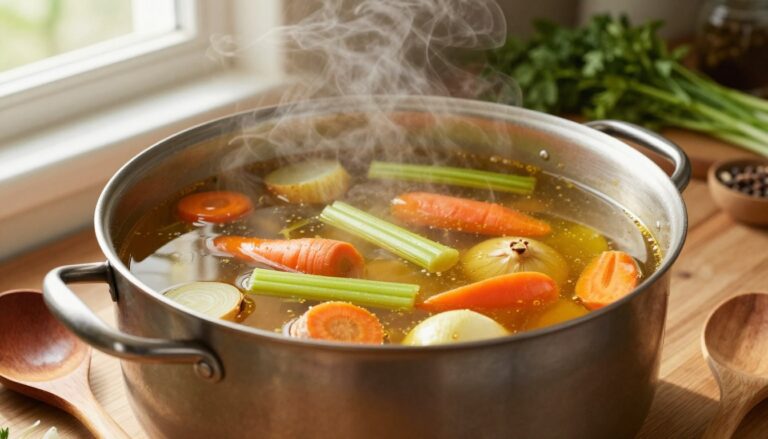
Making chicken broth with chicken is easier than you think. This simple recipe takes a few hours to make a nutritious base for soups and sauces. Follow these steps to make a flavorful broth that’s better than store-bought.
Preparing Your Chicken and Vegetables
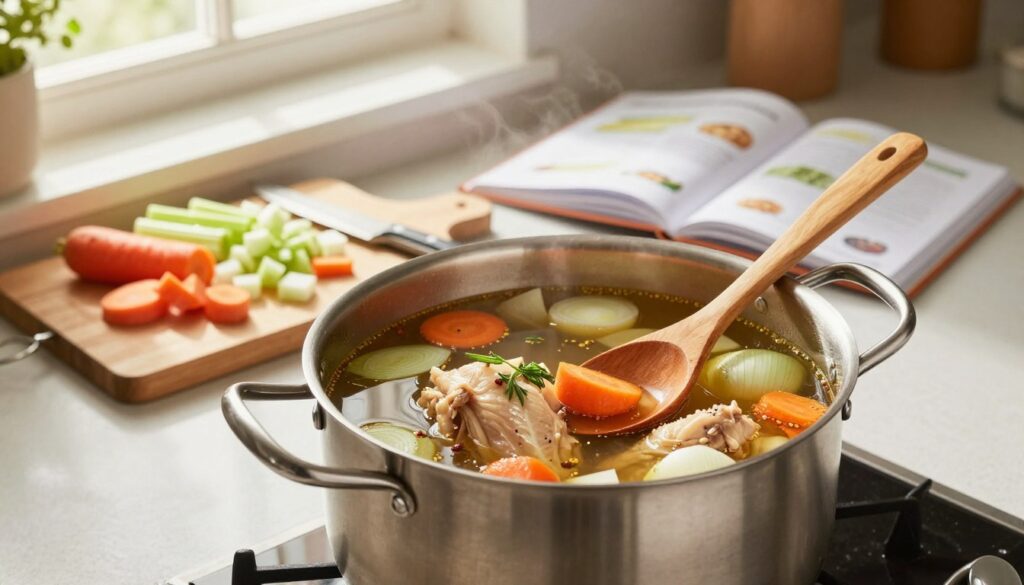
Start by rinsing your chicken under cold water. Cut a whole bird into pieces if needed. You can also use chicken bones or leftover rotisserie chicken bones. Don’t worry too much about the cuts.
Next, chop your vegetables into large chunks. Use carrots, celery, and onions as your base. Cut them roughly, as you’ll strain them out later. Leave the carrot skin on to add extra nutrients.
Place your chicken pieces and vegetables into a large stockpot. Roasting your chicken bones in the oven at 400°F for 20 minutes can add deeper flavor. This step makes the broth richer and darker.
- Rinse chicken under cold water
- Cut whole chicken into manageable pieces
- Chop vegetables into large chunks (carrots, celery, onions)
- Add chicken and vegetables to stockpot
- Optional: Roast bones first for deeper flavor
Prep Time: 15-20 minutes
Simmering Techniques for Maximum Flavor
Cover your ingredients with cold water. Cold water extracts more flavor from the chicken and vegetables. Fill your pot until everything is submerged by about two inches.
Turn the heat to medium-high and bring the pot to a boil. Once boiling, reduce the heat to low and simmer gently. You should see tiny bubbles, not a rolling boil.
In the first 30 minutes, skim off any foam and gray impurities. This makes the broth clearer and cleaner-tasting. Use a spoon or ladle to carefully remove the foam.
Simmer for 3-4 hours for regular chicken broth. For bone broth with more minerals, simmer for 6-24 hours. Add fresh herbs like thyme, bay leaves, or parsley during the last hour to preserve their flavors.
| Broth Type | Cooking Time | Best For |
|---|---|---|
| Regular Chicken Broth | 3-4 hours | Quick soups and everyday cooking |
| Rich Bone Broth | 6-24 hours | Maximum nutrients and gelatin extraction |
- Cover ingredients with cold water (2 inches above contents)
- Bring to boil on medium-high heat
- Reduce to gentle simmer immediately
- Skim foam for 30 minutes
- Simmer for 3-4 hours (or up to 24 hours for bone broth)
- Add fresh herbs in the last hour
Cooking Time: 3-4 hours (or 6-24 hours for bone broth)
Straining and Storing Your Finished Broth
Once your broth is ready, remove large solids with a slotted spoon or tongs. Discard the chicken pieces and vegetables.
Pour the broth through a fine-mesh strainer lined with cheesecloth into a large bowl. This step removes small particles and makes the broth clear. Work slowly to avoid splashing.
Let the broth cool to room temperature. To speed this up, place your bowl in an ice bath for 30-45 minutes. Once cooled, refrigerate overnight. This allows the fat to solidify on top, making it easy to remove if you prefer leaner broth.
This recipe yields approximately 3-4 quarts (12-16 cups) of broth. Transfer cooled broth into glass containers or freezer-safe bags. You can refrigerate it for up to 5 days or freeze for up to 6 months.
- Remove large solids with slotted spoon
- Strain through fine-mesh strainer with cheesecloth
- Cool to room temperature or use ice bath
- Refrigerate overnight for fat to solidify
- Remove solid fat layer if desired
- Store in glass containers or freezer bags
Storage: Refrigerate up to 5 days or freeze up to 6 months
Total Time: 3.5-4.5 hours (including prep and cooking)
Servings: Yields approximately 3-4 quarts (12-16 cups)
Expert Tips for the Best Chicken Broth from Scratch
Making the best chicken broth from scratch is more than just boiling chicken and water. Professional techniques make a big difference. Your approach to temperature, ingredients, and timing is key.
Temperature control is critical. Keep your broth at a gentle simmer, not a rolling boil. A rolling boil can make the broth cloudy and bitter. A gentle simmer gives you clear broth with rich flavor.
Choosing the right chicken parts is important. Use a mix of bones, joints, and meat. Chicken bone broth made with feet, wings, and knuckles has a gel-like consistency when chilled. These parts are full of collagen, which is good for your broth.
Save your vegetable scraps for broth-making. Keep onion ends, carrot peels, celery leaves, and herb stems in your freezer. They add depth to your chicken bone broth without extra cost.
Consider roasting your bones and vegetables before simmering. Use 400°F for 30 to 40 minutes. This step adds a deeper, caramelized flavor to your broth.
Taste and season only at the end. Flavors concentrate during cooking, so salt added early becomes too strong. Skip salt during cooking to control sodium levels in your final dishes.
- Keep temperature at a gentle simmer
- Use bones, joints, and meat together
- Roast bones and vegetables before simmering
- Season only at the end
- Freeze in various portion sizes
Freezing your finished broth properly ensures you use it efficiently. Pour broth into ice cube trays for small amounts. Use 2-cup containers for recipes. Store quart containers for soups. This variety gives you options for different cooking needs.
| Issue | Cause | Solution |
|---|---|---|
| Lacks flavor | Insufficient simmering time or too much water | Simmer longer (24-48 hours) or reduce liquid |
| Cloudy appearance | Temperature too high | Lower heat to maintain gentle simmer |
| Won’t gel when chilled | Insufficient collagen-rich parts | Add more feet, wings, or joints |
Your homemade broth is full of nutrition. One cup has 40 to 60 calories, 5 to 6 grams of protein, and 2 to 3 grams of fat. It also has about 150 to 200 milligrams of sodium. You get beneficial minerals like calcium, magnesium, and phosphorus. Long simmering also adds collagen peptides, which are good for your joints and skin.
Making the best chicken broth from scratch takes patience but rewards you with superior taste and nutrition. These expert techniques transform basic ingredients into liquid gold for your kitchen.
Conclusion
You now have all the tools to make a homemade chicken broth recipe that’s as good as any restaurant or store-bought one. It takes time, but it’s easy. You only need to spend 15 to 20 minutes at the beginning, and then just check it a few times while it simmers.
By making your own chicken broth, you control every ingredient. You choose the sodium, vegetables, herbs, and how long it simmers. This means no unwanted additives and pure, nutritious broth for your family. Plus, you save money by using leftover bones and scraps.
Try making your first batch this weekend and see the difference. Keep your freezer full of homemade chicken broth. Use it in soups, holiday dishes, or as a base for sauces. Every time you use it, you’ll know you made something special.
Don’t be afraid to try new things with your homemade chicken broth. Add different vegetables, herbs, and simmer times to create your own unique flavor. Once you taste the rich flavor of homemade broth, you’ll never go back to store-bought. You’re ready to take your cooking to the next level.
FAQ
What’s the difference between chicken broth and chicken bone broth?
Can I use a whole chicken or do I need specific chicken parts?
How long does it take to make homemade chicken broth?
Why should I make chicken broth from scratch instead of buying it at the store?
What’s the difference between chicken broth and chicken bone broth?
Can I use a whole chicken or do I need specific chicken parts?
How long does it take to make homemade chicken broth?
Why should I make chicken broth from scratch instead of buying it at the store?
FAQ
What’s the difference between chicken broth and chicken bone broth?
Chicken broth simmers for 3-4 hours with chicken parts. It’s lighter and more flavorful. Chicken bone broth, on the other hand, simmers for 6-24 hours with bones and joints. It’s thicker and has more gelatin and collagen.
Bone broth is better for joint health and gut healing. It has more amino acids like glycine and proline. Bone broth needs longer cooking to extract minerals and healing compounds from bones.
Can I use a whole chicken or do I need specific chicken parts?
You can use a whole chicken or chicken parts like backs and necks. Using a whole chicken gives you meat for soups or other dishes. Chicken parts are cheaper and better for broth.
For the best broth, include chicken feet and wing tips. This mix of bones, joints, and meat gives great flavor and nutrition.
How long does it take to make homemade chicken broth?
It takes about 3.5-4.5 hours, mostly passive cooking. Prep time is 15-20 minutes. Cooking time varies from 3-4 hours for regular broth to 6-24 hours for bone broth.
After cooking, straining and cooling take 10-15 minutes. Broth-making is mostly hands-off, allowing rich flavor and nutrition to develop.
Why should I make chicken broth from scratch instead of buying it at the store?
Homemade broth is healthier and tastes better. You control the sodium and avoid additives. It’s also cheaper, costing
FAQ
What’s the difference between chicken broth and chicken bone broth?
Chicken broth simmers for 3-4 hours with chicken parts. It’s lighter and more flavorful. Chicken bone broth, on the other hand, simmers for 6-24 hours with bones and joints. It’s thicker and has more gelatin and collagen.
Bone broth is better for joint health and gut healing. It has more amino acids like glycine and proline. Bone broth needs longer cooking to extract minerals and healing compounds from bones.
Can I use a whole chicken or do I need specific chicken parts?
You can use a whole chicken or chicken parts like backs and necks. Using a whole chicken gives you meat for soups or other dishes. Chicken parts are cheaper and better for broth.
For the best broth, include chicken feet and wing tips. This mix of bones, joints, and meat gives great flavor and nutrition.
How long does it take to make homemade chicken broth?
It takes about 3.5-4.5 hours, mostly passive cooking. Prep time is 15-20 minutes. Cooking time varies from 3-4 hours for regular broth to 6-24 hours for bone broth.
After cooking, straining and cooling take 10-15 minutes. Broth-making is mostly hands-off, allowing rich flavor and nutrition to develop.
Why should I make chicken broth from scratch instead of buying it at the store?
Homemade broth is healthier and tastes better. You control the sodium and avoid additives. It’s also cheaper, costing $0.50-$1.00 per quart.
Store-bought broth can have 800-1000mg of sodium per cup. Homemade broth is richer and customizable to your taste.
What ingredients do I need to make basic chicken broth?
You need 3-4 pounds of chicken, onions, carrots, celery, garlic, bay leaves, peppercorns, and herbs. Use cold water and add apple cider vinegar for extra minerals.
This recipe makes 3-4 quarts of broth. Keep vegetables and herbs simple for flavor.
Should I roast my bones before making broth?
Roasting bones adds deeper flavor. Spread bones and vegetables on a baking sheet and roast at 400°F for 30-40 minutes. This step creates rich flavors.
If you’re short on time, skip roasting for a lighter broth. Roasting is worth the extra 40 minutes for better flavor.
What’s the proper simmering temperature for chicken broth?
Start with a boil, then reduce heat to a gentle simmer. This extracts flavors and nutrients without cloudiness. Skim impurities in the first 30 minutes for clearer broth.
Keep the simmer low for the entire cooking time. This ensures restaurant-quality broth.
How do I strain my chicken broth properly?
Strain through a fine-mesh strainer lined with cheesecloth. Remove solids first, then strain the broth. This ensures a clear broth.
Let the broth cool, then refrigerate. The fat will solidify, making it easy to remove. This step gives your broth a professional look and texture.
How long can I store homemade chicken broth?
Broth keeps in the fridge for up to 5 days or in the freezer for 6 months. Use airtight containers for storage.
Freezing in ice cube trays is convenient. This way, you can thaw only what you need. Properly stored broth gets richer over time.
Why is my chicken broth cloudy instead of clear?
Cloudiness often comes from boiling instead of simmering. Boiling mixes fat and impurities, making the broth cloudy. Always simmer gently.
Skim the first 30 minutes to remove impurities. If it’s already cloudy, straining through cheesecloth can help. Clear broth shows you’ve done it right.
What should I do with the chicken meat after making broth?
Use the meat in soups, salads, or casseroles. It’s already cooked and tender. You can also freeze it for later.
This way, you get extra protein from your broth. It’s a great bonus. Use all the meat you can for maximum value.
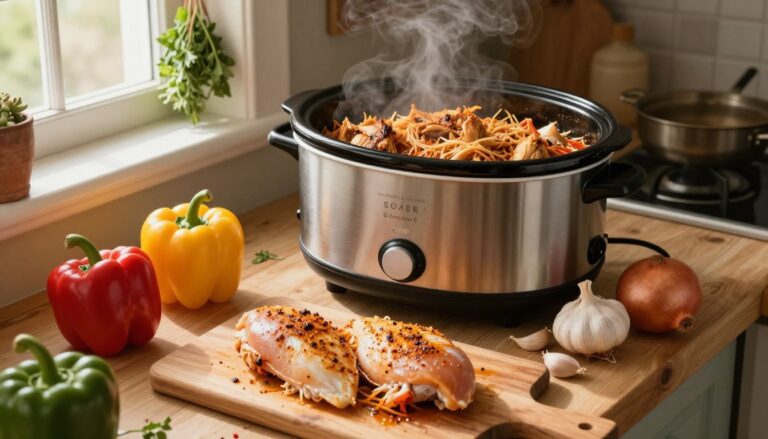
Can I make chicken broth in a slow cooker or instant pot?
Yes, slow cookers and Instant Pots are great alternatives. For slow cookers, simmer for 8-12 hours. For Instant Pots, cook for 1-2 hours.
Slow cooking is best for flavor and nutrients. But, pressure cooking is faster. Choose what fits your schedule best.
What are the nutrition facts for homemade chicken broth?
Homemade broth has about 40-60 calories per cup. It has 5-6g of protein and 2-3g of fat. It’s low in carbs and sodium.
Bone broth is rich in minerals and collagen. It’s better for joints and gut health. Homemade broth is healthier than store-bought.
Why doesn’t my broth gel when refrigerated?
If your broth doesn’t gel, it might lack collagen. Add chicken feet and wings for more collagen. Longer simmering also helps.
Don’t use too much water, as it dilutes the broth. Some chickens have more gelatin than others. If gelation is important, use chicken feet and simmer longer.
How much salt should I add to my chicken broth?
Add no salt during cooking. This lets you control the sodium in your recipes. Salt early on can make flavors overpowering.
Season with salt just before using. This way, you can adjust the flavor to your liking. Homemade broth is healthier than store-bought.
Can I reuse chicken bones for multiple batches of broth?
Reusing bones is not recommended. Each batch gets weaker and less nutritious. Bones lose collagen and minerals with each simmer.
Make one batch of broth and use the bones for compost or pet food. This approach is more efficient and produces better broth.
What vegetables work best for flavoring chicken broth?
Use onions, carrots, and celery for a balanced flavor. Garlic adds depth. Fresh herbs and bay leaves add aromatics.
Avoid strong-flavored vegetables like broccoli. The classic mirepoix mix is best for chicken broth.
FAQ
What’s the difference between chicken broth and chicken bone broth?
Chicken broth simmers for 3-4 hours with chicken parts. It’s lighter and more flavorful. Chicken bone broth, on the other hand, simmers for 6-24 hours with bones and joints. It’s thicker and has more gelatin and collagen.
Bone broth is better for joint health and gut healing. It has more amino acids like glycine and proline. Bone broth needs longer cooking to extract minerals and healing compounds from bones.
Can I use a whole chicken or do I need specific chicken parts?
You can use a whole chicken or chicken parts like backs and necks. Using a whole chicken gives you meat for soups or other dishes. Chicken parts are cheaper and better for broth.
For the best broth, include chicken feet and wing tips. This mix of bones, joints, and meat gives great flavor and nutrition.
How long does it take to make homemade chicken broth?
It takes about 3.5-4.5 hours, mostly passive cooking. Prep time is 15-20 minutes. Cooking time varies from 3-4 hours for regular broth to 6-24 hours for bone broth.
After cooking, straining and cooling take 10-15 minutes. Broth-making is mostly hands-off, allowing rich flavor and nutrition to develop.
Why should I make chicken broth from scratch instead of buying it at the store?
Homemade broth is healthier and tastes better. You control the sodium and avoid additives. It’s also cheaper, costing
FAQ
What’s the difference between chicken broth and chicken bone broth?
Chicken broth simmers for 3-4 hours with chicken parts. It’s lighter and more flavorful. Chicken bone broth, on the other hand, simmers for 6-24 hours with bones and joints. It’s thicker and has more gelatin and collagen.
Bone broth is better for joint health and gut healing. It has more amino acids like glycine and proline. Bone broth needs longer cooking to extract minerals and healing compounds from bones.
Can I use a whole chicken or do I need specific chicken parts?
You can use a whole chicken or chicken parts like backs and necks. Using a whole chicken gives you meat for soups or other dishes. Chicken parts are cheaper and better for broth.
For the best broth, include chicken feet and wing tips. This mix of bones, joints, and meat gives great flavor and nutrition.
How long does it take to make homemade chicken broth?
It takes about 3.5-4.5 hours, mostly passive cooking. Prep time is 15-20 minutes. Cooking time varies from 3-4 hours for regular broth to 6-24 hours for bone broth.
After cooking, straining and cooling take 10-15 minutes. Broth-making is mostly hands-off, allowing rich flavor and nutrition to develop.
Why should I make chicken broth from scratch instead of buying it at the store?
Homemade broth is healthier and tastes better. You control the sodium and avoid additives. It’s also cheaper, costing $0.50-$1.00 per quart.
Store-bought broth can have 800-1000mg of sodium per cup. Homemade broth is richer and customizable to your taste.
What ingredients do I need to make basic chicken broth?
You need 3-4 pounds of chicken, onions, carrots, celery, garlic, bay leaves, peppercorns, and herbs. Use cold water and add apple cider vinegar for extra minerals.
This recipe makes 3-4 quarts of broth. Keep vegetables and herbs simple for flavor.
Should I roast my bones before making broth?
Roasting bones adds deeper flavor. Spread bones and vegetables on a baking sheet and roast at 400°F for 30-40 minutes. This step creates rich flavors.
If you’re short on time, skip roasting for a lighter broth. Roasting is worth the extra 40 minutes for better flavor.
What’s the proper simmering temperature for chicken broth?
Start with a boil, then reduce heat to a gentle simmer. This extracts flavors and nutrients without cloudiness. Skim impurities in the first 30 minutes for clearer broth.
Keep the simmer low for the entire cooking time. This ensures restaurant-quality broth.
How do I strain my chicken broth properly?
Strain through a fine-mesh strainer lined with cheesecloth. Remove solids first, then strain the broth. This ensures a clear broth.
Let the broth cool, then refrigerate. The fat will solidify, making it easy to remove. This step gives your broth a professional look and texture.
How long can I store homemade chicken broth?
Broth keeps in the fridge for up to 5 days or in the freezer for 6 months. Use airtight containers for storage.
Freezing in ice cube trays is convenient. This way, you can thaw only what you need. Properly stored broth gets richer over time.
Why is my chicken broth cloudy instead of clear?
Cloudiness often comes from boiling instead of simmering. Boiling mixes fat and impurities, making the broth cloudy. Always simmer gently.
Skim the first 30 minutes to remove impurities. If it’s already cloudy, straining through cheesecloth can help. Clear broth shows you’ve done it right.
What should I do with the chicken meat after making broth?
Use the meat in soups, salads, or casseroles. It’s already cooked and tender. You can also freeze it for later.
This way, you get extra protein from your broth. It’s a great bonus. Use all the meat you can for maximum value.
Can I make chicken broth in a slow cooker or instant pot?
Yes, slow cookers and Instant Pots are great alternatives. For slow cookers, simmer for 8-12 hours. For Instant Pots, cook for 1-2 hours.
Slow cooking is best for flavor and nutrients. But, pressure cooking is faster. Choose what fits your schedule best.
What are the nutrition facts for homemade chicken broth?
Homemade broth has about 40-60 calories per cup. It has 5-6g of protein and 2-3g of fat. It’s low in carbs and sodium.
Bone broth is rich in minerals and collagen. It’s better for joints and gut health. Homemade broth is healthier than store-bought.
Why doesn’t my broth gel when refrigerated?
If your broth doesn’t gel, it might lack collagen. Add chicken feet and wings for more collagen. Longer simmering also helps.
Don’t use too much water, as it dilutes the broth. Some chickens have more gelatin than others. If gelation is important, use chicken feet and simmer longer.
How much salt should I add to my chicken broth?
Add no salt during cooking. This lets you control the sodium in your recipes. Salt early on can make flavors overpowering.
Season with salt just before using. This way, you can adjust the flavor to your liking. Homemade broth is healthier than store-bought.
Can I reuse chicken bones for multiple batches of broth?
Reusing bones is not recommended. Each batch gets weaker and less nutritious. Bones lose collagen and minerals with each simmer.
Make one batch of broth and use the bones for compost or pet food. This approach is more efficient and produces better broth.
What vegetables work best for flavoring chicken broth?
Use onions, carrots, and celery for a balanced flavor. Garlic adds depth. Fresh herbs and bay leaves add aromatics.
Avoid strong-flavored vegetables like broccoli. The classic mirepoix mix is best for chicken broth.
What ingredients do I need to make basic chicken broth?
Should I roast my bones before making broth?
What’s the proper simmering temperature for chicken broth?
How do I strain my chicken broth properly?
How long can I store homemade chicken broth?
Why is my chicken broth cloudy instead of clear?
What should I do with the chicken meat after making broth?
Can I make chicken broth in a slow cooker or instant pot?
What are the nutrition facts for homemade chicken broth?
Why doesn’t my broth gel when refrigerated?
How much salt should I add to my chicken broth?
Can I reuse chicken bones for multiple batches of broth?
What vegetables work best for flavoring chicken broth?
.50-
FAQ
What’s the difference between chicken broth and chicken bone broth?
Chicken broth simmers for 3-4 hours with chicken parts. It’s lighter and more flavorful. Chicken bone broth, on the other hand, simmers for 6-24 hours with bones and joints. It’s thicker and has more gelatin and collagen.
Bone broth is better for joint health and gut healing. It has more amino acids like glycine and proline. Bone broth needs longer cooking to extract minerals and healing compounds from bones.
Can I use a whole chicken or do I need specific chicken parts?
You can use a whole chicken or chicken parts like backs and necks. Using a whole chicken gives you meat for soups or other dishes. Chicken parts are cheaper and better for broth.
For the best broth, include chicken feet and wing tips. This mix of bones, joints, and meat gives great flavor and nutrition.
How long does it take to make homemade chicken broth?
It takes about 3.5-4.5 hours, mostly passive cooking. Prep time is 15-20 minutes. Cooking time varies from 3-4 hours for regular broth to 6-24 hours for bone broth.
After cooking, straining and cooling take 10-15 minutes. Broth-making is mostly hands-off, allowing rich flavor and nutrition to develop.
Why should I make chicken broth from scratch instead of buying it at the store?
Homemade broth is healthier and tastes better. You control the sodium and avoid additives. It’s also cheaper, costing $0.50-$1.00 per quart.
Store-bought broth can have 800-1000mg of sodium per cup. Homemade broth is richer and customizable to your taste.
What ingredients do I need to make basic chicken broth?
You need 3-4 pounds of chicken, onions, carrots, celery, garlic, bay leaves, peppercorns, and herbs. Use cold water and add apple cider vinegar for extra minerals.
This recipe makes 3-4 quarts of broth. Keep vegetables and herbs simple for flavor.
Should I roast my bones before making broth?
Roasting bones adds deeper flavor. Spread bones and vegetables on a baking sheet and roast at 400°F for 30-40 minutes. This step creates rich flavors.
If you’re short on time, skip roasting for a lighter broth. Roasting is worth the extra 40 minutes for better flavor.
What’s the proper simmering temperature for chicken broth?
Start with a boil, then reduce heat to a gentle simmer. This extracts flavors and nutrients without cloudiness. Skim impurities in the first 30 minutes for clearer broth.
Keep the simmer low for the entire cooking time. This ensures restaurant-quality broth.
How do I strain my chicken broth properly?
Strain through a fine-mesh strainer lined with cheesecloth. Remove solids first, then strain the broth. This ensures a clear broth.
Let the broth cool, then refrigerate. The fat will solidify, making it easy to remove. This step gives your broth a professional look and texture.
How long can I store homemade chicken broth?
Broth keeps in the fridge for up to 5 days or in the freezer for 6 months. Use airtight containers for storage.
Freezing in ice cube trays is convenient. This way, you can thaw only what you need. Properly stored broth gets richer over time.
Why is my chicken broth cloudy instead of clear?
Cloudiness often comes from boiling instead of simmering. Boiling mixes fat and impurities, making the broth cloudy. Always simmer gently.
Skim the first 30 minutes to remove impurities. If it’s already cloudy, straining through cheesecloth can help. Clear broth shows you’ve done it right.
What should I do with the chicken meat after making broth?
Use the meat in soups, salads, or casseroles. It’s already cooked and tender. You can also freeze it for later.
This way, you get extra protein from your broth. It’s a great bonus. Use all the meat you can for maximum value.
Can I make chicken broth in a slow cooker or instant pot?
Yes, slow cookers and Instant Pots are great alternatives. For slow cookers, simmer for 8-12 hours. For Instant Pots, cook for 1-2 hours.
Slow cooking is best for flavor and nutrients. But, pressure cooking is faster. Choose what fits your schedule best.
What are the nutrition facts for homemade chicken broth?
Homemade broth has about 40-60 calories per cup. It has 5-6g of protein and 2-3g of fat. It’s low in carbs and sodium.
Bone broth is rich in minerals and collagen. It’s better for joints and gut health. Homemade broth is healthier than store-bought.
Why doesn’t my broth gel when refrigerated?
If your broth doesn’t gel, it might lack collagen. Add chicken feet and wings for more collagen. Longer simmering also helps.
Don’t use too much water, as it dilutes the broth. Some chickens have more gelatin than others. If gelation is important, use chicken feet and simmer longer.
How much salt should I add to my chicken broth?
Add no salt during cooking. This lets you control the sodium in your recipes. Salt early on can make flavors overpowering.
Season with salt just before using. This way, you can adjust the flavor to your liking. Homemade broth is healthier than store-bought.
Can I reuse chicken bones for multiple batches of broth?
Reusing bones is not recommended. Each batch gets weaker and less nutritious. Bones lose collagen and minerals with each simmer.
Make one batch of broth and use the bones for compost or pet food. This approach is more efficient and produces better broth.
What vegetables work best for flavoring chicken broth?
Use onions, carrots, and celery for a balanced flavor. Garlic adds depth. Fresh herbs and bay leaves add aromatics.
Avoid strong-flavored vegetables like broccoli. The classic mirepoix mix is best for chicken broth.
.00 per quart.
Store-bought broth can have 800-1000mg of sodium per cup. Homemade broth is richer and customizable to your taste.
What ingredients do I need to make basic chicken broth?
You need 3-4 pounds of chicken, onions, carrots, celery, garlic, bay leaves, peppercorns, and herbs. Use cold water and add apple cider vinegar for extra minerals.
This recipe makes 3-4 quarts of broth. Keep vegetables and herbs simple for flavor.
Should I roast my bones before making broth?
Roasting bones adds deeper flavor. Spread bones and vegetables on a baking sheet and roast at 400°F for 30-40 minutes. This step creates rich flavors.
If you’re short on time, skip roasting for a lighter broth. Roasting is worth the extra 40 minutes for better flavor.
What’s the proper simmering temperature for chicken broth?
Start with a boil, then reduce heat to a gentle simmer. This extracts flavors and nutrients without cloudiness. Skim impurities in the first 30 minutes for clearer broth.
Keep the simmer low for the entire cooking time. This ensures restaurant-quality broth.
How do I strain my chicken broth properly?
Strain through a fine-mesh strainer lined with cheesecloth. Remove solids first, then strain the broth. This ensures a clear broth.
Let the broth cool, then refrigerate. The fat will solidify, making it easy to remove. This step gives your broth a professional look and texture.
How long can I store homemade chicken broth?
Broth keeps in the fridge for up to 5 days or in the freezer for 6 months. Use airtight containers for storage.
Freezing in ice cube trays is convenient. This way, you can thaw only what you need. Properly stored broth gets richer over time.
Why is my chicken broth cloudy instead of clear?
Cloudiness often comes from boiling instead of simmering. Boiling mixes fat and impurities, making the broth cloudy. Always simmer gently.
Skim the first 30 minutes to remove impurities. If it’s already cloudy, straining through cheesecloth can help. Clear broth shows you’ve done it right.
What should I do with the chicken meat after making broth?
Use the meat in soups, salads, or casseroles. It’s already cooked and tender. You can also freeze it for later.
This way, you get extra protein from your broth. It’s a great bonus. Use all the meat you can for maximum value.
Can I make chicken broth in a slow cooker or instant pot?
Yes, slow cookers and Instant Pots are great alternatives. For slow cookers, simmer for 8-12 hours. For Instant Pots, cook for 1-2 hours.
Slow cooking is best for flavor and nutrients. But, pressure cooking is faster. Choose what fits your schedule best.
What are the nutrition facts for homemade chicken broth?
Homemade broth has about 40-60 calories per cup. It has 5-6g of protein and 2-3g of fat. It’s low in carbs and sodium.
Bone broth is rich in minerals and collagen. It’s better for joints and gut health. Homemade broth is healthier than store-bought.
Why doesn’t my broth gel when refrigerated?
If your broth doesn’t gel, it might lack collagen. Add chicken feet and wings for more collagen. Longer simmering also helps.
Don’t use too much water, as it dilutes the broth. Some chickens have more gelatin than others. If gelation is important, use chicken feet and simmer longer.
How much salt should I add to my chicken broth?
Add no salt during cooking. This lets you control the sodium in your recipes. Salt early on can make flavors overpowering.
Season with salt just before using. This way, you can adjust the flavor to your liking. Homemade broth is healthier than store-bought.
Can I reuse chicken bones for multiple batches of broth?
Reusing bones is not recommended. Each batch gets weaker and less nutritious. Bones lose collagen and minerals with each simmer.
Make one batch of broth and use the bones for compost or pet food. This approach is more efficient and produces better broth.
What vegetables work best for flavoring chicken broth?
Use onions, carrots, and celery for a balanced flavor. Garlic adds depth. Fresh herbs and bay leaves add aromatics.
Avoid strong-flavored vegetables like broccoli. The classic mirepoix mix is best for chicken broth.