Mouth-Watering Pan Seared Steak Dish
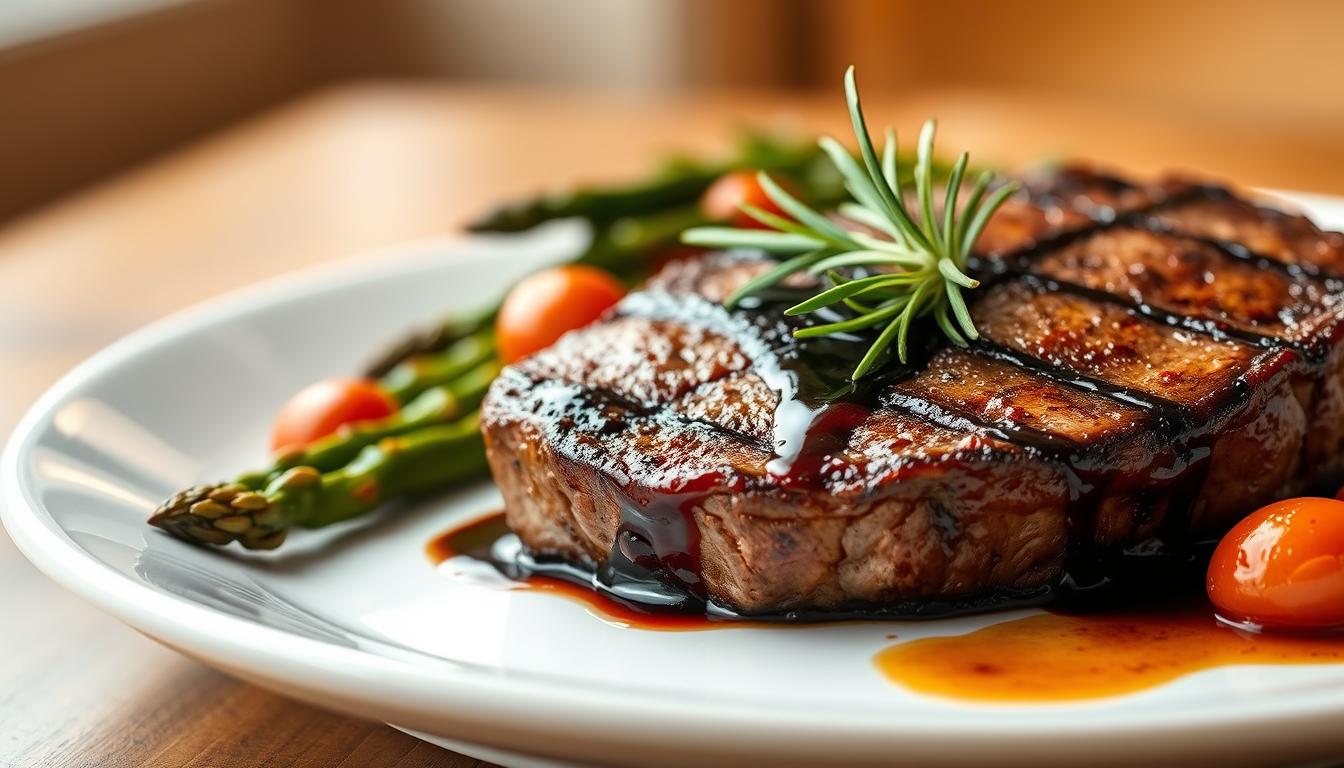
Do you remember the smell of hot butter and caramelized beef? It’s the scent of a true pan seared steak. This method promises a caramelized crust and a juicy interior every time.
In this guide, you’ll learn to make the best pan seared steak at home. You can use ribeye, strip, filet mignon, or sirloin. The steps are the same: choose the right cut, use the right pan, dry and season the meat, and master the sear and rest.
Expect layered flavors from simple seasoning and a finishing pat of butter or pan sauce. You’ll also learn about temperature targets for your steak. This article covers choosing cuts, essential tools, prepping and seasoning, searing techniques, temperature targets and resting, sauces and sides, common mistakes, and a full recipe with times, servings, nutrition, and expert tips.
By the end, you’ll be confident in making a mouth-watering pan seared steak dish. It will taste like it came from a restaurant, and you’ll be able to make it easily.
Table of Contents
Introduction to Pan Seared Steak
Pan searing is a method that uses high heat to create a crust on the steak. It cooks the inside to your liking. This technique gives a flavor and texture that grilling or broiling can’t match.
Choose pan searing for quick cooking and control over doneness. It’s great for single steaks, small batches, and thick cuts. The process keeps juices in and creates a consistent crust.
It’s fast, reliable, and lets you make rich pan sauces. The brown bits in the pan add depth to your sauce when you deglaze with stock or wine.
Follow simple tips to keep your kitchen safe and the results consistent. Use a well-ventilated area and a heavy-bottomed pan. Choose oils like canola or avocado oil. Be careful when deglazing to avoid flare-ups and splatter.
| When to Use | Why It Works | Quick Tip |
|---|---|---|
| Limited outdoor space or apartment cooking | Gives a reliable crust and stable indoor control | Preheat pan until shimmering, then add oil |
| Cooking one or two steaks | Even sear and easy monitoring of doneness | Pat steak dry to improve browning |
| Thick cuts finished in oven | Sear seals juices, oven finishes evenly | Use an oven-safe skillet and a thermometer |
| Making pan sauce from fond | Fond adds concentrated flavor for sauces | Deglaze with stock or wine, scrape up browned bits |
Choosing the Right Cut of Steak
Choose a cut that matches your taste, budget, and cooking method. The thickness, marbling, and texture of the steak affect how it cooks. The right cut ensures a great crust, juicy inside, and a delicious finish.
Popular Cuts for Pan Searing
Ribeye is known for its richness. Its high marbling makes it juicy and flavorful. New York strip offers a beefy taste and a firm texture, perfect for slicing.
Filet mignon is tender and lean. It’s best with butter basting or a short oven finish. Sirloin or top sirloin is affordable but needs careful timing to avoid toughness.
Hanger and flank are flavorful and budget-friendly. Slice them against the grain for tenderness. Flank may be thinner; a quick marinade helps it stay tender.
Choose steaks between 1 and 1.5 inches thick for stovetop searing. Thicker cuts might need oven finishing to avoid burning. Thickness is key for a great pan seared steak.
Grass-Fed vs Grain-Fed: What’s the Difference?
Grass-fed beef is leaner with a stronger, earthy flavor. It cooks faster and needs careful monitoring to avoid drying. It has less marbling than grain-fed cuts.
Grain-fed beef has more intramuscular fat, making it richer and more forgiving. It often results in juicier steaks. Your choice depends on taste and budget.
If you prefer a leaner, bolder flavor, choose grass-fed. For a tender, buttery bite, go with grain-fed. USDA grades like Prime, Choice, and Select help guide your choice for the best pan seared steak.
Essential Tools for Cooking Steak
To master the pan seared steak technique, you need the right gear and a clear plan. The correct cookware, utensils, oils, and a reliable thermometer are key. They save time and improve results. Here are concise, practical recommendations for your home.
Recommended Cookware
Choose a heavy-bottomed cast iron skillet like Lodge for even heat. It’s great for a deep brown sear. Cast iron holds heat well when you add a steak.
Stainless steel pans are good for a good fond for pan sauces. Avoid nonstick pans for high-heat searing. They can degrade at searing temperatures. Pick an oven-safe skillet for thicker cuts.
Round out your tools with sturdy, long-handled tongs and a heatproof spatula. A splatter screen is also useful for safety. Use high-smoke-point oils like avocado or canola to prevent burning. Keep unsalted or cultured butter on hand for basting and finishing flavor.
Thermometers: Why They Matter
An instant-read thermometer like a Thermapen from ThermoWorks gives quick, accurate readings. It helps you hit your target doneness without guessing. Pulling at the right moment stops overcooking.
Probe thermometers are useful for oven finishing. They provide continuous readings while the steak rests. This reduces the risk of temperature spikes.
| Doneness | Target Internal Temp (°F) | Pull Temp (accounting for carryover) |
|---|---|---|
| Rare | 120–125 | 115–122 |
| Medium-rare | 130–135 | 125–132 |
| Medium | 140–145 | 135–142 |
| Medium-well | 150–155 | 145–152 |
Carryover cooking raises the internal temperature by about 3–10°F after you remove the steak. Use this knowledge when checking with your thermometer. Plan the pull temperature based on this.
Respect food safety: cook ground beef to recommended temperatures. Treat whole-muscle cuts with the same hygiene. Clean utensils and surfaces, wash your hands, and sanitize your tools after use.
Preparing the Steak for Cooking
Before you start, get your pan seared steak prep ready. A few small steps can make a big difference. Drying and seasoning are key for a great crust and flavor.
Wipe your steaks dry with paper towels to remove moisture. Moist surfaces can prevent a good crust. Let steaks sit at room temperature for 20–30 minutes for even cooking.
The Importance of Drying the Steak
Trim off large silver skin or fat seams to prevent curling. Keep a thin fat cap for flavor and to baste the meat. Use a 5–8% salt solution for 30–60 minutes if brining. Rinse and dry well before searing.
Lightly oil the steak or pan for better heat transfer. Use a high smoke-point oil to avoid smoke during searing.
Seasoning Your Steak: Simple or Complex?
Choose your seasoning before cooking. For a classic taste, use kosher salt and black pepper. Coarse salt helps create a better crust.
Salt timing is important. Salt right before searing for a crispy crust, or an hour ahead for deeper flavor. For a more complex flavor, use a dry rub with garlic, onion, smoked paprika, and brown sugar. Use these ingredients sparingly to let the beef shine.
Finish with butter and herbs like garlic, thyme, or rosemary during the last sear. Tilt the pan and spoon the melted butter over the steak for richness and flavor.
| Step | What to Do | Why It Matters |
|---|---|---|
| Drying | Pat steak dry; let rest at room temp 20–30 min | Removes moisture for better browning and even cooking |
| Trimming | Remove excess silver skin; leave thin fat cap | Prevents curling, adds flavor and basting fat |
| Brine (optional) | 5–8% salt solution for 30–60 min, then dry | Increases juiciness and flavor when used correctly |
| Simple Seasoning | Kosher salt and fresh black pepper, apply before sear or hour ahead | Creates a pronounced beefy crust without masking flavor |
| Complex Seasoning | Light dry rubs: garlic powder, smoked paprika, onion powder | Adds depth while preserving natural beef taste |
| Finish | Butter-baste with garlic and herbs at end | Enhances richness and aromatic complexity |
Techniques for Perfectly Pan Searing
You’ll learn how to get a crust like a restaurant and even doneness. Mastering pan seared steak technique is about heat, timing, and a few finishing touches. These steps boost flavor without extra effort.
The Searing Process Explained
First, preheat your pan until it’s very hot. A drop of water should sizzle and disappear quickly. Use a heavy pan like cast iron for steady heat.
Add a small amount of high-smoke-point oil and swirl it to coat. Place the steak away from you to reduce splatter. Don’t move the steak for the first 2–3 minutes, depending on its thickness. This creates the Maillard reaction for the crust you want.
Flip the steak once using tongs. Avoid pressing down on the meat; pressing out juices. For thicker cuts, sear the sides and fat cap by holding the steak with tongs to render the fat and build flavor.
In the last 1–2 minutes, add butter and aromatics like thyme, rosemary, or smashed garlic. Tilt the pan and spoon the melted butter over the steak to baste. After resting, deglaze the pan with wine, stock, or balsamic and use the fond to make a quick pan sauce.
Managing Heat: High vs Medium Heat
Start on high heat to form a deep, brown crust fast. Use hot oil and run ventilation; be mindful of smoke. High heat is key for a reliable pan seared steak method.
If the crust browns too fast or the cut is thick, drop to medium heat. This gentler heat lets the interior cook to the right temperature without burning the outside. You can finish thicker steaks in a preheated oven at 400–450°F after an initial sear.
Combine approaches: begin high for the sear, reduce to medium to finish, or transfer to the oven for even cooking. Control your burner size and pan placement to keep temperature steady. Cast iron helps maintain consistent heat across the pan for the perfect pan seared steak.
Adding Flavor with Marinades and Rubs
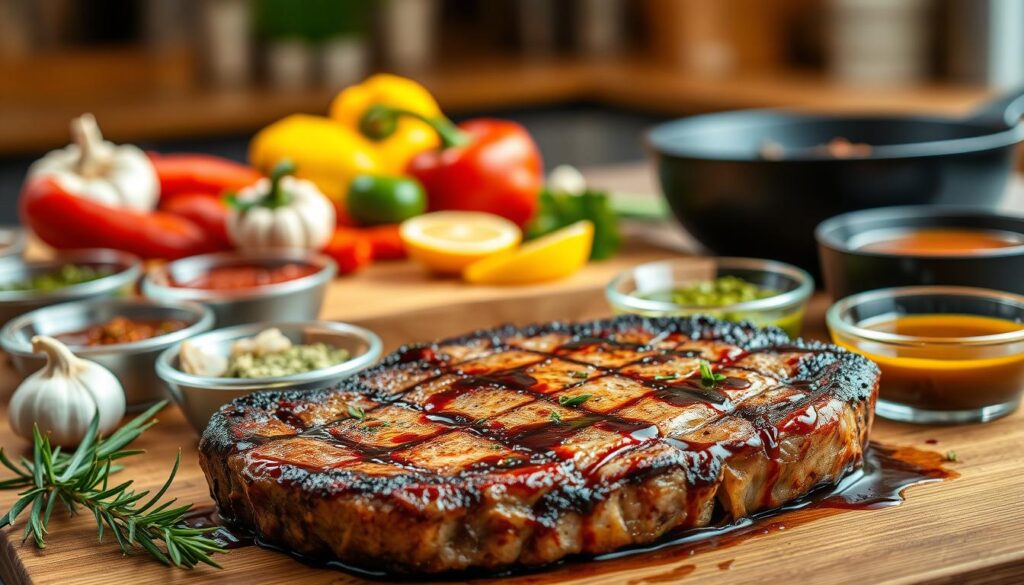
You can make a pan seared steak taste better without covering up its natural flavor. You can use a wet marinade or a dry rub. Each method works best with different steaks and cooking times. Here are some simple recipes and ingredients to help you choose the right one.
Simple Marinade Recipes to Try
A classic garlic-herb marinade adds bright, familiar tastes. Mix olive oil, minced garlic, fresh herbs, lemon zest, salt, and pepper. Let it marinate for 30 minutes to 2 hours to enhance flavor without changing the steak’s texture.
For flank and skirt steaks, try a soy-ginger marinade. Mix soy sauce, grated ginger, garlic, honey, and sesame oil. Marinate for up to 4 hours for a deeper flavor without making the steak too tender.
Balsamic and rosemary marinade offers a sweet, aromatic taste. Whisk together balsamic vinegar, olive oil, garlic, rosemary, and salt. Marinate for 1–2 hours to get a good balance of acid and oil.
Remember, acidic marinades can start to “cook” the steak’s surface if left too long. Avoid overnight marinating on delicate cuts unless a recipe calls for it.
The Best Dry Rub Ingredients
Begin with a basic seasoning blend: kosher salt, black pepper, garlic powder, onion powder, and smoked paprika. This mix enhances the beef’s flavor without hiding it.
Add optional ingredients for more complexity. Brown sugar caramelizes on thicker cuts. Cumin and coriander add warmth. Thyme and crushed red pepper add herbal notes and heat.
Apply the rub generously 5–60 minutes before cooking. For dry brining, use only salt or a light rub to avoid too much seasoning.
Remember, the goal is to complement the beef, not overpower it. Rubs should enhance the steak’s taste. Taste preferences vary, so start with a light rub and adjust as needed.
Cooking the Steak to Perfection
Getting a perfect pan seared steak is all about timing, temperature, and letting it rest. You’ll use an instant-read thermometer to check the steak’s thickness and starting temperature. This helps you know how long it will take to cook. Remember, let the steak rest off heat for the best flavor.
Ideal Internal Temperatures for Steak
For a perfect steak, use the pull-temperature method. Take the steak off heat a few degrees before your final target. This allows for carryover cooking. For rare, aim for 120°F and expect it to reach 120–125°F.
For medium-rare, pull at 125°F and aim for 130–135°F. Medium is 135°F, finishing at 140–145°F. Medium-well is 145°F, finishing at 150–155°F. Well-done is 155–160°F.
Check the steak’s temperature by inserting the thermometer into the thickest part. Thicker cuts and steaks straight from the fridge will take longer. The USDA says to cook whole cuts to 145°F for safety. But many chefs prefer medium-rare for tenderness and flavor.
Resting Your Steak: Why It’s Crucial
Resting your steak is key to keeping it juicy. For a 1–1.5″ steak, rest for 5–10 minutes. Larger roasts need 10–15 minutes. Use foil to keep the heat in without trapping steam.
Carryover cooking increases the steak’s internal temperature during rest. That’s why you pull slightly below your target. Slice against the grain for extra tenderness. These tips and the pull-temperature method are essential for a perfect pan seared steak.
Side Dishes that Complement Pan Seared Steak
Choose sides that match the steak’s richness and cooking style. For a bold ribeye with a heavy sauce, pick lighter, acidic sides. For a lean strip or filet, add richer accompaniments to balance texture and flavor. Use the suggestions below to compose a meal that highlights the steak without overpowering it.
Your choices should follow a simple rule: match intensity. Lean cuts pair well with creamy pan seared steak sides, while fattier cuts benefit from bright vegetables and acidic notes.
Classic Pairings: Mashed Potatoes & Vegetables
Creamy mashed potatoes made with Yukon Gold or russet, butter, and cream provide a neutral base that lets the steak shine. These classic steak pairings comfort the palate and soak up pan juices.
Roasted or sautéed vegetables—like asparagus, green beans almondine, Brussels sprouts, or garlic-roasted mushrooms—bring texture and freshness. Mushrooms add beefy umami that echoes the steak’s flavor.
Simple roasted baby potatoes tossed with rosemary and olive oil deliver a crunchy exterior and soft center. Finish the plate with a peppery arugula salad dressed in lemon vinaigrette to cut through richness.
Creative Sides for a Unique Meal
For a modern twist, try truffle mashed cauliflower as a lower-carb option that feels upscale. Charred broccolini with chili flakes and lemon provides bright bite and contrast in texture.
Sweet potato gratin or roasted beets with goat cheese introduce sweet-and-savory balance that complements pan seared steak recipe sides. Grain bowls featuring farro or barley with herbs and roasted vegetables add heartiness and a contemporary feel.
Adjust side richness based on sauce and cut. If your steak wears a heavy peppercorn or red wine sauce, choose simpler sides. If the steak is plain and lean, select richer pan seared steak sides to build depth.
| Side | Flavor Profile | Best With |
|---|---|---|
| Mashed Potatoes (Yukon Gold) | Buttery, creamy, neutral | Rich cuts, brown-butter sauces |
| Garlic-Roasted Mushrooms | Umami, earthy | Steaks with simple seasoning or red-wine reduction |
| Roasted Baby Potatoes with Rosemary | Crisp outside, tender inside, herb-forward | Charred steaks, peppery finishes |
| Arugula Salad with Lemon Vinaigrette | Peppery, bright, acidic | Fatty cuts, creamy sides |
| Truffle Mashed Cauliflower | Decadent, low-carb, aromatic | Lean steaks, elegant dinners |
| Charred Broccolini with Chili | Smoky, spicy, zesty | Grilled or pan-seared steaks with herb rubs |
| Sweet Potato Gratin | Sweet, creamy, savory | Smoky or peppery steaks |
| Farro & Roasted Vegetable Bowl | Hearty, nutty, herbaceous | Modern plates, shared family meals |
Sauces and Toppings to Elevate Your Steak
Transform a great pan seared steak into a memorable meal with the right sauce or topping. Choose options that match the cut, seasoning, and your taste. Rich sauces are great with lean cuts. Bright herb sauces refresh the palate, balancing fattier steaks.
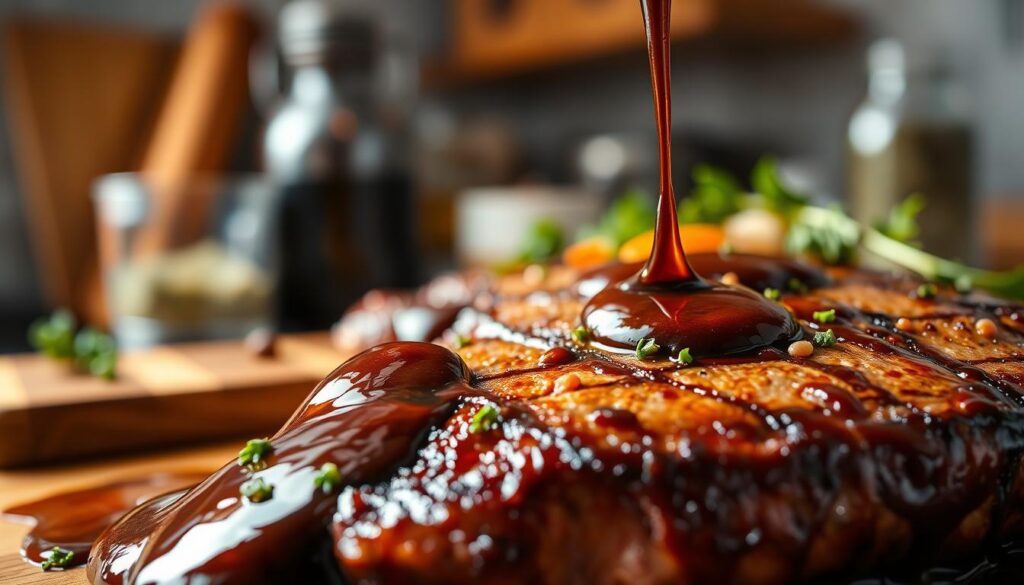
Start with classic, easy-to-make sauces that build flavor right in the pan. A quick pan seared steak sauce made from deglazing with red wine or beef stock, a few minced shallots, and a whisk of cold butter gives glossy depth. For a silky finish, spoon the sauce over the steak just before serving.
Try a peppercorn cream for bold flavor. Crush black peppercorns, deglaze with brandy or cognac with caution, then add heavy cream and reduce until it coats the back of a spoon. Garlic-herb butter is another fast choice. Combine softened butter with garlic, parsley, chives, and lemon zest, then let a pat melt over the hot steak.
You can also choose bright, uncooked sauces like chimichurri. Made with parsley, garlic, red wine vinegar, oregano, and olive oil, chimichurri adds herbaceous lift and pairs well with charred edges. A salsa verde with capers and anchovy delivers an umami punch that complements robust seasoning.
Explore trending pan seared steak toppings to add texture and contrast. Gremolata—lemon zest, parsley, and garlic—adds a zippy finish. Blue cheese compound butter or crumbled bleu brings sharp tang and creaminess. Caramelized onions and sautéed mushrooms offer deep, earthy richness. For crunch, top with crispy garlic chips or fried shallots.
Use the table below to match sauces and toppings to common cuts and flavor goals. This helps you quickly choose what will elevate pan seared steak for your meal.
| Cut | Best Sauce | Recommended Toppings | Why It Works |
|---|---|---|---|
| Filet mignon | Red wine pan seared steak sauce | Blue cheese compound butter, gremolata | Lean, tender meat benefits from rich, glossy sauces or bright herbs to add flavor without overpowering texture. |
| Ribeye | Peppercorn cream | Caramelized onions, crispy garlic chips | Marbled fat stands up to bold, creamy sauces and crunchy toppings that cut richness and add savory depth. |
| New York strip | Garlic-herb butter | Sautéed mushrooms, parsley gremolata | Meaty flavor pairs with compound butter that melts into the steak and earthy mushrooms that enhance umami. |
| Skirt/Flank | Chimichurri | Salsa verde with capers, fried shallots | Lean, flavorful cuts gain lift from acidic, herbal sauces and crunchy toppings that add contrast. |
| Sirloin | Beef stock pan sauce with shallots | Brown butter with herbs, blue cheese crumbles | Versatile cut that benefits from a savory pan sauce and toppings that increase richness or brightness as needed. |
Common Mistakes to Avoid When Cooking Steak
When cooking a perfect pan seared steak, a few simple mistakes can ruin it. Watch out for heat, timing, and resting mistakes that can make your steak dry or tough. Follow these tips to keep your steak flavorful and tender.
Overcooking: Signs to Watch For
A gray interior with no pink center is what you want. If your steak feels dry, tough, or lacks juice, it’s overcooked. This usually happens when the pan is too hot, the steak stays in too long, or you don’t use a thermometer.
To avoid overcooking, use a thermometer and remove the steak a bit before it reaches the target temperature. For thick steaks, sear on the stovetop and then finish in a 375°F oven. This method helps prevent overbrowning and ensures the center is cooked right. Remember, cooking from the fridge takes longer, so plan for that.
Not Letting the Steak Rest
Slicing too soon lets juices spill out, making the steak dry and less tasty. Wrapping it too tightly can also soften the crust. Resting allows juices to redistribute, making the steak juicier.
Rest the steak on a cutting board for 5–15 minutes, depending on its thickness. Cover it loosely with foil to keep the crust crispy. Then, slice against the grain for extra tenderness.
Other mistakes include over-seasoning too early, overcrowding the pan, and using low smoke point oils. Season wisely, cook in batches if necessary, and choose oils like avocado or refined grapeseed for a clean sear.
By following these tips and avoiding common mistakes, you can achieve a restaurant-quality steak every time.
Conclusion and Final Thoughts on Pan Seared Steak
To get a perfect pan seared steak, just follow a few steps. Pick a cut that suits your taste, dry it, season it lightly, and use a heavy pan with the right oil. Heat the pan well, sear the steak, and check it with a thermometer. Let it rest before you slice it.
Getting better at pan seared steak takes practice. Try different timing, heat levels, and seasonings. Each try teaches you about the steak, its thickness, and how the stove affects it.
Remember to stay safe while cooking. Use good ventilation, handle hot pans carefully, and avoid alcohol near flames. Follow food safety rules for storing and reheating food. These habits keep your kitchen safe and your steak delicious.
The steps above are a quick guide to pan seared steak. Read the full recipe next to practice this method. Start perfecting your own signature steak.
| Step | Action | Why it matters |
|---|---|---|
| 1 | Choose a well-marbled cut | Marbling adds flavor and juiciness during searing |
| 2 | Dry and season | Removes surface moisture for a better crust and enhances taste |
| 3 | Select heavy cookware and oil | Ensures even heat and steady searing temperature |
| 4 | Preheat pan until shimmering | Promotes immediate browning and crust formation |
| 5 | Sear, then monitor with thermometer | Controls doneness while preserving texture |
| 6 | Rest before slicing | Allows juices to redistribute for a tender bite |
| 7 | Pair with complementary sides | Completes the meal and balances flavors |
Complete Pan Seared Steak Recipe (Ingredients, Instructions, Times, Servings, Nutrition, Expert Tips)
This recipe makes two ribeyes with a crispy crust and a juicy inside. You’ll need 2 ribeyes, about 10–12 oz each, and some basic spices. Also, get 2 tablespoons of oil, 3 tablespoons of butter, 3 cloves of garlic, and 3 sprigs of thyme or rosemary. You can also add 1/4 cup of red wine or beef stock for a sauce.
Start by taking the steaks out of the fridge 20–30 minutes early. Pat them dry. Heat a cast iron skillet over medium-high for 5 minutes. Add oil, then sear the steaks for 2.5–4 minutes on each side.
For thicker steaks, sear the sides and fat cap for 30–60 seconds. If you need to, finish them in a preheated oven at 400°F. Wait until they’re about 5°F below your desired temperature.
In the last 90 seconds, add butter, garlic, and herbs. Baste the steaks with the melted butter. Remove them when they’re ready, then let them rest for 5–10 minutes. While they rest, make a sauce by deglazing the pan with red wine or beef stock. Whisk in cold butter and serve with the sliced steak.
Nutrition varies, but each serving has about 650–800 kcal, 55–65 g protein, and 45–60 g fat. For the best results, use a thermometer, dry the steaks, and don’t overcrowd the pan. If your stove can’t sear well, try finishing under the broiler.