Chicken Liver Pate Recipe – Creamy, Rich & Easy to Make
I still remember the first time you hesitated at a spread on a tray and then tried it. That quiet moment, curiosity mixed with caution, can turn into one of your favorite bites. This introduction meets that feeling head-on.
This page includes a complete chicken liver pate recipe with ingredients, step-by-step instructions, prep and cook times, servings, and nutrition so you get everything in one place.
Expect a classic, French-inspired chicken liver pâté that’s silky and spreadable, not chunky like a terrine. The signature taste is rich and savory, balanced by butter, aromatics, and an optional splash of brandy for depth.
You’ll learn two big success factors: proper doneness, browned outside, barely pink inside, and thorough blending for a non-grainy texture. Make-ahead is a win: the spread firms and the flavors deepen after chilling.
Table of Contents
Serve it as an appetizer, a snack, or on a charcuterie board with crackers or bread. Ready to turn hesitation into delight? Scroll on for the full chicken liver pate details and step-by-step guidance.
Why You’ll Love This Creamy Chicken Liver Pâté
Few appetizers feel as sophisticated and effortless as a silky, spreadable pâté. You get a small number of familiar pantry items and a short cook time that yields a memorable starter for guests or a quiet night in.
Silky-smooth texture and rich, savory flavor
Silky-smooth texture and rich, savory flavor
“Creamy” means a silky texture that spreads cleanly on toast or crackers. That result comes from correct doneness and thorough processing so the spread is velvety, not grainy.
Simple grocery-store ingredients with classic French inspiration
Simple grocery-store ingredients with classic French inspiration
The ingredient list is realistic for U.S. markets: butter, aromatics, a splash of brandy or sherry, and cream if you like extra softness. These items create a bistro-style taste without specialty shopping.
Easy to make ahead for entertaining and charcuterie boards
Easy to make ahead for entertaining and charcuterie boards
Active cook time is short, often measured in minutes, so you get a big impact with little hands-on effort. Chill the spread to let the flavor develop, then serve straight from the fridge for effortless hosting.
- Quick overview: Ingredients, step-by-step instructions, prep and cook times, servings, and nutrition are included below for a complete pate recipe snapshot.
Ultimate Meal Planner
Bundle
The all-in-one kitchen spreadsheet — plan meals, track spending, manage groceries and hit your nutrition goals. 12 powerful tabs, 800+ live formulas.
⚡ Instant · ✏️ Editable · ♻️ Reusable forever
Ingredients for Chicken Liver Pâté and Smart Substitutions
The ingredients you pick set the tone, simple swaps can change richness and texture.
Choose fresh livers: look for mild smell and bright color. Trim any white connective tissue for a clean bite.
Protein options
- You can use chicken livers for affordability and access. For a richer, traditional French finish, use duck or goose livers.
Fats and aromatics
Butter is the classic cooking fat and richness builder. Alternatives like ghee, schmaltz, or duck fat add unique notes.
Use shallot for a sweeter base or onion as a practical swap. Add garlic for savory depth.
Herbs, liquid, and texture
Fresh thyme brightens the spread; dried thyme works in a pinch. For deglazing, water keeps things plain, while brandy or cognac adds depth after a quick simmer.
A splash of heavy cream softens texture; coconut cream is a dairy-free option with a flavor shift.
Quick recipe data
| Item | Amount | Notes |
|---|---|---|
| chicken livers | 1 pound | Trim, mild smell |
| unsalted butter | 4 tbsp | Or ghee/schmaltz |
| shallot or onion | 1 small | Finely chopped |
| garlic & thyme | 1 clove; 1 tsp | Adjust salt and pepper after blending |
| brandy or water; cream | 2 tbsp; 2 tbsp | Simmer briefly; add cream to taste |
Nutrition note: Liver is nutrient-dense but the spread is rich in fat. Keep servings modest—about 1–2 tablespoons per person—for balance.
Chicken liver pate recipe
A small skillet, steady heat, and simple technique turn modest ingredients into a refined appetizer.
Times & servings
| Prep time | Cook time | Chill time | Total time | Servings |
|---|---|---|---|---|
| 10 minutes | 8 minutes | 4–6 hours (or overnight) | 4–6 hours 18 minutes | 6–8 (1/4 cup each) |
Ingredients
- 1 lb trimmed livers
- 4 tbsp butter, plus 2 tbsp for blending
- 1 small shallot or onion, finely chopped
- 1 clove garlic, 1 tsp fresh thyme
- 2 tbsp brandy or water, 2 tbsp cream
- Salt and pepper to taste
Step-by-step instructions
- Heat a pan over medium heat and melt 2 tbsp butter. Sauté shallot and garlic 1–2 minutes until soft.
- Add trimmed livers, thyme, salt, and pepper. Pour in brandy or water. Cover and simmer 4–8 minutes until browned outside and barely pink inside.
- Remove from heat, cover and rest 5 minutes. Drain well to avoid a loose mixture.
- Transfer to a food processor. Add remaining butter and cream, blending until silky. Taste and adjust salt.
- Spoon into ramekins, smooth the top, and chill in the fridge 4–6 hours or overnight to firm.
Nutrition (per 1/4 cup)
| Calories | Fat | Protein | Total carbs |
|---|---|---|---|
| 253 | 22.5 g | 10.3 g | 2.8 g |
Step-by-Step Technique Tips for the Smoothest Pâté
A reliable method of clean trimming, correct heat, and patient blending gives you a smooth finish every time.
Trim for a clean bite
Remove any white connective tissue and tough bits from the livers. These pieces stay chewy and will create grainy surprises in the final spread.
Sauté or simmer: choose the right way
Sautéing in butter gives a nuttier, deeper flavor and faster browning. Simmering gently in a bit of stock or water is kinder to the interior and lowers the risk of overcooking.
Watch doneness to avoid graininess
Cook in a single layer and avoid crowding the pan so pieces brown instead of steaming. Aim for browned edges and a little pink in the center. This cue prevents a dry, grainy texture.
Blend for silk, then refine
Use a food processor to puree the warm mixture until silky. Process longer than you expect, scraping the bowl and adding butter or cream in small bits to emulsify.
Optional extra step
For ultra-smooth pâté, press the blended mixture through a fine-mesh strainer with the back of a spoon. This final pass removes any stubborn fibers and yields a velvet finish.
| Element | What to do | Why it matters |
|---|---|---|
| Trim | Remove white connective tissue | Prevents chewy fragments |
| Cooking way | Sauté for flavor; simmer for gentleness | Choose by desired depth and risk of overcooking |
| Doneness | Brown outside, slightly pink inside (check in minutes) | Stops graininess from overcooking |
| Blending | Use a processor, add butter/cream in bits, scrape bowl | Creates a stable, silky mixture |
How to Seal, Chill, and Store Your Pâté Safely
A simple cling-film press or a butter cap will keep your spread looking and tasting its best. Air exposure oxidizes the surface quickly and causes a dull, gray film.
Prevent discoloration with direct wrap contact
Press plastic wrap directly onto the surface so there are no air pockets between the wrap and the top. This method slows oxidation and keeps the color fresh.
Butter seal option for longer freshness
For a polished finish, pour a thin layer of warm clarified butter over the surface. Skimmed of milk solids, clarified butter forms a clear fat barrier that extends fridge life to about 3–5 days.
Fridge timeline, portioning, and flavor
Chill for at least 4–6 hours so the spread firms and flavors deepen—this actually improves taste. Without a seal, expect about 1–2 days in the fridge; with a good wrap or butter cap plan on 3–5 days.
Portion into small ramekins so only a small top is exposed when you serve. That way the rest stays protected and fresh longer.
Freezing and best thawing method
Wrap tightly, add a butter layer if you like, and freeze for up to 3 months. Thaw overnight in the fridge, then stir gently to re-smooth before serving. A couple hours at room time can help if you need it faster, but fridge thaw gives the best texture.
Quick storage snapshot
| Action | Time | Result |
|---|---|---|
| Press wrap to top | Immediate | Prevents surface oxidation |
| Butter or clarified butter cap | Up to 5 days | Clear fat seal; polished look |
| Freeze (tightly wrapped) | Up to 3 months | Good long-term storage; slight texture change |
Mini recipe snapshot
- Prep time: 10 min • Cook time: 8 min • Chill time: 4–6 hrs
- Servings: 6–8 (about 1/4 cup each)
- Typical nutrition per 1/4 cup: ~250 kcal, 22 g fat, 10 g protein
Serving Ideas and Pairings for Your Chicken Liver Pâté
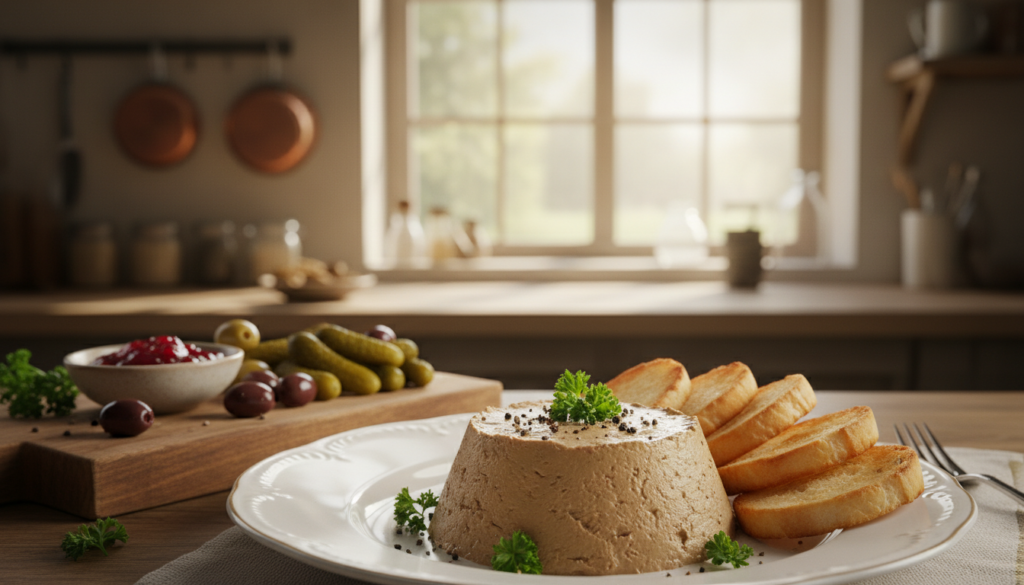
Simple serving choices make a big difference. Spread the pâté on crackers for the fastest appetizer, or offer thin toast, crostini, or thick slices of crusty bread for a more classic plate. A crisp base balances the silkiness and gives each bite structure.
Melba toast method
Make melba toast ahead: freeze a loaf (ciabatta works), thaw slightly, slice very thin, then bake at 180°C for ~10 minutes until crisp. For a gentler dry, bake 150°C for ~20 minutes. Cool and store airtight so the crackers and toast stay snappy.
Sweet and tangy pairings
Bright elements cut richness. Try Seville-style marmalade or a spoon of bitter-sweet jam and a few cornichons for a sharp, pickled counterpoint.
Entertaining and board tips
Build a simple board with crackers, bread, pickles, and a sweet spread. If you pre-spread on crisp rounds, do it just before serving to avoid sogginess. This bistro-style food pairs well with a glass of red wine and fits both holiday starters and casual weekend snacks.
| Quick serving recipe | Amount |
|---|---|
| Prep time | 10 min |
| Cook time | 8 min |
| Servings | 6–8 (1/4 cup ea.) |
| Nutrition (per 1/4 cup) | ~250 kcal; 22 g fat; 10 g protein |
Conclusion
Homemade pâté is easier than it looks and rewards a little patience.
Active cook time takes only minutes; most of the work is chill time in the fridge. The full ingredients, step-by-step instructions, prep and cook times, servings, and nutrition are included above for a complete recipe snapshot.
Remember the three pillars for great texture and flavor: trim connective tissue, cook the liver to browned outside and just pink inside, and blend until completely smooth.
Store with plastic pressed to the surface or add a thin butter seal to protect the top. This spread makes an easy-make, make-ahead appetizer and freezes well when portioned.
Serve with crackers or bread and a bright counterpoint like marmalade or cornichons. Once you make this, you’ll have a simple, repeatable way to elevate humble livers into a special starter.
Ultimate Meal Planner
Bundle
The all-in-one kitchen spreadsheet — plan meals, track spending, manage groceries and hit your nutrition goals. 12 powerful tabs, 800+ live formulas.
⚡ Instant · ✏️ Editable · ♻️ Reusable forever