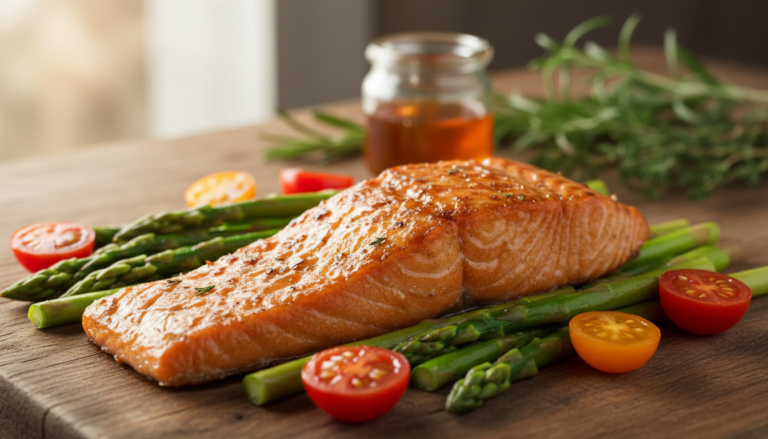
There’s a moment when you pull salmon from the oven and wonder if you’ve nailed it. The flesh should glisten. It should flake with a gentle fork. This perfect balance between moist and cooked comes down to one thing: temperature.
Table of Contents
Understanding salmon cook temp is the difference between a rubbery disaster and a restaurant-quality dinner on your own table.
You’ve probably overcooked salmon before. Most people have. The fish turns pale and dry. All that beautiful flavor disappears.
Learning how to cook salmon perfectly starts with respecting the internal temperature. This single detail changes everything about your results.
Salmon continues cooking after you remove it from heat. This carryover cooking means you need to pull your fish off the stove before it reaches your target temperature. Get this timing wrong, and you’ve lost the tender, buttery texture that makes salmon worth cooking.
Temperature control isn’t just about safety. It protects the delicate moisture trapped inside the fish. It keeps the omega-3 fatty acids intact. It preserves the rich, clean taste that separates quality salmon from mediocre fish.
Whether you bake, grill, or pan-sear your salmon, the temperature rules stay the same. You’ll learn the exact numbers to target. You’ll discover which cooking methods work best for different situations. You’ll gain confidence knowing exactly when your salmon is done.
Mastering salmon cook temp means never serving undercooked fish to your family. It means saying goodbye to dry, overcooked meals. This guide walks you through everything you need to know to cook salmon perfectly every single time.
Understanding Salmon Cooking Temperatures
Getting the right salmon doneness temperature is key to serving delicious fish. Knowing the proper internal temperature ensures your salmon is tender and juicy. Temperature is more important than you think. A few degrees can make a big difference.
The difference between good and great salmon comes down to heat levels. Your taste, food safety, and texture depend on the right temperature. Learning this skill takes just a few minutes.
Ideal Internal Temperature for Salmon
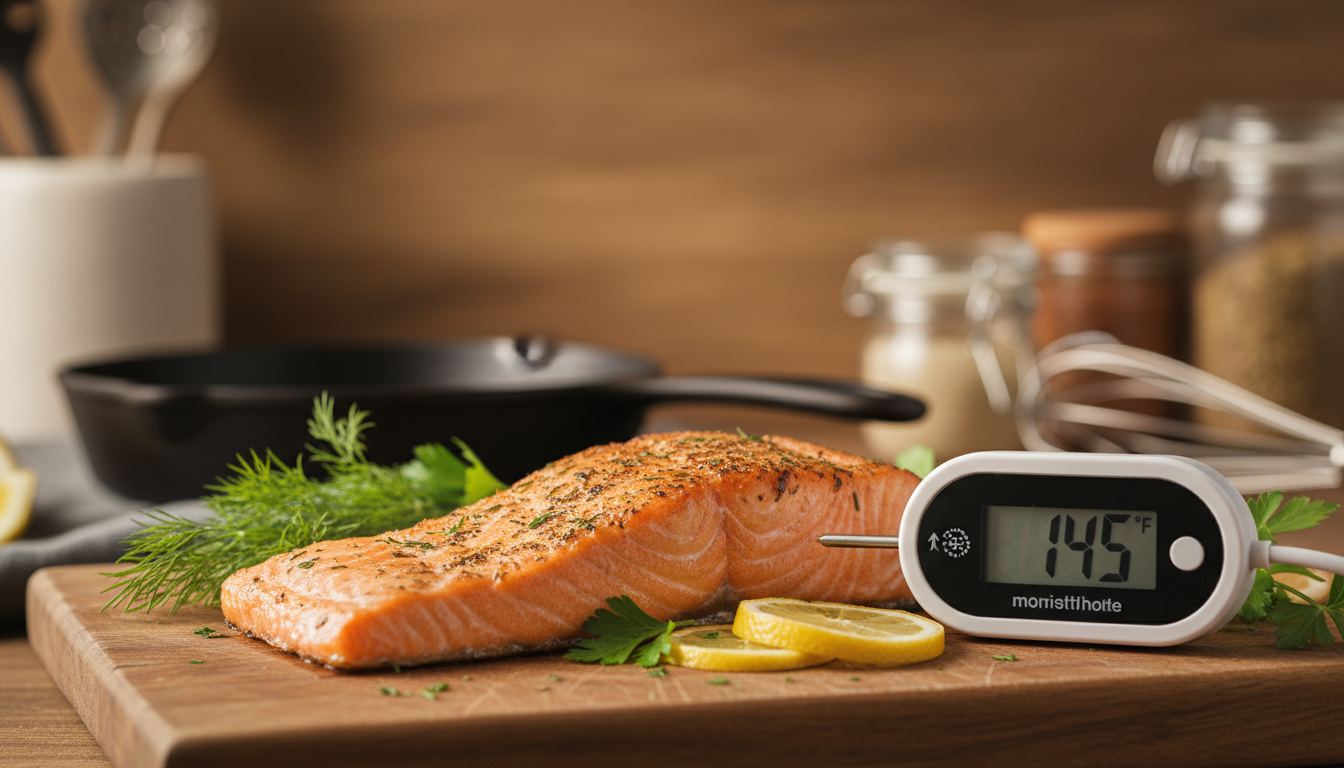
The USDA says to cook salmon to 145°F (63°C). This kills harmful bacteria and makes it safe to eat. Your salmon will be completely safe at this temperature.
Many prefer a lower temperature for salmon. They cook it to 120-125°F (49-52°C). This keeps the salmon moist and tender, with a slightly translucent center.
You can choose your preferred doneness level:
Rare: 110°F—barely warm inside
Medium-rare: 125°F—moist center, pink throughout
Medium: 135°F—mostly opaque with slight pink
Well-done: 145°F—fully opaque, no pink
Effects of Overcooking Salmon
Overcooking salmon is a big problem. High heat for too long causes the proteins to contract. This squeezes out the moisture that makes salmon delicious.
Overcooked salmon becomes chalky, dry, and disappointing. The omega-3 fatty acids break down, losing their health benefits. Even cooking 5-10 degrees beyond your target temperature ruins the texture.
Watch for these signs of overcooked salmon:
Dry, flaky flesh that falls apart easily
Pale, dull appearance
No moisture when you cut into it
Bland taste lacking richness
Understanding the right salmon internal temperature prevents these problems. You get fish that tastes amazing and stays nutritious.
Different Cooking Methods for Salmon
Choosing the right cooking method is key to great salmon. Each method has its own benefits and needs. Your choice depends on your equipment, time, and desired texture. Knowing each method ensures perfect salmon every time.
Baking Salmon to Perfection
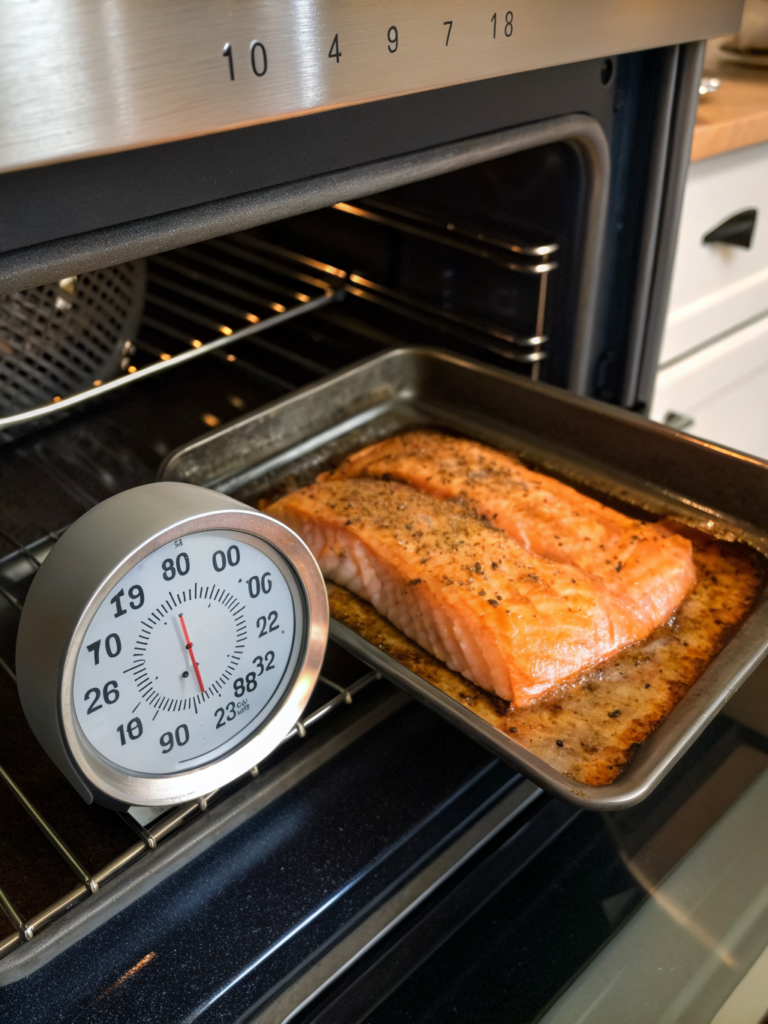
Baking is simple and effective for cooking salmon at home. Preheat your oven to 375-400°F. Place salmon on a lined baking sheet. Fillets cook in 12-15 minutes, making it tender and moist.
Pat your fillets dry before baking for even cooking. Add lemon slices, herbs, or veggies for flavor. Check the salmon’s internal temperature at 145°F at its thickest part.
Grilling Salmon: Tips and Techniques
Grilling adds smoky flavor to salmon. Heat your grill to medium-high (400-450°F). Oil the grates to prevent sticking and flare-ups. Keep the skin on to protect the meat.
Oil the grates thoroughly before cooking
Place salmon skin-side down first
Cook for 4-6 minutes per side
Use a fish basket for extra protection
Avoid moving the fish too much
Pan-Searing vs. Broiling Salmon
Pan-searing gives salmon a golden crust. Heat a skillet over medium-high and cook 3-4 minutes per side. This method keeps the inside moist.
Broiling uses intense heat from above. Place salmon on a broiler pan and broil for 6-8 minutes. It creates caramelization on top but watch it closely to avoid drying.
Both pan-searing and broiling need careful temperature control. Aim for an internal temperature of 145°F for safety and taste.
How to Use a Food Thermometer
Using a food thermometer makes cooking salmon easy. It removes the guesswork, ensuring your salmon is always perfectly cooked. A good thermometer is your go-to tool in the kitchen for this tasty protein.
Knowing how to use your thermometer is key. It helps you avoid undercooked or overcooked salmon. You’ll become more confident in your cooking as you learn the right techniques.
Types of Food Thermometers
There are many thermometers to choose from for checking salmon cook temp. Each has its own benefits, depending on your cooking style.
Instant-read digital thermometers give fast readings in 2-3 seconds and have thin probes that don’t harm your fish
Dial thermometers are reliable but take longer to show results
Leave-in probe thermometers stay in your salmon while it cooks, continuously monitoring the temperature
Digital thermometers are the top choice for home cooks. They offer quick, precise readings, making it easy to get the salmon just right.
Proper Thermometer Placement
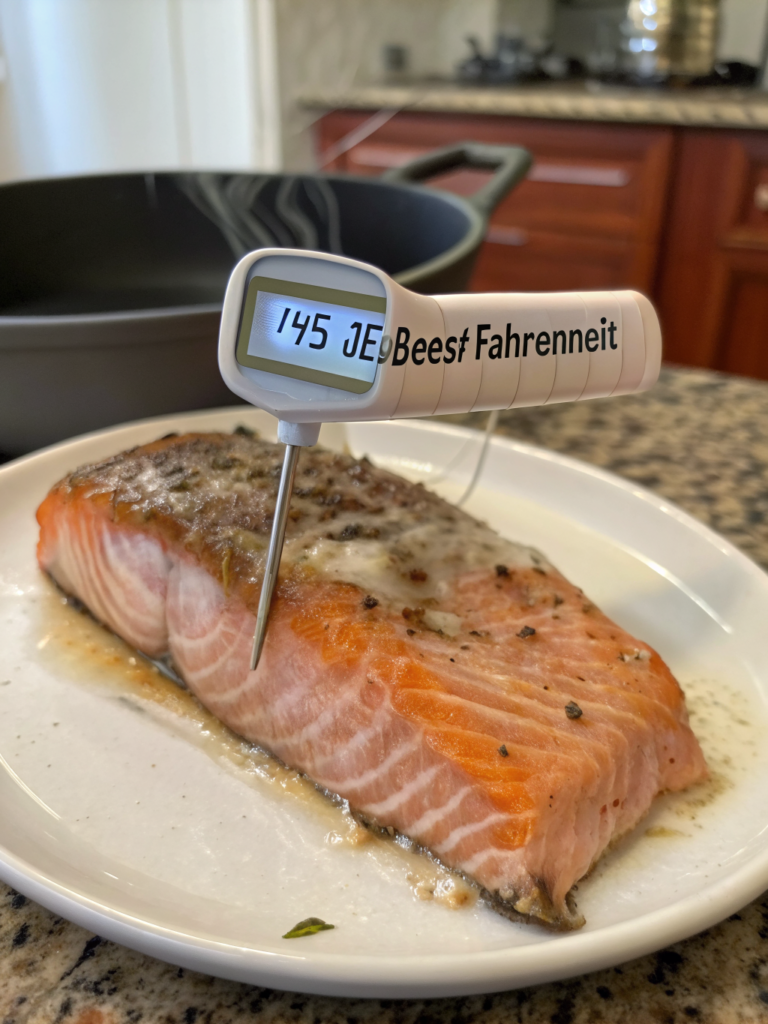
Where you put your thermometer is very important. Stick it into the thickest part of your salmon fillet, at an angle to stay in the center.
Here’s how to do it right:
Don’t let the thermometer touch the pan or any bones
Make sure it’s deep enough to get an accurate reading from inside the fish
Check different spots on thicker pieces to ensure even cooking
Take the salmon off the heat when it’s 5 degrees below your target temperature
This method lets your salmon reach the perfect temperature as it rests. It prevents overcooking and keeps the fish moist and flavorful.
Checking Doneness Without a Thermometer
You don’t always need a kitchen thermometer to cook salmon perfectly. Many cooks use visual and tactile methods to check if salmon is done. These methods get better with practice and are great when you don’t have a thermometer.
Visual Cues for Perfectly Cooked Salmon
Your eyes can tell you a lot about salmon’s cooking. Look for these signs:
The flesh changes from translucent to opaque as it cooks
Color shifts from bright reddish-orange to a lighter, more muted pink
White albumin (protein beads) may appear on the surface, indicating a perfect salmon cook temp
Medium-rare salmon shows a slightly darker, translucent center
Medium to well-done salmon appears uniformly opaque throughout
The amount of white albumin is key. A little albumin means you’ve cooked it just right. Too much means it’s overcooked.
Flaking Test for Doneness
The fork flaking method checks if salmon is cooked without cutting it. Insert a fork at a 45-degree angle into the thickest part of the fillet and twist gently. If it flakes easily along natural muscle lines, it’s cooked right.
If salmon resists flaking, it needs more cooking. If it falls apart, it’s overcooked.
Try the press test too. Gently press the surface with your finger—it should feel firm but give a bit. This confirms you’ve cooked it to perfection.
Seasoning and Preparing Salmon
Learning to cook salmon starts before you even put it in the pan. The right seasoning and prep are key to great results. Salmon’s oily flesh is perfect for both simple and bold flavors. The right seasonings bring out the natural taste and match your cooking method.
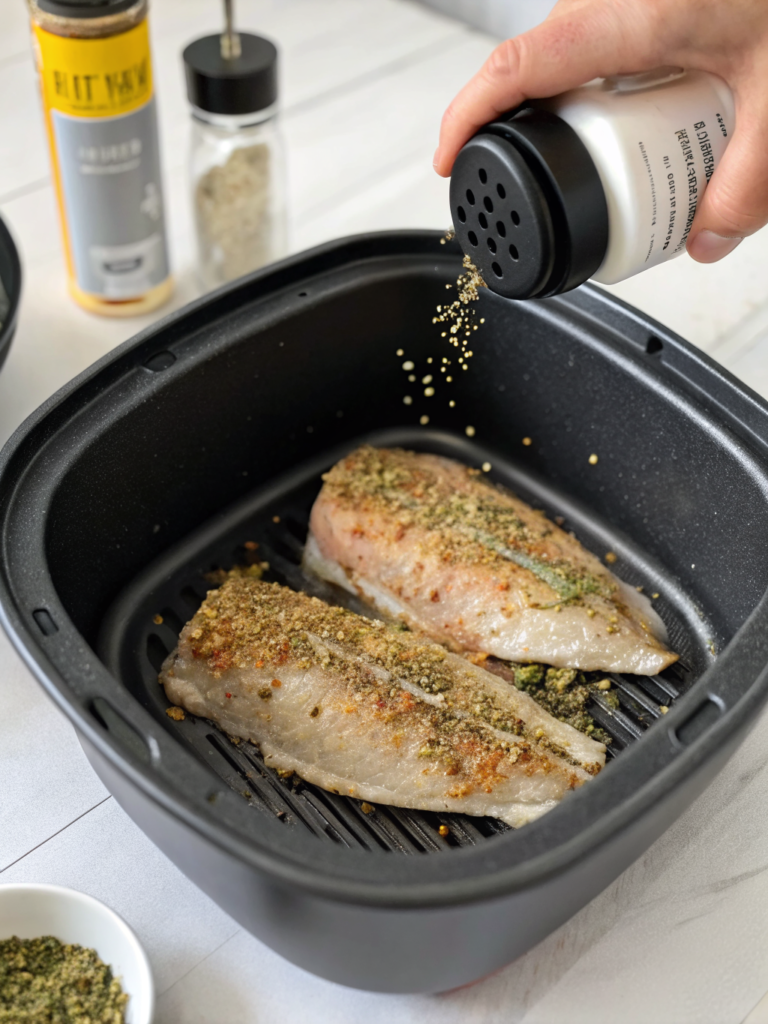
First, pat your salmon dry with paper towels. This prevents moisture from stopping the fish from browning well. A dry surface helps get that perfect sear, keeping the fish moist and reaching the right temperature.
Best Seasonings for Salmon
Salt is essential. Use kosher salt 15-30 minutes before cooking for dry brining. This method improves browning and keeps the fish tender.
Here are some great seasonings:
Fresh dill and lemon juice
Garlic powder and black pepper
Smoked paprika and thyme
Fresh parsley and white pepper
Honey and soy glaze
Cajun spice rubs
Lightly coat with olive oil before adding seasonings. This helps the flavors stick and cook evenly. Let the fish’s natural taste come through, not hide it.
Marinating for Extra Flavor
Salmon marinating times are shorter than other proteins. Marinate for 30 minutes to 2 hours. Longer times can make the fish too soft.
Try this marinade mix:
Acid: lemon juice or vinegar
Oil: olive oil for richness
Sweetness: honey or maple syrup
Aromatics: garlic, ginger, or fresh herbs
Even the best seasonings can’t save overcooked fish. Keep the temperature right for the best taste.
Cooking Frozen vs. Fresh Salmon
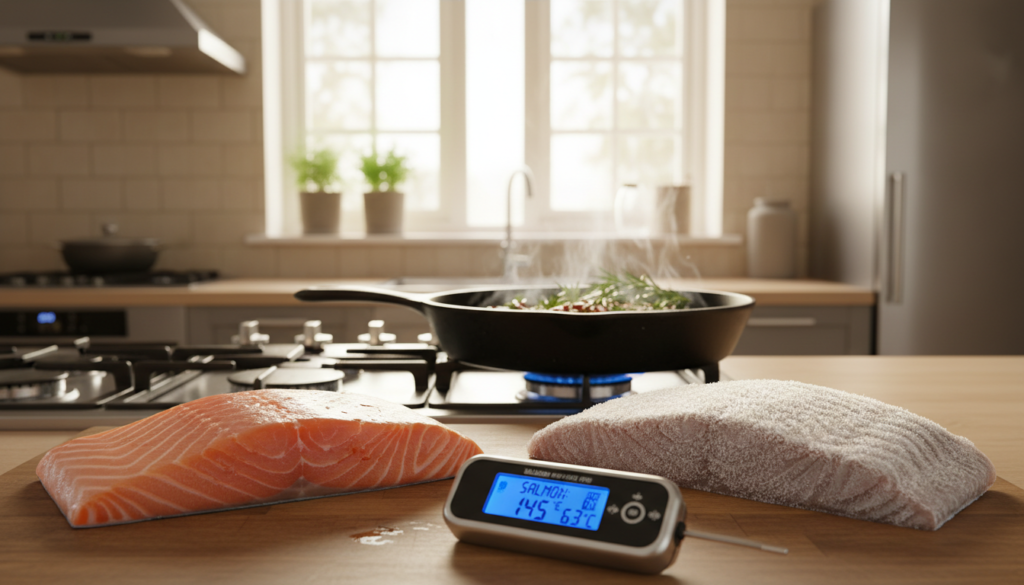
You might think frozen salmon needs thawing before cooking. But, many cooks and chefs cook it straight from the freezer. The main difference is adjusting cooking times and temperatures. This way, you can make tasty salmon, whether it’s fresh or frozen.
Adjustments for Cooking Frozen Salmon
For frozen salmon, you need to tweak your cooking method. First, rinse it under cold water to remove ice. Then, dry it with paper towels before seasoning and cooking.
Start with a lower cooking temperature than fresh fish. For baking, use 375°F instead of 400°F. This gentle heat helps prevent overcooking the outside while the inside thaws and cooks.
Be prepared for longer cooking times:
Baking takes 18-22 minutes instead of 12-15 minutes
Pan-searing requires medium heat and approximately 8-10 minutes per side
Grilling needs medium-low temperatures and careful monitoring
Your goal is the same internal temperature: 125-145°F. Use a meat thermometer to check the thickest part of the fish.
Benefits of Cooking Fresh Salmon
Fresh salmon has its perks for home cooks. It cooks faster and more evenly, making timing easier. Fresh fish also gets a better crust when seared and absorbs seasonings better.
If you thaw your fish, do it safely:
Refrigerator thawing overnight (safest method)
Cold water submersion in a sealed bag for 30-60 minutes
Whether you cook frozen or fresh salmon, always check the internal temperature to ensure it’s done.
Utilizing Salmon Cook Temp in Recipes
Now you know about temperature basics. This knowledge helps you cook like a pro. Cooking salmon at the right temperature makes it moist and tender.
Controlling temperature is key. Following heat guidelines makes your recipes better. Adjusting cooking times helps you cook different salmon cuts well.
Recipes for Perfectly Cooked Salmon
This classic baked salmon recipe shows how to cook salmon perfectly.
Expert Tips: Always use a food thermometer. It ensures your salmon is cooked perfectly. This way, your fillets stay juicy and tender.
Adapting Cooking Times for Different Cuts
Salmon comes in various sizes and shapes. Thick steaks need more time than thin fillets. The cooking time changes based on thickness, but the temperature stays the same.
Cooking Time Guidelines:
Thin fillets (½ inch): 8-10 minutes at 400°F
Standard fillets (¾ inch): 12-15 minutes at 400°F
Thick steaks (1 inch): 15-20 minutes at 400°F
Whole salmon (3-4 lbs): 25-30 minutes at 375°F
Always measure thickness at the thickest part. This helps you predict cooking time accurately. Your ideal salmon cooking temp target stays at 145°F for all cuts. Thicker pieces just need more time to reach that temperature.
Use a meat thermometer to check doneness. This removes all doubt from your cooking process. Your salmon will turn out perfect every single time when you trust the numbers.
Food Safety When Cooking Salmon
Cooking salmon safely means knowing the right temperatures and storage methods. Your health depends on following proper food safety guidelines. This keeps your family safe from harmful bacteria and parasites.
Safe Minimum Cooking Temperatures
The USDA and FDA say to cook salmon to 145°F (63°C). This kills dangerous bacteria like Salmonella and Listeria. Reaching this temperature makes the fish safe to eat.
Some cooks prefer lower temperatures, between 125°F and 135°F, for better texture. High-quality salmon that was previously frozen is safe at these temperatures. Pregnant women, young children, elderly people, and those with weak immune systems should always follow the 145°F rule.
Before cooking, check your salmon carefully:
Reject fish with a sour smell
Discard salmon with a slimy texture
Avoid discolored or gray flesh
Storing Leftover Salmon
Store cooked salmon in the refrigerator within 2 hours of cooking. If your kitchen is warmer than 90°F, refrigerate within 1 hour. Use airtight containers and eat leftover salmon within 3 to 4 days.
You can freeze cooked salmon for up to 3 months when wrapped properly. When reheating, gently warm salmon to 145°F. Many people enjoy eating leftover salmon cold in salads to prevent overcooking and maintain its quality.
Pairing Salmon with Side Dishes
You’ve mastered the best salmon cooking temperature. Now, it’s time to create a complete meal around your perfectly cooked fish. The right side dishes can make your salmon dinner feel like a restaurant-quality experience. Salmon’s rich flavor works best with sides that provide contrast and balance.
Fresh vegetables are ideal companions for salmon. Roasted asparagus with lemon brings bright, acidic notes that cut through the fish’s natural oils. Garlic mashed potatoes offer creamy comfort that complements baked salmon. Quinoa pilaf with fresh herbs provides a light grain option that won’t overshadow your main dish.
Roasted Brussels sprouts add a crispy texture, while Mediterranean couscous brings Mediterranean flavors to your plate. You can roast sweet potatoes for earthiness or sauté green beans with almonds for crunch. Wild rice with mushrooms pairs beautifully with grilled salmon that has char marks.
Best Side Dishes to Complement Salmon
Simple preparations work best with just-cooked salmon. When you achieve the best salmon cooking temperature, your fish speaks for itself. Choose sides that won’t compete for attention.
A fresh Caesar salad provides crispness and helps cleanse your palate between bites. Grilled vegetables timed to finish with your salmon create harmony on the plate. Starting vegetables that take longer first—like root vegetables—ensures everything reaches the table at the same moment as your salmon.
Timing matters as much as temperature does. If your salmon needs 12 to 15 minutes in a 400-degree oven, plan your vegetable cooking around that window. Tender vegetables that cook quickly can wait until your salmon is almost done.
This coordination prevents cold food and creates a seamless dining experience where every element tastes its best.
Wine Pairings for Salmon Dishes
Wine selection depends on how you’ve prepared your salmon. Pinot Noir brings earthy undertones that match grilled salmon beautifully. Chardonnay provides buttery richness that enhances baked preparations. Sauvignon Blanc offers crisp acidity that cuts through fatty portions of the fish.
Rosé provides remarkable versatility across different salmon cooking methods and seasonings. Sparkling wines add celebration to any occasion.
Your cooking method influences your wine choice. Delicate poached salmon pairs differently than bold, glazed preparations. If you’re serving salmon cooked to the best salmon cooking temperature with heavy seasonings, choose wines with stronger profiles.
For simply prepared salmon, lighter wines won’t overwhelm the dish. Non-alcoholic options like sparkling water with lemon, iced green tea, or cucumber-infused water work beautifully when you prefer them. Creating a complete salmon meal requires the same attention to detail you’ve applied to mastering temperatures—every choice should serve your perfectly cooked salmon as the star of your table.
FAQ
What is the ideal salmon internal temperature for perfect cooking?
The USDA says to cook salmon to 145°F (63°C) for safety. But many chefs and home cooks prefer 120-125°F (49-52°C) for a tender, moist texture. The right temperature makes a big difference in the salmon’s texture.
How do I check salmon doneness without using a thermometer?
You can check salmon doneness by looking and feeling. The flesh should turn from translucent to opaque. It should also change color from bright reddish-orange to a lighter pink.Use the flaking test by inserting a fork at a 45-degree angle. The salmon should flake easily but hold together. The press test involves gently pressing the surface with your finger. It should feel firm but give a bit.
What is the best salmon cook temp for different cooking methods?
The best temperature varies by cooking method. For baking, use a 375-400°F oven for 12-15 minutes. For grilling, keep the heat at 400-450°F and keep the skin on.Pan-searing needs medium-high heat for 3-4 minutes per side. Broiling uses intense heat for 6-8 minutes. Always check the internal temperature to ensure doneness.
What happens when you overcook salmon?
Overcooking salmon makes it dry and chalky. The omega-3 fatty acids degrade, reducing nutritional value. It loses its juiciness and becomes unappetizing.Being precise with temperature is key. Even a small increase in temperature can make a big difference in texture.
How do I check salmon doneness without using a thermometer?
You can determine perfect salmon cook temp using visual cues and tactile tests. Look for the flesh transitioning from translucent to opaque, with the color changing from bright reddish-orange to a lighter, more muted pink. Use the flaking test by inserting a fork at a 45-degree angle into the thickest part and twisting gently—properly cooked salmon will flake easily along natural muscle lines but will also hold together. The press test involves gently pressing the surface with your finger; it should feel firm but retain some give. These methods become more reliable with practice and serve as excellent backup techniques when a thermometer isn’t available.
What is the best salmon cook temp for different cooking methods?
Your optimal salmon cooking temperature varies by method. For baking, use a 375-400°F oven for 12-15 minutes to achieve the ideal internal temperature. For grilling, maintain medium-high heat (400-450°F) and keep the skin on to protect delicate flesh. Pan-searing requires medium-high heat for 3-4 minutes per side, creating a beautiful crust while reaching your target cooking salmon temperature. Broiling uses intense overhead heat for 6-8 minutes total, creating caramelization on top. Regardless of method, monitor the salmon internal temperature as your primary indicator of doneness.
What happens when you overcook salmon?
Overcooked salmon experiences several detrimental changes. The proteins contract excessively, causing moisture to be expelled, which creates a chalky and dry texture. The delicate omega-3 fatty acids can degrade, reducing the nutritional benefits and affecting flavor quality. The flesh loses its natural juiciness and becomes unappetizing. This is why precise temperature monitoring is critical—even exceeding your target salmon internal temperature by 5-10 degrees can transform delicious fish into disappointing results. Understanding how sensitive salmon is to temperature helps you appreciate why the best salmon cooking temperature demands careful attention.
How do I properly use a food thermometer to check salmon doneness temperature?
Insert your instant-read digital thermometer (the fastest and most accurate option) into the thickest part of the salmon fillet, angling it horizontally to stay in the center of the flesh without touching the pan or bone. For thicker pieces, check multiple spots to ensure even cooking. Remove the salmon from heat when it reaches five degrees below your target temperature to account for carryover cooking, which continues raising the internal temperature after removal from heat. Digital thermometers with thin probes cause minimal damage to the fish and provide the most reliable readings. Avoid common mistakes like checking too early, not inserting deep enough, or touching the cooking surface instead of the fish itself.
What is the difference between USDA safe temperature and chef-preferred salmon cooking temperature?
The USDA recommends 145°F (63°C) as the safe minimum internal temperature for salmon, which eliminates parasites and bacteria. Chefs and experienced home cooks often prefer 120-125°F (49-52°C) for better texture and moisture. High-quality, previously frozen salmon has parasites eliminated during freezing, making lower cooking temperatures safer. Your choice depends on your risk tolerance and texture preference. Special populations—pregnant women, young children, elderly individuals, and those with compromised immune systems—should follow the 145°F guideline strictly for food safety.
Can you cook frozen salmon, and does it require different temperature management?
Yes, you can cook frozen salmon directly without thawing, and it can produce excellent results. The key adjustment is adding approximately 50% more cooking time and starting with a slightly lower temperature to prevent exterior overcooking while the interior thaws and cooks. Rinse frozen salmon under cold water to remove ice crystals, pat dry thoroughly, then bake at 375°F for approximately 18-22 minutes instead of the standard 12-15 minutes. Your target cooking salmon temperature remains the same (125-145°F depending on preference). Many chefs actually prefer cooking from frozen because it helps maintain moisture and makes timing more forgiving than fresh salmon.
What are the different salmon doneness levels and what do they look like?
Salmon doneness levels include: Rare at 110°F with a translucent, buttery center; Medium-Rare at 125°F with mostly opaque flesh but a translucent pink center—this is the most popular choice among chefs; Medium at 135°F with uniformly opaque flesh but yet tender; and Well-Done at 145°F with completely opaque, firm flesh throughout. Understanding these levels helps you choose your preferred doneness based on personal taste while maintaining the best salmon cooking temperature for your desired result. Visual descriptions of properly cooked versus overcooked salmon help you recognize signs before using a thermometer.
How should I season salmon before cooking to achieve the best results?
Pat your salmon dry before seasoning to ensure proper searing and crust formation. Season with kosher salt 15-30 minutes before cooking (dry brining) to enhance flavor and achieve better browning. Classic seasoning combinations include lemon and dill, garlic and herb butter, honey and soy glaze, or Cajun spice rubs. Excellent complementary herbs and spices include fresh dill, parsley, thyme, smoked paprika, black pepper, and garlic powder. A light coating of oil helps seasonings adhere and promotes even cooking. Remember that regardless of seasoning choices, proper salmon internal temperature remains the priority—even the best seasonings cannot rescue overcooked fish.
How long should you marinate salmon, and what makes an effective marinade?
Salmon benefits from shorter marinating times of 30 minutes to 2 hours, as its delicate texture can break down with prolonged acid exposure, unlike heartier proteins. Effective marinades combine four key elements: acid (lemon juice, vinegar), oil (olive oil), sweetness (honey, maple syrup), and aromatics (garlic, ginger). Start with a ratio of roughly one part acid to two parts oil, adjusting to taste. Even with excellent marinades, achieving the perfect salmon cook temp through proper temperature monitoring ensures the delicate flavors and textures you’ve carefully developed aren’t compromised by overcooking.
What is the proper way to thaw frozen salmon for cooking?
Two safe thawing methods exist. The preferred method is thawing overnight in your refrigerator, which takes 8-12 hours but maintains the best texture and safety profile. For faster thawing, place sealed salmon in cold water for 30-60 minutes, changing the water every 15 minutes to maintain cold temperatures. Never thaw salmon at room temperature, as this allows bacteria to multiply. After thawing, pat the salmon dry thoroughly before seasoning and cooking. Whether using frozen or fresh salmon, monitoring your salmon internal temperature remains your most reliable indicator of achieving the best salmon cooking temperature regardless of the preparation method.
How should you store leftover cooked salmon to maintain food safety?
Cooked salmon should be refrigerated within 2 hours of cooking (1 hour if room temperature exceeds 90°F). Store it in airtight containers to prevent moisture loss and flavor absorption from other foods. Properly stored cooked salmon will keep in your refrigerator for 3-4 days. For longer storage, freeze cooked salmon in airtight freezer bags or containers for up to 3 months. When reheating, gently warm leftover salmon to 145°F, though many people prefer eating it cold in salads to avoid overcooking. Proper thawing of frozen cooked salmon should follow the same refrigerator or cold water methods used for raw salmon.
What does white substance (albumin) on cooked salmon mean?
The white beads or coating you see on cooked salmon is albumin, a protein that naturally separates and coagulates as salmon cooks. Some albumin appearance is normal and indicates the fish is cooking, but excessive amounts suggest the salmon internal temperature may have exceeded your target. Minimal albumin indicates you’ve hit the timing perfectly for your preferred doneness level. While the presence of albumin doesn’t affect food safety or significantly impact taste, many home cooks use it as a visual cue to adjust cooking times on future preparations. Understanding this natural process helps you fine-tune your ability to achieve consistently perfect salmon cook temp results.
Which cooking method is best for achieving the perfect salmon internal temperature for beginners?
A: Baking is the most forgiving method for beginners attempting to achieve perfect salmon cook temp. The even, gentle heat of a 375-400°F oven distributes uniformly around the fish, reducing the likelihood of overcooked exteriors with undercooked centers. Standard fillets reach the ideal internal temperature in 12-15 minutes, providing a predictable timeline. Baking also requires minimal monitoring or technique skill—simply place seasoned salmon skin-side down on a lined baking sheet and let the oven do the work. Once you’ve mastered baking, you can confidently move to pan-searing, grilling, or broiling methods, but baking provides the best foundation for learning proper temperature management.
What types of food thermometers are best for monitoring salmon cooking temperature?
Three main thermometer types exist for monitoring salmon cook temp. Instant-read digital thermometers (the most popular choice) provide readings in 2-3 seconds with thin probes that cause minimal fish damage—these are recommended for their speed and precision. Dial thermometers work reliably but read more slowly (5-10 seconds). Leave-in probe thermometers are ideal for oven cooking as they monitor temperature continuously, alerting you when your target salmon internal temperature is reached. Digital models with thin probes provide the most accurate readings and versatility across all cooking methods. Investing in a quality instant-read digital thermometer becomes your most valuable tool for consistently achieving the best salmon cooking temperature.
How does carryover cooking affect salmon temperature targets?
Carryover cooking is the phenomenon where salmon continues cooking after removal from heat, raising the internal temperature by an additional 3-5 degrees (sometimes more). This is why you should remove salmon from heat when it reaches 5 degrees below your target temperature. For example, if you prefer your salmon at 125°F (medium-rare), remove it at 120°F and allow residual heat to finish cooking. This technique prevents overshooting your target salmon internal temperature and becoming overcooked. Understanding carryover cooking is essential to achieving consistent results—it’s the difference between perfectly moist salmon and disappointing dry fish, making it a critical concept in mastering the best salmon cooking temperature.
What seasoning pairs best with different salmon cooking methods?
Different cooking methods benefit from complementary seasonings. Baked salmon pairs beautifully with delicate seasonings like fresh dill, lemon zest, and light herbs. Grilled salmon handles bolder flavors like Cajun spices, smoked paprika, and garlic powder that aren’t overwhelmed by char and smoke. Pan-seared salmon works well with herb butters and simple salt-and-pepper combinations that highlight the natural crust. Broiled salmon benefits from honey glazes, soy-based marinades, or Asian-inspired seasonings. Regardless of your choice, ensuring your salmon internal temperature is correctly monitored guarantees that your carefully selected seasonings achieve their intended flavor profile without being masked by overcooking.
How can you tell if your salmon is fresh versus previously frozen?
Fresh salmon should have a mild ocean smell, bright reddish-orange color, and firm texture. Previously frozen salmon (which has often had parasites eliminated through freezing) may appear slightly duller and feel slightly softer initially after thawing. Neither is inferior—frozen salmon that’s been properly thawed cooks excellently and safely. Check labels for “previously frozen” designations. Avoid salmon with a sour smell, slimy texture, or discolored flesh, as these indicate spoilage. Knowing your salmon’s origin helps you make informed decisions about the best salmon cooking temperature to use, whether to follow standard safety guidelines or the lower preferred temperatures used by chefs with high-quality fish.
What is the optimal salmon doneness temperature for different cuisines and preparations?
Different culinary traditions prefer different salmon internal temperatures. Japanese and Scandinavian cuisines often use lower temperatures (110-120°F) for a buttery texture and delicate flavor. French classical cooking favors 125°F (medium-rare) for balance between safety and texture. American home cooking typically follows the USDA guideline of 145°F for well-done results. Mediterranean preparations work well at 130-135°F to complement acidic and herbal accompaniments. Asian-inspired glazed salmon often works at 130°F to maintain moisture against bold sauces. Understanding traditional approaches to salmon cooking temperature helps you make informed choices about your preferred doneness level while respecting both safety and culinary heritage.
How does the thickness of your salmon fillet affect cooking time and temperature management?
Thicker salmon fillets (1.5+ inches) require longer cooking times and benefit from lower starting temperatures to prevent exterior overcooking before the center reaches the ideal salmon internal temperature. Standard fillets (1 inch) cook evenly with straightforward methods. Very thin fillets (under 0.5 inches) cook rapidly (3-5 minutes per side when pan-searing) and require vigilant temperature monitoring to avoid exceeding target temperature. Thicker pieces benefit from the probe thermometer positioned horizontally through the center, checking multiple spots for even cooking. Adjusting your cooking method and time based on thickness while maintaining consistent target salmon internal temperature ensures predictable, perfect results regardless of fillet size.
What special food safety considerations exist for high-risk populations eating salmon?
Pregnant women, young children (under 5 years), elderly individuals (over 65), and those with compromised immune systems should strictly follow the USDA recommendation of cooking salmon to 145°F (63°C) internal temperature. These populations face significantly higher risks from foodborne pathogens like Listeria and Salmonella. For all other populations, the preferred chef salmon cooking temperature of 120-125°F is relatively safe when using high-quality, previously frozen salmon. Cooking to intermediate temperatures (130-135°F) provides a reasonable compromise for households with mixed dietary preferences. When preparing salmon for vulnerable individuals, prioritizing food safety over texture preferences ensures protection without sacrificing quality in their dining experience.
Can you cook salmon sous vide, and what temperature should you use?
Yes, sous vide (precision water-bath cooking) produces exceptional salmon results. Set your water bath to your target salmon internal temperature: 120°F (49°C) for medium-rare or 130°F (54°C) for medium. Vacuum-seal seasoned salmon fillets and cook for 15-20 minutes in the precisely controlled water bath. The advantage is that salmon cooks evenly throughout to your exact target temperature without carryover cooking concern. After the water bath, sear the salmon 30-45 seconds per side in a very hot pan to develop a flavorful crust. Sous vide represents the most precise method for achieving perfect salmon cook temp consistency, though it requires specialized equipment. The technique is excellent for meal prep or cooking multiple