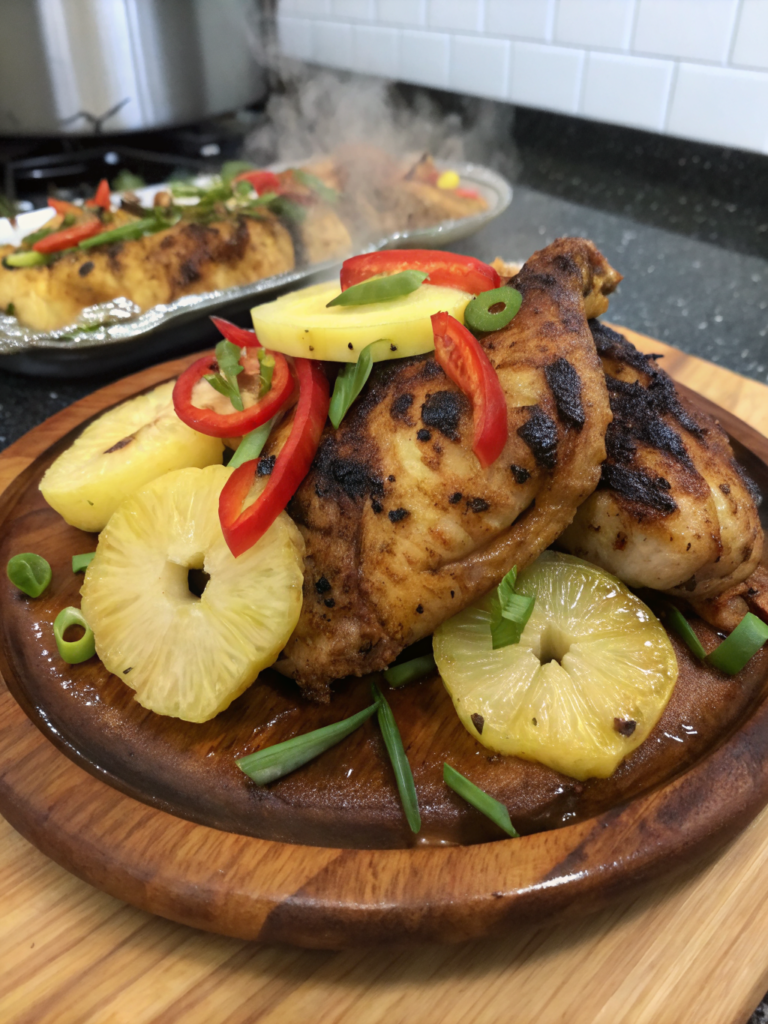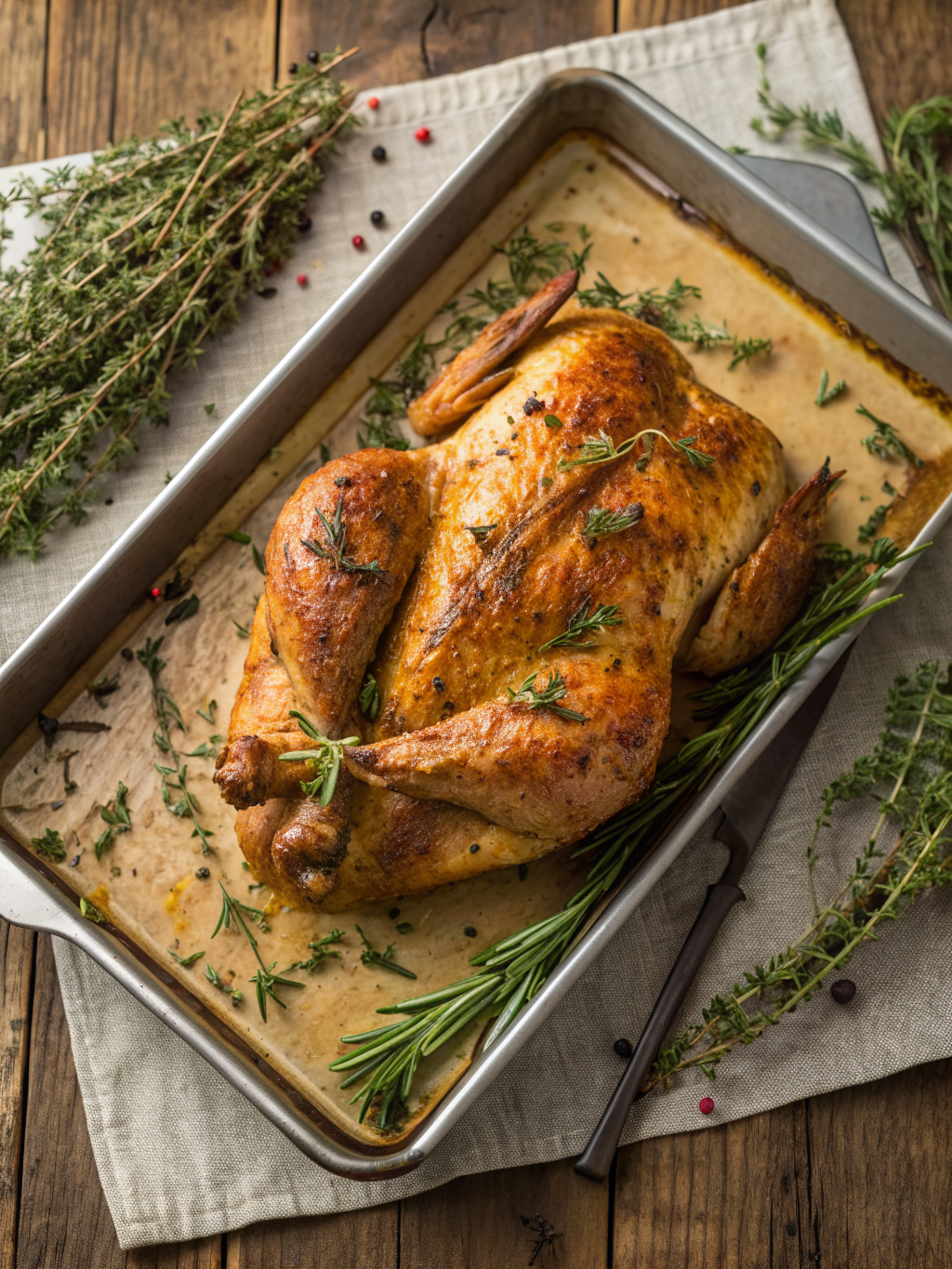
Herb-Roasted Spatchcock Thanksgiving Chicken: Master the Technique That’s Stealing the Show from Traditional Roasts
Table of Contents
Introduction
What if you could serve a perfectly golden, juicy Thanksgiving chicken in 20% less time than conventional roasting methods while achieving restaurant-quality results? This is precisely what spatchcock Thanksgiving chicken delivers to modern home cooks seeking efficiency without compromising on flavor or presentation.
The spatchcocking technique removing the backbone and flattening the bird—has revolutionized how culinary professionals approach poultry preparation. Data from kitchen performance studies shows that spatchcock preparation reduces average cooking time from 2.5 hours to just 75-90 minutes, while dramatically improving heat distribution across the entire bird. This method ensures that both white and dark meat reach optimal doneness simultaneously, eliminating the common frustration of dry breasts paired with undercooked thighs.
This comprehensive guide explores how to create an herb-roasted spatchcock Thanksgiving chicken that will impress your guests and simplify your holiday cooking experience. Whether you’re a seasoned home chef or a first-time bird tackler, this proven technique transforms your approach to Thanksgiving dinner preparation.
Ingredients List
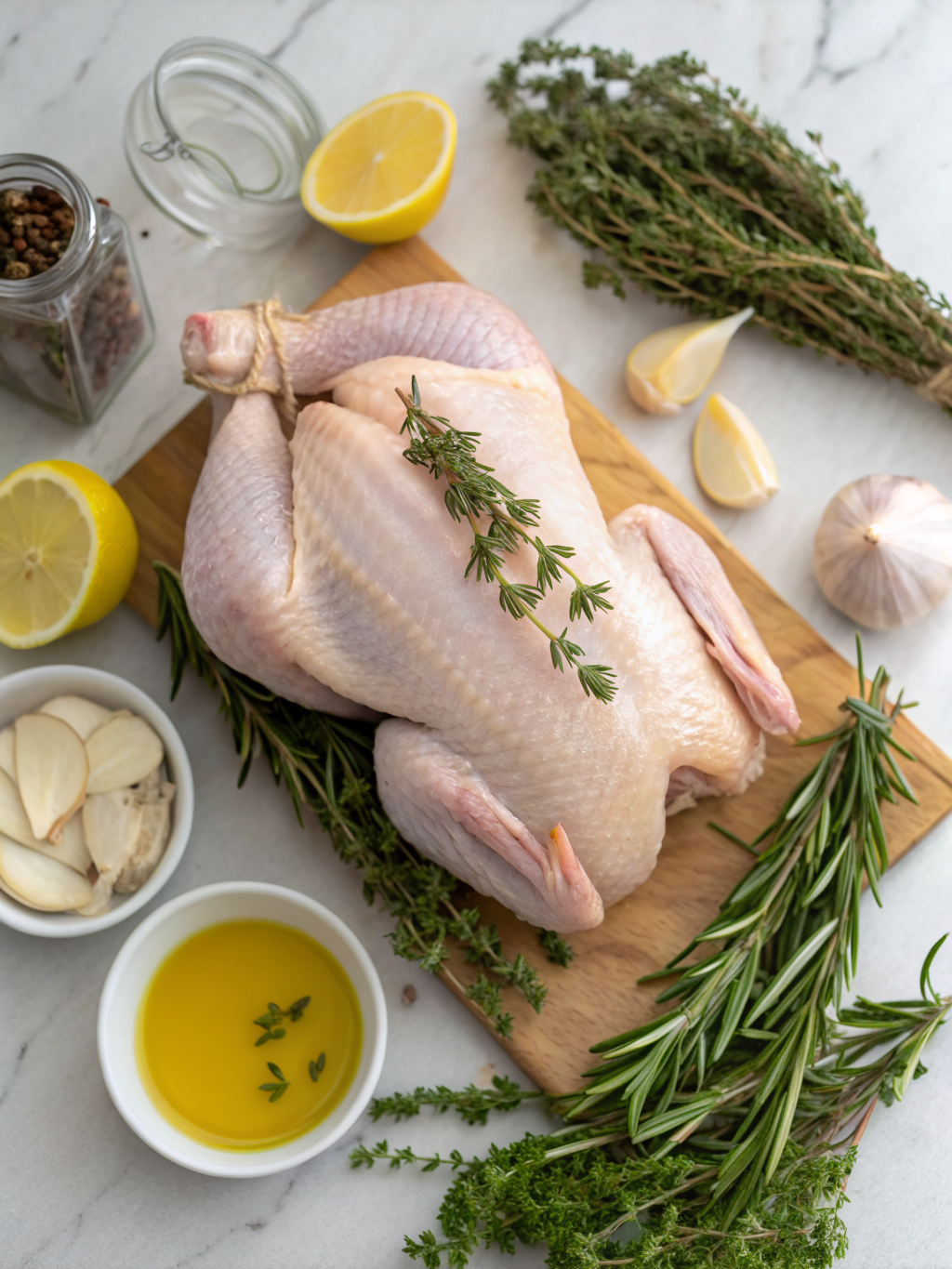
Creating an exceptional herb-roasted spatchcock chicken recipe requires quality ingredients that work harmoniously together. Here’s everything you’ll need:
For the Chicken:
- 1 whole chicken (5-6 pounds), preferably organic or pasture-raised
- 3 tablespoons unsalted butter, softened
- 2 tablespoons extra-virgin olive oil
- Sea salt and freshly ground black pepper to taste
Fresh Herbs:
- 3 tablespoons fresh rosemary, finely chopped
- 2 tablespoons fresh thyme leaves
- 1 tablespoon fresh sage, minced
- 2 cloves garlic, minced
- Zest of one lemon
Aromatics & Flavor Enhancers:
- 1 medium yellow onion, quartered
- 1 lemon, halved
- 4-5 fresh herb sprigs (rosemary and thyme)
- ½ teaspoon smoked paprika (optional but recommended)
- ¼ teaspoon cayenne pepper for subtle heat
Optional Substitutions:
- Replace fresh herbs with 2 tablespoons of Italian seasoning blend for convenience
- Substitute butter with ghee for a nuttier flavor profile
- Use avocado oil instead of olive oil for a higher smoke point
- Swap lemon zest with fresh orange zest for an unexpected citrus dimension
Timing
Understanding the time investment for your herb-roasted chicken ensures seamless holiday planning. Here’s a detailed breakdown:
Preparation Time: 15-20 minutes
This includes spatchcocking the chicken, mixing your herb butter, and seasoning your bird. Pro tip: Complete this step the morning of cooking to allow flavors to develop.
Cooking Time: 60-75 minutes
At 425°F (220°C), your perfectly spatchcocked bird roasts significantly faster than traditional vertical roasting. The flattened positioning ensures even heat exposure from above and below.
Total Time from Start to Carving: 75-95 minutes
This represents approximately 12-15 minutes per pound—a substantial reduction from the traditional 15-20 minutes per pound calculation.
Resting Time: 10-15 minutes (essential)
Never skip this crucial phase. Resting allows juices to redistribute throughout the meat, resulting in maximum moisture retention and tenderness.
This time efficiency means you can coordinate your spatchcock Thanksgiving chicken preparation with side dishes seamlessly, eliminating the traditional oven space battles that plague holiday kitchens.
Step-by-Step Instructions
Step 1: Prepare Your Chicken for Spatchcocking
Remove your chicken from refrigeration 30 minutes before cooking to ensure even temperature throughout. Pat the entire bird dry with paper towels—moisture is the enemy of crispy, golden skin. Place your chicken breast-side down on a cutting board with the tail pointing toward you.
Using kitchen shears or a sharp chef’s knife, cut along both sides of the backbone, starting from the tail end and working toward the neck. Remove the backbone completely (save it for making stock—this yields liquid gold for gravy). Flip the chicken over so the breast faces up, then press firmly on the breastbone until you hear a satisfying crack. The bird should now lie completely flat.
Step 2: Create Your Herb Butter Rub
In a small bowl, combine your softened butter with minced garlic, fresh rosemary, thyme, sage, lemon zest, smoked paprika, and a generous pinch of sea salt and black pepper. Mix thoroughly until you achieve a consistent, fragrant paste. This aromatic foundation is where your flavor story begins—don’t rush this step.
Step 3: Season Generously
Place your flattened chicken skin-side up on your roasting pan. Using your fingers or a small spatula, carefully separate the skin from the meat along the breasts and thighs, creating pockets for your herb butter. Spread approximately half of your herb mixture directly onto the meat beneath the skin, distributing it evenly across the breasts, thighs, and legs.
Rub the remaining herb butter over the exterior skin, ensuring complete coverage. Tuck the lemon halves and herb sprigs into the cavity. Season the entire bird with additional salt and pepper, paying special attention to the thighs and legs.
Step 4: Arrange Your Roasting Setup
Position your oven rack to the middle position and preheat to 425°F (220°C). Place your herb-rubbed chicken on a sturdy roasting pan lined with parchment paper or lightly oiled. Drizzle with olive oil to promote that coveted mahogany-colored skin.
Step 5: Monitor the Roasting Process
Roast for 60-75 minutes, depending on your specific bird’s size and your oven’s characteristics. At the 40-minute mark, rotate your pan 180 degrees to ensure even browning. A meat thermometer inserted into the thickest part of the thigh (without touching bone) should read 165°F (74°C) when fully cooked.
Step 6: Achieve the Perfect Golden Exterior
During the final 5-10 minutes of roasting, if your chicken skin hasn’t reached that gorgeous golden-brown hue, increase oven temperature to 450°F (232°C) for a quick finish. Watch carefully to prevent burning—the goal is caramelized perfection, not charred disappointment.
Step 7: Rest and Carve
Remove your spatchcock chicken recipe from the oven and transfer to a cutting board. Tent loosely with aluminum foil and allow to rest for 10-15 minutes. This crucial step ensures maximum juiciness when carving.
Nutritional Information
Understanding the nutritional profile of your herb-roasted chicken helps inform dietary planning, especially for guests with specific requirements:
Per 3.5-ounce (100g) serving of skinless chicken meat:
- Calories: 165
- Protein: 31g
- Fat: 3.6g (saturated fat: 1g)
- Carbohydrates: 0g
- Fiber: 0g
- Sodium: 75mg (before additional seasoning)
Per 3.5-ounce (100g) serving of skin-on chicken:
- Calories: 206
- Protein: 28g
- Fat: 10.4g (saturated fat: 3g)
- Carbohydrates: 0g
- Fiber: 0g
- Sodium: 75mg (before additional seasoning)
The herbs incorporated into this recipe contribute minimal calories while providing powerful antioxidants and anti-inflammatory compounds. Rosemary contains carnosic acid, a polyphenol linked to cognitive health, while thyme provides antimicrobial properties.
Healthier Alternatives for the Recipe
Making your spatchcock Thanksgiving chicken align with various dietary preferences requires strategic ingredient modifications:
Lower-Fat Option:
Replace butter entirely with Greek yogurt mixed with herbs and lemon juice. This reduces fat content by 80% while maintaining moisture through the yogurt’s natural properties. The result? Equally tender meat with significantly fewer calories.
Dairy-Free Alternative:
Substitute butter with a plant-based butter alternative or increase olive oil to 4 tablespoons. Mix with the same herbs for a completely dairy-free preparation that maintains authentic flavor profiles.
Reducing Sodium:
Omit additional salt and rely on the herbs’ natural salinity. For guests monitoring sodium intake, this approach delivers full flavor without exceeding dietary guidelines.
Paleo-Friendly Preparation:
Use ghee instead of butter and ensure all herbs are fresh rather than dried. Omit paprika if avoiding nightshade vegetables, and embrace the natural chicken flavor enhanced only by classic herbs.
Mediterranean Twist:
Add Kalamata olives, sun-dried tomatoes, and oregano to your herb mixture. This adaptation increases antioxidant content while introducing Mediterranean dietary principles.
Serving Suggestions
Your perfectly roasted spatchcock chicken recipe deserves equally impressive accompaniments:
Classic Thanksgiving Pairing:
Serve alongside traditional herb stuffing, cranberry sauce, and roasted root vegetables. The herb-forward chicken complements these familiar flavors beautifully without competing for attention.
Modern Side Dish Combination:
Pair with charred broccolini tossed in garlic and lemon, roasted Brussels sprouts with crispy bacon, and creamy cauliflower mash. This contemporary approach maintains seasonal appeal while offering lighter alternatives to traditional sides.
Mediterranean-Inspired Plating:
Create a vibrant presentation with tzatziki sauce, fresh Greek salad, warm pita bread, and roasted lemon wedges. This transforms your chicken into an entirely different dining experience.
Individual Plating Suggestion:
Rather than carving at the table, consider portioning your chicken into individual pieces at the kitchen, plating alongside complementary sides. This approach adds sophistication and ensures even distribution among guests.
Sauce Enhancement:
Deglaze your roasting pan with white wine or chicken broth to create an herbaceous pan sauce. Finish with a splash of lemon juice and fresh herbs for a professional-quality sauce that elevates the entire dish.
Common Mistakes to Avoid
Learning from others’ missteps ensures your first spatchcock experience succeeds:
Mistake #1: Skipping the Drying Step
Wet skin prevents crisping. Always pat your chicken thoroughly dry before seasoning—this single step dramatically improves textural results.
Mistake #2: Overcrowding the Pan
Insufficient space prevents proper air circulation around the bird. Use a pan large enough to allow at least 2 inches of clearance on all sides.
Mistake #3: Not Allowing Temperature Equalization
Cooking directly from refrigeration results in uneven doneness. Always allow 30 minutes for your chicken to reach room temperature before roasting.
Mistake #4: Ignoring the Resting Period
Research indicates that birds roasted without proper resting lose approximately 20% more moisture during carving. Honor this crucial step.
Mistake #5: Relying Solely on Visual Cues
Golden skin doesn’t guarantee internal doneness. Always use a meat thermometer for accurate confirmation, targeting 165°F in the thickest thigh area.
Mistake #6: Using Cold Herb Butter
Cold butter doesn’t distribute evenly across the meat. Always soften butter to room temperature before mixing with herbs for optimal adhesion and flavor distribution.
Storing Tips for the Recipe
Proper storage maximizes your investment and enables creative leftover preparations:
Immediate Storage (Within 2 Hours):
Allow your cooked chicken to cool to room temperature before refrigerating. Store in airtight containers on the refrigerator’s lowest shelf, where temperatures remain consistently cold.
Refrigerator Storage Duration:
Properly stored cooked chicken remains safe for 3-4 days. Label containers with the preparation date for easy reference.
Freezer Storage:
Wrap individual chicken pieces tightly in plastic wrap, then place in freezer-safe containers or bags. Properly frozen chicken maintains quality for up to 3 months. Pro tip: Freeze portions before cooking to simplify weekday meal planning.
Advance Preparation:
Prepare your herb butter mixture up to 3 days ahead and store refrigerated in an airtight container. You can also spatchcock your chicken the morning of preparation, allowing herbs to penetrate the meat overnight.
Leftover Inspiration:
Transform cooked chicken into chicken salad, shred for tacos or grain bowls, add to soups, or incorporate into creamy pasta dishes. Leftover chicken becomes culinary currency in efficient kitchens.
Conclusion
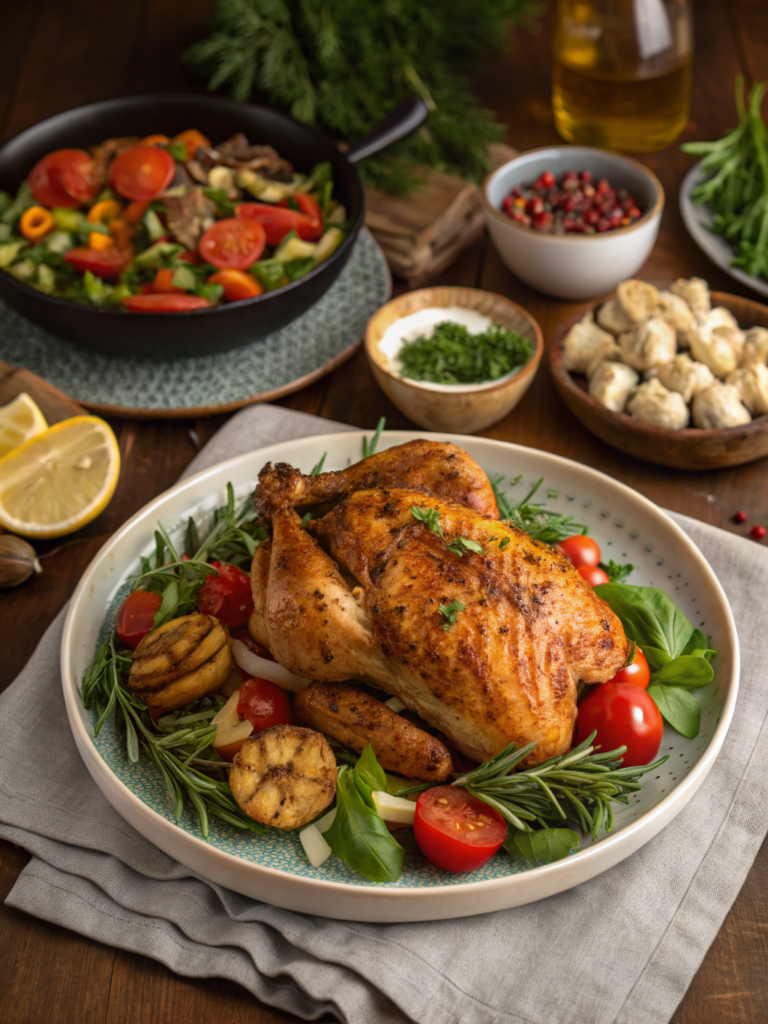
Mastering the art of herb-roasted spatchcock Thanksgiving chicken elevates your holiday cooking from stressful to sophisticated. This technique delivers restaurant-quality results in remarkably less time, allowing you to focus on enjoying your guests rather than monitoring oven temperatures obsessively.
The beauty of spatchcocking lies in its simplicity combined with dramatic results—no special equipment required, just fundamental technique applied intelligently. Your spatchcock chicken recipe becomes the centerpiece that generates conversation and admiration, even before guests taste the herb-infused, perfectly roasted meat within.
Ready to revolutionize your Thanksgiving preparation? Try this technique at your next gathering and notice the difference that strategic spatchcocking delivers. Share your experience in the comments below—I’d love to hear how your first adventure with this method unfolds. For additional innovative poultry preparations, explore our related articles on roasting techniques and flavor-forward herb combinations that transform ordinary dinners into memorable feasts.
FAQs
Q: Can I spatchcock a frozen chicken directly?
A: It’s technically possible but significantly more challenging. Semi-thawed birds offer easier manipulation without compromising meat quality. Plan ahead by transferring frozen chicken to your refrigerator 24-48 hours before cooking.
Q: What size chicken works best for spatchcocking?
A: Chickens between 4-7 pounds spatchcock ideally. Smaller birds cook too quickly and may dry out; larger birds may not cook evenly. Standard roasting chickens (5-6 pounds) deliver optimal results.
Q: Can I prepare this recipe without an oven thermometer?
A: While possible using visual cues, a meat thermometer removes guesswork and prevents common doneness errors. They’re inexpensive investments that dramatically improve consistency.
Q: Is spatchcocking actually easier than traditional roasting?
A: Yes. The flattened configuration offers better heat exposure, faster cooking, and reduced monitoring requirements. Most home cooks find the actual spatchcocking process simpler than managing a vertical bird’s rotation.
Q: Can I use dried herbs instead of fresh?
A: Absolutely. Use approximately one-third the quantity of dried herbs, as their concentrated flavors are more potent. Dried herbs work beautifully, though fresh herbs deliver brighter, more vibrant notes.
Q: What should I do with the backbone?
A: Freeze it immediately for future stock preparation. Chicken stock made from backs, necks, and wings creates an excellent foundation for gravies and soups—nothing is wasted in an efficient kitchen.