Beef Ribs in Oven: Irresistibly Juicy & Mouthwatering Recipe
Beef ribs in oven create that unforgettable first bite that makes everyone stop talking. Imagine serving a dish where the meat is perfectly tender, falling right off the bone, coated in a rich and irresistible sauce. That’s the magic of slow-roasting beef ribs the right way.
This guide will show you how to make the best beef ribs at home. You’ll learn about choosing the right ribs, seasoning, oven temperatures, and cooking times. You can make juicy beef ribs without a smoker using just a few tools.
The recipe makes 4–6 servings, depending on the size of the ribs. It takes about 20 minutes to prepare and then cooks slowly in the oven. It’s perfect for a relaxing afternoon or a big weekend dinner. You’ll also find tips on keeping the ribs moist and flavorful, as well as how to avoid dry or undercooked ribs.
Table of Contents
Introduction to Oven-Roasted Beef Ribs
Oven-roasted beef ribs are a great alternative to grilling and smoking. They offer deep flavor and tender meat. You can get restaurant-quality results without a smoker or a big backyard pit. This method is perfect for weeknights and weekend gatherings.
The anatomy of beef ribs is important. They have a lot of connective tissue and collagen. This needs low, slow heat to break down into gelatin. This makes the ribs juicy and silky when cooked right.
If you’re a home cook looking for consistent results, this guide is for you. It covers basic tips and steps for cooking delicious beef ribs in your oven. You’ll need a meat thermometer but no special equipment.
The article will guide you through ingredients, prep steps, oven settings, and timing. You’ll learn how to season, use foil for moisture, and find great sides. It also offers storage tips and flavor variations for next time.
Safety basics are simple but crucial. Always use a reliable meat thermometer to check temperatures. Follow safe handling practices for raw beef. These tips help avoid undercooking and ensure a safe, tasty meal for your family.
The Benefits of Cooking Beef Ribs in the Oven
Cooking beef ribs in the oven lets you control the temperature and timing. A steady low heat ensures even results. This avoids the hot spots found on charcoal or gas grills.
Even Cooking and Flavor Infusion
Roasting at 225–300°F breaks down collagen slowly. This makes the beef ribs tender and silky. They feel rich in your mouth.
Long, gentle heat helps dry rubs and marinades penetrate deeper. Wrapping ribs in foil or adding liquid creates steam. This carries flavors into the meat, making the ribs flavorful from crust to bone.
To add a caramelized crust, finish the ribs uncovered or under higher heat. This crust adds texture and a roasted flavor. It enhances the overall taste.
Convenience of Oven Cooking
Your oven works all year, rain or shine. It’s easy to plan meals any season. Once the ribs are set, you can focus on sides and plating.
Most home ovens can hold low temperatures for hours. You don’t need a smoker or pellet grill. This makes oven-baked beef ribs practical for any kitchen.
Cooking low-and-slow can be energy-efficient. You can cook other dishes at the same time. This method reduces active work while delivering tender and flavorful beef ribs every time.
Choosing the Right Cut of Beef Ribs
Choosing the right cut is key to the best beef ribs recipe. You can go for big, showy bones or meatier, marbled pieces. These are perfect for low, slow cooking in the oven.
Types of Beef Ribs Available
Back ribs come from the rib section. They have thinner meat near the bones and more towards the brisket. Back ribs roast well, making them a classic choice for oven recipes.
Short ribs include plate and flanken styles. These are meatier and more marbled. Short ribs are great for braising or slow cooking, making them tender.
Dinosaur or ranch ribs are large, bone-in cuts. They have lots of meat and look impressive. They’re perfect for a show-stopping dish that’s cooked for a long time.
Plan for 1/2 to 1 pound of ribs per person. Increase this if guests have big appetites or if you’re serving light sides.
How to Identify Quality Ribs
Buy from trusted places like Whole Foods or a local butcher. Look for bright red color and even marbling. Marbling helps keep the ribs juicy.
Check the fat cap. It should be creamy white and firm. Avoid gray or dry fat caps. Fresh, firm bones and meat mean good handling.
- Avoid strong off-odors or dark spots that indicate age or poor storage.
- Look for minimal surface drying and consistent sell-by dates.
- Ask the butcher for USDA Choice or Prime for better marbling, if available.
Quality ribs lead to tender texture and full flavor. This makes every roast a step closer to perfect beef ribs.
Essential Ingredients for Beef Ribs
Start with high-quality beef ribs, whether back ribs or short ribs. Seasoning and the right liquids are key for juicy, flavorful ribs. Use kosher salt and black pepper as your base. Add a light coat of vegetable oil or avocado oil for better browning.
For foil-roasted ribs, add beef broth, apple cider vinegar, or beer for steam. A small amount of brown sugar helps with caramelization when finishing uncovered.
Seasoning Options for Maximum Flavor
Choose a dry rub that fits your flavor preference. Classic BBQ rubs mix paprika, chili powder, and spices. Texas-style rubs use coarse salt and black pepper with garlic powder.
For heat, try a spicy rub with cayenne and chipotle. Use kosher salt for even seasoning. Apply the rub hours ahead or overnight for deep flavor.
Recommended Sauces and Marinades
Finish with a sauce that complements your rub. Kansas City-style BBQ sauce is sweet and tangy. Carolina vinegar sauce adds sharp acidity. Honey and sriracha make a sweet-spicy glaze.
- Worcestershire and soy-based marinades add umami depth.
- Red wine with garlic builds a richer, more savory profile.
- Baste with sauce in the last 15–30 minutes uncovered to caramelize without burning sugar-heavy sauces.
Follow these tips to balance salt, acid, and sweetness. They’ll help you make the best beef ribs for any occasion.
Preparing Beef Ribs for Cooking
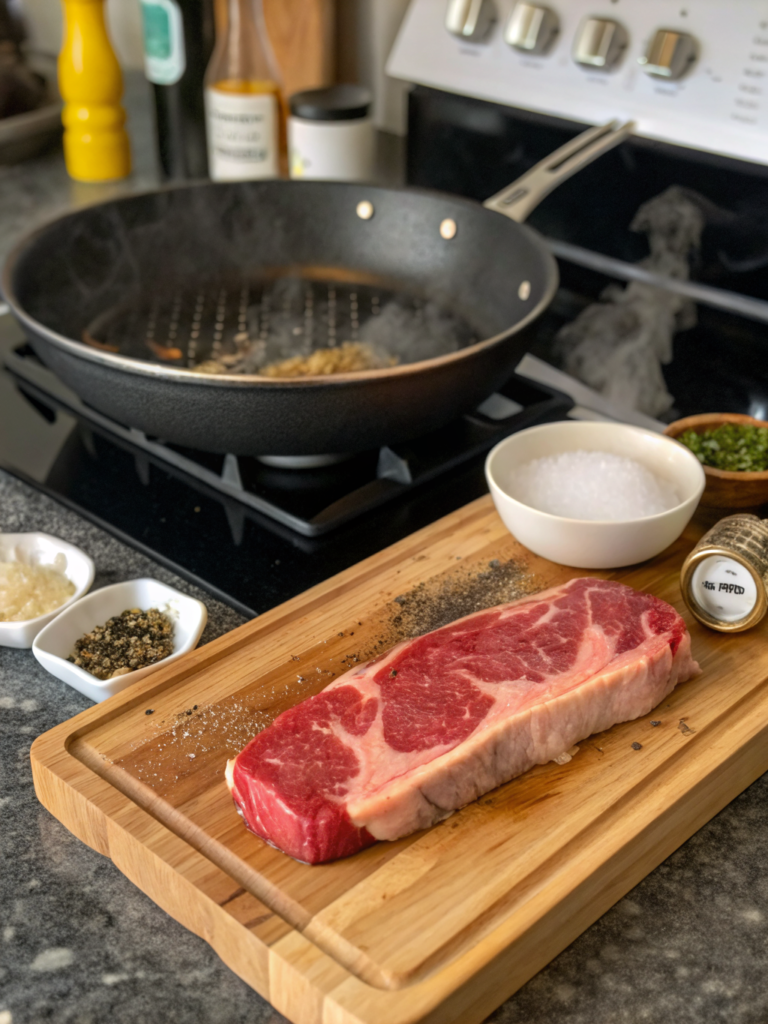
Begin with cold, clean ribs from the fridge. Dry them with paper towels to remove moisture. Let the ribs sit at room temperature for 20–30 minutes. This ensures they cook evenly when you learn how to cook beef ribs in oven.
Trimming and Prepping the Ribs
Flip the slab so the bone side faces up. Use a sharp knife to loosen the membrane or silver skin. Pull it off with a paper towel for a smooth motion. Trim fat, but keep a thin layer to keep the meat moist.
If the slab is too big, cut it into 2–3 sections. Smaller pieces cook better and are easier to handle. Rub with oil and then your seasoning. Pat dry before oiling to help the rub stick and create a better crust.
Marinating Tips for Enhanced Taste
Choose a wet marinade for deeper flavor or a dry rub for a crisp exterior. For a quick infusion, marinate 2–4 hours. For deeper flavor, aim for 8–12 hours in the fridge. Avoid very acidic mixtures for more than 12 hours to prevent tightening.
To get both depth and a crust, soak in a wet marinade, dry the meat, then apply a generous dry rub. If you refrigerate the rubbed ribs uncovered up to 24 hours, they will form a pellicle that browns nicely when you bake oven-baked beef ribs.
Remember food safety. Always refrigerate while marinating. Discard any used marinade that touched raw meat unless you boil it at least five minutes before using it as a sauce. These steps help you make reliably juicy beef ribs every time.
The Perfect Oven Temperature and Cooking Methods
Getting the temperature right is key for tender beef ribs. Low heat breaks down collagen and fat. This makes the ribs tender and easy to pull from the bone. Using a convection setting can speed up cooking, but lower the temperature by 25°F.
Recommended Temperature Settings
For most oven-roasted beef ribs, set your oven between 250°F and 275°F. This range ensures even cooking and keeps the meat moist. If you prefer a quicker cook, 300°F works, but the ribs might not be as tender.
Don’t roast whole slabs above 325°F. High heat can make the meat tough. For convection ovens, reduce the temperature by about 25°F and check for doneness a bit sooner.
Cooking Times for Tender Ribs
Time varies based on the type of ribs. Back ribs take 2.5 to 3.5 hours at 275°F. They’re done when the meat has pulled back from the bones and reaches 195–205°F.
Short ribs need more time. Braise-style short ribs take 3 to 4 hours in the oven. They’re ready when they’re fork-tender and reach 190–205°F.
Look for visual and tactile signs of doneness, not just time. The ribs should feel soft and show slight pull-back from the bones. If they’re still firm, return them to low heat and check every 20–30 minutes until they’re tender.
For a caramelized finish, blast the ribs at 425°F under the broiler or in a hot oven at 450°F for 5–10 minutes. This step seals the glaze and adds color without losing the slow roast’s benefits. It makes your dish look and taste amazing.
Step-by-Step Instructions for Oven-Roasted Beef Ribs
Follow this easy guide for tender, flavorful beef ribs. It works for short ribs, plate ribs, and big bone-in racks. You’ll learn how to season, use foil to control moisture, and finish for crispy, juicy ribs every time.
Seasoning Your Ribs
1. First, preheat your oven to 275°F and put the rack in the middle. This low heat is key for the best ribs.
2. Dry the ribs with paper towels, then coat them lightly with neutral oil like canola or grapeseed. This helps the rub stick and browns evenly.
3. Rub both sides of the ribs with your chosen dry rub, pressing it in. Let them sit at room temperature for 30 minutes or chill for hours to enhance flavor.
4. Place the ribs on a baking sheet with a wire rack or in a roasting pan. For bone-down racks or short ribs, put them meat-side up. This helps cook them evenly and allows air to circulate.
Using Foil for Moisture Retention
1. Begin by roasting uncovered or loosely covered for 1.5–2 hours. This step creates a flavorful crust and melts fat.
2. Next, wrap the ribs tightly in foil with 1/4 to 1/2 cup of beef broth, apple juice, or beer. Make sure the edges are sealed well and place the seam down. This keeps the steam in and makes the ribs juicy.
3. For short ribs, place them in a roasting pan with liquid that covers about one-third of the meat. Cover it tightly and roast until the meat is tender and falls off the bone.
4. In the last 20–30 minutes, remove the foil to crisp the sauce and crust. Brush with barbecue sauce and broil for caramelized edges. Always check the ribs’ internal temperature and look for visual doneness before resting for safe, tender results.
Let the ribs rest for 10–15 minutes after taking them out of the oven. Cut against the grain, serve with your favorite sides, and enjoy the best beef ribs recipe at home.
Recommendations for Side Dishes
Choosing the right sides enhances oven-baked beef ribs. Pick dishes that balance flavors, add contrast, and fit regional tastes. Time your sides to finish as the ribs rest for a perfect meal.
Classic Pairings
For a comforting touch, try mashed potatoes, mac and cheese, or buttery cornbread. These dishes soak up the ribs’ sauce, making each bite richer.
To balance the fat, offer vinegar slaw or pickled cucumbers. A citrusy salad with arugula and orange segments adds brightness to the plate.
- Creamy coleslaw (vinegar- or mayo-based)
- Baked beans or Kansas City–style baked beans
- Mashed potatoes or roasted fingerling potatoes
- Mac and cheese
- Grilled corn on the cob for summer menus
Popular Sides in American Cuisine
Regional sides add character. Try Southern-style collard greens or braised collards with Texas pinto beans for a hearty meal. Carolina-style slaw offers a tangy contrast to rich beef ribs.
Vegetable sides complete the meal. Roast Brussels sprouts with balsamic glaze, sauté green beans with almonds, or honey-roast carrots for color and texture.
- Southern collards or braised greens
- Texas pinto beans or Kansas City baked beans
- Carolina-style slaw for a tangy contrast
- Roasted Brussels sprouts with balsamic
- Sautéed green beans with almonds
Plan your prep and oven time. Start slow-cooked items like baked beans and collards early. Make quick salads and slaws while the ribs rest to keep them warm. Reheat or finish sides in the oven with the ribs for a complete meal.
For a simple yet effective pairing, combine a starch, a bright salad, and a roasted vegetable. This combination complements your oven-baked beef ribs and highlights their flavor.
Serving Suggestions for Beef Ribs
When serving beef ribs, how you present them is just as important as their taste. Let the ribs rest for a bit after roasting. This helps keep them moist and makes them easier to serve.
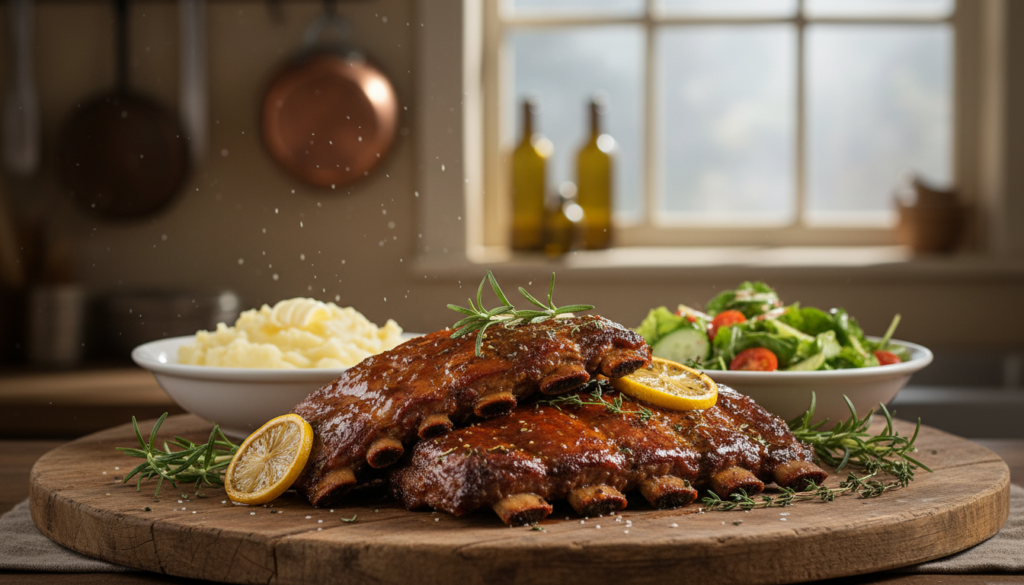
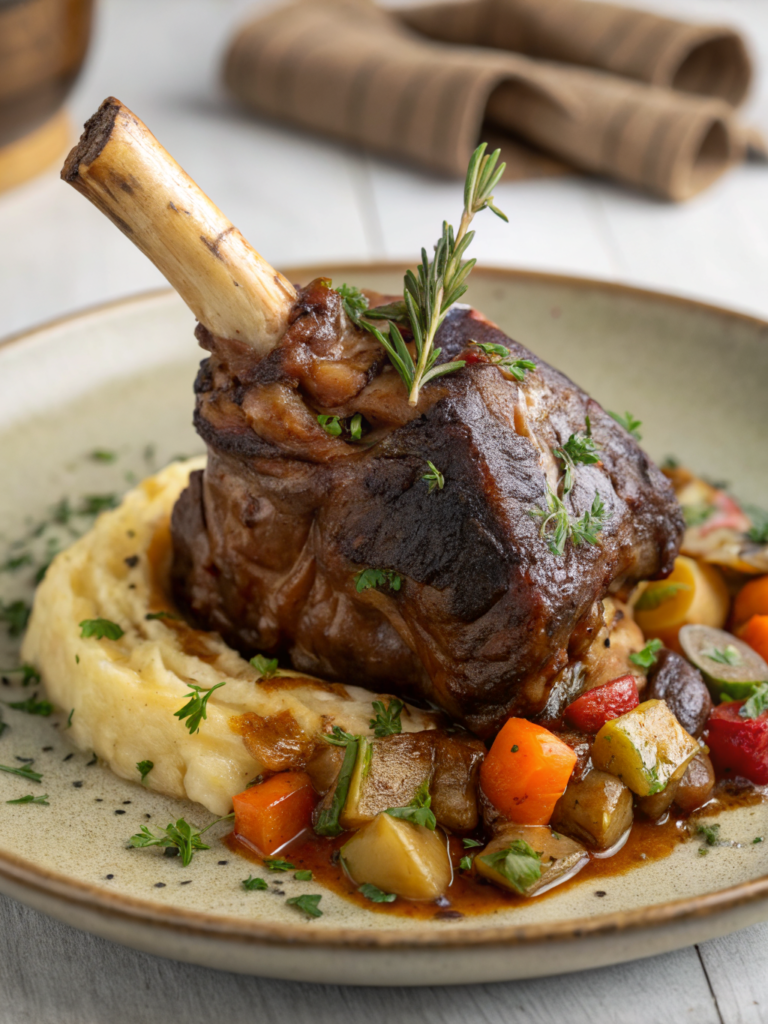
Either slice the ribs or separate them into individual portions. Place each rib bone-side down on warm plates. This makes the ribs look neat and easy to eat.
For family-style meals, put the ribs on a wooden cutting board or large platter. Add small bowls of extra sauce for dipping. This lets guests add their own flavor to their meal.
For serving, give each person one to two ribs with sides. Pair each plate with a small salad or slaw. This adds color and balances the richness of the meat.
Plating techniques to elevate your meal:
- Place ribs on a warm board, meat-side up, with a garnish at the tail end.
- Use compact stacks or fanned arrangements for a refined look.
- Keep sauce in ramekins so plates stay tidy for diners.
Garnishes that enhance flavor:
- Chopped fresh parsley or cilantro for bright contrast with fatty meat.
- Thinly sliced green onions for a sharp, fresh note.
- Lemon or lime wedges to squeeze lightly over each rib.
- Flaky sea salt sprinkled just before serving to lift flavors.
- Crunchy accents such as fried shallots, toasted sesame seeds for an Asian twist, or crushed roasted peanuts paired with a compatible sauce.
Choose drinks that match the bold taste of beef ribs. Full-bodied beers like stouts or amber ales are great. Bold red wines like Zinfandel or Syrah also pair well. For nonalcoholic options, try sweet iced tea or lemonade.
When you serve oven-roasted beef ribs, small details make a big difference. Thoughtful plating, balanced portions, and the right garnishes can turn a simple meal into a memorable one.
Storing Leftover Beef Ribs
After a big meal, you want your ribs to taste as good as the first bite. Follow simple steps to keep the flavor and texture of your beef ribs. Cool the ribs at room temperature for no more than two hours before storing them.
Proper Storage Techniques
Once cooled, put the ribs in airtight containers or wrap them tightly with foil or plastic wrap. Store them in the fridge for 3–4 days. For longer storage, use heavy-duty freezer bags or vacuum-sealed packs. Remove as much air as you can.
Label each package with the date so you know when to use it. It’s best to keep the sauce separate. Sauces can make the meat soggy over time. Store a small container of sauce in the fridge and add it when you reheat or serve.
Reheating Tips for Best Results
Reheating beef ribs gently keeps them juicy. Warm them in a low oven set to 250–300°F, covered with foil, until the internal temperature reaches 140–165°F. This takes about 20–30 minutes, depending on the size of your portions.
If you need a quicker method, heat a skillet over medium-low with a splash of beef broth. Add the ribs, cover, and let them steam through. Baste with sauce at the end and give them a quick crisp under the broiler for a caramelized finish.
Avoid the microwave if you can. It tends to dry out the meat and change its texture. If you must use it, cover the ribs, reheat in short intervals, and add a little broth or sauce to keep them moist.
- Tip: Use a meat thermometer to check doneness when reheating.
- Tip: Slice ribs before freezing for easier portioning when storing beef ribs.
- Tip: For best results, review beef ribs cooking tips before reheating to match the original style.
Variations: Experimenting with Flavors
Try small twists to keep your juicy beef ribs exciting. You can move from classic barbecue to bold international tastes without changing your cooking method. Aim for balance in fat, acid, and salt to preserve texture and boost flavor.
Explore different marinades that draw on global traditions. A Korean-style mix of soy sauce, brown sugar, garlic, ginger, and gochujang adds depth and a touch of heat. For a Mexican flair, use lime, chipotle, cumin, and achiote to brighten the meat. Argentine chimichurri with parsley, oregano, and red wine vinegar makes a lively, herby marinade. A Mediterranean option blends balsamic and rosemary for a glossy, aromatic finish. For a smoky-sweet profile, try a coffee-and-cocoa rub that forms a complex crust.
Keep acidic marinades shorter to avoid mushy meat. If you use citrus or vinegar, marinate for one to four hours depending on strength. For oil-based or soy-forward marinades you can go longer, up to overnight. Always taste and adjust salt before cooking.
Use creative spice blends to change the character of your ribs without adding liquid. A coffee-chile rub mixes ground coffee, smoked paprika, cayenne, and brown sugar for a deep, bittersweet edge. A citrus-black pepper rub combines orange zest, coarse black pepper, and sea salt for bright, sharp notes. An herbaceous blend of dried rosemary, thyme, and garlic powder highlights savory, fragrant tones.
Play with sweetness and heat to match your sides and sauces. Brown sugar or maple lifts sweet rubs that pair well with tangy tomato-based BBQ. Spicier rubs with cayenne or chipotle work best with cooling herb sauces or creamy slaws. Test small batches until a combination sings with your preferred balance.
Below are quick ideas to try at home:
- Korean-style marinade: soy, brown sugar, garlic, ginger, gochujang.
- Mexican-style marinade: lime, chipotle, cumin, achiote.
- Chimichurri marinade: parsley, oregano, red wine vinegar.
- Balsamic-rosemary: balsamic vinegar, olive oil, fresh rosemary.
- Coffee-chile rub: ground coffee, smoked paprika, cayenne, brown sugar.
- Citrus-black pepper rub: orange zest, black pepper, sea salt.
- Herb blend: dried rosemary, thyme, garlic powder.
As you experiment, keep notes on times and ratios. That way you can repeat favorites and refine new ideas for more juicy beef ribs every time.
Cooking for Special Occasions
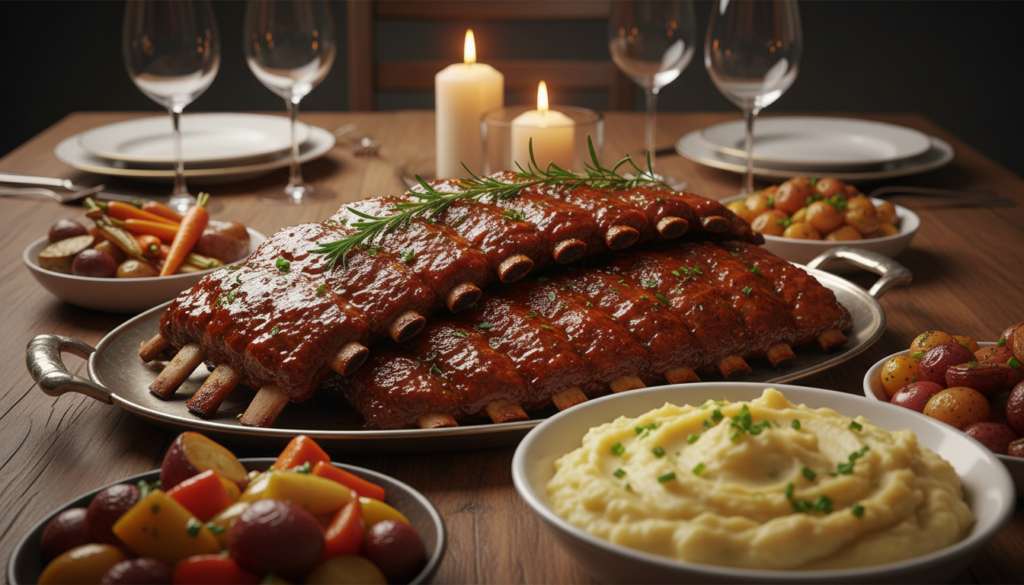
Beef ribs are perfect for any big event. They’re great for weekend meals, game-day parties, summer barbecues, and holiday dinners. Pick a reliable recipe to make cooking easy and the results consistent.
It’s easy to cook for a crowd. You can cook several racks at once. Use different pans and adjust the oven times. This way, you can serve everyone hot and tender without stress.
Serving tips
- Carve and arrange ribs on a large wooden board so guests can help themselves.
- Label sauces and set up a DIY sauce-and-condiment station to let everyone customize their plate.
- Keep a spare pan warm in the oven for seconds and late arrivals.
Presentation and ambiance
- Place ribs with sides around them for an inviting family-style spread.
- Enhance mood with curated music and themed table settings that match your menu.
- Offer beverage pairings that complement the rub or sauce you used for perfect beef ribs.
Plan ahead
- Start prep the day before: apply rub, make sauces, and chop sides to reduce day-of stress.
- Time the final oven or grill finish so ribs rest briefly before serving for peak tenderness.
- Keep a checklist for temperatures and hold times to ensure food safety and consistent flavor.
With a little planning, your beef ribs will impress everyone. Stick to a tried method and your favorite recipe. This way, you’ll always serve perfect beef ribs.
Conclusion: Enjoying Your Beef Ribs
You’ve learned how to pick the right cut, trim, and season. You also know how to use low-and-slow oven temperatures. This turns tough meat into tender, juicy beef ribs.
A final blast under the broiler or a glossy sauce finish adds a caramelized crust. This makes good ribs into delicious ones you’ll want to serve again and again.
Sharing the Experience with Family and Friends
Serve your beef ribs in oven for a warm, communal meal. Family and friends will love the rich flavors and the effort you put into each bite. Pair it with familiar sides like coleslaw, roasted potatoes, or grilled corn.
This balances the meal and highlights the juicy beef ribs.
Encouragement to Try the Recipe at Home
Try the included recipe and techniques at home. The method is forgiving and adapts to your tastes. Practice will help you time cooking and adjust seasoning better.
So, each batch of how to cook beef ribs in oven becomes more consistent and rewarding. Remember food safety: store leftovers promptly, reheat thoroughly, and follow safe handling. This keeps every meal delicious and safe.