Cornbeef Hash: The Ultimate Comfort Food Breakfast
Ever felt that warm, happy feeling after eating a delicious breakfast? That’s what cornbeef hash is all about. It’s perfect for using leftover corned beef or for a cozy brunch. This dish makes simple ingredients into something truly comforting.
This guide will cover everything you need to know. You’ll learn how to make a classic corned beef hash recipe. Plus, get tips for the best homemade texture and ideas to make it even better. You’ll discover the history, how to cook it step by step, and how to store and reheat it.
If you love cooking hearty breakfasts at home, this article is for you. By the end, you’ll know how to make restaurant-quality cornbeef hash in your kitchen.
Table of Contents
What is Cornbeef Hash?
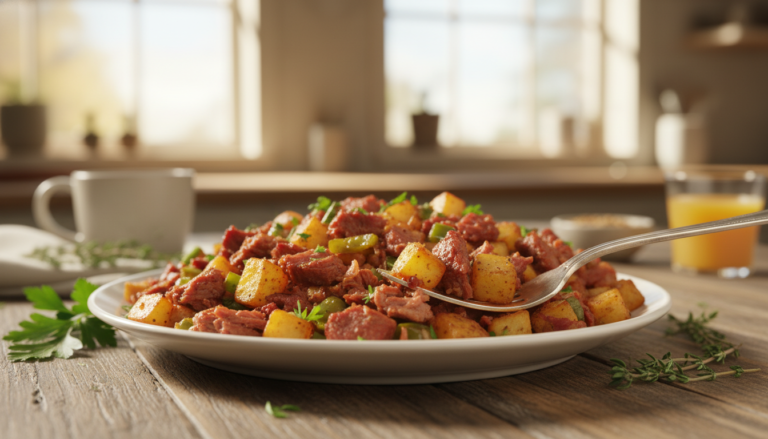
Corned beef hash is a tasty dish made from chopped beef, potatoes, and onions. It’s fried until it’s crispy. The name “corned” comes from the curing process using salt.
A Brief History
This dish started in 19th-century Britain and Ireland. People used leftover meat and veggies to make a meal. When immigrants came to America, they brought this tradition with them.
By the early 1900s, canned corned beef made it easier to make. Jewish and Irish communities helped make it a popular breakfast item.
Key Ingredients in Traditional Recipes
A classic corned beef hash has a few key ingredients. You’ll need cooked corned beef, potatoes, and onions. Butter or oil is used for browning, and salt, pepper, and Worcestershire sauce for flavor.
Adding bell peppers, garlic, and parsley can enhance the taste. If using deli meat, shred it before frying. For canned, drain and flake the meat to avoid excess moisture.
Choose the right potatoes for the best texture. Russets make it fluffier, while Yukon Golds add creaminess. These choices affect the final dish.
Why Cornbeef Hash is a Comfort Food Favorite
You feel it the moment the pan hits the stove: warm aromas, sizzling edges, a memory of family kitchens and late-morning diners. Corned beef hash wakes up more than your appetite. It recalls holiday plates, quiet Sunday mornings, and the ritual of sharing a simple, satisfying meal.
The sensory mix drives that nostalgia. Salty, savory corned beef meets sweet, caramelized onions and golden potato edges. Crunchy exteriors give way to tender interiors. Butter or oil adds richness while pan fond adds a deep, meaty umami that keeps you coming back.
The Warmth of Nostalgia
You remember a plate passed across the table or a counter seat at a diner. Meals made from leftovers become traditions. Serving corned beef hash for a corned beef hash breakfast links past and present. A familiar scent triggers stories and makes a simple bite feel like home.
That emotional pull makes the dish comforting. The best corned beef hash is rarely just about flavor. It carries family recipes, regional diner versions, and the little tweaks that make it yours.
Versatility for Any Meal
You can turn corned beef hash into many meals. Serve it with eggs for breakfast or brunch. Pile it into a sandwich for lunch. Pair it with roasted vegetables for dinner. You can use it as a main, a side, or a hearty topping.
Making a homemade corned beef hash is practical. Leftover corned beef and potatoes transform into a quick, satisfying dish. Canned corned beef offers an even faster option for a corned beef hash breakfast when time is tight.
How to Make Classic Cornbeef Hash
Plan carefully to make your corned beef hash perfect. This recipe serves 3–4 and takes 20–30 minutes. You’ll need 2 cups cooked corned beef, 3 cups diced cooked potatoes, 1 medium diced onion, 2–3 tablespoons butter or oil, 1 tablespoon Worcestershire sauce, salt, pepper, and fresh parsley.
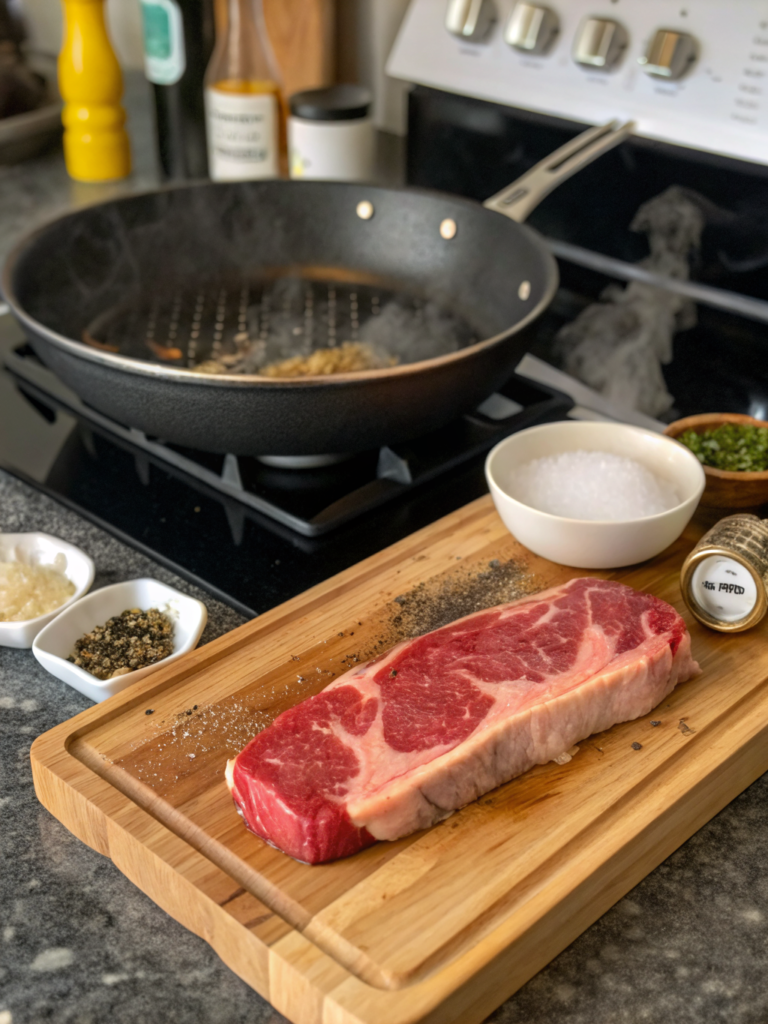
Equipment: a large skillet and a sturdy spatula. Use a heavy cast iron pan for extra browning. For a quick version, use leftover or canned potatoes.
Step-by-Step Recipe Guide
1) If using raw potatoes, parboil until tender, then cool and dice. Use leftover or canned potatoes and pat them dry.
2) Chop or shred corned beef into bite-sized pieces for balanced meat and potato.
3) Heat your skillet over medium-high and add butter or oil. Sauté the onion until translucent and starting to brown, about 4–5 minutes.
4) Add the potatoes and spread them into an even layer. Let them sear without stirring for 3–5 minutes to build a crisp crust.
5) Add the corned beef and Worcestershire sauce, mix gently, then press down again to encourage more crust formation. Cook until heated through and crisped to your taste.
6) Season with salt and pepper. Finish with chopped parsley. Serve hot, with corned beef hash and eggs for a classic breakfast.
Tips for the Perfect Texture
To get a crispy exterior, avoid overcrowding the pan. Use medium-high heat and give potatoes time to sear before stirring. A heavy skillet like cast iron holds heat and creates an even crust.
Balance moisture by draining excess liquid from canned corned beef and thoroughly patting ingredients dry. If your mix seems wet, raise heat slightly and cook a few extra minutes to evaporate moisture.
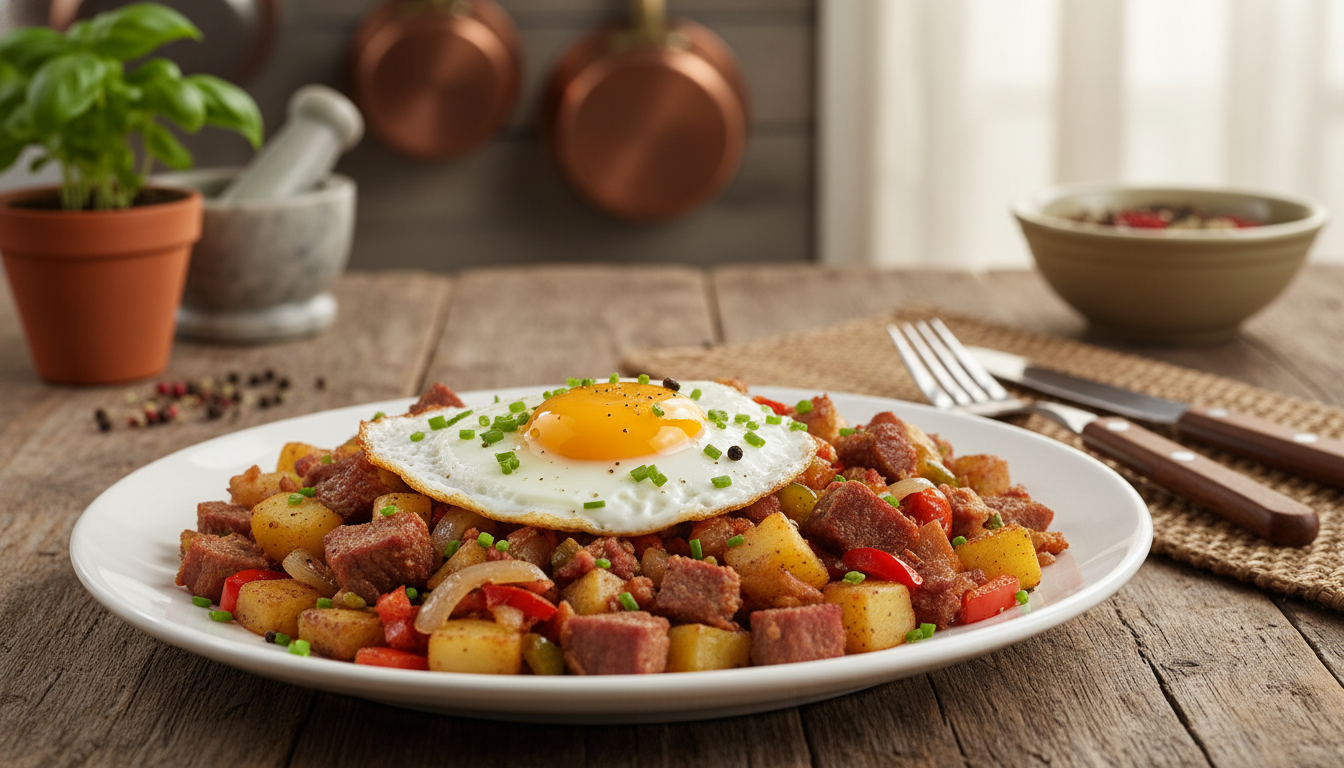
For serving, top the hash with fried, poached, or scrambled eggs. Aim for sunny-side up or over-easy to let a runny yolk mingle with the hash. This pairing of corned beef hash and eggs adds richness and makes the meal more satisfying.
Variations of Cornbeef Hash
Small changes can make a classic dish feel new. Regional corned beef hash shows how local ingredients change flavor. Creative ideas let you make it perfect for brunch, weeknight dinners, or big gatherings.
Regional Twists Across America
In New England, a buttery pan with extra onions is common. This style focuses on richer textures and simple flavors.
The Midwest often uses canned corned beef and adds bell peppers for color. Chicago and Detroit diners serve it with rye toast and fried eggs.
On the West Coast, chefs add fresh herbs and bright garnishes. Avocado slices or cilantro make it lighter and fresher.
Creative Additions to the Classic Recipe
Global influences bring bold flavors. Try kimchi for a Korean twist, Mexican chorizo for heat, or sauerkraut for a German tang.
Adding diced apples for sweetness or cheddar for richness is a good idea. Green peas or corn add color and sweetness. Chopped pickles or capers add a bright touch.
Spice blends like smoked paprika and cumin add warm, earthy flavors. Serve in cast-iron skillets, top with quick pickled veggies, or garnish with microgreens for a fancy brunch.
For dietary needs, rinse canned corned beef to lower sodium. Use low-sodium Worcestershire for less salt. Vegetarians can use seitan or tempeh for a meaty texture.
Pairing Your Cornbeef Hash
You want your corned beef hash to shine. The right sides and drink can make it even better. Here are some easy ideas for a great corned beef hash breakfast or brunch.
Best Breakfast Sides
Eggs are a classic choice. Try fried, poached, or scrambled eggs with your hash for extra protein. Add toasted rye or sourdough with butter for a nice crunch.
Baked beans and roasted tomatoes add warmth and a bit of acidity. For a lighter touch, try sautéed spinach or kale, or a fresh salad. A simple fruit salad can also brighten up your dish.
Don’t forget about condiments. Ketchup and hot sauce are must-haves. Try whole-grain mustard, HP sauce, or steak sauce for more flavor. A dollop of sour cream or crème fraîche can smooth things out. Top it off with chopped parsley or chives for a pop of color.
Ideal Beverages to Complement Your Meal
Start with a medium to dark roast coffee or latte for a morning pick-me-up. Black tea or English Breakfast adds a classic diner vibe. Fresh-squeezed orange juice brings a nice citrus touch.
For brunch or later, a Bloody Mary is a great choice. A light lager offers a crisp contrast. For warmer months, try sparkling water with lemon or iced coffee.
Seasonal Pairings
In winter, pair your hash with roasted root vegetables and a stout beer for a cozy meal. In spring and summer, go for lighter options like fresh fruit, iced coffee, or lemonade. This lets the corned beef hash take center stage.
Storing and Reheating Leftover Cornbeef Hash
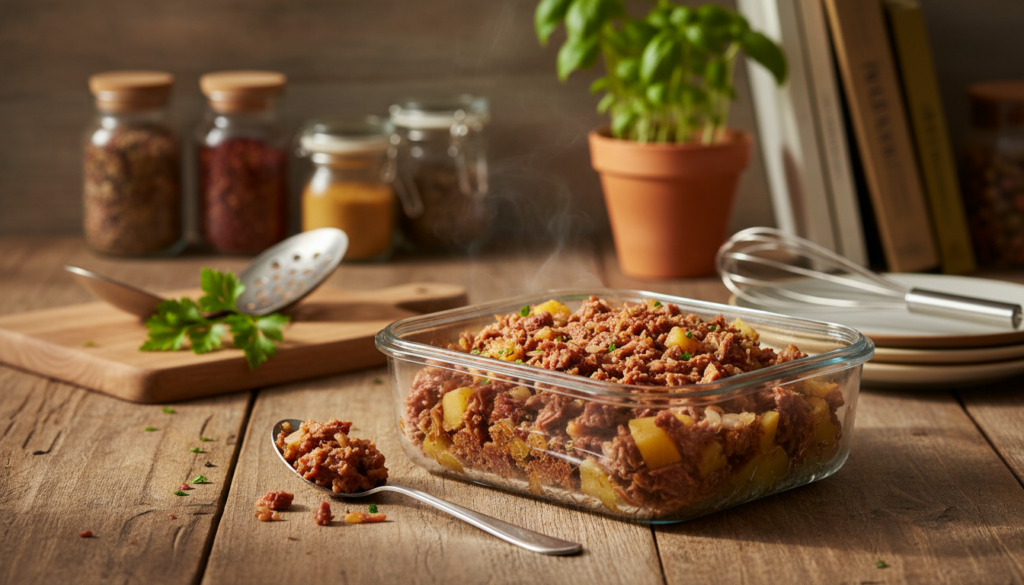
You cooked a batch and want to save the best bites. Proper storing corned beef hash keeps flavor and safety intact. Cool your hash within two hours, then move it to airtight containers. In the refrigerator, it will stay good for 3–4 days.
For longer storage, portion into freezer-safe containers or resealable bags and freeze for 2–3 months. Label each container with the date so you use the oldest first.
Refrigeration Tips
When you refrigerate leftovers, place containers on a middle shelf to keep them at a steady temperature. Use shallow containers so the hash cools fast. If you froze portions, thaw them overnight in the fridge before reheating corned beef hash for best texture.
Always reheat to an internal temperature of 165°F to ensure safety. Use an instant-read thermometer for accuracy. If you plan to reheat in stages, heat only once and eat promptly to avoid repeated cooling and warming.
Creative Ways to Use Leftovers
Leftover corned beef ideas should be quick and tasty. Fold warm hash into an omelet or scramble it into eggs for a hearty breakfast. Roll it into tortillas for breakfast burritos or tacos.
Press patties and pan-fry for sandwiches on brioche or potato rolls. Turn hash into a gratin by melting cheese on top under the broiler for a golden crust. Stuff bell peppers with hash and bake until tender for a full meal.
Mix a scoop into cooked pasta or rice and sauté with a splash of soy sauce or hot sauce for a fast skillet dinner.
Best Reheating Methods
To restore crispness when reheating corned beef hash, use a skillet over medium heat with a little oil or butter. Press and flip the hash so both sides brown. For larger batches, spread the hash on a baking sheet and heat at 375°F for 10–15 minutes until hot and crisp.
The microwave is the fastest option but yields softer results. Heat in short intervals, stirring between each minute. For a crisp finish, transfer the microwaved portion to a hot skillet for a minute or two.
Nutritional Value of Cornbeef Hash
The nutritional value of corned beef hash can vary. It’s high in calories, protein, and carbs. This is due to the beef and potatoes used. Adding canned corned beef, extra oil, or cheese can increase the calorie count.
Even so, you can still enjoy it by being mindful of portion sizes and ingredients.
Breakdown of Key Nutrients
A typical serving has 15–25 grams of protein and 25–40 grams of carbs. Fat content ranges from 10–25 grams, depending on added ingredients. Potatoes provide potassium, while beef offers iron and B vitamins.
Adding peppers or tomatoes adds vitamin C. Be aware that sodium can be high, so check labels.
Balancing Your Meal Choices
To balance corned beef hash, use lean brisket or rinse canned corned beef. Choose a light spray of olive oil instead of heavy frying oil. Adding vegetables like bell peppers, spinach, and onions boosts fiber and vitamins without adding many calories.
If watching sodium or calories, opt for low-sodium corned beef or serve smaller portions. Pair it with a large salad or steamed greens. For a plant-based option, try a potato-based vegan hash with smoked paprika and tempeh for savory protein.
Cornbeef Hash in Popular Culture
Corned beef hash is everywhere in movies, TV, diners, and online. It’s a symbol of comfort, hard work, and morning routines. Its enduring popularity shows why it’s a favorite in culture.
Iconic Appearances in Films and Media
Classic diner scenes in movies like Mystic River and TV shows like The Simpsons use breakfast hash. It’s a quick way to show a place feels like home. When someone orders hash, you know it’s late-night, neon-lit, and early-morning vibes.
Directors and writers love it because it feels real and familiar. Scenes with Jackie Gleason and John Waters’ films capture that feeling. The sight of a crispy hash edge means comfort.
Social Media Trends and Recipes
Instagram and TikTok are full of sizzling skillet videos and recipe tutorials. Hashtags like #cornedbeefhash bring both fans and innovators together. You’ll see crispy shots, quick recipes, and brunch ideas that grab attention.
Chefs like Julia Child and cookbook authors share fancy hash recipes. They inspire people to try new things like kimchi hash and cheesy bakes. Local diners and big chains like Mel’s Drive-In share their best hash, sparking conversations and long lines.
These moments and recipes keep corned beef hash in the spotlight. It’s moved from a simple dish to a social media sensation, encouraging creativity.
Cornbeef Hash Around the World
Hash-style dishes are found in kitchens from London to Manila to Kingston. Each place puts its own twist on diced meat and starch, using local tastes and produce. This creates exciting international hash variations to try.
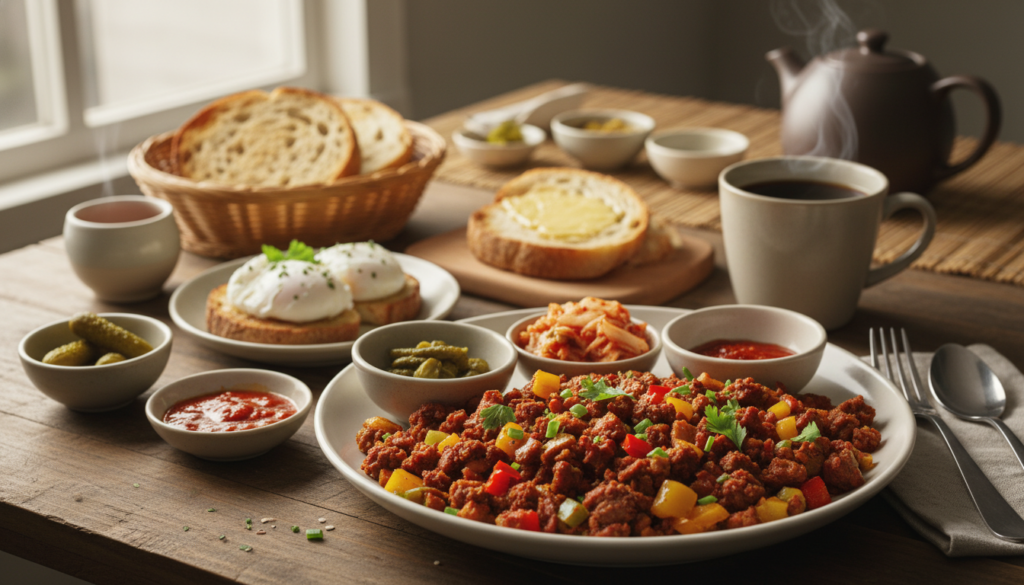
Global variations to explore
In the UK, leftover roast beef is diced and cooked in a pan. This dish adds roasted herbs and gravy flavors. In the Philippines, canned corned beef is sautéed with garlic and onions, served with rice. This dish is a comfort food that mirrors local breakfasts.
In Caribbean kitchens, salted beef is mixed with fried plantains or yam and Scotch bonnet peppers. These ingredients add true island heat. These dishes show how corned beef hash can feel familiar yet unique in each place.
Ingredients that change the flavor profile
Changing just a few ingredients can change the whole dish. Adding soy sauce or fish sauce gives it a savory taste. A bit of curry powder brings Indian flavors. Kimchi adds a tangy, spicy kick.
Coconut milk and Scotch bonnet peppers make a rich, creamy Caribbean version. Each ingredient change affects the dish’s texture and smell. This lets you make the dish your own.
Local protein substitutions and technique
In places where corned beef is rare, cooks use salted pork or mutton. Canned corned beef is a staple in many homes. For starch, try yams, plantains, or rice instead of potatoes.
Use a hot, well-oiled skillet for a crispy crust and tender inside. When adapting recipes, aim for balance. Pair bold spices with mild starches and add a fresh touch like lime juice or cilantro.
This way, your version of corned beef hash stays true to tradition but also reflects local tastes.
Making Cornbeef Hash for a Crowd
Planning corned beef hash for a crowd means scaling, prep, and a smart buffet layout. Start with a base recipe and adjust it with simple math. Aim for about 1 to 1.5 cups of finished hash per person for a main-course breakfast portion.
Scaling Up Your Recipe
Double or triple the ingredient list from your tested base. Test one batch at full scale before the event. Spread batches across multiple large skillets or sheet pans for even cooking and crispness.
When scaling corned beef hash, weigh ingredients when possible. Potatoes and corned beef scale predictably; spices can be adjusted by taste at the end. Par-cook potatoes by roasting or boiling to speed final assembly and preserve texture.
Ideas for Buffet-style Serving
Cook on griddles, commercial flat-tops, or large sheet pans. Use hotel pans for holding and chafing dishes set to low heat. Keep hash warm in a 200–250°F oven, but be aware extended holding softens crisp edges. Re-crisp under a broiler in short bursts to refresh texture.
Set up a build-your-own station with toppings like fried eggs, chopped chives, hot sauce, whole-grain mustard, and cornichons. Label dishes for dietary notes and place utensils and plates for a smooth flow. If budget allows, offer small cast-iron skillets or individual ramekins for plated service to elevate presentation.
Prep, Timing, and Staffing
Prep components ahead: roast or boil potatoes and chop corned beef the day before. For brunch events, par-cook potatoes and finish with corned beef just before service to keep texture fresh. This strategy makes scaling corned beef hash manageable and reliable.
Plan staffing so one cook handles two to three pans on a griddle during peak service. Schedule final finishing steps close to service time. Clear station roles for plating, topping, and replenishing the buffet to keep lines moving.
Common Mistakes When Cooking Cornbeef Hash
Small mistakes can ruin your corned beef hash. Watch out for moisture, salt, potato type, and beef cut. These tips help you avoid common mistakes and achieve the perfect dish.
Avoiding a soggy result. Sogginess comes from too much moisture in potatoes or not draining the corned beef. Parboil potatoes, cool, and dry them before chopping. Pat dry the corned beef and other ingredients with paper towels.
Use a hot skillet and let the hash sear without stirring for a few minutes. This helps it crisp up. Cooking in batches prevents steam buildup and keeps the hash from getting soggy.
Fixes for wet hash. If the pan steams, raise the heat and spread the mix thinly. Remove excess liquid with a spoon during cooking. Rinsing and draining canned corned beef reduces juices and salt, preventing sogginess.
Salt and sodium control. Cured or canned corned beef is very salty. Check labels and rinse canned products before use. Taste the mix before adding extra salt. Too much sodium can make the dish harsh instead of savory.
Pick the right potato. Waxy potatoes like new potatoes become gluey when fried. Choose Russet for fluffy inside and crisp edges, or Yukon Gold for creaminess. The wrong potato can cause texture issues, so stick to these varieties.
Choosing the best corned beef cut. For homemade corned beef, ask for brisket. Brisket cooks tender but moist. If using canned corned beef, choose reputable brands. Texture will differ from freshly cooked brisket. Avoid overcooking brisket before chopping to prevent drying.
Balance your seasonings. Strong sauces like Worcestershire or hot sauce can overpower the dish. Add bold flavors slowly and taste as you go. If the hash tastes flat, add a splash of vinegar, chopped pickles, lemon juice, or fresh herbs like parsley. Proper seasoning prevents another common mistake and keeps the dish lively.
Conclusion: The Timeless Appeal of Cornbeef Hash
Cornbeef hash is loved for its simple mix of ingredients and easy cooking method. It has a long history, starting from humble beginnings to becoming a beloved dish today. It combines salted meat, potatoes, and spices to offer a comforting meal every morning.
When you make cornbeef hash at home, pay attention to texture and flavor. Follow the detailed steps to perfect the searing. Using leftover corned beef adds flavor and saves time. The article also shared tips on variations, pairings, storage, and nutrition.
Give the recipe a try and work on getting that perfect sear. Don’t be afraid to add your own twist with ingredients like bell peppers or soy sauce. Cornbeef hash is easy to customize, making it a great choice for any meal. It’s a reliable comfort food that everyone can enjoy.