How Do You Make Corned Beef Hash? The Best Method Explained
How do you make corned beef hash? Do you remember that warm, salty smell from your childhood? A great corned beef hash brings that feeling back. It’s simple, satisfying, and true to its roots.
This guide will show you how to make corned beef hash that feels like home. You can use leftover deli corned beef or brisket from a Sunday dinner. It’s all about the taste and the memories it brings.
Here, you’ll find a clear, reliable recipe for corned beef hash. You can make it on the stovetop or in a slow cooker. We’ll walk you through each step, help you choose the right ingredients, and share tips for making it crispy.
This guide is for anyone who loves cooking at home, hosting brunch, or has leftover corned beef. You’ll learn about traditional, stovetop, and slow cooker methods. Each one offers a unique way to enjoy this classic dish.
Making corned beef hash on the stovetop takes about 20–45 minutes. The slow cooker method takes several hours. But don’t worry, it’s easy to follow, and you’ll get enough for 2–4 people. Get ready to make a dish that’s both crispy and full of flavor.
Table of Contents
How Do You Make Corned Beef Hash? What You Need to Know
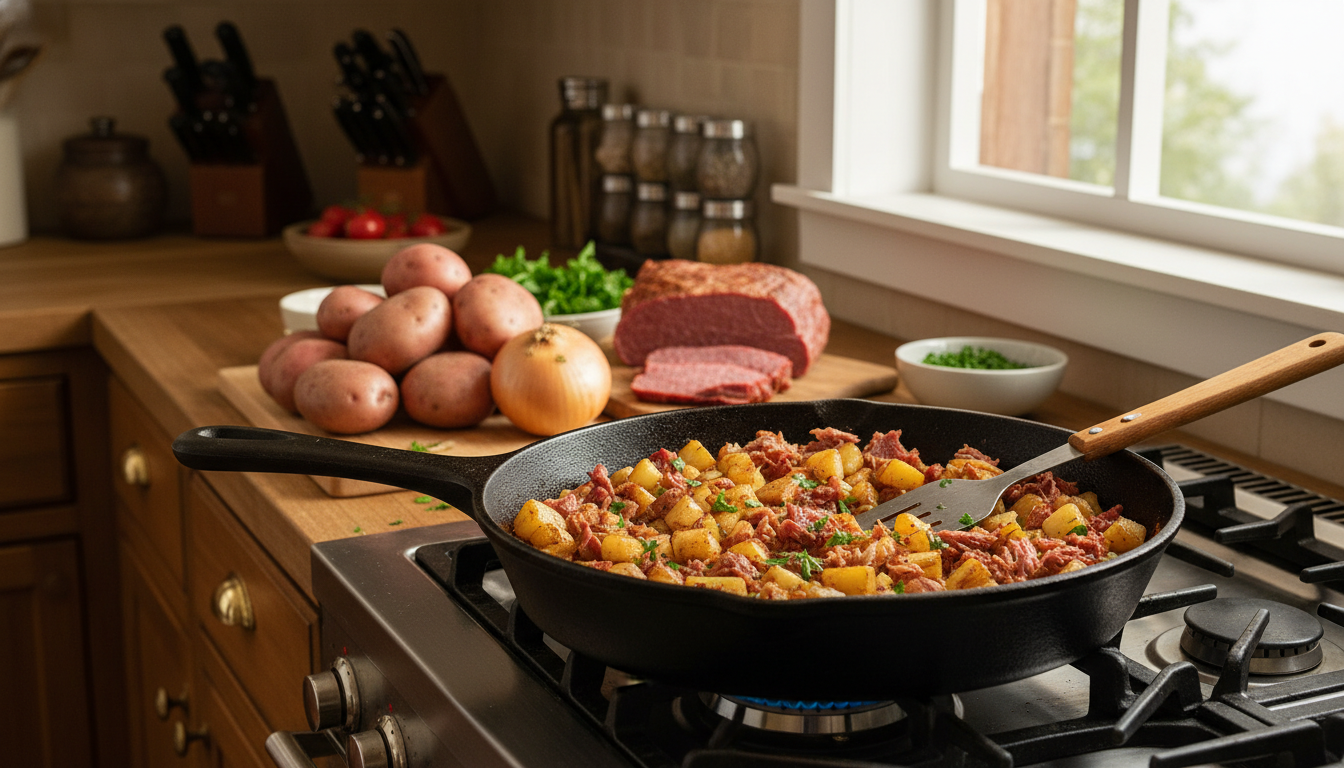
Corned beef hash is known for its crispy edges and soft potato center. It’s a simple dish made from corned beef, potatoes, and onions. These ingredients are pan-fried until they’re golden brown.
It’s a favorite for breakfast or brunch, often topped with eggs.
Origin and History of Corned Beef Hash
The history of corned beef hash starts in 19th-century Britain and Ireland. The term “hash” comes from the French hacher, which means to chop. Cooks used to mix leftover meats with potatoes to reduce waste.
Irish immigrants brought corned beef to the United States. It became popular in Irish-American kitchens and Jewish delis. Brands like Libby’s made it easy for busy families to enjoy.
Popular Variations Across Regions
There are many regional twists on corned beef hash. New England and Irish-American versions use corned beef, potatoes, and onion. They keep it simple.
In the South and Tex-Mex, they add bell peppers, chili powder, or jalapeños for a spicy kick. British cooks might use lamb instead of beef. In the U.S., diners offer both canned and slow-cooked brisket versions.
Modern chefs experiment with duck confit or braised beef. Vegetarians can enjoy it with tempeh or jackfruit for a meatless option.
Key Ingredients for Corned Beef Hash
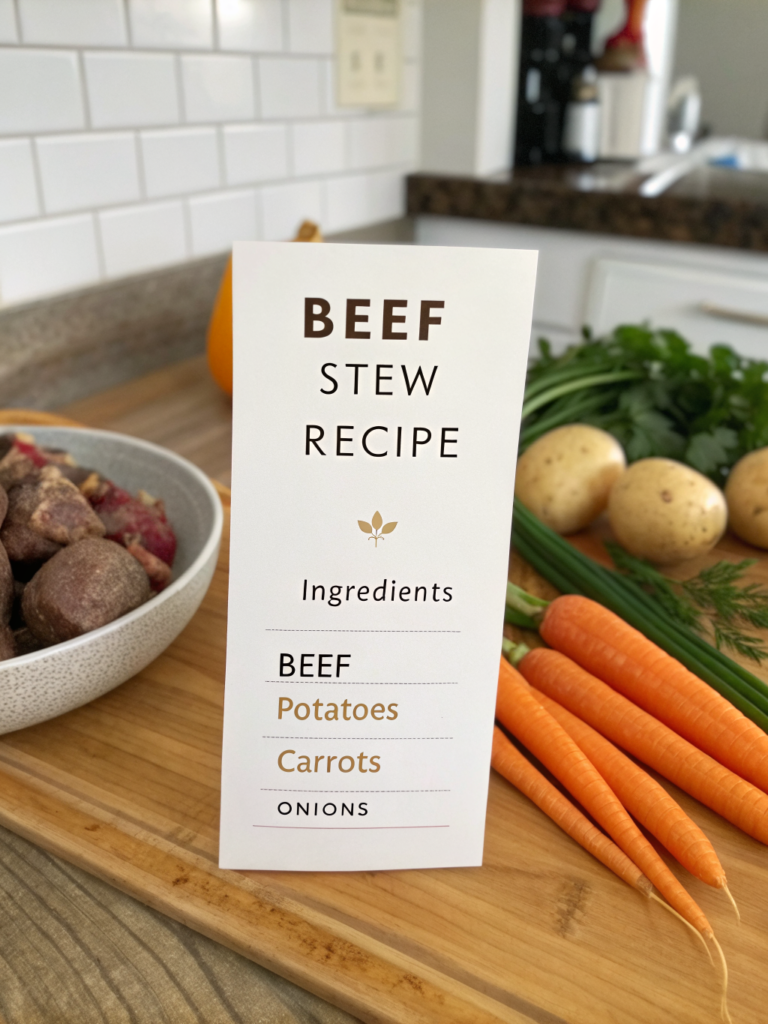
You can make a great corned beef hash with just a few things from your pantry. Start with good proteins, firm potatoes, and some aromatics for texture and taste. This part explains the main ingredients and how to pick the right ones for your taste and schedule.
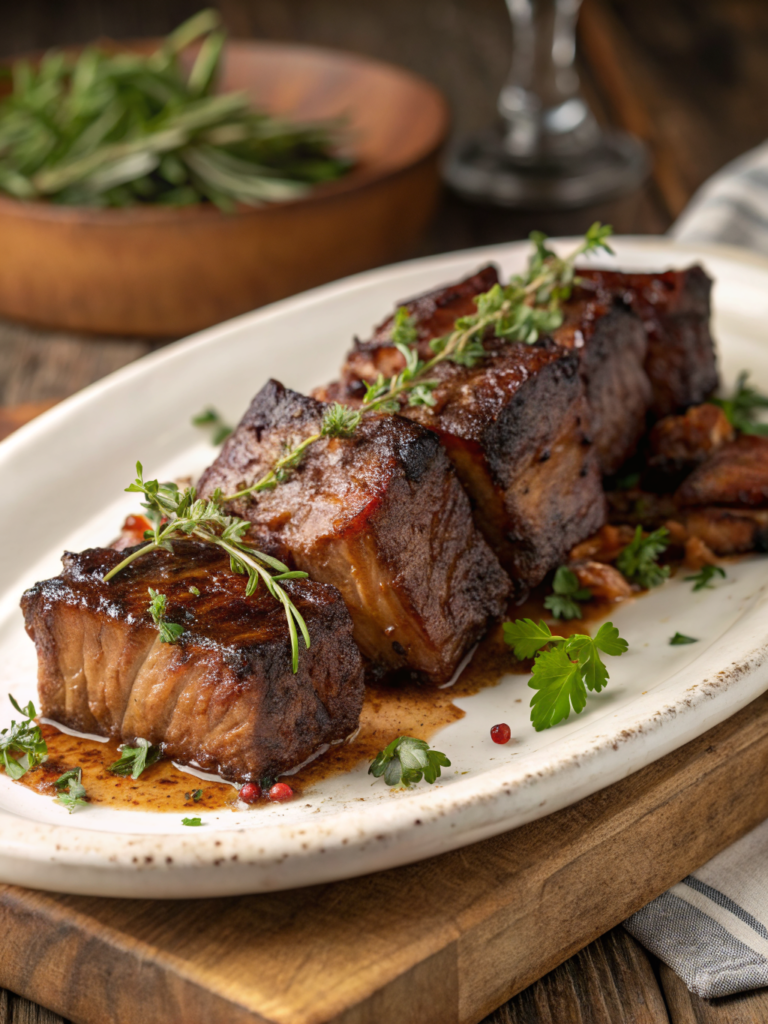
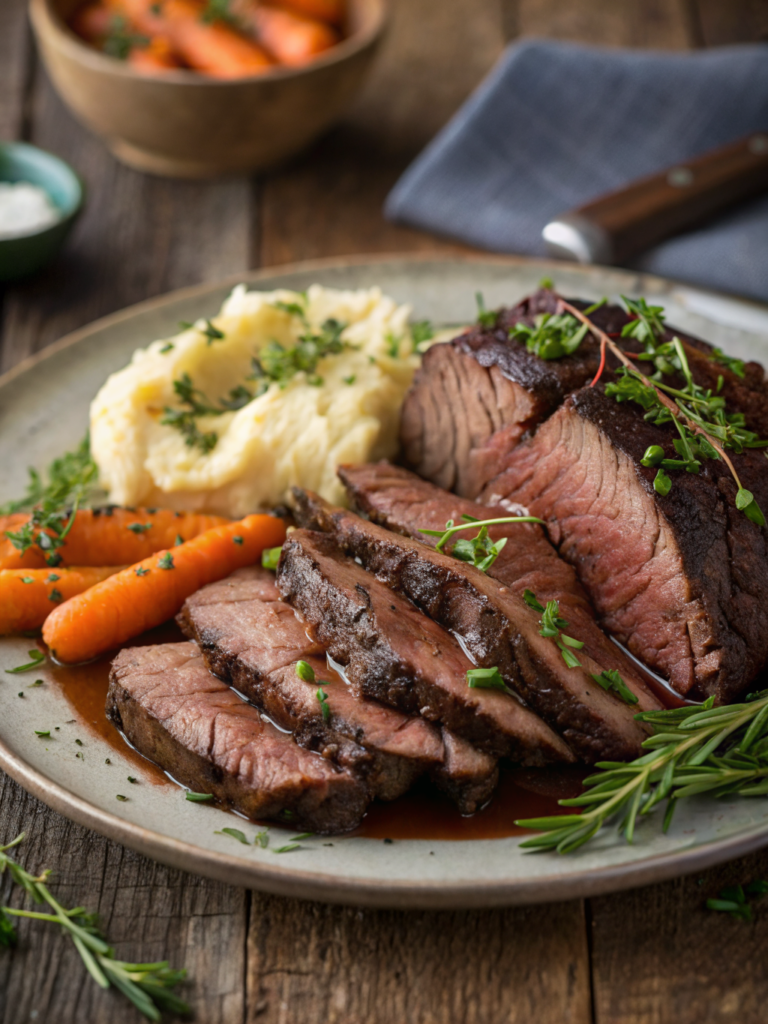
Choosing corned beef is key for texture. Leftover cooked corned beef brisket is tender and crispy. Canned corned beef, like Libby’s, is easy to chop but might need salt adjustment. Cooking brisket at home and slicing it makes the best hash.
Potatoes are crucial. Russet potatoes make the edges crispy. Yukon Gold potatoes are creamier inside. Parboiling helps, and leftover mashed potatoes can make a quick, soft hash.
Onions are the flavor base. Yellow or sweet onions are classic. Red onion is sweeter. Adding bell peppers, scallions, garlic, or leeks can enhance flavor without overpowering.
Seasoning should be simple. Start with kosher salt and black pepper. Smoked paprika, mustard, or caraway seeds add depth. Worcestershire sauce or hot sauce balance richness. Fresh parsley or chives add brightness.
Getting the balance right is important. Use equal parts meat and potato for a cohesive dish. One medium onion per pound of meat and potato is a good ratio. These simple guidelines ensure a tasty corned beef hash every time.
Equipment You’ll Need
To make a great stovetop corned beef hash, gather reliable tools before you start. Good equipment for corned beef hash keeps your prep smooth and the cook even. A few right items stop frustration and help you get a crisp, well-seared finish.
Essential Cooking Tools
Use a sharp chef’s knife and a sturdy cutting board for trimming and dicing the brisket and vegetables. A box grater or food processor speeds potato prep when you want a different texture. Pick a spatula that’s sturdy metal or heat-resistant silicone so you can turn and press the hash without bending.
Keep a slotted spoon handy to drain excess fat or moisture as you cook. A quick-read thermometer comes in useful if you’re checking temperatures for freshly cooked brisket. These pieces form the core of your equipment for corned beef hash.
Recommended Cookware for Optimal Results
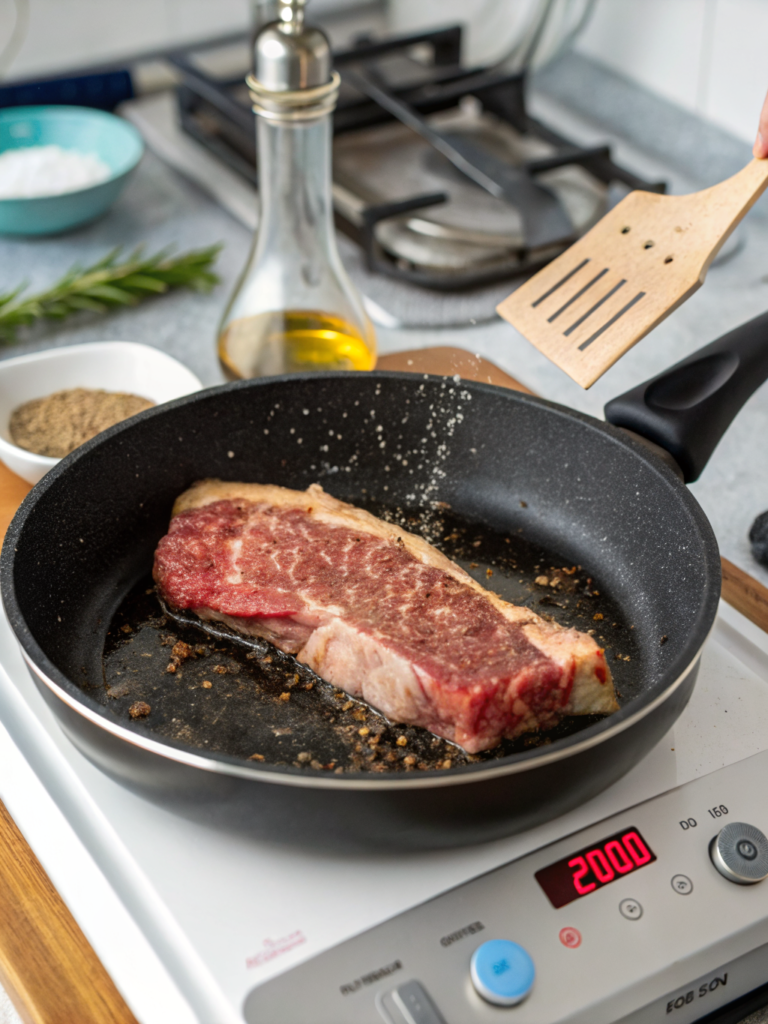
For best results, choose a heavy-bottomed skillet or a cast-iron pan in the 10–12 inch range. Brands like Lodge and Le Creuset provide even heat and help form a deep crust. If you prefer easier flipping, a nonstick skillet will work, though it won’t deliver the same sear.
If you like slow-cooked variations, a 4–6 quart Crock-Pot pairs well with a skillet for browning before the slow cook. For oven finishes, use a baking sheet or an ovenproof skillet to crisp the top at 425°F for a few minutes. These choices show the best cookware for hash and cover most recipes.
Mind safety and maintenance. Re-season cast iron as needed. Avoid metal utensils on nonstick surfaces and use oven mitts for hot pans. These small steps protect your pans and keep your results consistent.
Preparing Your Ingredients
Before you start cooking, make sure you have all your ingredients ready. This quick prep helps you focus on cooking the corned beef hash perfectly.

How to cook corned beef varies based on your starting point. If you have raw brisket, cook it in water with pickling spices for 2.5–3.5 hours. Let it rest, then slice or shred it. For oven braising, sear the brisket, add liquid, cover, and cook at 325°F for 3–4 hours. A slow cooker on low for 8 hours makes the meat tender with little effort.
If using canned or leftover corned beef, drain excess liquid and shred or dice it into 1/2-inch pieces. Pat the meat dry to reduce steam in the pan.
Start chopping vegetables by choosing uniform sizes. Dice potatoes into 1/2-inch cubes for even cooking. Parboiling potatoes for 5–8 minutes can help with stovetop browning. Drain and dry them well before adding to the skillet.
Dice onions and bell peppers uniformly for even caramelization. Mince garlic finely. Cut scallions or parsley for a fresh garnish at the end.
When chopping vegetables, use a sharp knife and a stable cutting board. Work in small batches for consistent pieces. Pat vegetables dry to avoid soggy hash and to encourage crisp edges.
To prevent sogginess, avoid overcrowding the skillet. Give ingredients room for moisture to evaporate and for browning to occur. Dry both potatoes and corned beef before adding them to the hot pan.
Cooking Techniques
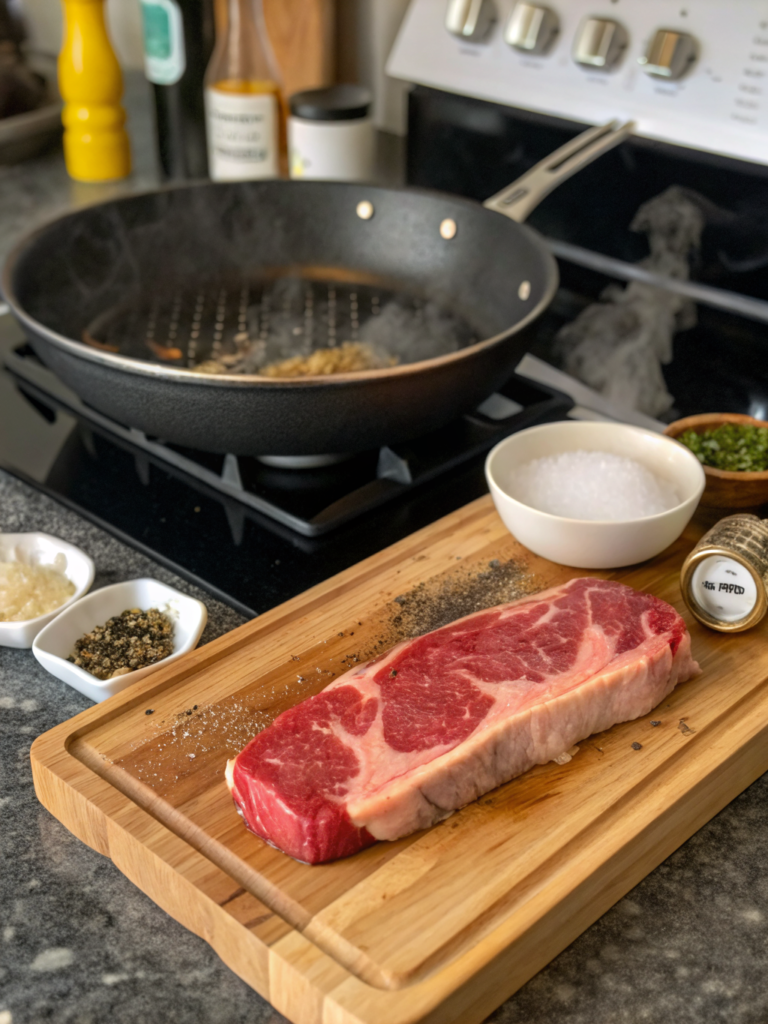
Choose a method based on texture and time. Start with a hot, heavy skillet and cook in small batches. This gives you control, whether sautéing or frying corned beef hash. A cast iron pan is best for a deep crust and even heat.
Sautéing vs. frying
Sautéing corned beef hash is great for layered flavor and soft veggies. Heat the pan over medium to medium-high. Add oil or butter, then sweat the onions until they’re translucent. Next, add potatoes and corned beef, turning gently to brown without burning.
Frying corned beef hash gives a bolder, crunchier result. Use more oil and a hotter pan for frying. Shallow pan-frying allows for browning on both sides. Press with a spatula for even contact. Avoid deep frying, as it’s not needed for this dish.
Best methods for crispiness
Preheat the skillet until it’s almost smoking, then add oil. Cook in batches to prevent steaming instead of browning. Use parboiled or day-old cooked potatoes to help with crisping.
Press the hash down with a spatula or small skillet. Leave it undisturbed for 4–6 minutes per side to form a crust. For a crisp top, finish in a 425°F oven for 5–10 minutes.
After browning, deglaze with Worcestershire, beef stock, or beer. This lifts the fond and adds flavor. Stir in butter at the end for sheen and richness. This will give you the perfect crispy corned beef hash.
Tips for Perfect Corned Beef Hash
Want to make the best corned beef hash ever? Start by tasting the corned beef before adding salt. Canned and deli corned beef usually have enough seasoning. So, add salt carefully to avoid too much.
To balance flavors, mix fat, acid, sweet, and herbs. Brown oil and butter for a rich color and silky feel. Use the fat from the corned beef for extra depth, but trim it first.
Add a squeeze of lemon or a dash of malt vinegar near the end. It brightens the flavors. If it tastes flat, a few drops of hot sauce can help without adding spice.
Caramelize onions for a sweet hint. A teaspoon of brown sugar can balance salty bites. Finish with parsley, chives, or dill for freshness.
Cooking time and temperature considerations
Use medium-high heat for good browning and tender potatoes. High heat can burn the edges and leave the center raw.
For stovetop cooking, it takes about 20–30 minutes. Brown in intervals, press to form a crust, then flip to crisp both sides. These steps enhance texture and taste.
In a slow cooker, expect less crust. Cook on low for 4–6 hours with raw potatoes, or 2–3 hours with pre-cooked ingredients. Let it rest for a minute before serving to meld flavors and juices.
Remember, the key is to balance salt, fat, acid, and sweetness. Track your cooking time to repeat success. Keep experimenting until you find your perfect corned beef hash.
Adding Extra Flavor
Want to make your corned beef hash better? Think about texture, balance, and boldness. Small tweaks can make a big difference, whether you’re adding herbs or keeping it simple.
Incorporating herbs and spices
Finish with fresh parsley, chives, or thyme for color and smell. Add them at the end to keep them fresh. Smoked paprika or dry mustard add smoky depth. Black pepper or cayenne add warmth without overpowering the beef.
Garlic, shallots, or leeks add complexity. Add garlic late to avoid bitterness. A bit of Worcestershire sauce, soy sauce, or hot sauce boosts umami and adds tanginess.
Suggested add-ins for customized hash
Vegetables add color and texture. Try bell peppers, mushrooms, corn, peas, or diced tomatoes. Stir in sharp cheddar or pepper jack for a creamy layer that’s great with eggs.
Mix in cooked bacon, breakfast sausage, or leftover roast beef for extra richness. Top with a fried, poached, or soft-boiled egg for a filling meal. For a Mexican twist, use cumin and cilantro. For an Indian flavor, try curry powder and cilantro.
Pairings make choices easy. For brunch, mix cheddar, green onion, and hot sauce. For dinner, try mushrooms, thyme, and Worcestershire. Keep a list of add-ins to quickly make a dish everyone loves.
Serving Suggestions
Think about balance when serving corned beef hash. Pair rich, salty flavors with bright or acidic elements. This keeps each bite lively. Serve about 1 to 1.5 cups per person if it’s the main dish.
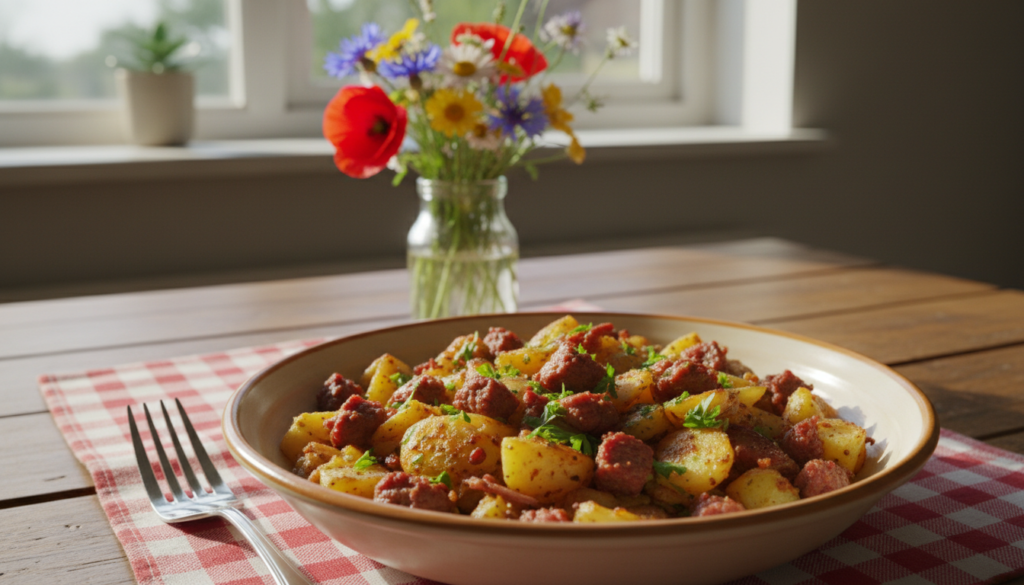
Top your hash with eggs cooked to your liking. Sunny-side up, poached, or scrambled eggs work well. The yolk will mix with the potatoes and beef.
Add toasted sourdough, rye, or an English muffin to soak up juices. A light salad like arugula with lemon vinaigrette cuts the richness. Pickles, sauerkraut, or pickled red onion add a bright, acidic bite.
Finish with fresh fruit or a fruit salad for a sweet contrast. This balances the savory flavors.
Creative serving ideas for breakfast or brunch
Try a corned beef Eggs Benedict twist with a poached egg and hollandaise. Serve individual portions in small cast-iron skillets for a rustic look. Roll hash into burritos with scrambled eggs and cheese for a quick breakfast.
Build breakfast bowls with avocado, pico de gallo, and hot sauce for texture and heat. Make sliders or sandwiches on brioche with crisp hash, melted cheese, and a fried egg. This is a hearty, shareable option.
Garnish plates with chopped parsley or scallions for color and freshness. These ideas make your breakfast corned beef hash perfect for casual meals or fancy brunches.
Storing Leftovers
After a great meal, you want your leftovers to taste just as good later. Cool your corned beef hash to room temperature within two hours. Then, move it into airtight containers.
For clear rotation, label each container with the date and contents. This way, you know when to use or freeze them.
Proper storage techniques
Refrigerate leftovers corned beef hash for up to 3–4 days. If you plan to keep it longer, freeze in freezer-safe containers or resealable bags for 2–3 months. For slow cooker corned beef hash storage, portion into shallow containers.
This helps it cool quickly and evenly in the fridge.
Reheating corned beef hash
On the stovetop, reheat in a skillet over medium heat with a little oil or butter. Press the hash to revive the crust and cook 5–8 minutes until heated through. Use a thermometer to reach 165°F for safety.
In the oven, spread the hash on a baking sheet and heat at 350°F for 10–15 minutes. Flip once to crisp both sides. Microwaving is fastest but will soften the crust; heat in 1-minute intervals and finish in a hot skillet if you want crispiness.
If your hash is frozen, thaw overnight in the fridge for best texture. You can reheat from frozen by using the oven at 375°F for 25–30 minutes, stirring halfway through to ensure even heating. Follow safety guidance and discard refrigerated dishes after 3–4 days.
Troubleshooting Common Issues
When your hash doesn’t turn out right, focused fixes will save the dish. Use the tips below to diagnose problems fast and get back to a golden, flavorful pan.
Addressing Dry or Rubbery Hash
If your corned beef feels tough, the cause is often overcooking lean meat or too little fat in the pan. To rescue dry corned beef hash, stir in a pat of butter or a drizzle of beef broth while reheating to add moisture.
To add body and creaminess, fold a beaten egg into the warm mix or top each serving with a runny fried egg. Use rendered brisket fat or crisped bacon when cooking to prevent rubbery corned beef hash in future batches.
Avoid blasting the pan with very high heat for long periods. Cook at steady medium-high heat so the meat crisps without becoming leathery.
Fixing Flavor Imbalances
Too salty? Counter with unsalted cooked potatoes or a squeeze of lemon. A splash of milk or cream when serving will mellow harsh salt. Pair salty hash with plain toast or a green salad to dilute intensity on the plate.
If the dish tastes flat, brighten it with Worcestershire sauce, soy sauce, smoked paprika, or a few grinds of black pepper. Finish with chopped parsley or chives for fresh contrast and lift.
When the hash is too greasy, remove excess fat with a slotted spoon and blot on paper towels. A short stint under a hot broiler or on a paper-lined tray will help shed surface oil.
Burnt or bitter notes come from scorched bits. Scrape away those areas, then add a small splash of vinegar or lemon and a tiny pinch of sugar to rebalance flavors.
Other Common Problems and Quick Fixes
Soggy hash is usually from undercooked potatoes or overcrowding the pan. Parboil potatoes, dry them thoroughly, and cook in batches so steam escapes and crisping happens.
Uneven browning results from mixed-size dice or a cold pan. Cut ingredients uniformly, let the skillet preheat, and press the hash gently with a spatula to boost contact.
Use these practical steps for troubleshooting corned beef hash so you can fix flavor corned beef hash issues and avoid dry corned beef hash or rubbery corned beef hash next time.
Conclusion
You now know how to make a great corned beef hash. Start with quality corned beef, like leftover brisket or canned. Choose potatoes like russet or Yukon Gold. Dry the meat and potatoes before cooking in a hot pan.
Don’t fill the pan too much. Let it cook undisturbed to get a nice crust. This crust is what makes the hash the best.
Use moderate heat and be patient. This helps control the texture. For a softer hash, use a slow cooker. But, brown it on the stovetop or under a broiler for crisp edges.
Add a splash of acid and fresh herbs to finish. These steps are key to a consistent taste in your corned beef hash.
Make it your own by trying different ingredients and methods. Add eggs, sharp cheddar, bell peppers, or smoked paprika for a unique flavor. If something goes wrong, just adjust the fat, heat, or seasoning.
An easy corned beef hash is perfect for breakfast, brunch, or dinner. With a bit of practice and tweaking, you’ll make the best corned beef hash at home.