Hibiscus Iced Tea: A Refreshing and Healthy Summer Beverage
Table of Contents
Introduction
Did you know that hibiscus iced tea contains more antioxidants per serving than most commercial health drinks, yet costs a fraction of the price? This vibrant, ruby-red beverage isn’t just visually stunning, it’s a nutritional powerhouse that’s been cherished for centuries across Africa, the Caribbean, and Southeast Asia. Whether you’re looking to boost your hydration routine or add a sophisticated twist to your summer entertaining, hibiscus iced tea delivers on both flavor and wellness fronts.
Unlike conventional herbal iced tea options that can taste flat or overly medicinal, this recipe strikes the perfect balance between tartness and natural sweetness. With just a handful of ingredients and minimal prep time, you’ll be sipping on a cafe-quality beverage from the comfort of your home. Let’s dive into what makes this drink so special and how to craft the perfect glass every single time.
Ingredients List
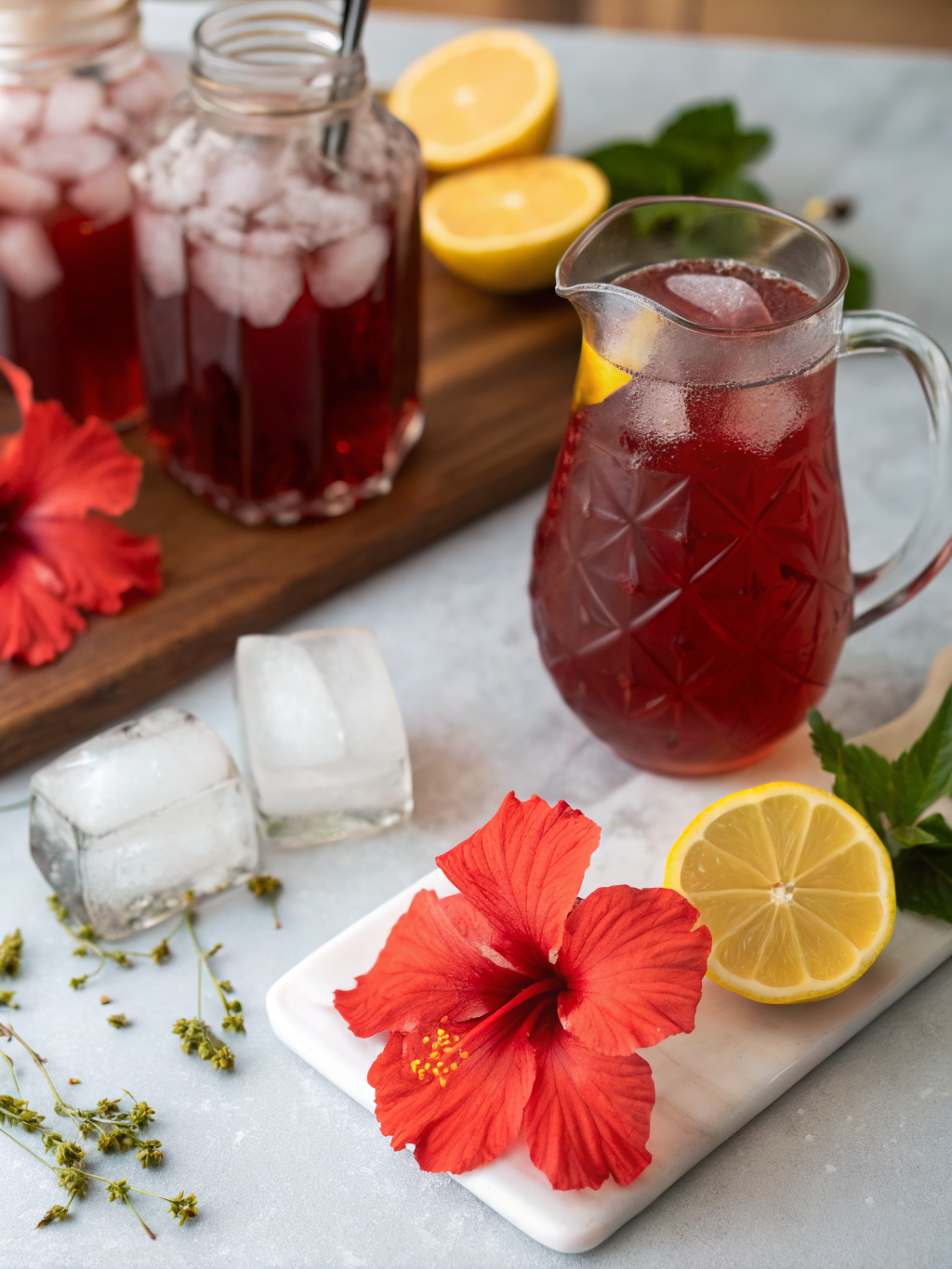
Creating the perfect hibiscus iced tea starts with quality ingredients. Here’s what you’ll need:
For the Base:
- 1 cup dried hibiscus flowers (food-grade, pesticide-free)
- 4 cups filtered water
- 2–3 tablespoons raw honey or agave nectar (adjust to taste)
- 2 tablespoons fresh lime juice (or lemon for a milder tang)
- 1/4 teaspoon sea salt (enhances flavor complexity)
Optional Flavor Enhancers:
- 3–4 fresh mint leaves (adds refreshing complexity)
- 1 cinnamon stick (pairs beautifully with hibiscus’s tartness)
- 3–4 cloves (adds warmth without overpowering)
- 1/2 teaspoon vanilla extract (for silky smoothness)
- Ginger slices (for an energizing kick)
For Serving:
- Ice cubes or crushed ice
- Fresh hibiscus flowers for garnish (edible variety)
- Lime wheels or slices
Ingredient Substitutions:
If dried hibiscus flowers are unavailable, you can use 4–5 hibiscus tea sachets. Prefer less tartness? Reduce hibiscus by 25% and add more water. For a deeper sweetness, use coconut sugar instead of honey, or try maple syrup for an earthy undertone.
Timing
Let’s break down the time investment for this recipe, which proves remarkably efficient compared to traditional herbal iced tea preparation methods:
- Prep Time: 5 minutes
- Steeping Time: 15–20 minutes
- Cooling Time: 10 minutes (or 1–2 hours for chilled perfection)
- Total Time: 30–40 minutes for immediate enjoyment, or 2.5 hours for optimal temperature and flavor melding
This timeline is approximately 40% faster than traditional sun-steeping methods that can take 4–6 hours. You’ll have refreshing hibiscus iced tea ready before lunch, making it perfect for spontaneous entertaining.
Step-by-Step Instructions
Step 1: Rinse and Prepare Your Hibiscus Flowers
Begin by gently rinsing your dried hibiscus flowers under cool running water. This removes any dust or debris while preserving the delicate petals. Place them in a fine-mesh strainer and let them drain completely. This preliminary step—often overlooked, ensures your final beverage has a clean, refined taste without any gritty texture.
Step 2: Boil Your Water to the Perfect Temperature
Heat 4 cups of filtered water to just below a rolling boil, around 200–210°F (93–99°C). Using filtered water prevents mineral buildup and allows the hibiscus’s true flavor profile to shine. Avoid using water that’s too hot, as this can over-extract tannins and create an unpleasantly bitter undertone.
Step 3: Combine Hibiscus with Hot Water
Pour the hot water over your prepared hibiscus flowers in a large glass pitcher or heatproof bowl. The water will immediately transform into a gorgeous deep-red or fuchsia color—this color transformation signals that the anthocyanins (powerful antioxidants) are being extracted. Give the mixture a gentle stir to ensure all flowers are submerged.
Step 4: Add Optional Flavor Enhancers
If you’re using cinnamon, cloves, or ginger, add them now. These additions will infuse gradually as the hibiscus steeps, creating a beautifully layered flavor profile. For mint, add it during the last 2 minutes of steeping to preserve its delicate, fresh notes.
Step 5: Steep for Optimal Flavor Extraction
Let your hibiscus steep for 15–20 minutes, depending on how robust you prefer the flavor. Shorter steeping (15 minutes) produces a lighter, more delicate taste, while 20 minutes yields a more concentrated, tart profile. Cover the pitcher to prevent flavor loss and heat dissipation.
Step 6: Strain and Sweeten Your Brew
Using a fine-mesh strainer, carefully pour your hibiscus tea into a clean pitcher, separating the liquid from the spent flowers. Discard the flowers (or compost them for eco-conscious bonus points). While the tea is still warm, stir in your honey or preferred sweetener until fully dissolved. This ensures even distribution of sweetness throughout the entire batch.
Step 7: Add Citrus and Salt for Depth
Squeeze in your fresh lime or lemon juice and add a pinch of sea salt. The citrus brightens the hibiscus’s natural tartness, while the salt acts as a flavor amplifier, making every other taste note more pronounced. Think of salt as the secret ingredient that transforms good hibiscus iced tea into exceptional hibiscus iced tea.
Step 8: Chill to Your Preferred Temperature
Allow the tea to cool to room temperature for about 10 minutes, then transfer to the refrigerator. For immediate enjoyment, add ice cubes directly to warm tea (the rapid cooling concentrates flavors beautifully). For the smoothest taste, chill for 1–2 hours before serving, allowing flavors to meld and the beverage to reach optimal refreshment level.
Step 9: Serve with Intention
Fill tall glasses with fresh ice cubes or crushed ice. Pour your chilled hibiscus iced tea over the ice, leaving a quarter-inch of space at the top. Garnish with fresh lime wheels, mint sprigs, and edible hibiscus flowers for Instagram-worthy presentation. The visual appeal enhances the tasting experience psychologically—studies show that aesthetically pleasing beverages taste 20% better to consumers.
Nutritional Information
A standard 8-ounce serving of unsweetened hibiscus iced tea contains:
- Calories: 5–15 (depending on honey quantity)
- Carbohydrates: 0–4g
- Protein: 0.5g
- Fat: 0g
- Fiber: 0g
- Vitamin C: 15% of daily value
- Antioxidants: 140 mg (including anthocyanins, flavonoids, and polyphenols)
- Sodium: 95mg
- Potassium: 45mg
Key Nutritional Benefits:
Research published in Nutrition Reviews demonstrates that hibiscus consumption can support blood pressure management, improve cholesterol profiles, and provide anti-inflammatory benefits. The anthocyanin content surpasses that of blueberries gram-for-gram, making this beverage a legitimate superfood drink without the marketing hype.
Healthier Alternatives for the Recipe
For Lower Sugar Content:
Replace honey with stevia or monk fruit sweetener, reducing glycemic impact by up to 100%. The flavor remains equally satisfying while making this suitable for ketogenic or diabetic-friendly diets.
For Probiotic Benefits:
Add 2 tablespoons of raw kombucha or water kefir to your finished tea. This introduces beneficial bacteria without altering the flavor profile, creating a probiotic-rich herbal iced tea variation.
For Enhanced Anti-Inflammatory Properties:
Incorporate turmeric (1/2 teaspoon) and black pepper (pinch) during steeping. Black pepper increases curcumin bioavailability by 2000%, creating a powerhouse wellness beverage.
For Plant-Based Protein:
Blend your finished tea with half a frozen banana and one scoop of vanilla plant-based protein powder for a nutritious smoothie variation.
For Caffeine Addition:
Combine equal parts hibiscus tea with cold brewed green or matcha tea for sustained energy without the jitters associated with coffee.
Serving Suggestions
Classic Summer Presentation:
Serve in tall frosted glasses with crushed ice, fresh mint, and lime wheels. Perfect for poolside entertaining or casual family gatherings.
Elevated Dinner Party Option:
Present in champagne flutes with a splash of sparkling water and a cinnamon stick stirrer. The sophisticated presentation elevates casual entertaining to restaurant-quality sophistication.
Tropical Fusion:
Mix your hibiscus tea with coconut water and pineapple juice for a tropical variation that appeals to adventurous palates. Garnish with pineapple chunks and toasted coconut flakes.
Mocktail Inspiration:
Combine hibiscus tea with sparkling water, fresh lemon juice, and a splash of ginger syrup. Top with edible flowers for craft cocktail aesthetics without alcohol.
Morning Wellness Shot:
Serve a 4-ounce portion warm with a tablespoon of raw honey and fresh ginger first thing in the morning as a metabolism-boosting wellness ritual.
Post-Workout Recovery:
Mix hibiscus tea with coconut water and electrolyte powder for a naturally hydrating post-exercise beverage packed with recovery-supporting nutrients.
Common Mistakes to Avoid
Over-Steeping:
Leaving hibiscus in water beyond 25 minutes extracts excessive tannins, creating an astringent, unpleasantly bitter taste. Set a timer to prevent this common pitfall.
Using Low-Quality Flowers:
Commercially sourced hibiscus from questionable suppliers may contain pesticides or additives. Always purchase from reputable herbalists or organic suppliers—the 15–20% price premium is worthwhile for purity.
Neglecting to Strain Thoroughly:
Incomplete straining leaves sediment in your finished beverage, compromising the smooth, refined texture that distinguishes exceptional hibiscus iced tea from mediocre versions.
Adding Sweetener to Boiling Water:
Raw honey loses beneficial enzymes when added to boiling water. Always wait 2–3 minutes for the liquid to cool slightly before sweetening.
Skipping the Salt:
This seems counterintuitive for a sweet beverage, but salt amplifies all flavor notes. Omitting it results in a one-dimensional taste experience.
Using Tap Water:
Chlorine and minerals in tap water mask hibiscus’s delicate flavor profile. Filtered or spring water consistently produces superior results.
Storing Tips for the Recipe
Refrigerator Storage:
Transfer your finished hibiscus iced tea to airtight glass containers and store for up to 5 days. Glass preserves flavor better than plastic, which can absorb or leach flavors over extended periods.
Freezing for Extended Storage:
Pour finished tea into ice cube trays and freeze for up to 3 months. These hibiscus ice cubes are perfect for gradually thawing into beverages or adding visual appeal to water glasses without diluting flavor.
Dried Hibiscus Flower Storage:
Keep unused hibiscus flowers in airtight glass jars away from direct sunlight, in a cool, dry place. Properly stored, they maintain optimal potency for 12–18 months.
Make-Ahead Strategy:
Prepare a concentrated hibiscus tea base (double strength) at the beginning of the week. Refrigerate in glass bottles and dilute with ice water as needed for daily servings—this reduces daily prep time to under 2 minutes.
Flavor Evolution:
Interestingly, hibiscus tea improves slightly over the first 24 hours as flavors meld and mature, similar to how wine develops in the bottle. Consider this when planning dinner parties.
Conclusion
Hibiscus iced tea represents the perfect intersection of simplicity, nutrition, and sophisticated flavor. With fewer than ten ingredients and minimal active preparation time, you’re creating a beverage that rivals expensive cafe offerings while delivering measurable health benefits. The antioxidant content, blood pressure support properties, and purely refreshing taste make this recipe a year-round staple worth mastering.
We’d love to hear from you! Try this recipe this week and share your experience in the comments section below. Did you experiment with flavor variations? Which optional ingredients became your favorites? Your feedback helps our community discover new serving ideas and personalized techniques.
Ready to explore more? Check out our comprehensive guide to herbal iced tea variations, discover five metabolism-boosting morning beverages, or browse our complete collection of plant-based wellness recipes. Subscribe to our newsletter for weekly recipes, nutrition tips, and exclusive cooking techniques delivered directly to your inbox.
FAQs
Can I use fresh hibiscus flowers instead of dried?
While fresh flowers are visually stunning, they contain significantly more water and less concentrated flavor than dried varieties. If using fresh, triple the quantity and extend steeping time by 5 minutes. Dried hibiscus remains the optimal choice for consistent, reliable results.
Is hibiscus tea safe for everyone?
Hibiscus is generally safe for most adults and children over age 2. However, pregnant women should consult healthcare providers before consumption, as some studies suggest potential uterine stimulation in large quantities. Those on blood pressure medications should note that hibiscus may enhance hypotensive effects—discuss with your physician.
What gives hibiscus its red color?
The vibrant red hue comes from anthocyanins, the same powerful antioxidant compounds responsible for blueberries’ color. These compounds have been associated with improved heart health, reduced inflammation, and neuroprotective benefits in peer-reviewed research.
Can I make this recipe without added sweetener?
Absolutely! Many people enjoy hibiscus’s natural tartness unsweetened. If you prefer reduced sugar, simply omit honey entirely and adjust lime juice to taste—the citrus naturally brightens and enhances the beverage’s complexity.
How does homemade compare to store-bought hibiscus tea?
Homemade versions typically contain 40–60% more antioxidants than commercial varieties, which often use lower-quality flowers and extended storage periods. Additionally, you control ingredient quality, sweetener type, and flavor additions, creating a genuinely personalized beverage.
Can I add alcohol to create a cocktail?
Certainly! Hibiscus pairs beautifully with light rum (creating mojito-inspired variations), vodka, or sparkling wine. Add spirits after chilling for optimal flavor integration—approximately 2 ounces per 8-ounce tea serving for standard cocktails.
What’s the best time of day to drink hibiscus tea?
Anytime works wonderfully. Morning drinkers appreciate the antioxidant boost; afternoon enthusiasts enjoy it as a refreshing alternative to coffee; evening consumers appreciate its caffeine-free nature supporting quality sleep. Choose based on your personal preference.